Cart 0
What bespoke packaging means for UK food businesses
Many small and medium-sized food businesses in the UK assume bespoke packaging is a luxury reserved for large chains with deep pockets and dedicated design teams. That assumption is costing them. The reality is that bespoke packaging has become increasingly accessible, and for food service businesses facing growing competition, tighter margins, and rising customer expectations, it is no longer a nice-to-have. This guide breaks down exactly what bespoke packaging means, how it differs from standard solutions, and why it could be one of the most practical investments your food business makes in 2026.
Table of Contents
- Defining bespoke packaging: What sets it apart?
- The impact of bespoke packaging on branding and customer experience
- Operational advantages: Tailoring packaging to your business needs
- Sustainability and regulatory trends for custom packaging
- Steps to implement bespoke packaging for your food business
- Explore bespoke packaging solutions for your UK food business
- Frequently asked questions
Key Takeaways
| Point | Details |
|---|---|
| Custom fits enhance branding | Bespoke packaging directly improves brand recognition, customer loyalty, and operational effectiveness. |
| Sustainability remains key | Regulatory changes and recycling limitations make choosing the right materials crucial for UK SMEs. |
| Investment brings efficiency | Tailored packaging solutions reduce waste and speed up packing for food service businesses. |
| SMEs face MOQ barriers | Minimum order quantities for sustainable materials can be a hurdle; trends are changing to favour smaller businesses. |
Defining bespoke packaging: What sets it apart?
Bespoke packaging is packaging designed and produced specifically for your business. It is not pulled from a generic catalogue and handed over in bulk. Instead, it is shaped around your product dimensions, your brand identity, your materials preferences, and your operational requirements. Think of it as the difference between buying a suit off the rack and having one made to measure.
Standard, or stock, packaging is produced in large volumes to fit a broad range of uses. It is cost-effective and immediately available, but it rarely fits any one business perfectly. Bespoke packaging, by contrast, is built around your specific needs. The packaging customisation benefits go well beyond aesthetics, touching everything from product protection to staff efficiency.
Here is a quick comparison to illustrate the difference:
| Feature | Standard packaging | Bespoke packaging |
|---|---|---|
| Design | Generic | Tailored to your brand |
| Fit | Approximate | Precise to your product |
| Branding | None or minimal | Full custom print |
| Material choice | Limited | Wide range available |
| Lead time | Immediate | Planned in advance |
| Cost per unit | Lower at small volumes | Competitive at scale |
The key features of bespoke packaging include custom sizing, branded print, material selection, and structural design. For food businesses, this means:
- Packaging that fits your portions correctly, reducing waste
- Branded cups, boxes, or bags that reinforce your identity at every touchpoint
- Materials chosen for your specific food type, whether hot, cold, greasy, or delicate
- Designs that make your product stand out on a delivery platform or market stall
The packaging in marketing role is often underestimated by SMEs, yet it is one of the most visible expressions of your brand. As the British Plastics Federation notes, the customisation vs efficiency trade-off is a genuine concern for smaller businesses, but it is one that can be managed with the right supplier and planning.
The impact of bespoke packaging on branding and customer experience
Your packaging is often the first physical thing a customer touches. Before they taste your food, they see your box, your cup, your bag. That moment matters more than most food businesses realise.
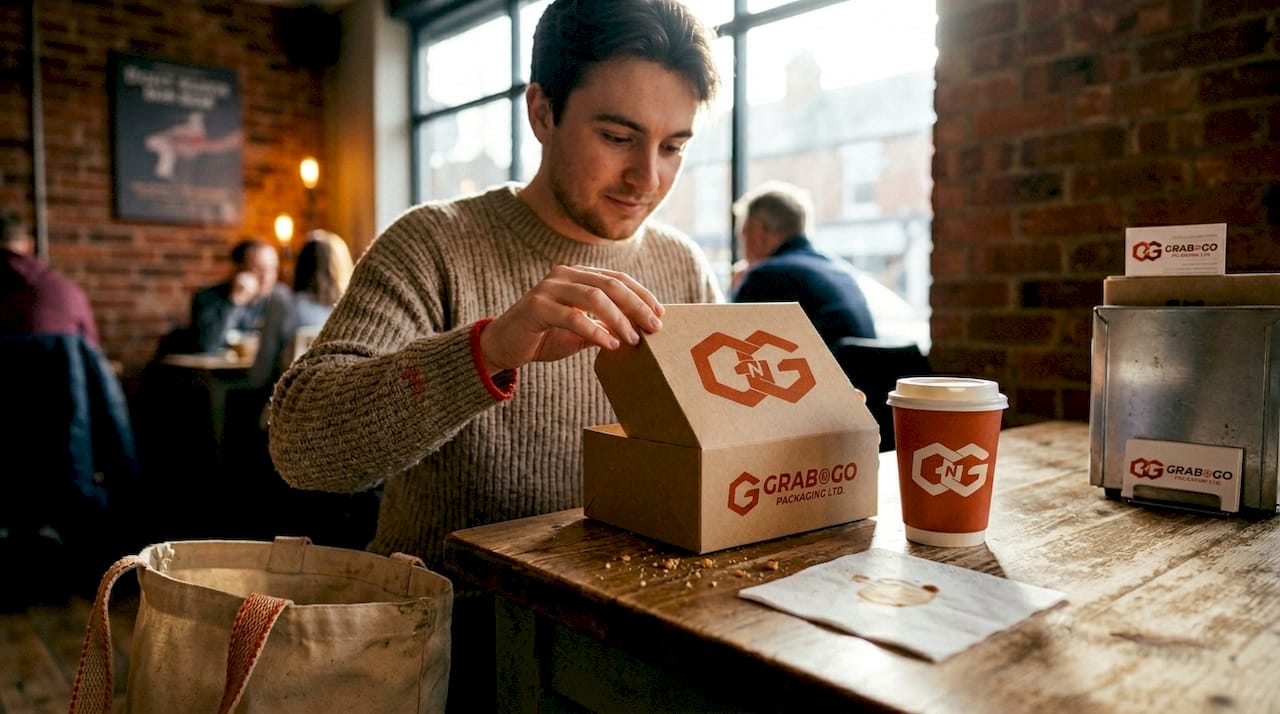
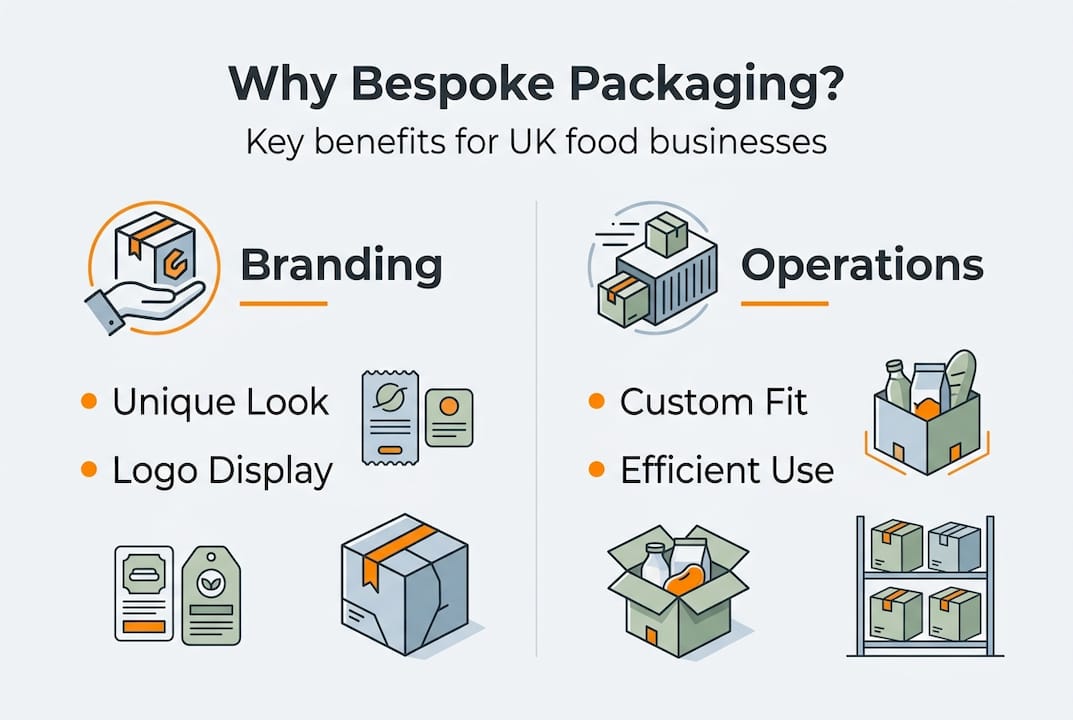
Bespoke packaging contributes directly to brand differentiation in a crowded market. A printed coffee cup with your logo, a custom sandwich box in your brand colours, or a greaseproof paper sheet stamped with your name all send a clear message: this business takes itself seriously. Customers notice, and they remember.
When you customise food packaging thoughtfully, you create a consistent brand experience from the moment an order is placed to the moment it is opened. That consistency builds trust. It also encourages repeat business, because customers associate the quality of your packaging with the quality of your food.
Practical branding benefits include:
- Instant recognition on delivery platforms like Deliveroo or Uber Eats
- Shareable unboxing moments that generate organic social media content
- Reduced order errors because staff can identify products at a glance
- A professional appearance that justifies premium pricing
Good printed packaging tips will tell you that less is often more. A clean logo, a consistent colour palette, and a clear font go further than a cluttered design. And when it comes to packaging design, the goal is always to make your customer feel something positive the moment they receive their order.
Operational advantages: Tailoring packaging to your business needs
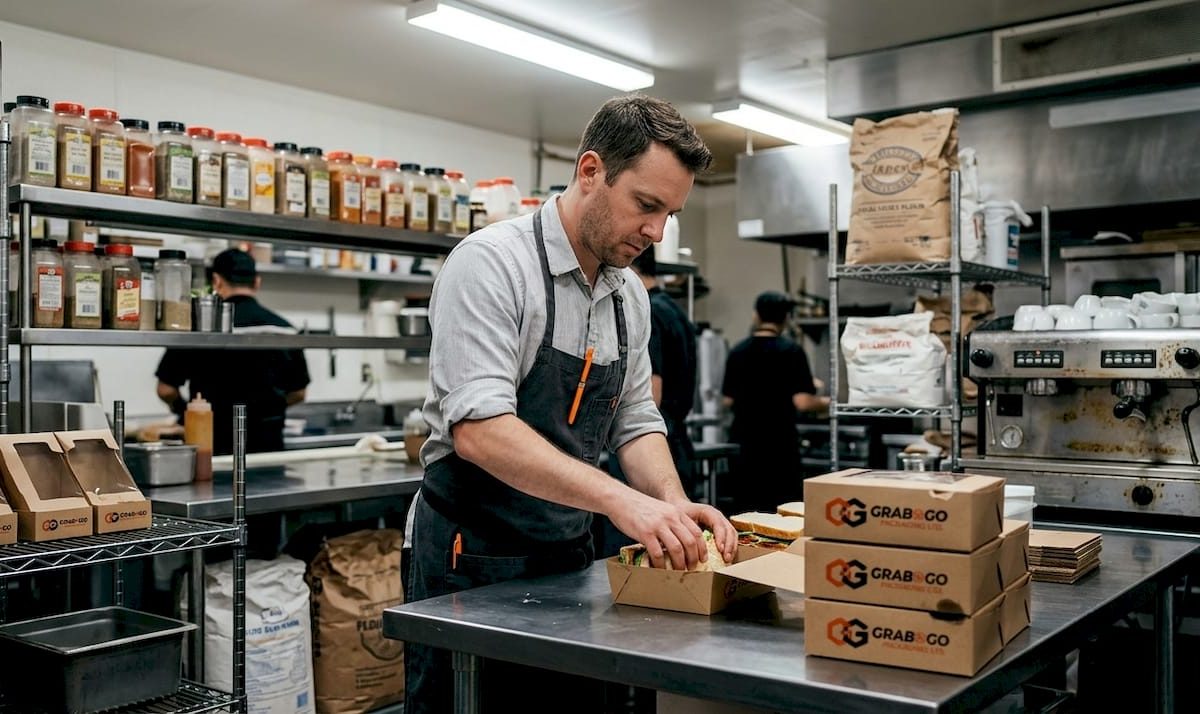
Branding is important, but bespoke packaging also delivers operational value that directly affects your bottom line. When packaging is designed around your actual products, the day-to-day running of your kitchen or counter becomes noticeably smoother.
Here is how bespoke packaging improves operations step by step:
- Correct fit reduces spills and leaks. A container sized precisely for your portion means lids seal properly, sauces stay contained, and deliveries arrive intact.
- Right materials for the right food. Hot curries need grease-resistant, heat-retaining containers. Cold salads need breathable packaging. Bespoke solutions let you specify exactly what you need.
- Faster packing speeds. When packaging is intuitive and purpose-built, staff pack orders more quickly and with fewer mistakes.
- Less waste. Packaging that fits your product means you are not using oversized boxes or excessive void fill, which cuts material costs over time.
- Sustainability alignment. Choosing the right bespoke materials from the outset means you can build eco-credentials into your packaging from day one rather than retrofitting later.
The packaging selection process is worth investing time in upfront. As the British Plastics Federation highlights, the customisation vs efficiency trade-off is a reality for many SMEs, but businesses that plan carefully find the operational gains outweigh the initial complexity.
Pro Tip: Before committing to a bespoke order, map out your five most common packaging uses and identify where current stock packaging is causing problems. That list becomes your brief to a supplier.
Sustainability and regulatory trends for custom packaging
With operational benefits established, it is crucial to consider sustainability and regulatory requirements for bespoke packaging. The UK regulatory landscape is shifting, and food businesses that ignore it risk both fines and reputational damage.
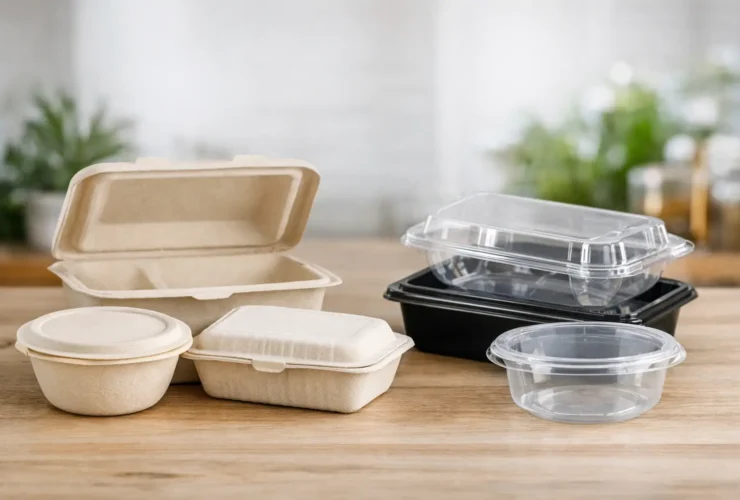
Here is a snapshot of key sustainable material options and their trade-offs:
| Material | Benefit | Challenge |
|---|---|---|
| Bagasse (sugarcane pulp) | Compostable, sturdy | Higher unit cost |
| Recycled cardboard | Widely recyclable | Less moisture resistant |
| PLA (plant-based plastic) | Compostable in facilities | Needs industrial composting |
| Kraft paper | Recyclable, natural look | Limited grease resistance |
| Recycled plastic | Lower carbon footprint | Consumer perception issues |
The UK’s Extended Producer Responsibility (EPR) regulations, which came into force in 2025, mean businesses are now financially accountable for the packaging they place on the market. Choosing recyclable or compostable bespoke materials is no longer just an ethical choice; it is a commercial one.
“Flexible packaging faces limited recycling infrastructure until the Simpler Recycling scheme rolls out by 2027, presenting real challenges for SMEs trying to act responsibly today.”
The Simpler Recycling scheme, expected to be fully operational by 2027, will standardise what can be collected for recycling across England, making it easier for consumers and businesses alike to dispose of packaging correctly. Until then, SMEs should focus on materials that are already widely recyclable through existing kerbside collections.
For guidance on making the right choices, the eco-friendly packaging options available today are broader than many businesses realise. A solid recyclable packaging guide can help you navigate the options without getting lost in jargon. Keep an eye on the packaging industry news for regulatory updates as they emerge.
Steps to implement bespoke packaging for your food business
Now, let us walk through the essential steps to introduce bespoke packaging into your food business. The process is more straightforward than most SMEs expect, provided you approach it methodically.
- Assess your current packaging pain points. Where are you losing money, time, or brand credibility with your existing packaging? Write it down. This becomes your business case.
- Define your requirements clearly. Specify quantities, materials, dimensions, print requirements, and any sustainability criteria. The more precise your brief, the better the outcome.
- Research and shortlist suppliers. Look for suppliers who work with food businesses at your scale, offer samples, and can advise on materials. Do not commit to a large order without testing samples first.
- Request and evaluate samples. Test samples under real conditions: fill them with your actual food, seal them, transport them. Only approve what genuinely works.
- Integrate new packaging into your workflow. Train staff, update your storage layout, and communicate any changes to your team before the new packaging goes live.
- Review and iterate. After a few weeks, gather feedback from staff and customers. Bespoke packaging can always be refined as your business evolves.
As the British Plastics Federation points out, customisation requires careful balancing with operational efficiency and sustainability. The businesses that get it right are those that treat packaging as a strategic decision, not an afterthought.
For more detailed guidance, the custom packaging tips available for UK food businesses in 2026 cover everything from briefing suppliers to managing minimum order quantities.
Pro Tip: Start with one or two packaging items rather than overhauling everything at once. A branded coffee cup or a custom sandwich box is a low-risk way to test the impact of bespoke packaging before scaling up.
Explore bespoke packaging solutions for your UK food business
You have seen how bespoke packaging can strengthen your brand, improve operations, and align with sustainability goals. The next step is finding the right products and guidance to make it happen for your business.
At Grab & Go Packaging, we work with small and medium-sized food businesses across the UK to find packaging that fits their needs, not just their budget. Whether you are looking for printed cups, custom boxes, or eco-friendly alternatives, our packaging shop covers a wide range of options suited to food service businesses of every size. Our materials guide helps you understand which materials suit your food type and sustainability goals, while our custom packaging tips walk you through the process from brief to delivery. We are here to make bespoke packaging practical, not complicated.
Frequently asked questions
How can small food businesses afford bespoke packaging?
Many suppliers now offer lower minimum order quantities, making bespoke packaging far more accessible for SMEs. While high MOQs for sustainable materials can still be a barrier, starting with one or two key items keeps costs manageable.
Is bespoke packaging more sustainable than standard packaging?
Bespoke packaging can be designed with sustainability in mind from the outset, giving you more control over materials. However, limited recycling infrastructure for some flexible materials remains a challenge until the Simpler Recycling scheme is fully operational.
What is the Simpler Recycling scheme and how will it affect packaging?
The Simpler Recycling scheme is a UK government initiative that will standardise recycling collections across England, with full rollout expected by 2027. It will make it easier for businesses and consumers to recycle a wider range of packaging materials correctly.
How does bespoke packaging affect operational efficiency for food businesses?
When packaging is tailored to your products, packing becomes faster and errors decrease. The customisation vs efficiency trade-off is real, but businesses that plan carefully consistently report improved workflow and reduced material waste.
Recommended
- Custom packaging tips for UK food businesses in 2026 – Grab & Go Packaging
- Why Customise Food Packaging for UK Cafés – Grab & Go Packaging
- Packaging design tips for UK food businesses to boost branding – Grab & Go Packaging
- Why Packaging Design Matters for UK Food Businesses – Grab & Go Packaging
- Why premium coffee benefits hospitality businesses in 2026