Cart 0
Cafe Packaging Essentials Guide for Daily Service
The lunchtime rush exposes weak packaging fast. A lid that does not fit properly, a carrier bag that tears, or a sandwich wedge that clouds up in the chiller can slow service, damage presentation and create waste. This cafe packaging essentials guide is built for operators who need packaging to do its job every day, across coffee, food to go and delivery.
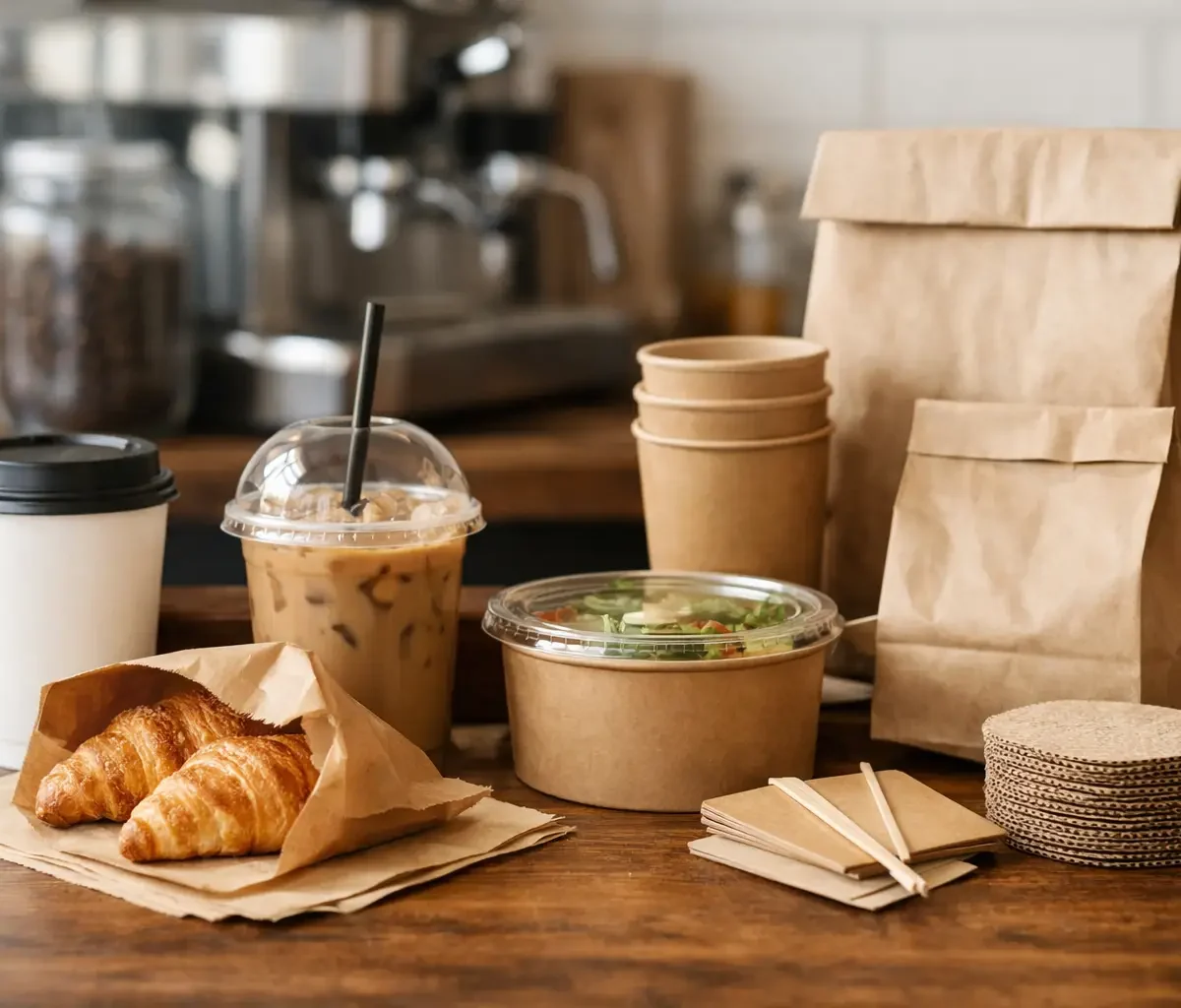
For most cafés, packaging is not one single line on the order sheet. It is a working system made up of cups, lids, food containers, bags, napkins, greaseproof, cutlery and cleaning supplies, all of which need to match the menu, service style and order volume. The right setup keeps queues moving, protects product quality and makes reordering simpler.
What a cafe packaging essentials guide should actually cover
A practical buying guide should start with your menu, not with whatever happens to be cheapest in a single category. A coffee-led site with a small pastry offer needs a different mix from a busy all-day café selling paninis, salad bowls, hot boxes and cold drinks. The essential question is always the same: what does the customer carry away, and what does that item need from its packaging?
Hot drinks need secure cup sizes, dependable lids and sleeves where heat retention matters. Cold drinks need clear cups, domed or flat lids and straw compatibility if that suits the serve. Food to go needs packaging that protects texture as much as it protects shape. A toastie trapped in the wrong box can sweat and soften. A salad in a weak bowl can leak into the bag. Good packaging supports the product, rather than fighting it.
That is why range matters. Buying from one supplier across key categories is often more efficient than piecing orders together from multiple sources. It reduces admin, makes stock planning easier and helps keep front-of-house presentation consistent.
Cups and lids are the first packaging decision
For many cafés, cups are the highest-volume packaging line, so mistakes here are expensive. You need the right capacities for your drink menu, but you also need reliable lid fit across every size. If a 12oz cup and lid combination works well but the 16oz equivalent is inconsistent, staff lose time double-checking every drink before handover.
Paper coffee cups remain the standard choice for fast-moving takeaway service. Double wall options can reduce the need for sleeves, though they usually come at a higher unit cost. Single wall cups may be more economical if you already issue sleeves or if most drinks are served briefly after collection. It depends on your price point, drink temperatures and customer expectations.
Cold drink packaging has its own demands. Smoothies, iced coffees, shakes and juices need cups that present well and hold up during transport. Clear plastic or alternative cold cups work best when the drink itself is part of the sell. Lids matter just as much as the cup, especially if cream toppings, fruit garnish or thick smoothie consistency are part of the offer.
If you want packaging that also works as marketing, personalised coffee cups are usually one of the strongest places to invest. Customers carry them out into the street, into offices and onto public transport. Branded cups are visible, practical and directly tied to repeat purchase behaviour.
Food packaging needs to match the product, not the shelf label
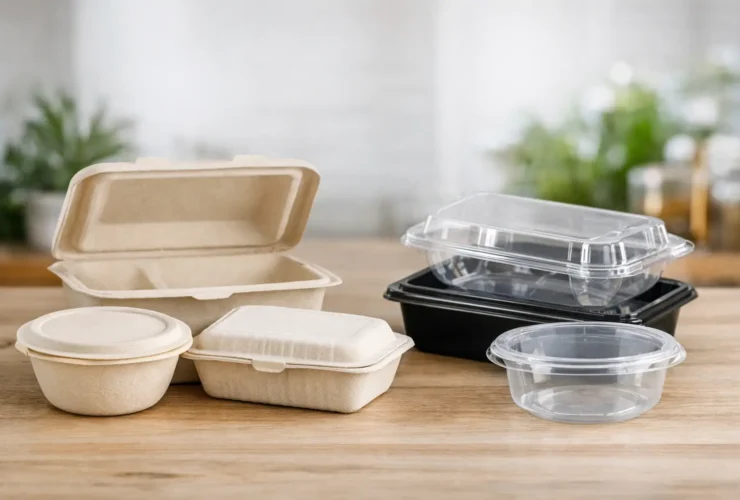
A broad café menu usually needs several food packaging formats rather than one catch-all box. Sandwich wedges are ideal for chilled grab-and-go display because they show the product clearly and stack neatly. Deli bowls are better for pasta, couscous, fruit and layered salads where visibility supports impulse purchase. Hot takeaway containers are more suitable for rice dishes, breakfast items and hot lunch specials.
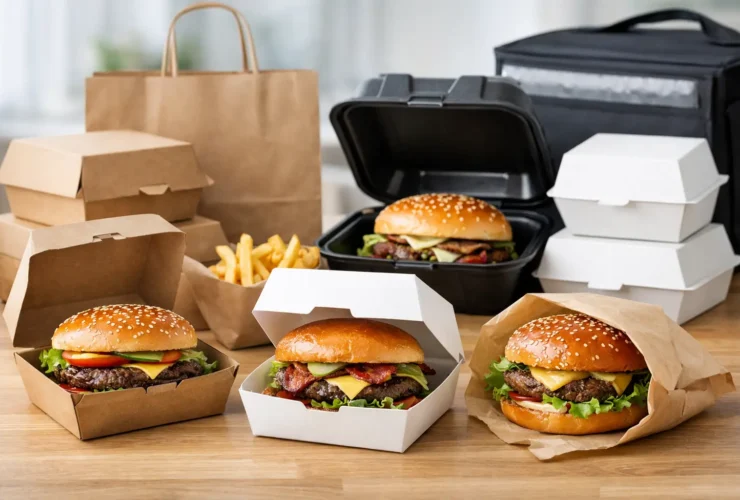
Burger boxes, clamshells and meal boxes can work well for hot handheld food, but ventilation and structure matter. If steam has nowhere to escape, fried or toasted products lose quality quickly. On the other hand, too much venting can cause heat loss. There is always a trade-off between crispness, warmth and journey time.
Foil trays are useful where heat retention is a priority or where the food has sauce, oil or moisture that weaker board formats cannot handle well. They are common in takeaway and catering settings, but they can also suit café operators offering baked dishes or prepared meal collection. Bagasse products can be a strong alternative when you want a more natural presentation or need a broader range of food formats in one material style.
The best approach is to map packaging directly to menu lines. If one box is being used for wraps, cakes, hot breakfasts and chips, it is probably the wrong box for at least two of those items.
Bags, wrap and greaseproof still shape the customer experience
Operators often focus on cups and containers, then underbuy the basics that complete the order. Carrier bags, paper bags, napkins and greaseproof paper are small-ticket lines, but they influence speed, presentation and practicality.
A good carrier bag should cope with the weight and shape of your average order. That sounds obvious, but many failures happen when drinks and food are packed together without enough base support. If your café handles a lot of breakfast and lunch trade, choose bags that can carry containers upright and still leave space for extras. If your menu is lighter, paper bags may be enough for pastries, sandwiches and single-drink orders.
Printed greaseproof paper is one of the most cost-effective ways to sharpen presentation. It improves how pastries, toasties, burgers and baked items are served, and it adds brand recognition without changing the product itself. For independent cafés that want a more polished look without overcomplicating the operation, bespoke greaseproof can make a clear difference.
The cafe packaging essentials guide for stock control
The right products are only half the job. The other half is stock control. Cafés usually run into packaging trouble when ordering is too reactive. One item runs short, staff substitute something that does not fit properly, and suddenly drink presentation, food quality and service speed all slip together.
A more dependable system starts with your core weekly lines. These are the products you cannot trade without: key cup sizes, matching lids, main food containers, bags, napkins and any branded essentials tied to your customer-facing offer. Then look at second-tier lines, such as seasonal drink cups, specialist bowls or occasional catering trays, which may not need the same reorder frequency.
Pack size matters here. Buying in volume can improve cost control, but only if you have the storage space and turnover to justify it. A small site with limited backroom space may be better off with more frequent, manageable replenishment. A larger or multi-site operator usually gains more from wholesale case quantities and standardised product lines across locations.
Consistency also matters when training staff. If each site or shift is working with different cup formats, lid types or food boxes, packing errors increase. Standard ranges simplify ordering, storage and service.
Do not forget front-of-house consumables
Packaging decisions often sit alongside items that are not technically packaging but are essential to the customer handover. Cutlery, napkins, straws where relevant, cup carriers, portion pots and cleaning supplies all support the same operational goal – serving customers quickly and cleanly.
Cleaning products deserve a mention because packaging presentation depends on them. Smudged chilled cabinets, sticky counters and marked cup lids make even good packaging look poor. For busy cafés, buying cleaning supplies alongside service essentials can save time and keep procurement straightforward.
When branded packaging is worth it
Not every café needs bespoke print across every line. In many cases, a selective approach gives better value. Start with the items customers see most often or carry furthest – coffee cups, greaseproof paper or premium food wraps are common first choices.
Branded packaging works best when your presentation is already consistent. If cup lids vary, labels are improvised and food is packed in mixed formats, printing alone will not fix the experience. But if your service flow is solid, bespoke packaging can elevate the whole offer. It helps smaller operators look established and gives growing businesses a cleaner, more recognisable identity across sites.
For buyers who want to simplify ordering, a one-stop supplier model is usually the practical answer. Grab & Go Packaging Ltd fits that need by covering everyday cups, containers, bags, disposables and bespoke print options in one place, which makes repeat purchasing easier for busy food businesses.
Buy for the real shift, not the ideal one
The strongest packaging choices are usually made with the busiest hour in mind. Can staff grab the right lid without hesitation? Will the bag hold two drinks and a hot box? Does the sandwich pack still look good after a few hours in the chiller? Can delivery orders leave the site without last-minute repacking?
That is the real test. Packaging should make service faster, keep food and drink in good condition and support the standard you want customers to associate with your café. If it also strengthens branding and simplifies purchasing, even better. The right range is not about buying more products. It is about buying the formats you will trust every day.