Cart 0
Printed Greaseproof Paper for Takeaway
A burger wrapped in plain paper does the job. A burger wrapped in printed greaseproof paper for takeaway does more than that – it keeps hands cleaner, supports presentation and puts your brand in front of the customer from the first touch.
For cafés, takeaways, street food traders and fast food operators, that matters. Packaging is not just there to carry food out of the door. It affects how hot items travel, how tidy they look when opened, and whether your business feels generic or properly branded. Greaseproof sheets are a small-format item, but they have a direct effect on service standards and customer perception.
Why printed greaseproof paper for takeaway earns its place
Greaseproof paper sits close to the food, so it works harder than many operators first expect. It helps manage oil and moisture, reduces mess inside trays and boxes, and gives fried or freshly prepared food a cleaner finish at handover. If you serve burgers, toasties, pastries, loaded fries, wraps, fish, chicken or bakery items, it is one of those simple consumables that improves consistency without slowing service.
The printed version adds another layer of value. Instead of a plain sheet that disappears into the background, you get a surface that carries your logo, pattern or brand message. That is useful in-store and even more useful for takeaway and delivery, where the food may be eaten well away from your premises. A branded sheet helps the order feel thought through rather than thrown together.
This is especially relevant for independent operators competing with larger chains. You may not have a national advertising budget, but you can still make your food look more established and more professional with bespoke packaging that is practical at the same time.
Where it works best in busy food operations
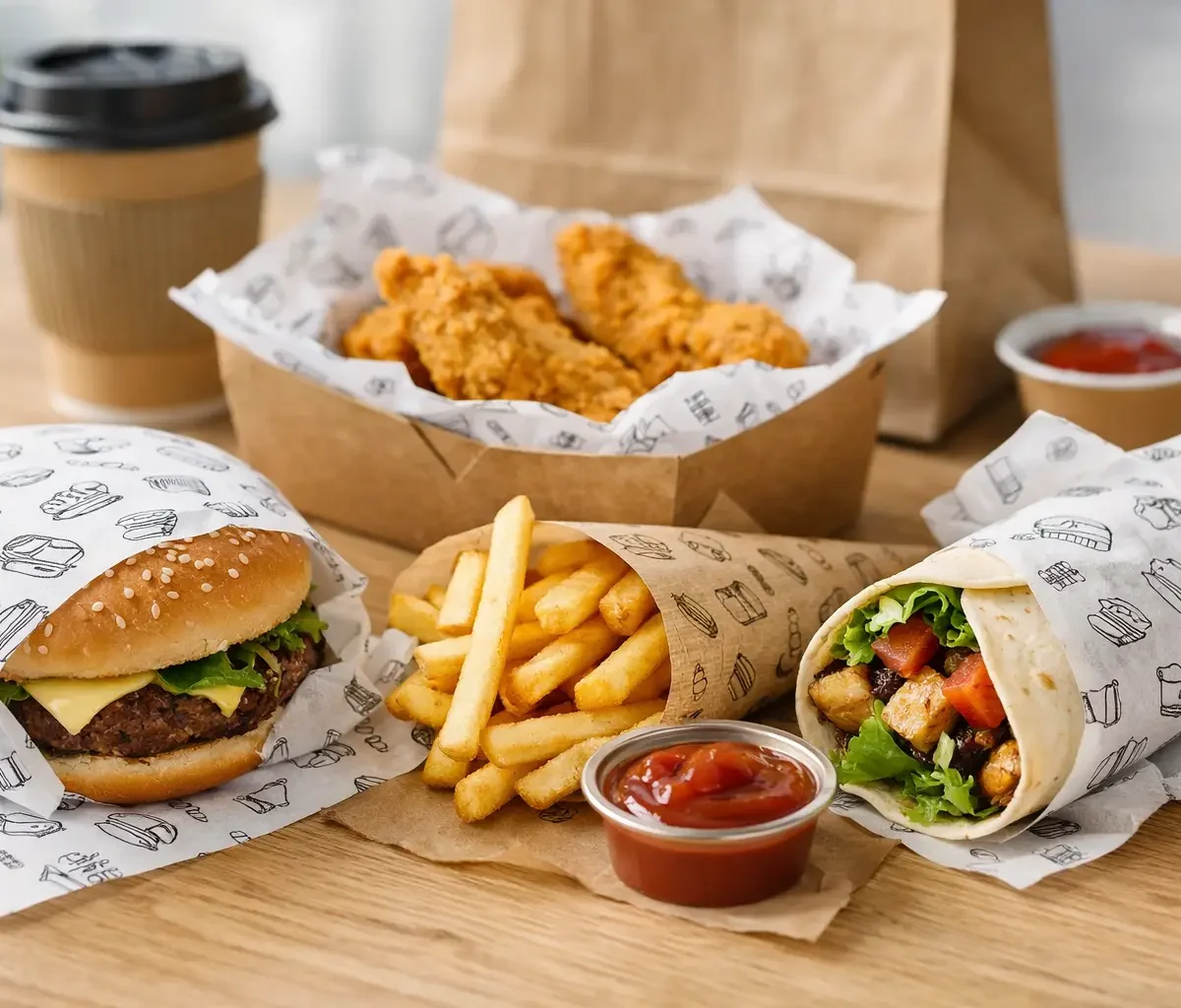
Printed greaseproof paper for takeaway is flexible enough to suit several service styles. In burger shops, it is commonly used to wrap burgers directly or line trays and burger boxes. In sandwich bars and cafés, it works well for paninis, baguettes, toasties and pastries. In fried food outlets, it can line baskets, trays and containers to absorb excess grease and improve presentation.
It also suits deli counters, bakeries and mobile catering setups where speed matters. A pre-cut sheet is quick to grab, easy to fold and simple to integrate into an existing packing routine. That is important during peak periods when staff do not have time for fiddly packaging formats.
There is a practical limit, though. Greaseproof paper is excellent for many hot and freshly prepared foods, but it is not the right answer for every menu item. Very wet dishes, heavily sauced meals or products that need a full leak-resistant seal usually require containers, foil trays, deli bowls or clamshell boxes alongside the paper. In those cases, greaseproof becomes part of the presentation rather than the only pack format.
What buyers should look for before ordering
The first decision is sheet size. Too small, and staff will struggle to wrap the product properly. Too large, and you create waste, slow down packing and increase cost per order. The right size depends on your menu, whether the paper is used for wrapping or lining, and the pack formats already in use.
Paper weight matters as well. A lighter sheet may be suitable for pastries or dry bakery items, while burgers, fried chicken and loaded foods often need a stronger grade that stands up better during service. The finish and print quality also need attention. If the branding looks faint or inconsistent, the whole purpose of printed paper is weakened.
For commercial buyers, the real question is not just how the paper looks on a sample photo. It is how it performs in a live environment. Can staff wrap quickly with it? Does it hold up under heat lamps? Does it become too soft with steam? Does the print still look clean after contact with warm, oily food? These are the operational details that affect repeat ordering.
Branding that works on the counter and on delivery
Good branded packaging does not need to be complicated. In many cases, a repeated logo, simple pattern or one-colour design works better than an overcrowded layout. The goal is clear brand recognition, not forcing every possible message onto one sheet.
For takeaway, the advantage is immediate. A wrapped burger, sandwich or pastry instantly looks more finished. For delivery, the benefit lasts longer because the customer often unpacks the order item by item. Branded greaseproof gives your food a recognisable layer before the customer even reaches the box or tray.
This can also help with consistency across multiple sites or growing businesses. If you are standardising cups, boxes, carrier bags and food wraps, greaseproof paper becomes part of a broader presentation system. That joined-up look is useful whether you run one busy shop or several branches.
Cost versus value – the trade-off buyers actually face
Any bespoke printed item costs more than a plain stock alternative, so it is fair to weigh up whether the spend is justified. For some operators, especially those with very low average order values, plain paper may still be the right short-term choice. If branding is not yet a priority, budget may be better directed towards core containers, lids and bags.
But for many food businesses, the cost difference is easier to justify than expected. Printed greaseproof paper is a relatively accessible branded product compared with larger-format packaging lines. It can improve the look of a wide range of food items without requiring a full packaging overhaul.
There is also value in the practical side. If the paper helps keep boxes cleaner, reduces visible grease marks and gives food a better finish, that supports customer perception in a direct way. In a market where people post food online, leave reviews based on presentation and compare independent operators with bigger brands, that matters.
Matching greaseproof paper to the rest of your packaging
One of the biggest purchasing frustrations for food businesses is having to source different categories from multiple suppliers. Greaseproof paper works best when it is chosen as part of a wider packaging setup rather than as an isolated item.
If you serve burgers, for example, the paper needs to fit your burger boxes, trays or serving baskets. If you are a café, it should sit neatly alongside sandwich wedges, coffee cups, napkins and carrier bags. If you run a fish and chip or chicken shop, it should support your hot food boxes, wrap formats and front-of-house service flow.
That is where category depth becomes useful. Ordering greaseproof, containers, cups, lids, cutlery and cleaning supplies from one wholesale source saves time and reduces the risk of mismatched formats. For busy operators, procurement efficiency is not a small issue. It affects stock control, ordering routines and day-to-day continuity.
Bespoke ordering without overcomplicating it
Many buyers assume custom print means a long, awkward process. In reality, the right supplier should make it straightforward. You need clarity on sheet sizes, print options, minimum order quantities, lead times and how the design will reproduce on the chosen paper.
Before you commit, it helps to be clear about usage. Are you wrapping food directly, lining trays, or doing both? Are you packing for immediate takeaway, or for delivery where the food sits longer before it is opened? Are you ordering for one site, or trying to standardise across a group? Those answers shape the most sensible specification.
For businesses that want a dependable route into branded service items, Grab & Go Packaging Ltd offers bespoke options alongside everyday stock lines, which makes it easier to build a practical packaging range around your actual menu rather than forcing a one-size-fits-all approach.
When plain stock still makes sense
Not every item has to be branded. That is worth saying plainly. If you run high-volume promotions, seasonal menu trials or short-term events, plain greaseproof may be the more efficient choice. The same applies if your menu changes frequently or if you are still testing product formats before standardising.
The commercial decision depends on turnover, brand ambition and how visible the packaging is to the customer. If the sheet is hidden inside a sealed box and rarely noticed, print may add less value. If the food is served wrapped, partially open, tray-lined or photographed often, print tends to work much harder for the spend.
Printed greaseproof paper for takeaway is one of those products that earns attention because it bridges two jobs at once. It helps manage food presentation and it gives your brand a visible place in the order without getting in the way of service. For operators who want packaging that works just as hard as the kitchen, that is usually a sensible place to start.