

What sets successful British restaurants apart in the crowded takeaway and delivery scene often begins with the first touchpoint — the packaging. For food service operators, choosing the right packaging means much more than keeping food safe; it influences how customers perceive your brand before their first bite. With evolving UK regulations and the rising value placed on sustainability, selecting effective packaging becomes a strategic decision blending compliance, customer appeal, and distinctive brand identity that helps your business stand out.
| Point | Details |
|---|---|
| Importance of Packaging | Packaging serves as a crucial marketing tool that communicates brand identity and values, impacting consumer perceptions and purchasing decisions. |
| Sustainability Focus | The UK market is shifting towards sustainable packaging solutions, emphasising the need for businesses to adapt to evolving environmental regulations. |
| Design as Communication | Effective packaging design goes beyond containment, engaging consumers through colour, typography, and imagery to create emotional connections. |
| Legal Compliance Necessity | Adhering to packaging regulations is essential for consumer safety and brand credibility, requiring clear labelling and accurate information disclosures. |
Food packaging has transformed from a purely functional necessity into a sophisticated marketing instrument that speaks volumes about a brand’s identity and values. Modern food businesses recognise that packaging is no longer just about containment, but a critical communication channel with consumers. Critical packaging strategies now encompass multiple dimensions beyond basic product protection.
In the competitive UK food market, packaging serves several strategic marketing functions:
The visual and tactile elements of packaging directly influence consumer perceptions and purchasing decisions. Brand identity emerges through carefully selected colours, materials, and design elements that tell a compelling story. For instance, sustainable packaging can signal environmental consciousness, while premium materials suggest high-end product quality.
Packaging is the silent salesperson that communicates brand values without saying a word.
Moreover, plastic packaging continues to play a transformative role in maintaining product integrity and meeting evolving consumer expectations. It serves not just as a protective layer, but as a dynamic marketing tool that can enhance perceived value and brand recognition.
Pro tip: Invest time in understanding your target audience’s visual preferences and design packaging that resonates with their lifestyle and aspirations.
The foodservice industry encompasses a diverse range of packaging solutions designed to meet evolving consumer demands and regulatory requirements. Packaging options have expanded significantly beyond traditional single-use plastics, reflecting growing sustainability concerns and technological innovations.
Key types of packaging in modern food service include:
The UK market has witnessed a significant shift towards more sustainable packaging solutions. Regulatory compliance now plays a crucial role in packaging selection, with recent legislation pushing businesses towards more environmentally conscious choices. Innovative materials like seaweed-derived films and edible packaging are emerging as exciting alternatives to traditional packaging methods.
Sustainability is no longer optional – it’s a critical consideration in packaging design.
Each packaging type presents unique advantages and challenges. UK food safety regulations require careful evaluation of packaging materials to ensure product integrity, shelf life, and consumer safety while balancing environmental responsibilities.
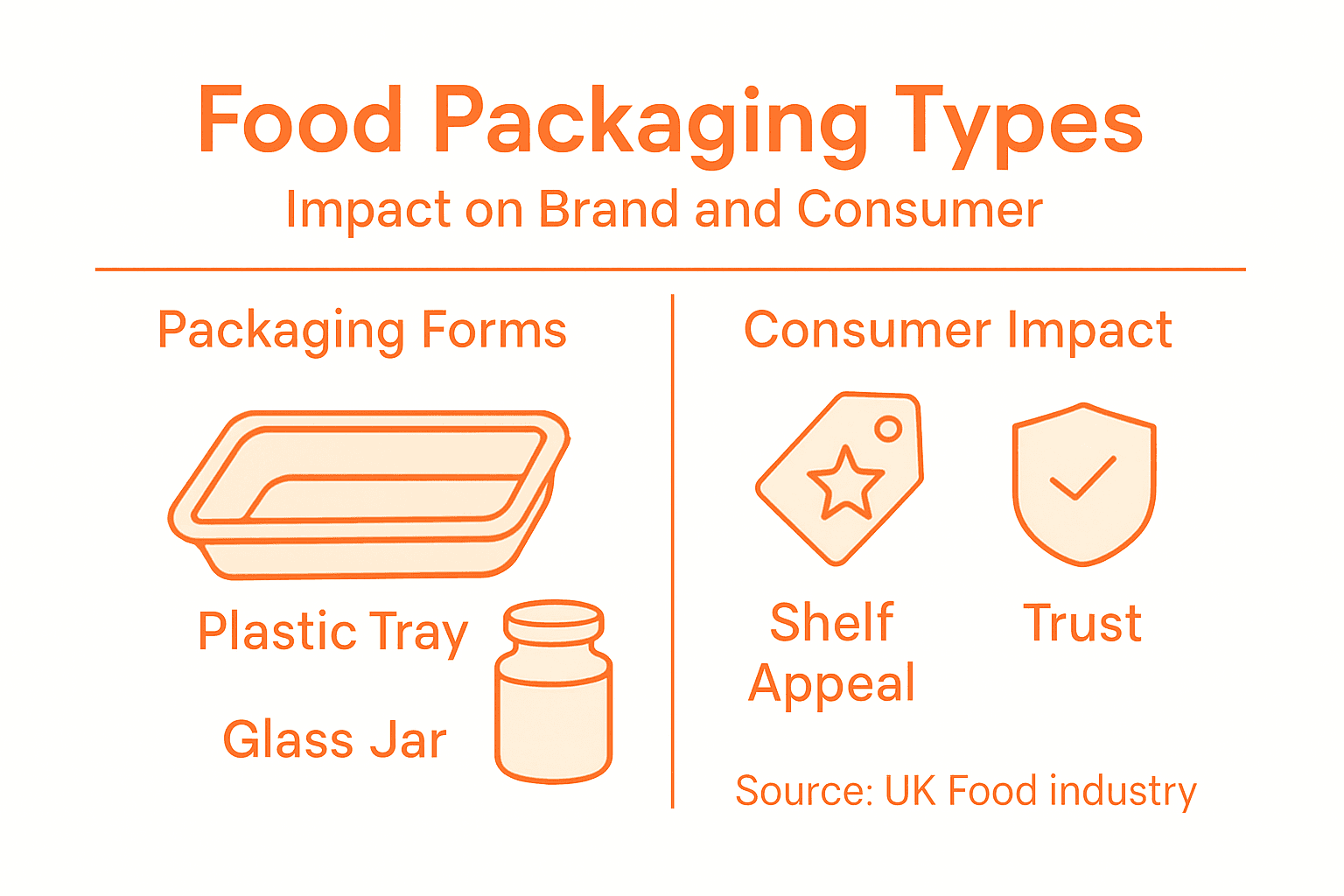
Here’s how key food packaging materials compare in sustainability, regulatory compliance, and consumer appeal:
| Packaging Type | Sustainability Impact | Regulatory Challenges | Consumer Appeal |
|---|---|---|---|
| Single-use plastics | High environmental cost | Strict UK phase-out and recycling targets | Familiar and widespread |
| Biodegradable | Reduced landfill waste | Verification of degradation standards needed | Growing preference in UK |
| Bio-based polymers | Lower carbon footprint | Must prove food safety and compostability | Innovative, eco-conscious |
| Compostable | Minimal waste, composts | Labelling must clarify composting process | Strong eco-friendly image |
| Paper-based | Renewable, recyclable | Must balance barrier properties and strength | Trusted for takeaways |
| Edible films | Zero disposal waste | Allergens and shelf-life must be addressed | Novelty, niche market |
Pro tip: Conduct a comprehensive audit of your current packaging to identify opportunities for more sustainable and cost-effective alternatives.
Packaging design represents a critical communication channel that goes far beyond mere product containment. Modern food businesses understand that packaging is a powerful storytelling medium that can significantly influence consumer perceptions and purchasing decisions.
Key design elements that drive branding and customer experience include:
Brand differentiation emerges through strategic design choices that communicate unique value propositions. Successful packaging transforms from a passive container to an active marketing tool that engages consumers before they even taste the product. The visual and tactile experience becomes an extension of the brand’s narrative.
Packaging design is the silent ambassador of your brand’s identity and values.
Processed food markets increasingly recognise packaging as a strategic communication tool, with design elements carefully curated to create emotional connections. Consumers don’t just buy products; they invest in experiences that resonate with their personal aspirations and lifestyle preferences.

Pro tip: Conduct regular consumer research to understand how your packaging design translates into emotional engagement and brand perception.
UK food packaging regulations have become increasingly complex, reflecting the critical need for consumer safety, transparency, and environmental responsibility. Food businesses must navigate a sophisticated landscape of legal requirements that touch every aspect of packaging design, material selection, and information disclosure.
Key legal compliance elements include:
Regulatory compliance goes beyond mere technical adherence, representing a fundamental commitment to consumer protection and environmental stewardship. Modern packaging must balance intricate legal requirements with marketing objectives, ensuring that every label, material choice, and design element meets stringent national and international standards.
Summary of crucial legal packaging requirements impacting UK food businesses:
| Requirement | Business Risk if Ignored | Compliance Benefit |
|---|---|---|
| Allergen labelling | Fines, consumer harm | Increases buyer trust |
| Nutritional declarations | Product withdrawal | Enables informed choices |
| Material safety standards | Legal action, recalls | Ensures food integrity |
| Environmental disclosures | Reputational damage | Enhances brand credibility |
| Traceability documentation | Supply chain disruption | Eases recall management |
Compliance is not a checkbox, but a comprehensive approach to responsible food packaging.
Consumer understanding of sustainable packaging claims remains a critical challenge, highlighting the importance of clear, accessible labelling. Businesses must bridge knowledge gaps by providing transparent, easily comprehensible information about packaging materials, recycling instructions, and environmental credentials.
Pro tip: Invest in regular legal compliance audits and stay updated with evolving packaging regulations to mitigate potential risks and demonstrate your commitment to consumer safety.
Common packaging development errors can significantly undermine a food brand’s reputation and market performance. Understanding these pitfalls is crucial for businesses seeking to create effective, appealing, and compliant packaging solutions that resonate with consumers and support brand objectives.
Key mistakes food businesses frequently encounter include:
Brand perception hinges on packaging decisions that demonstrate thoughtfulness and strategic thinking. Many organisations inadvertently compromise their market position by making short-sighted packaging choices that prioritise immediate cost savings over long-term brand value and consumer trust.
Packaging is a silent ambassador of your brand’s commitment to quality and responsibility.
UK FMCG packaging development processes reveal that ineffective decision-making can lead to reduced market share and lost competitive advantage. Successful packaging requires a holistic approach that integrates marketing insights, legal compliance, and environmental considerations from the initial design stages.
Pro tip: Conduct comprehensive consumer research and sustainability audits before finalising packaging designs to mitigate potential strategic errors.
The article highlights the vital role packaging plays in creating powerful first impressions and communicating your brand’s unique identity while meeting legal and sustainability requirements. If you are struggling with over-packaging, unclear labelling, or finding the right balance between sustainability and consumer appeal, it is time to rethink your packaging strategy with professional support. At GrabnGo Packaging, we understand the important connection between packaging design and your marketing success.
Explore our wide range of packaging supplies specifically designed for the food service sector including bespoke printed cups and eco-friendly options that help you comply with UK regulations while impressing customers visually and emotionally. Whether you need disposable containers, greaseproof papers, or customised packaging to tell your brand story clearly, our user-friendly platform makes it easy to order reliably at competitive prices. Don’t risk your brand’s reputation with ineffective packaging. Visit GrabnGo Packaging today for tailored solutions that boost your food business and keep you ahead in the competitive market.
Packaging serves as a critical communication channel that conveys brand identity, differentiates products, and influences consumer perceptions. It also creates first impressions and provides essential product information.
The design elements, including colour, typography, and imagery, can significantly trigger emotional responses. Effective packaging engages consumers and enhances their overall experience with the brand, creating strong visual and tactile connections.
Sustainable packaging options reduce environmental impact, appeal to eco-conscious consumers, and comply with regulatory requirements. They can also enhance brand credibility and build trust with consumers who prioritize sustainability.
Brands should avoid over-packaging, neglecting sustainability, poor design communication, inadequate labelling, and using non-recyclable materials. These mistakes can harm brand perception and undermine consumer trust.