
{
"@type": "Article",
"author": {
"url": "https://grabngopackaging.co.uk/",
"name": "Grabngopackaging",
"@type": "Organization"
},
"@context": "https://schema.org",
"headline": "The Essential Guide to Packaging in Takeaway Operations",
"publisher": {
"url": "https://grabngopackaging.co.uk/",
"name": "Grabngopackaging",
"@type": "Organization"
},
"inLanguage": "en",
"articleBody": "Discover the role of packaging in takeaway operations, explore packaging types, food safety standards, branding opportunities, and cost efficiency in our comprehensive guide.",
"description": "Discover the role of packaging in takeaway operations, explore packaging types, food safety standards, branding opportunities, and cost efficiency in our comprehensive guide.",
"datePublished": "2025-10-30T02:38:30.506Z"
}
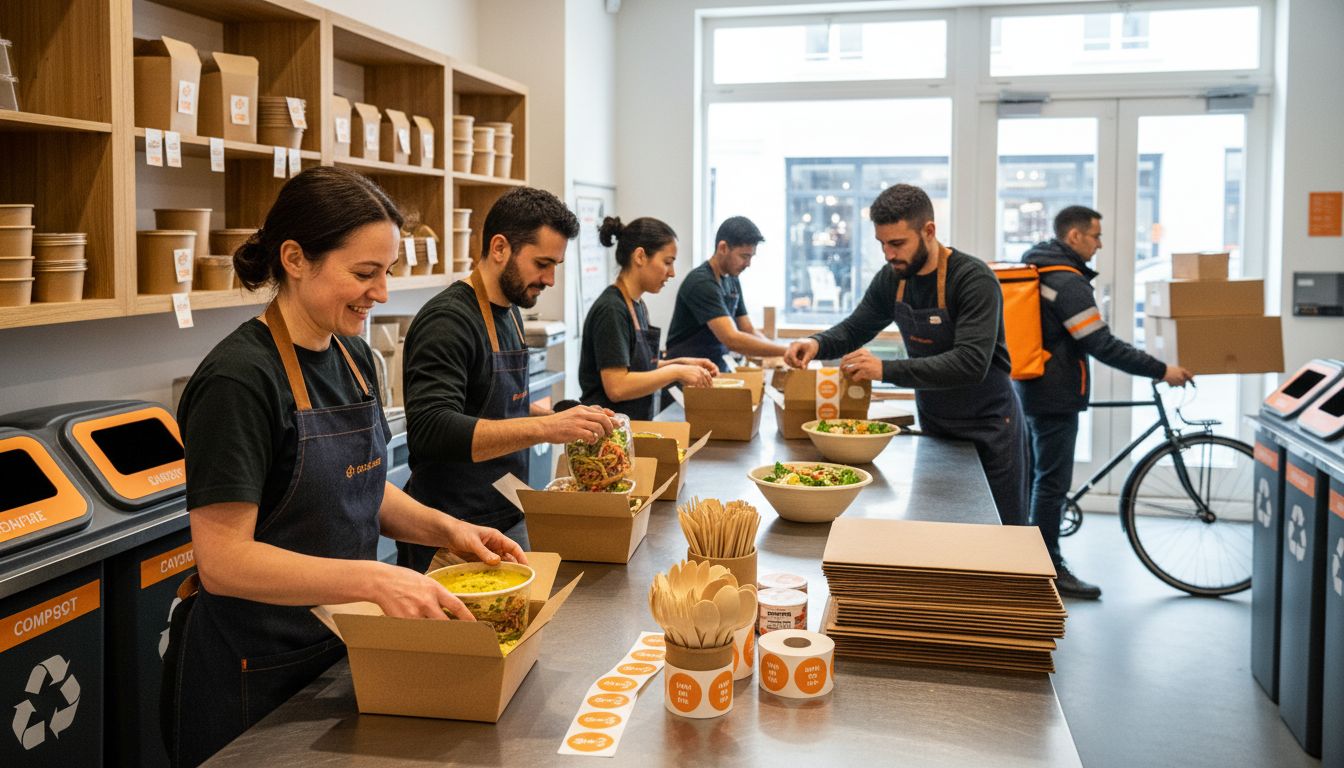
Did you know that over eight million tons of takeaway packaging waste ends up in landfills each year? The right packaging can shape a customer’s entire experience, influence what they remember about your food, and play a vital part in everyday business operations. From keeping meals fresh and safe to showing off your brand and supporting sustainability, good packaging choices make a real difference for restaurants aiming to stand out and succeed.
| Point | Details |
|---|---|
| Role of Packaging | Packaging is essential for maintaining food quality, brand identity, and environmental responsibility in takeaway operations. |
| Types of Packaging | There are four main categories of takeaway packaging, each serving a distinct operational purpose from primary to tertiary packaging. |
| Importance of Food Safety | Packaging must ensure food safety by preventing contamination and maintaining hygiene according to regulatory standards. |
| Sustainability and Compliance | Transitioning to sustainable packaging is crucial for compliance and can also enhance brand reputation and customer loyalty. |
Packaging is far more than just a container for food – it’s a critical operational component that directly impacts customer experience, brand perception, and business efficiency in takeaway operations. Food packaging serves multiple strategic functions beyond simple transportation, acting as a silent ambassador for your business and a complex system of protection, presentation, and communication.
At its core, effective takeaway packaging performs several key functions. First, it maintains food quality and safety during transit, preventing contamination and preserving temperature and texture. Second, it represents your brand’s visual identity, with design choices communicating professionalism, creativity, and commitment to customer experience. Third, packaging plays a crucial environmental role, with increasing consumer demand for sustainable, recyclable, or compostable materials.
The practical considerations of takeaway packaging extend well beyond aesthetic choices. Businesses must balance multiple priorities: cost-effectiveness, durability, thermal insulation, ease of handling, and environmental responsibility. Different food types require specialized packaging solutions – liquid-based dishes need leak-proof containers, hot foods demand heat-retention materials, and delicate items require structured protection. These nuanced requirements mean that selecting the right packaging is a strategic decision that impacts operational efficiency, customer satisfaction, and ultimately, business reputation.
For businesses seeking to optimise their takeaway packaging strategy, understanding these multifaceted roles is crucial. By exploring sustainable packaging options, food service operations can transform packaging from a mere logistical necessity into a powerful brand and operational tool.
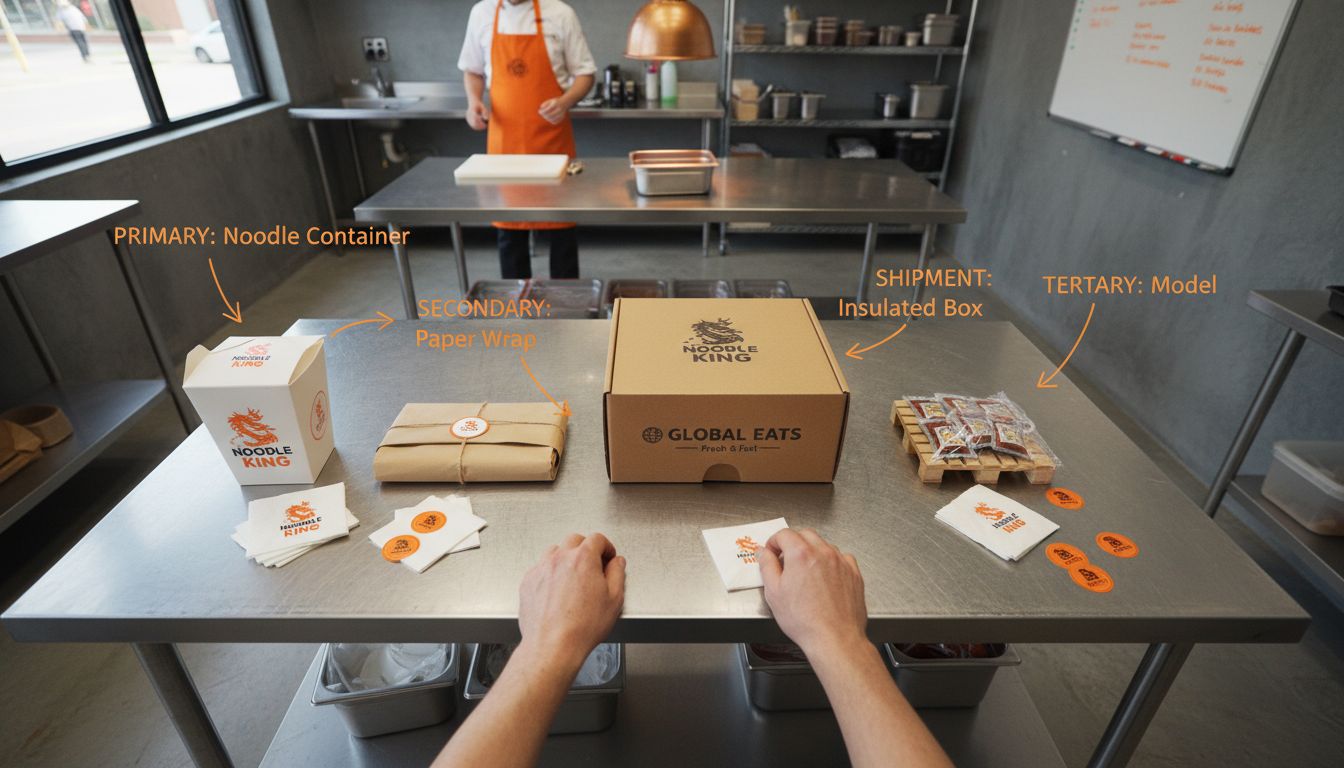
Takeaway packaging is a sophisticated ecosystem of materials and designs, strategically engineered to protect, transport, and present food products effectively. Packaging types range from primary containers holding individual meals to complex systems addressing environmental and operational challenges. According to the UK government guidance, these packaging solutions can be categorised into multiple distinct types, each serving a specific purpose in food service operations.
According to research from government packaging data guidelines, takeaway packaging fundamentally includes four critical categories:
Here’s a summary of takeaway packaging types and their key roles:
| Packaging Type | Primary Role | Typical Materials |
|---|---|---|
| Primary packaging | Direct food contact | Cardboard Plastic Compostable fibre |
| Secondary packaging | Grouping multiple items | Cardboard sleeves Kraft paper |
| Shipment packaging | Delivery and transport | Corrugated boxes Padded envelopes |
| Tertiary packaging | Bulk movement | Wooden pallets Plastic wrap |
Recent regulatory shifts have dramatically transformed packaging strategies, particularly regarding material selection. Compostable takeaway packaging has emerged as a critical solution addressing environmental concerns. As noted in UK government guidelines, businesses are now mandated to move away from single-use plastics, compelling innovative approaches to packaging design. This means traditional plastic cutlery, plates, and containers are being systematically replaced by biodegradable, recyclable alternatives that maintain food safety while reducing environmental impact.
The modern takeaway packaging landscape demands a holistic approach. Businesses must balance multiple considerations: food preservation, thermal management, brand presentation, environmental responsibility, and cost-effectiveness. Packaging is no longer just a functional necessity but a strategic tool communicating a brand’s values, commitment to sustainability, and dedication to customer experience.
Food safety in takeaway packaging is a complex, multi-layered challenge that goes far beyond simple containment. Every aspect of packaging design must meticulously protect food integrity, prevent contamination, and communicate critical information to consumers. According to UK food packaging regulations, this requires a comprehensive approach that balances technical performance with legal compliance and consumer protection.
According to government food labelling guidelines, packaging must meet several critical standards:
Material selection plays a pivotal role in maintaining food quality. Packaging must not only protect against physical contamination but also preserve temperature, prevent moisture loss, and resist chemical interactions with food. As outlined in government packaging waste regulations, materials must simultaneously meet stringent safety requirements and environmental standards. This means selecting packaging that minimises heavy metal concentrations, supports recyclability, and can be either biodegradable or suitable for energy recovery.
The ultimate goal of food packaging transcends mere protection – it’s about preserving the sensory experience of the meal. Compostable takeaway packaging represents a forward-thinking approach that addresses safety, quality, and environmental responsibility. By carefully engineering packaging that maintains food temperature, prevents leakage, and communicates nutritional information, takeaway businesses can transform packaging from a passive container into an active guardian of food quality and consumer trust.
Packaging has evolved from a mere functional necessity to a powerful brand communication tool that directly shapes customer perception and experience. In today’s competitive food service landscape, every aspect of packaging – from material choice to design aesthetics – becomes a strategic opportunity to differentiate and connect with consumers. According to UK packaging guidelines, this goes beyond visual appeal, encompassing transparency, sustainability, and brand storytelling.
According to government packaging regulations, effective packaging must achieve multiple strategic objectives:
The visual and tactile elements of packaging play a crucial psychological role in customer engagement. Color schemes, texture, typography, and structural design all contribute to creating an emotional connection that extends beyond the physical product. Compostable takeaway packaging represents an excellent example of how packaging can simultaneously communicate brand values of innovation and environmental responsibility, appealing to increasingly conscious consumers.
Ultimately, packaging is a silent brand ambassador. It communicates a business’s commitment to quality, sustainability, and customer care before the first bite is even taken. By thoughtfully designing packaging that balances functional excellence with aesthetic appeal, takeaway businesses can transform a simple container into a powerful marketing tool that enhances brand loyalty and customer satisfaction.
Packaging sustainability has become a critical strategic imperative for takeaway businesses, transforming from a peripheral concern to a central operational challenge. The landscape of food service packaging is rapidly evolving, driven by stringent regulatory requirements and increasing consumer demand for environmentally responsible solutions. Businesses must now navigate a complex ecosystem of cost management, environmental compliance, and brand reputation.
According to government guidelines on single-use plastics, businesses face significant challenges in transitioning away from traditional packaging materials:
The economic calculus of sustainable packaging extends beyond immediate financial considerations. Compostable takeaway packaging represents an investment in long-term brand value, customer loyalty, and environmental stewardship. While sustainable materials might initially increase costs, they offer substantial benefits in terms of reduced waste management expenses, enhanced brand perception, and alignment with evolving consumer expectations.
Regulatory compliance is no longer optional but a fundamental business requirement. As outlined in government packaging waste guidelines, businesses must systematically classify, manage, and responsibly dispose of packaging materials. This means developing comprehensive waste management strategies that go beyond mere compliance, transforming environmental responsibility into a competitive advantage. By proactively addressing sustainability, takeaway operations can turn potential regulatory challenges into opportunities for innovation, cost optimization, and meaningful environmental impact.
Packaging plays a vital role in protecting food quality, promoting your brand, and meeting sustainability goals. If you are navigating challenges like finding cost-effective, durable, and eco-friendly options that maintain food safety while enhancing customer experience, you are not alone. Businesses need packaging solutions that balance these demands to succeed in the competitive takeaway market.
Discover how GrabnGo Packaging can empower your food service operation with a wide range of specialised packaging supplies designed to solve these exact problems. From compostable takeaway packaging to bespoke printed cups, their extensive selection supports your goals for quality, sustainability, and memorable branding. Act now to secure reliable packaging that safeguards your food and reflects your business values with ease.
There are four main types of takeaway packaging: primary packaging (individual meal containers), secondary packaging (grouped containers such as boxes), shipment packaging (for delivery and transport), and tertiary packaging (bulk transport solutions like pallets).
Takeaway packaging ensures food safety by using materials that prevent contamination, maintain temperature, and minimize moisture loss. It must also comply with regulations that require clear labeling of food contents and allergen information.
Branding in takeaway packaging is crucial as it communicates brand identity and values. Well-designed packaging enhances customer experience, creates a memorable unboxing moment, and reflects the brand’s commitment to sustainability and quality.
Businesses can balance cost and sustainability by investing in compostable packaging that, while initially more expensive, can lead to long-term savings through waste management and improved brand perception. Compliance with environmental regulations must also be factored into the overall cost strategy.