Cart 0
Recyclable plastic explained: a UK food service owner’s guide
Many food service operators in the UK are running packaging that they believe is recyclable, only to discover it is costing them more in compliance fees and doing little for their sustainability goals. The UK’s plastic packaging recycling rate sits at around 52%, yet domestic recycling capacity covers only 23% of current needs. That gap is not just an environmental problem. It is a financial and reputational risk for every food business owner who has not yet got to grips with what recyclable plastic actually means in practice.
Table of Contents
- What makes a plastic recyclable in the UK?
- Plastics that are not recyclable: common traps for food businesses
- How is recyclability assessed for compliance and EPR fees?
- Best practices for designing truly recyclable food service plastic packaging
- The role of collection, sorting, and recycling infrastructure
- Next steps: sourcing recyclable and compliant packaging solutions
- Frequently asked questions
Key Takeaways
| Point | Details |
|---|---|
| UK recyclable plastics | Most widely recyclable plastics for food packaging are clear PET, HDPE, and PP if clean and single-material. |
| Common pitfalls | Black plastics, polystyrene, and contaminated films are not recyclable in regular UK collections. |
| RAM rating impact | The RAM Green/Amber/Red system directly affects compliance and packaging fees from 2026. |
| Design for recycling | Pack mono-materials, avoid full-coverage sleeves, and rinse containers to ensure recyclability. |
| Infrastructure matters | UK recycling infrastructure covers only a portion of needs, making material choice and clean collection vital for actual recycling. |
What makes a plastic recyclable in the UK?
With that backdrop in mind, let’s clarify what ‘recyclable’ means under UK law and practice for food packaging plastics.
A plastic is only genuinely recyclable if it can be collected, sorted, and reprocessed at scale within the UK. That sounds straightforward, but the reality is more nuanced. Not every plastic that carries a recycling symbol is actually processed by your local authority. The symbol tells you the material can be recycled in theory, not that it will be in practice.
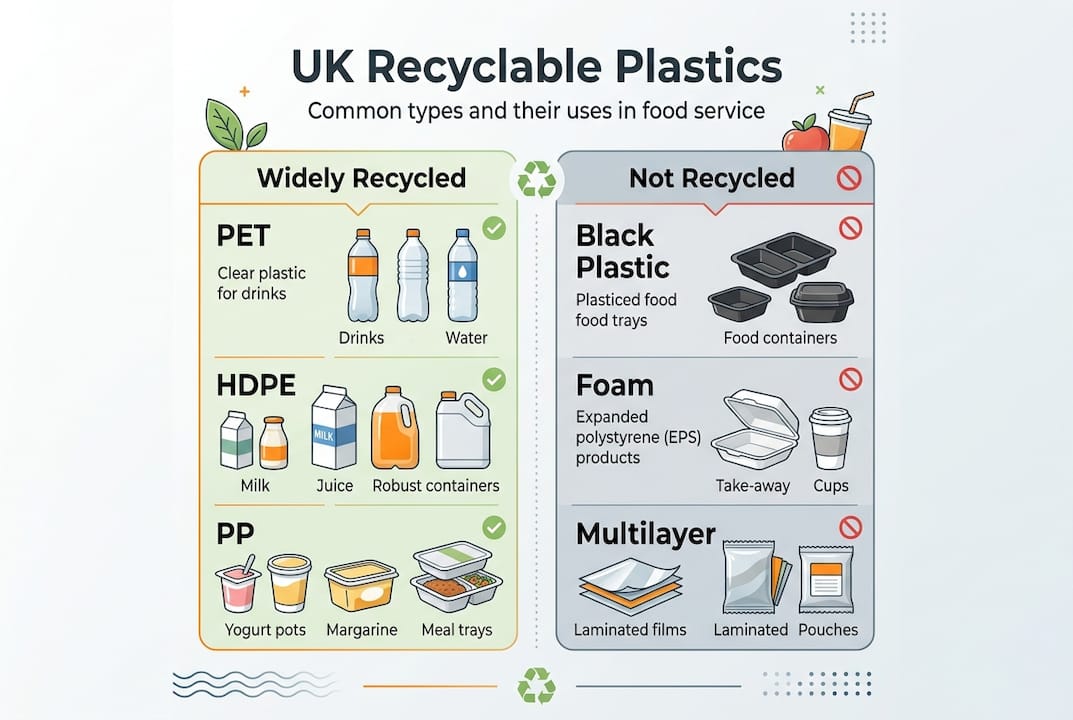
The three plastics most widely accepted in UK food service recycling streams are:
- PET (polyethylene terephthalate): Clear bottles, salad trays, and cold drink cups. Widely collected and reprocessed.
- HDPE (high-density polyethylene): Milk bottles, sauce containers, and rigid food tubs. Strong end markets in the UK.
- PP (polypropylene): Hot food containers, yoghurt pots, and microwaveable trays. Increasingly accepted kerbside.
| Plastic type | Common food use | Widely recycled in UK? |
|---|---|---|
| PET | Cold cups, trays, bottles | Yes |
| HDPE | Sauce bottles, rigid tubs | Yes |
| PP | Hot food containers, lids | Mostly yes |
| PVC | Cling film, some trays | No |
| EPS | Foam cups, trays | No |
| Black plastic | Takeaway containers | Rarely |
Mono-materials, meaning packaging made from a single polymer with no mixed layers or coatings, are strongly preferred. A clear PET tray with a PP lid is harder to recycle than a tray and lid both made from PET. Our UK food service recycling guide explains this in more detail, and the government’s Simpler Recycling guidance sets out what local authorities are expected to collect from March 2026 onwards.
Pro Tip: When sourcing new packaging, always ask your supplier to confirm the polymer type and whether it is a mono-material. If they cannot answer that question, look elsewhere.
For a broader overview of materials, our materials guide for food businesses covers the full range of options available to UK caterers.
Plastics that are not recyclable: common traps for food businesses
Understanding what qualifies as recyclable is one thing, but equally important is knowing what to avoid. Here are the common pitfalls business owners face.
Black and dark-coloured plastic containers are one of the most common traps. Optical sorting machines at recycling facilities use near-infrared technology to identify polymer types. Black pigment absorbs infrared light, making the item invisible to the machine. It gets sorted as contamination and sent to landfill or incineration, regardless of what polymer it is made from.
The following materials are not widely collected or recycled in the UK:
- PVC: Found in some cling films and rigid trays. Contaminates PET streams.
- Polystyrene (EPS and HIPS): Foam cups, foam trays, and some rigid containers. Almost no kerbside collection.
- Multi-layer laminates: Pouches and sachets combining plastic with foil or paper. Cannot be separated.
- Flexible films: Carrier bags, cling wrap, and soft pouches. Rarely accepted kerbside.
| Packaging type | Material | Recyclable kerbside? |
|---|---|---|
| Black takeaway box | PP or PET | Rarely |
| Foam cup | EPS | No |
| Sauce sachet | Multi-layer laminate | No |
| Cling film | PVC or LDPE | No |
| Clear PET tray | PET | Yes |
Contaminants matter too. Food residue, incompatible adhesive labels, and barrier coatings can all render an otherwise recyclable item non-recyclable. You do not need spotless packaging, but heavy grease or food contamination is a problem. For practical guidance on reducing waste at source, see our reduce packaging waste guidance, and for alternatives to problematic plastics, our eco-friendly disposable options are worth exploring.
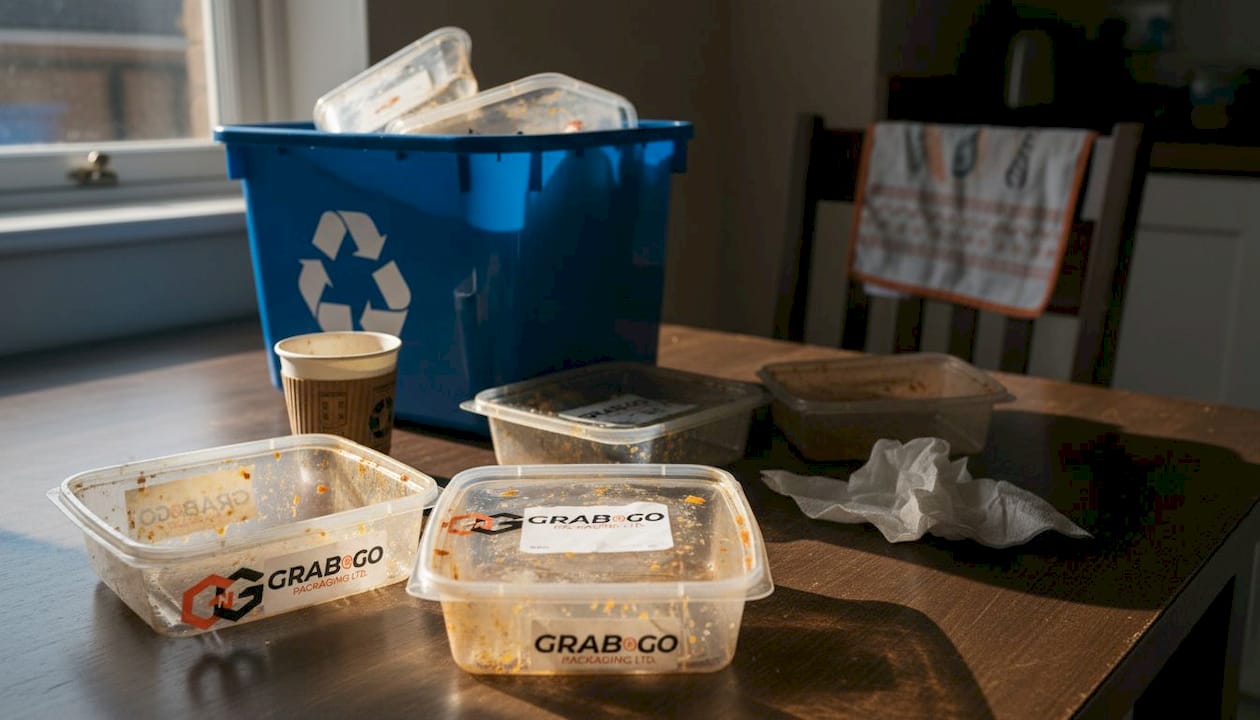
Pro Tip: If you are currently using black takeaway containers, switching to clear or natural-coloured PP or PET equivalents is one of the fastest wins for your recyclability credentials and your EPR fee rating.
For a full breakdown of which plastics cause problems in UK recycling, UK recycling plastics guidance is a useful reference.
How is recyclability assessed for compliance and EPR fees?
So how do authorities and your suppliers determine what counts as ‘recyclable’ for compliance purposes? The RAM and its colour-coded system hold the answers.
The Recyclability Assessment Methodology, known as the RAM, is the official framework used to grade packaging for Extended Producer Responsibility (EPR) fee modulation in the UK. Under EPR, businesses that place packaging on the market pay fees based on how recyclable that packaging is. The RAM rates packaging Green, Amber, or Red based on sortation, reprocessing capability, and available end markets.
Green means the packaging is recyclable and attracts lower EPR fees. Amber means recyclability is limited or conditional. Red means the packaging is not recyclable and will attract the highest fees from 2026.
Here is how the RAM scoring works in practice:
- Sortation: Can the item be detected and sorted by standard optical equipment? Items smaller than 40mm often fail this step.
- Reprocessing: Is there UK reprocessing capacity for this material at scale?
- End markets: Is there genuine demand for the recycled material?
- Contamination: Does the packaging contain coatings, inks, or labels that disrupt reprocessing?
| RAM rating | Meaning | EPR fee impact |
|---|---|---|
| Green | Recyclable | Lower fees |
| Amber | Limited recyclability | Moderate fees |
| Red | Not recyclable | Highest fees |
The financial stakes are real. With UK recycling capacity covering only 23% of needs, infrastructure pressure will push fees higher for non-compliant packaging. Businesses using Red-rated packaging in 2026 will pay significantly more than those using Green-rated alternatives. Our food packaging best practices resource and catering packaging step-by-step guide both address how to navigate EPR practically. The full RAM guidance is publicly available and worth bookmarking.
Best practices for designing truly recyclable food service plastic packaging
Compliance is crucial, but doing it right is even better for your bottom line and brand. These best-practice steps will help you design or buy the right packaging, every time.
The single most impactful decision you can make is to specify mono-material packaging. Mono-material PET, HDPE, and PP are the gold standard. Incompatible sleeves or labels covering more than 40 to 60% of a container’s surface, barrier coatings, and anti-block agents all reduce recyclability scores under the RAM.
- Choose mono-materials: Specify PET, HDPE, or PP throughout. Avoid mixing polymers in a single pack.
- Avoid full-coverage sleeves: Labels covering most of the container body interfere with sorting. Use spot labels or neck bands instead.
- Check coatings: Some grease-resistant coatings on plastic trays are incompatible with standard reprocessing. Ask your supplier for confirmation.
- Go clear or natural: Coloured and opaque plastics recover far less efficiently. Clear packaging is always the safer choice.
- Rinse where possible: Light food residue is generally accepted, but heavy contamination causes rejection at the sorting facility.
WRAP has tested decontamination protocols for over 400 contaminants and supports a 30% recycled content target by 2030. That means the food-grade recycled plastic market is growing, and packaging you put out today could become tomorrow’s food-safe container if you get the specification right.
Pro Tip: Before finalising any new packaging, ask your supplier for the RAM rating or request the polymer data sheet. A few minutes of due diligence now can save you significant EPR fees later.
For inspiration on what good looks like, browse our top takeaway containers and packaging design tips. Our takeaway packaging hygiene guide also covers how clean packaging supports recyclability. For technical detail, RECOUP recyclability advice and WRAP food-grade recycling are the most authoritative sources available.
The role of collection, sorting, and recycling infrastructure
Even with the right packaging, success depends on the recycling infrastructure. Here is what really happens to your recyclable plastics, and why it matters for your business.
From March 2026, kerbside plastic collection becomes mandatory across England, standardising what local authorities must collect. This is a significant step forward, but it does not mean every plastic will suddenly be recycled. The infrastructure for rigid plastics is well established. Flexible films and pouches still lag badly due to limited reprocessing capacity.
Here is what the journey looks like for a recyclable plastic food container:
- Collection: Picked up kerbside or via commercial waste collection.
- Sorting facility (MRF): Optical sorters identify polymer type by infrared signature. Items under 40mm or black plastics are rejected.
- Reprocessor: Sorted plastics are washed, shredded, and pelletised for reuse.
- End market: Pellets are sold to manufacturers for new packaging or products.
Clear PET and HDPE have the strongest end markets. Rigid plastics recover at 97% efficiency for clear PET, dropping to just 15% for coloured variants. Flexible plastics recover at only 29%.
Closed-loop recycling is worth understanding too. This is where used packaging is reprocessed back into food-grade material, creating a genuine circular loop. Under EPR rules, closed-loop recycling can qualify for cost offsets if the material is kept unmixed and meets food-grade standards. It is a more demanding process, but the financial and environmental benefits are real. Our sustainable disposables guide covers how to integrate these principles into your day-to-day purchasing.
Next steps: sourcing recyclable and compliant packaging solutions
Having a clear understanding is just the first step. Here is how you can take action and upgrade your packaging with confidence.
At Grab & Go Packaging, we work with food service businesses across the UK to source packaging that meets both practical and compliance needs. Whether you are switching away from black containers, looking for mono-material alternatives, or trying to understand your EPR obligations, we can help you make the right choices without the guesswork.

Our sustainable packaging for catering range is curated with recyclability in mind, covering everything from clear PET trays to HDPE containers that score well under the RAM. If you want to understand the broader picture before buying, our food packaging design tips and food packaging materials guide give you the knowledge to make confident, compliant decisions. Getting your packaging right in 2026 is not just about avoiding fines. It is about building a business that customers trust and regulators respect.
Frequently asked questions
Which plastics are actually recycled in the UK food sector?
Clear PET, HDPE, and PP are the most commonly recycled plastics from food packaging in the UK, provided they are collected clean and as mono-materials.
How do I know if packaging is recyclable under UK food service rules?
It must be a mono-material, larger than 40mm with clean polymers, free from incompatible labels or coatings, and included in your local authority’s collection scheme.
Are black takeaway containers recyclable?
Most black plastic containers are not recycled in the UK because optical sorting machines cannot detect them. Switching to clear or natural-coloured alternatives is strongly advised.
Can flexible films and pouches be recycled with other plastics?
Flexible films and pouches are rarely accepted kerbside and typically require specialist collection schemes to avoid going to landfill.
What is ‘closed-loop recycling’ for food packaging?
Closed-loop recycling means used packaging is reprocessed into new food-grade items. Under EPR rules, closed-loop recycling allows cost offsets if the material is kept unmixed and meets food-grade standards.
Recommended
- What is recyclable packaging: a UK food service guide – Grab & Go Packaging
- What is PP plastic? A guide for UK food businesses – Grab & Go Packaging
- Food packaging materials guide for UK food businesses 2026 – Grab & Go Packaging
- Sustainable disposables for eco-friendly food service in 2026 – Grab & Go Packaging
- What is foodservice coffee? Guide for SW UK hospitality