Cart 0
Personalised Coffee Cups Wholesale Guide
A customer leaves your counter with a flat white in hand, and your branding walks out with them. That is the real value of personalised coffee cups wholesale. For cafés, kiosks, bakeries, mobile coffee units and takeaway operators, printed cups are not just a packaging extra. They are part of service, presentation and repeat recognition.
Buying wholesale also changes the economics. Unit cost comes down, stockholding becomes easier to plan, and you can align your cups with lids, carriers, napkins and other front-of-house essentials. For busy operators, that matters just as much as the print itself.
Why personalised coffee cups wholesale makes commercial sense
Single-use coffee cups are one of the most visible items in any grab-and-go business. Unlike a burger box or deli bowl, they spend time in the customer’s hand, on desks, in cars and on high streets. A plain cup does the job. A printed cup does the job and promotes the business.
The wholesale model works best when coffee is a daily sales line rather than an occasional add-on. If you are serving a steady volume of americanos, lattes, cappuccinos and teas, customised cups stop being a novelty purchase and become a practical stock line. The more consistent your usage, the easier it is to forecast quantity, choose the right pack sizes and keep ordering efficient.
There is also a branding advantage for smaller operators. Independent cafés and local takeaways often assume custom print is mainly for chains. In practice, bespoke cups can be a sensible move for smaller sites too, provided the design is clean and the order quantity fits real usage.
Choosing the right cup format for your service
The best personalised cup is the one that fits the way you trade. Size, wall type and lid compatibility all affect cost, storage and day-to-day use.
Most hot drink ranges start with standard sizes such as 8oz, 12oz and 16oz. An 8oz cup suits flat whites, small coffees and children’s hot drinks. A 12oz cup is often the all-rounder for regular takeaway coffee. A 16oz cup works for larger drinks and higher-margin specials, but it also takes up more storage space and may not be necessary for every menu.
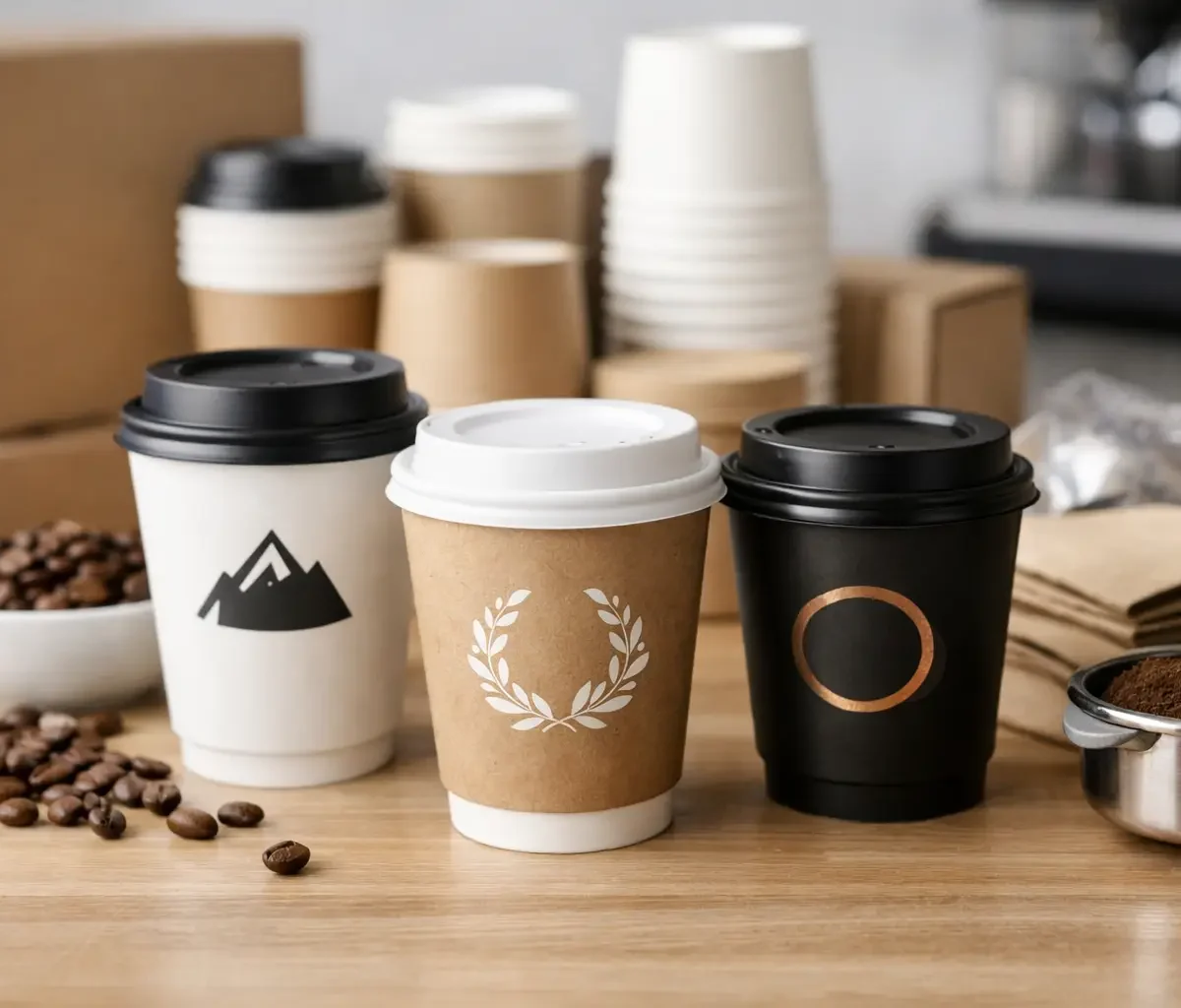
Wall construction matters too. Single wall cups are cost-effective and work well where drinks are served quickly with sleeves available if needed. Double wall cups give better insulation and a more premium feel, which can improve the customer experience for hotter drinks. Ripple wall cups offer grip and heat protection, though the print finish and overall look will differ from smoother cup styles.
It also pays to think beyond the cup itself. If your lids, sleeves and cup carriers come from different suppliers, small inconsistencies can create service issues. A cup that prints well but does not match your lid stock is not a good buy. For that reason, many buyers prefer to source cup ranges as part of a wider packaging order.
Match print decisions to how customers buy
If most customers grab a latte on the way to work, clear branding on a 12oz cup may deliver the best return. If your menu is broader and includes hot chocolate, seasonal drinks or multiple sizes of tea, you may need a coordinated printed range rather than a single hero cup.
That is where it helps to treat printed cups as an operational category, not a one-off marketing project. The design should work across your actual drink mix, not just look good on a sample.
What to include in a printed cup design
Simple usually works best. A logo, strong brand colour, clean typography and enough contrast to stay readable on the cup surface will go further than overloading the artwork. Coffee cups are viewed quickly, often at arm’s length, and usually in motion. Clarity wins.
For many businesses, the best result comes from using existing brand elements already seen on shopfronts, menus or social media. That keeps the look consistent. If your business uses printed greaseproof paper, takeaway bags or food boxes, cups should sit comfortably alongside them rather than feeling like a separate design job.
There are trade-offs. Dark, heavy coverage can look stylish, but it may affect print cost depending on the specification. Highly detailed artwork can lose impact on smaller cup sizes. Seasonal designs can be effective for promotions, but only if your ordering pattern is tight enough that you do not end up carrying old stock after the campaign finishes.
Keep practical information in mind
Hot cup printing still needs to support service. Baristas and counter staff should be able to write on cups where needed. Drink identification matters, especially in busy morning periods. If every cup is fully saturated with print and there is nowhere to mark an order, speed can suffer.
How much stock to order
This is where many businesses either overbuy or play too safe. Ordering too much can tie up cash and storage space. Ordering too little can push your unit cost up and create repeat admin.
A sensible starting point is average weekly usage by cup size, then forecast over a realistic reorder period. If you sell 1,000 hot drinks a week and 70 per cent go into 12oz cups, your main printed volume should reflect that rather than being split evenly across sizes.
Seasonality matters as well. Coffee volume can shift with weather, location and customer mix. A city centre coffee bar may peak differently from a school-run café or a forecourt unit. If your business sees winter surges, order planning for personalised coffee cups wholesale should account for those peaks rather than relying on annual averages.
Storage is another factor. Cases of cups are light but bulky. Before committing to larger wholesale quantities, check that back-of-house space can handle the volume without disrupting other stock lines such as lids, containers, bags and cleaning supplies.
Cost, value and where margins really sit
Printed cups cost more than plain cups. That much is obvious. The better question is whether they improve the overall value of your packaging spend.
For some businesses, the answer is yes because branded presentation supports premium pricing or encourages repeat custom. For others, the gain is more about consistency and professionalism, especially if they are building a recognisable local brand.
It depends on the type of site. A specialist coffee shop with strong footfall may get clear value from bespoke cups because each drink is a visible brand touchpoint. A takeaway where hot drinks are a minor sideline may be better off putting budget into stock reliability across broader packaging categories first.
That is why wholesale buying should be viewed in context. The right decision is not always the cheapest cup. It is the cup that fits service speed, customer expectation, brand image and realistic sales volume.
Working with one supplier saves time
Buying cups from one place, lids from another and food packaging from somewhere else can look workable on paper. In practice, it creates more admin, more deliveries and more room for mismatch.
For operators buying across multiple categories, there is a clear advantage in using a packaging supplier that understands hospitality purchasing as a whole. If you are already ordering coffee cups, smoothie cups, deli containers, burger boxes, pizza boxes, bags, cutlery and cleaning supplies, folding bespoke cup orders into that process is simply more efficient.
That is one reason businesses use Grab & Go Packaging Ltd. It gives buyers access to everyday stock lines and bespoke branded packaging through one trade-focused source, which helps keep ordering straightforward.
Questions to ask before placing a wholesale order
Before approving artwork or committing to volume, make sure the basics are covered. Check the cup sizes you genuinely need, whether your current lids are compatible, what lead times apply, and how the print will sit across your wider packaging range. Also confirm minimum order quantities and whether the design remains suitable if your menu or branding shifts in the next few months.
These checks sound obvious, but they prevent expensive drift. A custom cup should support service from day one, not create workarounds for staff later.
A better way to think about branded cups
The strongest wholesale packaging decisions are rarely about one product in isolation. They come from looking at the full customer journey – what the drink looks like leaving the counter, how easy it is for staff to serve, how reliably you can reorder, and whether the packaging reflects the standard of the business.
If your coffee offer is part of daily trade, personalised cups are not just a marketing extra. They are a working part of your front-of-house setup. Get the format, print and ordering level right, and they do more than carry coffee. They help carry the business properly.