Cart 0
Sustainable disposables for eco-friendly food service in 2026
Not all disposable packaging harms the environment equally. Material choice, certification standards, and disposal methods determine whether your food service operation truly reduces its ecological footprint or simply shifts the problem elsewhere. UK regulations now mandate specific recycled content thresholds, ban certain plastics outright, and transfer disposal costs to producers, making informed packaging decisions essential for compliance and profitability. This guide clarifies sustainable disposable terminology, explains regulatory requirements, compares material options, and provides practical recommendations for food service professionals seeking genuinely eco-friendly packaging solutions.
Table of Contents
- What Is Sustainable Disposables And Which Materials Are Used For Food And Beverage Packaging?
- UK Regulations And Market Trends Shaping Sustainable Disposables In 2026
- Material Choices For Sustainable Food Packaging And Their Suitability For Different Food Types
- Challenges And Trade-Offs In Sustainable Disposables For Food Service Operations
- Explore Sustainable Packaging Solutions With Grab & Go Packaging
Key takeaways
| Point | Details |
|---|---|
| Material certification matters | EN 13432 certifies industrial compostability whilst TÜV OK Compost Home confirms home composting suitability |
| UK regulations drive choices | Plastic Packaging Tax, SUP bans, and EPR shift costs and restrict materials from 2023 onwards |
| Disposal infrastructure limits options | Compostable packaging requires industrial facilities that many UK councils lack for proper breakdown |
| Contamination risks affect viability | Grease and food residue compromise both recycling streams and composting effectiveness |
| Cost premiums require justification | Sustainable disposables cost 15-30% more but reduce waste levies and meet compliance requirements |
What is sustainable disposables and which materials are used for food and beverage packaging?
Sustainable disposables represent single-use packaging engineered to minimise environmental impact through material selection, manufacturing processes, and end-of-life disposal pathways. These products aim to replace conventional plastic packaging whilst maintaining functionality for food service applications. The sustainability claim depends entirely on proper disposal, material composition, and local waste infrastructure compatibility.
Three distinct categories define sustainable disposables, each with specific environmental pathways. Biodegradable materials break down naturally through microbial action, though timescales vary dramatically from weeks to decades depending on conditions. Compostable products meet stricter standards, decomposing into nutrient-rich compost within defined timeframes under specific temperature and moisture conditions. Key methodologies include industrial composting meeting EN 13432 standards, home composting certified by OK Compost Home, and recycling where materials remain clean and uncontaminated. Recyclable disposables enter circular economy systems when properly sorted and processed through established collection infrastructure.
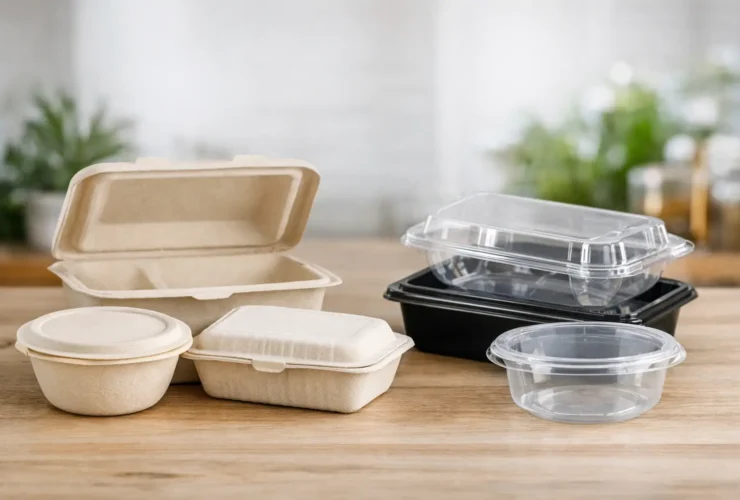
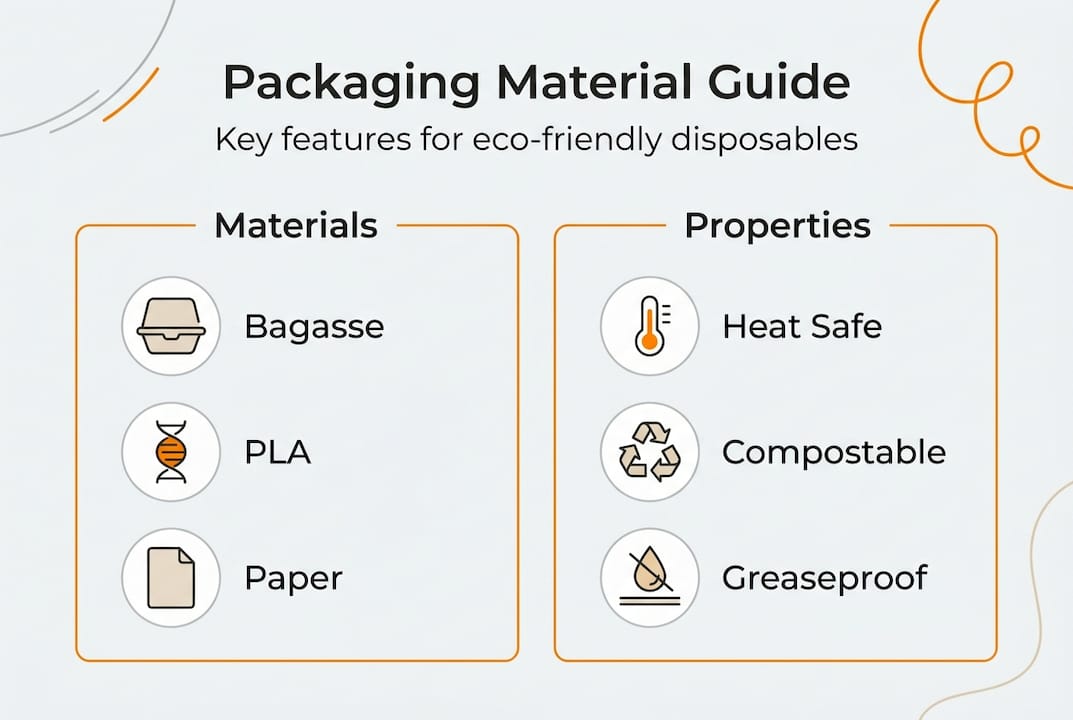
Food service professionals encounter several primary materials when sourcing sustainable packaging. Paper and card products offer familiar recyclability but require grease-resistant coatings for many applications. Bagasse, derived from sugarcane fibre waste, provides excellent heat resistance and grease barriers whilst composting effectively. Moulded fibre products use recycled paper pulp shaped into containers and trays suitable for hot foods. PLA (polylactic acid) comes from fermented plant starches, offering transparency similar to conventional plastic but requiring industrial composting facilities. CPLA adds crystallisation to PLA, improving heat resistance for hot beverages and foods whilst maintaining compostability credentials.
Material selection requires matching packaging properties to food characteristics and available disposal routes. Hot, greasy foods demand heat-stable, moisture-resistant materials like bagasse or CPLA. Cold items and dry goods suit PLA or paper-based options. Certification labels verify claims, with EN 13432 confirming industrial compostability and various recycling symbols indicating material streams. Understanding why single-use packaging remains necessary in certain food service contexts helps justify material choices whilst pursuing sustainability goals.
Pro Tip: Always verify that your chosen sustainable disposable matches your local council’s waste collection capabilities before committing to bulk orders, as certification alone does not guarantee proper disposal.
UK regulations and market trends shaping sustainable disposables in 2026
UK packaging regulations create financial incentives and legal requirements that directly impact material choices for food service operations. The Plastic Packaging Tax, implemented in April 2022, imposes £217.85 per tonne on packaging containing less than 30% recycled content, significantly increasing costs for virgin plastic disposables. This tax applies to packaging manufactured in or imported into the UK, affecting both producers and end users through supply chain price adjustments.
The single-use plastic ban, effective from October 2023, prohibits supply of specific items including plastic cutlery, plates, polystyrene food containers, and beverage stirrers across England. Scotland and Wales implemented similar restrictions with minor variations in scope and timing. These bans force immediate material substitution for affected products, driving demand for compliant alternatives.
Extended Producer Responsibility schemes shift waste management costs from local authorities to packaging producers and importers. From 2024 onwards, businesses handling over 50 tonnes of packaging annually must register and pay fees based on packaging weight and recyclability. These costs cascade through supply chains, making sustainable materials with better end-of-life profiles increasingly cost-competitive despite higher upfront prices.
| Regulation | Implementation | Impact on Food Service |
| — | — |
| Plastic Packaging Tax | April 2022 | £217.85/tonne on packaging with under 30% recycled content |
| Single-Use Plastic Ban | October 2023 | Prohibits plastic cutlery, plates, polystyrene containers |
| Extended Producer Responsibility | 2024 onwards | Producers pay waste management costs based on packaging weight |
| Deposit Return Scheme | Expected 2027 | May affect beverage container choices and logistics |
Market trends reflect these regulatory pressures and growing consumer sustainability expectations. Compostable packaging captured 12% of UK food service disposables market share in 2025, up from 7% in 2023. The broader sustainable packaging market reached £8.2 billion valuation in 2025 with projected growth to £11.4 billion by 2028. Investment in composting infrastructure remains inconsistent across regions, creating disposal challenges that limit compostable packaging effectiveness despite market growth.
Food service businesses must navigate this evolving landscape by selecting materials that meet current regulations whilst anticipating future restrictions. Understanding food packaging best practices for UK catering operations helps align material choices with compliance requirements and operational needs.
Material choices for sustainable food packaging and their suitability for different food types
Each sustainable material offers distinct performance characteristics, disposal requirements, and cost implications that determine suitability for specific food service applications. Matching material properties to food type, service style, and disposal infrastructure maximises both functionality and environmental benefits.
Bagasse and moulded fibre products excel in applications requiring heat resistance and grease barriers. These materials withstand temperatures up to 220°C, making them ideal for hot foods like curries, pasta dishes, and fried items. Bagasse packaging demonstrates superior grease resistance without requiring plastic linings or PFAS coatings, addressing emerging chemical safety concerns. Industrial composting facilities readily process these materials alongside food waste, simplifying disposal logistics. Limitations include lower structural strength when saturated and slightly higher costs compared to conventional alternatives.
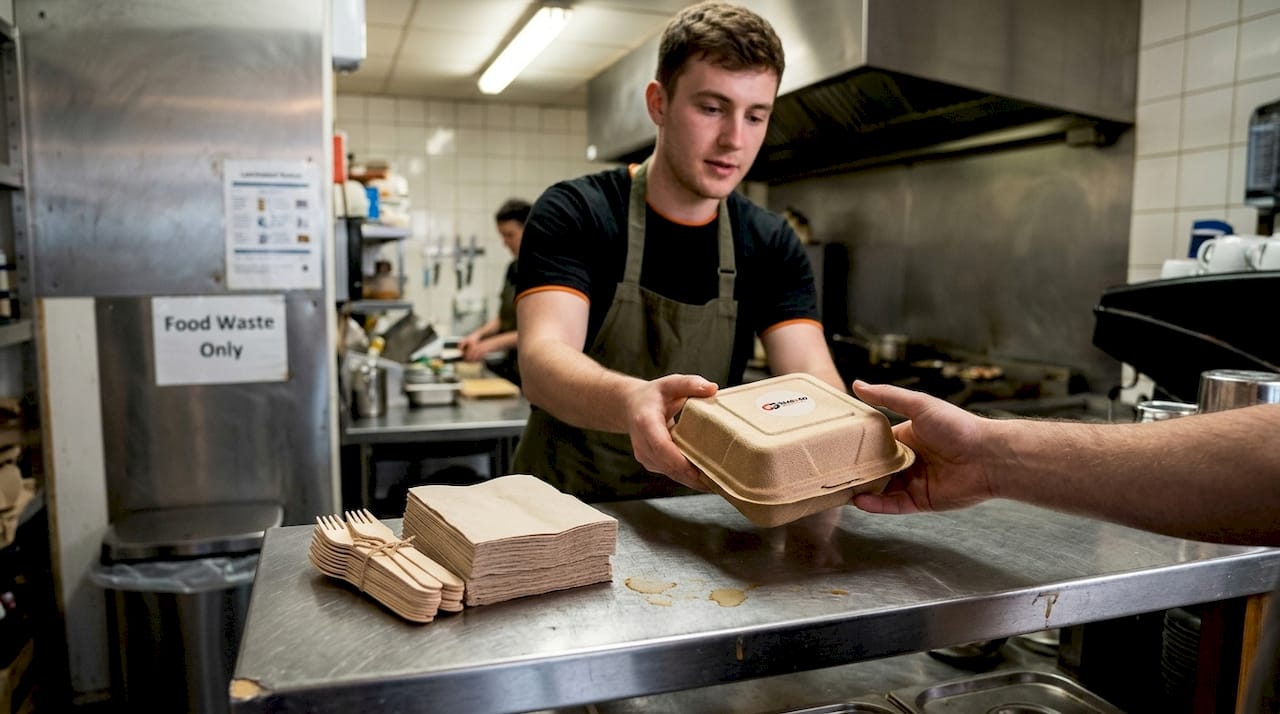
PLA and CPLA suit different temperature requirements and product categories. Standard PLA handles cold and ambient temperature foods effectively, offering clarity for salads, desserts, and cold beverages. CPLA’s crystallised structure provides heat resistance up to 85°C, suitable for hot beverages, soups, and warm foods. Both materials require industrial composting facilities operating at 58°C for proper breakdown, limiting disposal options in areas lacking such infrastructure. PLA contamination in conventional plastic recycling streams creates significant problems, necessitating clear labelling and disposal instructions.
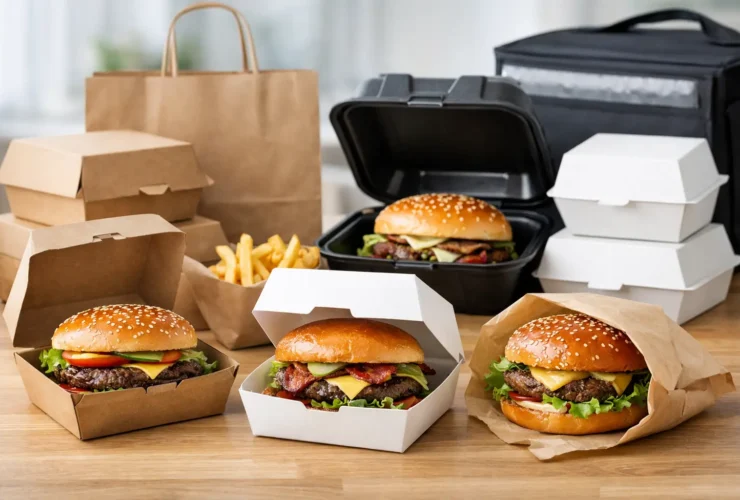
Paper and card products remain versatile options when properly specified. Uncoated paper suits dry goods and wrapping applications whilst maintaining recyclability. Grease-resistant papers use natural coatings or barrier treatments, though some treatments compromise recyclability. Card-based containers work well for ambient and cold foods but require careful selection for hot or moist items to prevent structural failure.
| Material | Best Applications | Heat Resistance | Compostability | Relative Cost |
|---|---|---|---|---|
| Bagasse | Hot/greasy foods, takeaway containers | Up to 220°C | Industrial composting | 20-30% premium |
| Moulded Fibre | Plates, bowls, trays for hot foods | Up to 200°C | Industrial composting | 15-25% premium |
| PLA | Cold foods, salads, desserts, cold drinks | Up to 45°C | Industrial composting | 15-20% premium |
| CPLA | Hot beverages, soups, warm foods | Up to 85°C | Industrial composting | 25-35% premium |
| Paper/Card | Wrapping, dry goods, ambient foods | Limited | Recyclable if uncontaminated | 5-15% premium |
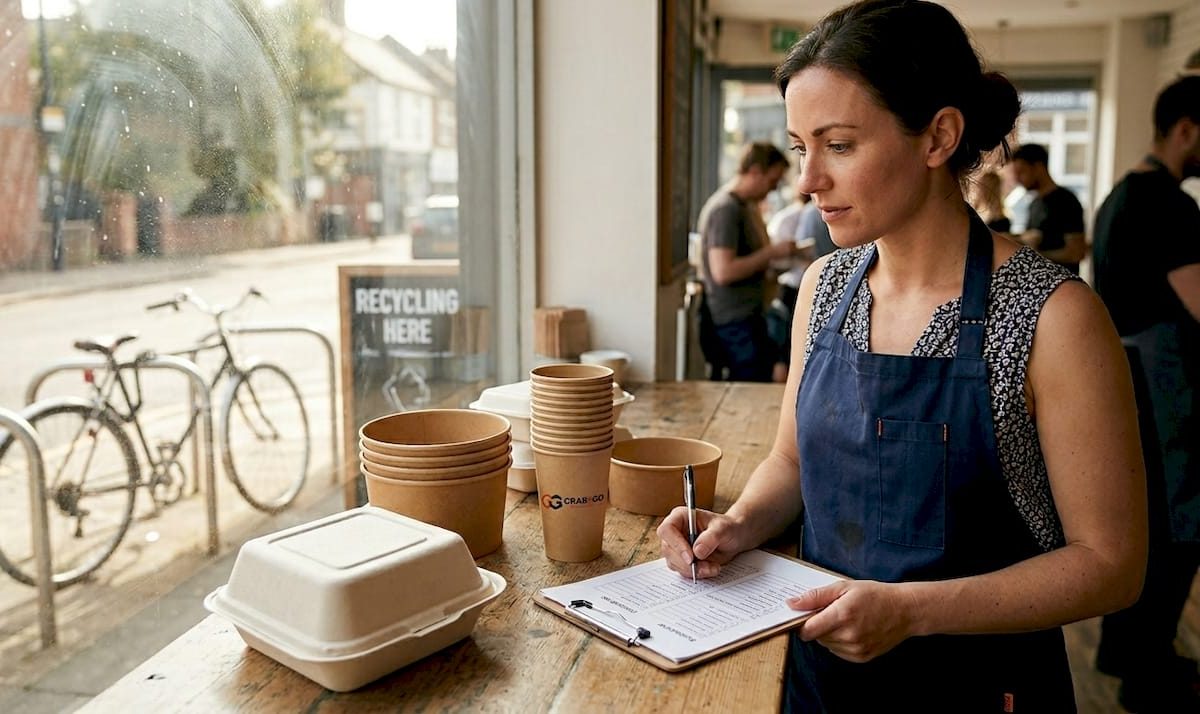
Contamination poses critical challenges for all sustainable materials. Food residue and grease compromise recyclability by contaminating paper streams and fouling processing equipment. Even compostable materials face issues when grease levels exceed facility tolerances or when mixed with non-compostable items. Consolidating compostable disposables with food waste streams reduces contamination risks and potentially lowers landfill levies charged by weight.
Cost premiums for sustainable disposables typically range from 15% to 30% above conventional plastic equivalents, varying by material type, order volume, and supplier. These upfront costs balance against potential savings from reduced waste levies, improved regulatory compliance, and enhanced brand reputation. Volume purchasing and long-term supplier relationships often secure better pricing whilst ensuring consistent supply.
Pro Tip: Test sustainable disposables with actual menu items under real service conditions before committing to large orders, as performance varies significantly between materials and food types.
Exploring how to use bagasse packaging in eco-friendly ways and reviewing examples of takeaway containers for UK food businesses provides practical insights into material selection and implementation strategies.
Challenges and trade-offs in sustainable disposables for food service operations
Disposal infrastructure limitations create the most significant barrier to sustainable disposable effectiveness across UK regions. Industrial composting facilities, essential for processing EN 13432 certified materials, operate in only 150 of 380 UK local authorities as of 2026. Compostable packaging requires industrial facilities maintaining 58°C temperatures with controlled moisture and oxygen levels for 12 weeks, conditions rarely achieved in home composting or landfill environments. Materials sent to landfill decompose anaerobically, producing methane emissions that negate environmental benefits. Home composting certification exists but applies to limited product ranges and requires consumer commitment that food service operators cannot control.
Contamination risks affect both recycling and composting pathways, reducing material recovery rates and system efficiency. Grease, food residue, and mixed materials create several problems. Paper and card contaminated with food waste cannot enter recycling streams, forcing diversion to general waste or energy recovery. Compostable plastics accidentally entering conventional plastic recycling contaminate entire batches, rendering them unsuitable for reprocessing. Mixed material disposables, combining different substrates or coatings, complicate sorting and processing at waste facilities.
Reusable packaging systems present alternative approaches with distinct trade-offs compared to sustainable disposables. Reusables eliminate single-use waste entirely when implemented with effective return and cleaning systems. Financial analysis shows reusables reduce per-use costs after 50-100 cycles, depending on item type and cleaning expenses. However, reusables require significant upfront investment in inventory, washing facilities, and logistics infrastructure. Hygiene standards demand hot water washing at 82°C minimum, consuming energy and water whilst requiring space and equipment. Deposit schemes and return logistics add operational complexity unsuitable for some service models.
Balancing these factors requires honest assessment of operational constraints, customer behaviour, and local infrastructure capabilities. High-volume operations with controlled environments suit reusable systems. Mobile services, delivery operations, and events favour disposables despite environmental compromises. Hybrid approaches combining reusables for dine-in service with sustainable disposables for takeaway optimise outcomes across different service channels.
Pro Tip: Contact your local council’s waste management department to confirm which sustainable disposable materials they accept and how they should be disposed of, as capabilities vary dramatically between regions.
Understanding disposable cutlery’s impact on UK businesses illustrates regulatory pressures and market shifts driving material substitution decisions.
Explore sustainable packaging solutions with Grab & Go Packaging
Navigating sustainable disposable options becomes straightforward when working with specialists who understand food service requirements and regulatory compliance. Grab & Go Packaging offers certified sustainable disposable packaging across all major material categories, from bagasse containers to CPLA cutlery, ensuring you find products matching your specific menu items and disposal capabilities.

Our product range includes EN 13432 certified compostable items, recyclable paper-based packaging, and PFAS-free options addressing emerging chemical safety concerns. Expert guidance helps you balance functionality, cost, and environmental impact whilst meeting UK regulatory requirements. Explore our sustainable packaging products to find solutions suited to your operation, or review our guide to selecting disposable containers for detailed material comparisons. Implementing food packaging best practices for UK catering ensures your sustainable choices deliver genuine environmental benefits whilst maintaining operational efficiency.
Frequently asked questions
What certifications should I look for in sustainable disposables?
Look for EN 13432 certification confirming industrial compostability within 12 weeks under controlled conditions. TÜV OK Compost Home certification indicates suitability for home composting, though fewer products meet this stricter standard. Recycling symbols and PFAS-free declarations provide additional assurance for specific disposal pathways and chemical safety.
Can I compost biodegradable disposables at home?
Most biodegradable disposables require industrial composting facilities to break down properly within acceptable timeframes. Home composting rarely achieves the sustained 58°C temperatures needed for certified compostable materials. Only products specifically certified for home composting should be added to domestic compost bins, and even these may take significantly longer to decompose than food waste.
Are compostable disposables accepted in regular UK recycling bins?
Compostable disposables are not accepted in standard recycling bins and contaminate recyclable plastic streams if mixed incorrectly. These materials require separate collection for industrial composting or disposal with food waste where local councils provide such services. Always check your local authority’s waste collection guidelines, as capabilities vary significantly between regions.
What are the cost implications of switching to sustainable disposables?
Sustainable disposables typically cost 15-30% more than conventional plastic equivalents, with variation by material type and order volume. These premiums may be offset by reduced waste levies, avoided Plastic Packaging Tax charges, and compliance with single-use plastic bans. Long-term supplier relationships and volume purchasing often secure better pricing whilst ensuring consistent product quality and availability.
Recommended
- Top 6 Disposable Containers for Restaurants in 2026 – Grab & Go Packaging
- Implement Sustainable Packaging for Catering Success – Grab & Go Packaging
- Sustainable Packaging: Why Eco-Friendly Options Matter for Your Business – Grab & Go Packaging
- Disposable Cutlery in the UK – Impact on Businesses – Grab & Go Packaging
- Sustainable Coffee Wholesale | Eco Friendly Supplier | Devon Somerse
- What is eco-friendly coffee sourcing: 2026 guide – House Coffee