

Food businesses lose thousands each year due to poor packaging choices that cause leaks, spoilage, or compliance problems. Selecting the right disposable containers goes far beyond picking what looks good on a shelf. When you understand how packaging affects food safety, branding, and cost, you can protect your products and reputation. Discover the essential steps that help you choose containers that truly work for your menu, meet regulations, and keep your business running smoothly.
| Key Point | Explanation |
|---|---|
| 1. Clearly define packaging needs | Assess operational requirements and legal standards for food packaging to streamline selection and avoid mistakes. |
| 2. Match materials with food types | Select packaging materials based on food type, temperature, and transportation needs to ensure safety and quality. |
| 3. Ensure compliance and safety | Conduct thorough reviews and maintain documentation to ensure packaging meets legal and safety standards. |
| 4. Evaluate long-term cost and branding | Consider not just unit costs, but also sustainability and branding potential for informed packaging decisions. |
| 5. Test container performance rigorously | Implement systematic performance tests to validate containers’ safety, durability, and compliance with regulations. |
Defining your food packaging needs is a critical first step for any food business looking to select the right disposable containers. This process involves carefully assessing your specific operational requirements and understanding the legal guidelines that govern food packaging.
According to Gov.uk, businesses must ensure their packaging meets crucial standards including clear labelling and using materials suitable for food contact. Start by evaluating key factors such as the type of food you are packaging, its temperature, moisture content, and potential transportation conditions. Consider aspects like portion size, durability requirements, and whether your containers need to be microwave safe, leak proof, or suitable for hot or cold foods.
Your packaging selection should also align with Nibusinessinfo guidelines that emphasize packaging must not pose health risks or alter food characteristics. This means carefully examining material compatibility, potential chemical interactions, and ensuring your chosen containers maintain food safety and quality throughout storage and transportation.
Quick pro tip: Create a checklist of your specific packaging requirements before shopping. This might include dimensions, material preferences, temperature resistance, and any branding needs. By being methodical, you will streamline your selection process and avoid costly mistakes.
Once you have clearly defined your packaging needs, you will be well positioned to move to the next step of researching specific container options that match your precise business requirements.
Matching the right packaging materials to your specific menu items is a crucial step in creating an effective food packaging strategy. This process requires careful consideration of your food types, serving temperatures, and potential transportation needs.
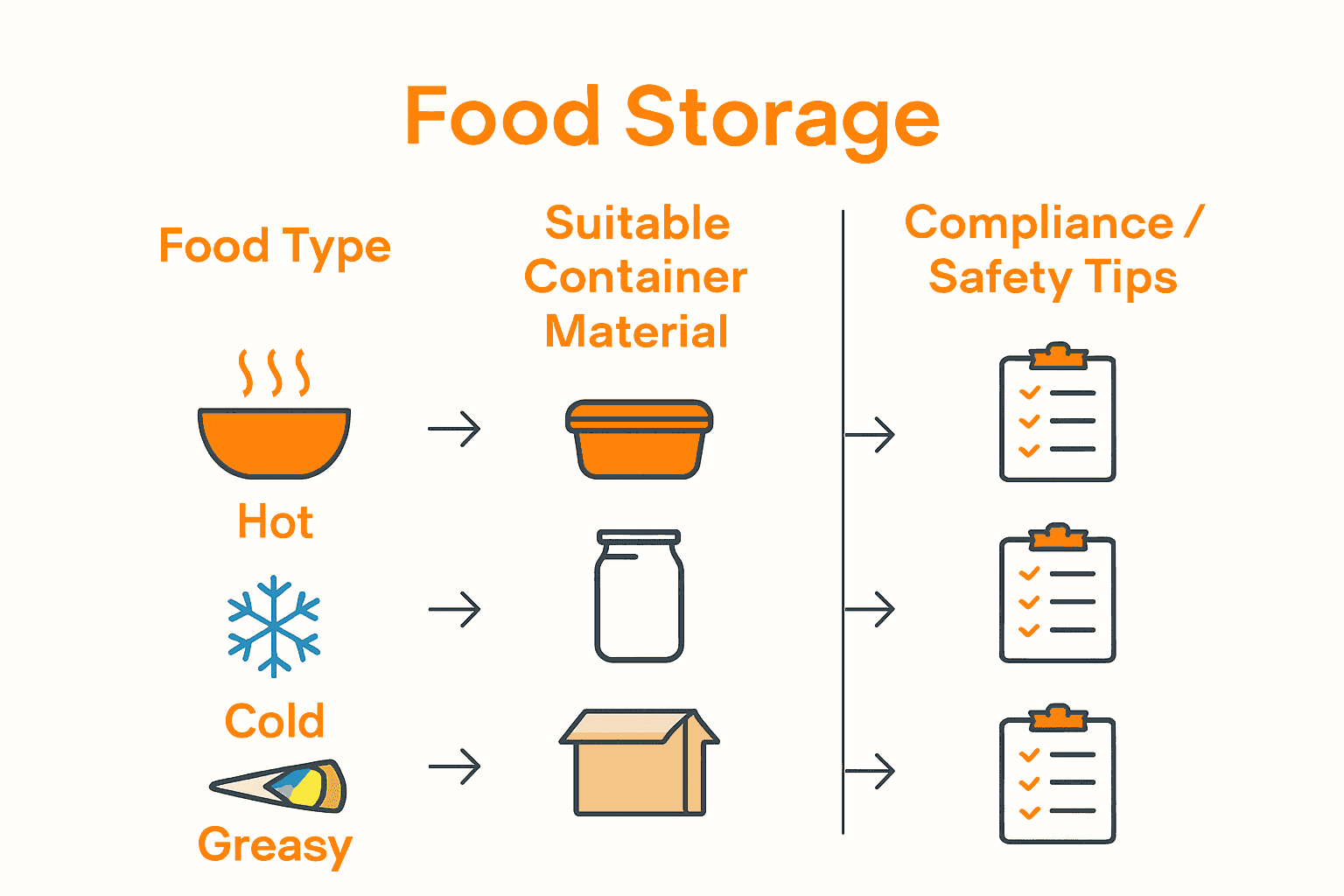
According to Food.gov.uk, businesses must select packaging materials that prevent harmful substance transfer and ensure consumer safety. Different food types demand different material properties. For hot liquid beverages, you will need heat resistant containers with good insulation. Greasy foods require grease resistant packaging, while cold salads need moisture resistant containers that prevent condensation.
As Anglesey.gov.wales emphasizes, look for packaging marked with the food contact symbol that indicates regulatory compliance. Consider these specific material matchups: paper based containers for dry baked goods, aluminium trays for hot meals, plastic containers with tight seals for salads, and biodegradable options for environmentally conscious businesses.
Quick pro tip: Create a simple reference chart matching your menu items with appropriate packaging materials. This visual guide will help kitchen staff consistently select the right containers and maintain food quality and safety.
With your materials carefully matched to menu items, you are now ready to explore specific container designs that will complement your food offerings and enhance customer experience.

Assessing the quality, safety, and compliance of your food packaging is a critical step that protects your business and customers. This comprehensive review ensures your packaging meets rigorous legal and safety standards.
According to IFST, businesses must navigate the complex landscape of regulatory requirements, particularly noting the transition from CE to UKCA marking post-Brexit. Your assessment should include a thorough examination of material specifications, checking for potential chemical migrations, understanding temperature resistance, and verifying that each container meets specific food safety regulations.
As Food Safety Systems emphasizes, documentation is key. Maintain detailed records of your packaging materials, including certificates of compliance, material safety data sheets, and testing reports. This documentation not only ensures regulatory adherence but also provides a critical paper trail that demonstrates your commitment to food safety and quality control.
Quick pro tip: Develop a systematic compliance checklist that covers material origin, chemical composition, intended food contact use, and regulatory certifications. Regular audits using this checklist will help you stay ahead of potential safety issues.
With a comprehensive understanding of your packaging materials quality and compliance, you are now prepared to make informed decisions that protect both your business and your customers.
Evaluating cost-effectiveness and branding options is a strategic process that balances financial considerations with your business image and customer perception. This step requires a nuanced approach that considers multiple factors beyond simple pricing.
According to Inside Packaging, businesses must carefully assess packaging designs with upcoming 2025 regulations in mind. This means looking beyond immediate costs and considering long-term sustainability and compliance. Compare potential packaging materials not just by unit price, but by total lifecycle cost including waste reduction potential, recyclability, and potential tax implications.
As Create8 emphasizes, your packaging is more than a container it is a critical branding tool. Explore customization options that allow you to incorporate your logo, colour scheme, and brand messaging while maintaining cost efficiency. Consider bulk purchasing options, standardized designs that work across multiple menu items, and materials that offer both aesthetic appeal and practical functionality.
Quick pro tip: Create a comprehensive spreadsheet comparing packaging options that includes not just price per unit, but also branding potential, environmental impact, and regulatory compliance. This holistic approach will help you make informed decisions that support both your bottom line and brand identity.
With a clear understanding of your packaging economics and branding strategy, you are now prepared to make confident selections that represent your business effectively.
Testing and verifying container performance is a crucial final step in ensuring the quality and reliability of your food packaging solutions. This process involves comprehensive evaluations that go beyond surface level observations to validate the containers functional capabilities.
According to ISPM, professionals must conduct rigorous risk assessments and quality assurance checks. Your testing protocol should include detailed examinations such as temperature resistance tests, leak detection evaluations, structural integrity assessments, and migration testing to confirm the packaging meets all safety and performance standards. Simulate real world conditions by testing containers under various stress scenarios including transportation bumps, temperature fluctuations, and potential handling pressures.
The ISPM training emphasizes the importance of systematic verification processes that address material safety and potential migration risks. Conduct comprehensive performance tests that evaluate how containers interact with different food types, assess potential chemical transfers, and ensure the packaging maintains its structural integrity throughout its intended use cycle.
Quick pro tip: Develop a standardized testing checklist that includes specific performance metrics such as temperature range tolerance, seal strength, material durability, and potential chemical interactions. Document all test results meticulously to create a comprehensive record of your packaging quality assurance process.
With thorough performance testing completed, you now have the confidence that your selected packaging will meet both regulatory standards and your business operational requirements.
Selecting the perfect disposable containers for your food business can feel overwhelming. From ensuring compliance with strict food safety regulations to finding packaging that complements your menu while supporting your brand image the challenges are many. You need containers that are durable, safe, and tailored to your unique food items without blowing your budget or sacrificing quality.
Discover how Grab N Go Packaging makes this process straightforward and stress free. With a broad selection of carefully chosen disposables, containers, and bespoke branding options you can efficiently meet all your packaging needs in one place. Whether you require microwave safe boxes, leak proof containers, or eco friendly solutions grab your food business advantage now by exploring our product range. Act today to secure your packaging that guarantees safety, quality, and enhances your customers’ experience with Grab N Go Packaging. Start browsing our trusted solutions and elevate your food service packaging with confidence.
Start by evaluating the specific operational requirements of your food business, such as the type of food, portion size, and necessary materials. Create a checklist outlining dimensions, temperature resistance, and durability to guide your selection process.
Match packaging materials to menu items based on their properties; for example, use heat-resistant containers for hot liquids and grease-resistant packaging for oily foods. Develop a reference chart to help staff easily identify the right materials for each food type.
Conduct a thorough review of material specifications and maintain documentation of compliance certifications for your packaging. Schedule regular audits using a compliance checklist to stay proactive about safety standards and material origin.
Evaluate not only the unit price but also the total lifecycle costs of packaging materials, including recyclability and waste reduction potential. Create a spreadsheet comparing these factors to make informed decisions that support your budget and sustainability goals.
Implement a rigorous testing protocol that includes assessments for temperature resistance, leak detection, and structural integrity. Use a standardized testing checklist to document performance metrics and ensure that packaging meets all safety standards during its intended use.