
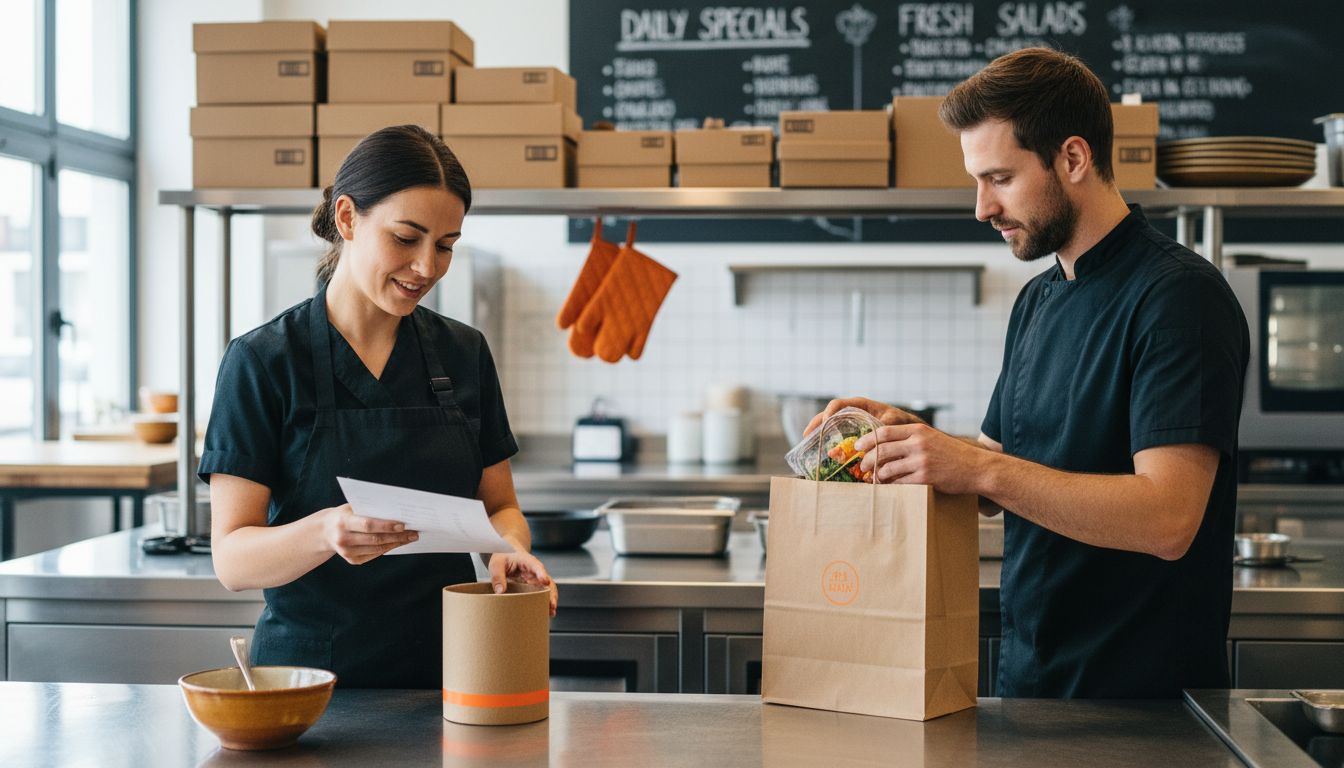
Selecting the right takeaway packaging is more than just a finishing touch—it can shape both customer satisfaction and your bottom line. With over 60% of consumers ranking packaging quality among their top food delivery concerns, small details matter. From protecting hot meals to showcasing your brand, every packaging choice influences food safety, freshness, and customer perception. If you want to deliver great food and leave a lasting impression, understanding packaging essentials is the first step to getting ahead.
| Takeaway | Explanation |
|---|---|
| 1. Assess your menu needs explicitly | Conduct a thorough inventory to understand each food item’s unique packaging requirements, including temperature and moisture needs. |
| 2. Prioritize temperature control in packaging | Select materials that effectively insulate to keep hot foods hot and cold foods cold, ensuring food safety during delivery. |
| 3. Choose durable, leak-proof containers | Select strong, well-sealed containers that withstand transportation stress and prevent contamination or spills. |
| 4. Opt for eco-friendly materials | Use sustainable packaging options that comply with regulations and reduce your business’s environmental impact. |
| 5. Establish reliable supplier relationships | Evaluate suppliers for quality, flexibility, and reliability to ensure consistent product availability and support your operational needs. |
Your takeaway packaging journey begins with a comprehensive understanding of your specific food and drink offerings. Before selecting packaging, you need to conduct a thorough menu assessment that considers every product’s unique requirements.
According to guidance from GOV.UK, certain mandatory information must be provided on food products. This includes critical details like product name, ingredient list, allergen information, and nutritional content. These requirements directly influence your packaging choices.
Start by creating a detailed inventory of your menu items. Break down each product and consider its specific characteristics:
This meticulous approach ensures you select packaging that preserves food quality, maintains safety standards, and meets legal labelling requirements. By understanding each menu item’s unique profile, you can make informed packaging decisions that protect your product and enhance customer experience.
Pro tip: Regularly review your menu and update your packaging strategy. As menu items change or new regulations emerge, your packaging needs will evolve.
Temperature control is not just about comfort it is a critical safety requirement for food businesses. Your packaging must act as a protective shield that keeps hot foods hot and cold foods cold during transportation and delivery.
According to Food.gov.uk, maintaining appropriate food temperatures is crucial for preventing foodborne illnesses. This means selecting packaging solutions that can effectively insulate and preserve your menu items.
Key Considerations for Temperature Maintenance:
Specialised packaging like thermal containers or double walled cups can significantly improve temperature retention. For hot foods, look for materials with high heat retention capabilities. For cold items, consider packaging with moisture resistant and cooling properties.
Pro tip: Always perform temperature retention tests with your chosen packaging. Some containers might look suitable but fail in real world conditions. Invest time in finding the right solution that protects both food quality and customer safety.
For more insights into maintaining food temperatures, check out our guide on sustainable packaging that explores innovative solutions for food preservation.
Choosing the right containers is more than just about packaging your food it is about protecting your product, reputation, and customer experience. Leak-proof and durable containers are your frontline defence against messy accidents and food quality degradation.
According to Food.gov.uk, selecting suitable packaging materials is crucial for maintaining food safety and preventing cross-contamination. Your containers must withstand transportation stresses while keeping contents secure.
Key Factors in Container Selection:
Consider containers made from high-density materials like polypropylene or robust biodegradable options. These materials offer excellent protection against leaks and can handle various food textures without compromising structural integrity.
When evaluating containers, perform practical tests. Drop them. Tilt them. Simulate real world delivery conditions. Your packaging should survive the journey without spilling a single drop.
For robust container options that meet these stringent requirements, explore our 500ml Clear Rectangular Containers which offer both durability and transparency.
Environmental responsibility is no longer optional for food businesses. Selecting packaging materials that are both eco-friendly and legally compliant has become a critical business strategy that impacts your brand reputation and bottom line.
According to GOV.UK, businesses are now encouraged to use recycled or biodegradable materials to reduce environmental impact and navigate emerging tax regulations. The Plastic Packaging Tax represents a significant shift towards sustainable business practices.
Strategic Material Selection Considerations:
Transitioning to sustainable packaging does not mean compromising on quality. Modern eco-friendly materials offer excellent durability and performance. Look for alternatives like bamboo composites, plant based plastics, and recycled paper products that meet both environmental and functional requirements.
To support your sustainability journey, we recommend exploring solutions like our natural compostable straws, which demonstrate how eco-friendly choices can be both practical and responsible.
Your packaging is more than a container it is a powerful marketing tool that communicates your brand identity and creates memorable customer experiences. Thoughtful customization transforms ordinary packaging into a strategic business asset.
Branding Elements to Consider:
Customization goes beyond visual aesthetics. It is about creating a tactile and emotional connection with your customers. High quality packaging with intelligent design can elevate perceived value and differentiate your brand from competitors.
Think strategically about how each packaging element represents your business philosophy. A well designed package can communicate professionalism, sustainability, creativity or playfulness depending on your brand personality.
Practical tip: Start small with one or two distinctive customization features. This might mean selecting packaging with space for your logo or choosing materials that align with your brand values. Gradual implementation allows you to test and refine your approach without overwhelming your design or budget.
Remember that consistent branding across all touchpoints reinforces brand recognition and builds customer trust. Your packaging is a silent ambassador that speaks volumes about your business before the first bite is taken.
Efficient packaging storage and dispensing can make or break your food service operation. A well organised system reduces waste, speeds up service times, and ensures your team can access packaging quickly and smoothly.
According to Food.gov.uk, effective management of storage areas is crucial for maintaining operational efficiency and food safety standards.
Strategic Storage Considerations:
Implement a first in first out approach to prevent packaging materials from degrading. Designate specific zones for different packaging types ensuring staff can quickly locate and retrieve items during peak service times. Consider investing in shelving systems with clear labelling and systematic arrangement.
Pro tip: Create a visual inventory map. This helps new staff members understand storage layouts rapidly and maintains consistency in your packaging management approach. Digital tracking tools can also help monitor stock levels and predict reordering needs.
Remember that smart storage is not just about organization it is about creating a seamless workflow that supports your team and maintains the quality of your packaging materials.
Choosing the right packaging supplier is like selecting a business partner who can make or break your operational efficiency. Your supplier relationship directly impacts product quality, cost management, and overall business performance.
According to GOV.UK, businesses must carefully evaluate procurement strategies to ensure long term reliability and cost effectiveness.
Supplier Evaluation Criteria:
When negotiating bulk pricing, look beyond the immediate cost. Consider suppliers who offer flexible terms, volume discounts, and demonstrate a commitment to supporting your business growth. A slightly higher per unit cost might be justified by superior service quality, reliable delivery, or customization options.
Practical tip: Request sample orders before committing to large volume purchases. This allows you to assess product quality, packaging durability, and supplier responsiveness without significant financial risk.
Remember that the cheapest option is not always the most economical. A reliable supplier who understands your specific needs can provide more value than one offering the lowest upfront price.
Below is a comprehensive table summarising key strategies and considerations for takeaway packaging as discussed in the article.
| Aspect | Key Considerations | Benefits |
|---|---|---|
| Assess Menu Needs | Conduct a thorough analysis of temperature, moisture, and transportation needs for each menu item. | Ensures food quality and compliance with labelling laws. |
| Temperature Control | Use packaging that insulates and retains heat or cold effectively. | Prevents foodborne illnesses and maintains safety. |
| Durable Containers | Choose leak-proof, durable materials that withstand transport. | Protects food and enhances customer satisfaction. |
| Eco-Friendly Options | Opt for sustainable and compliant materials like biodegradable products. | Reduces environmental impact and meets legal requirements. |
| Branding & Customisation | Incorporate brand logos and design elements. | Enhances brand recognition and customer experience. |
| Efficient Storage | Implement organised storage systems with clear labelling. | Speeds up service and reduces waste. |
| Supplier Review | Evaluate suppliers for product quality, reliability, and pricing. | Ensures consistent supply and cost-effective solutions. |
Every food business faces the challenge of finding packaging that protects dishes, maintains temperature, and highlights brand values clearly. The pain points you encounter such as needing leak-proof containers, eco-friendly materials and impactful branding require a partner who understands your unique needs. Our aim is to help you meet these goals without compromising on quality or service reliability.
Discover how our wide range of products aligns perfectly with your takeaway packaging checklist. Whether you want sturdy containers, sustainable straws, or customised packaging that speaks to your brand personality, we have tried and tested options ready to support your daily operations and enhance your customers’ experience.
Start your journey to hassle-free packaging today at Grabngo Packaging.
Browse our extensive selection of food packaging supplies and enjoy competitive prices combined with reliable deliveries. Act now to ensure your takeaway packaging is not just a box but a trusted extension of your business. Explore our range at Grabngo Packaging and take the next step towards packaging that works as hard as you do.
To assess your food and drink menu needs, create a detailed inventory of your menu items. Break down characteristics like temperature requirements, moisture content, and shelf life, which will help you select appropriate packaging solutions.
Choose packaging that provides effective insulation for both hot and cold foods. Consider materials designed for temperature retention, such as thermal containers, and always perform temperature retention tests to ensure food safety.
Selecting leak-proof and durable containers is crucial for protecting your food products and ensuring customer satisfaction. Opt for high-density materials that can withstand transportation stresses, and perform practical tests to ensure the packaging can survive real-world conditions.
To choose eco-friendly packaging materials, prioritize options that are recyclable or biodegradable and compliant with regulations. Evaluate the carbon footprint and environmental impact of each material, and explore alternatives that do not compromise on quality or safety.
Consider elements like logo visibility, color consistency, and unique design features for your takeaway packaging. A thoughtful approach to branding can elevate customer experience and differentiate your products in the market, so start with one or two distinctive features to test their effectiveness.
To ensure efficient storage and dispensing, organize your packaging materials based on accessibility and usage frequency. Implement a first in, first out system and create a visual inventory map to streamline operations and reduce waste during peak service times.