

More than 60 percent of meals purchased from restaurants in the UK are taken away rather than eaten on site. With this shift, the humble takeaway tray has become a staple of daily life. These containers do more than just carry food from counter to car—they play a key role in keeping meals hot, safe, and easy to enjoy wherever you are. Understanding what sets a takeaway tray apart helps both businesses and customers make smarter, safer choices for every meal on the go.
| Point | Details |
|---|---|
| Definition of Takeaway Trays | Takeaway trays are disposable containers designed for transporting food outside food service establishments, ensuring convenience and food quality for off-site consumption. |
| Types and Materials | Takeaway trays come in various materials, including biodegradable options, catering to different food service needs and environmental considerations. |
| Safety and Compliance | Food-grade standards and chemical safety are critical in takeaway tray selection to prevent contamination and protect consumer health. |
| Packaging Alternatives | Businesses must evaluate various packaging options, balancing cost, durability, and environmental impact when selecting takeaway solutions. |
A takeaway tray is a specialised disposable container designed specifically for transporting food items outside of a restaurant or food service establishment. According to tuptonhall, these trays are “a disposable container used in food service to hold and transport food items for consumption off the premises”, representing a critical component in modern food service operations.
Takeaway trays serve multiple practical functions beyond simple food transportation. They are engineered to maintain food temperature, prevent spillage, and provide a convenient eating surface for customers consuming meals away from the original service location. sqa highlights that these trays are “integral to counter/takeaway service, where food is prepared, packaged, and handed over to customers in disposable trays for off-site consumption”.
Key characteristics of takeaway trays typically include:
From fast food restaurants to gourmet meal prep services, takeaway trays have become an essential tool in modern food service, bridging the gap between kitchen preparation and customer convenience. The Essential Guide to Packaging in Takeaway Operations offers more insights into how these trays are transforming food service packaging strategies.
Takeaway trays come in a diverse range of materials and configurations, each designed to meet specific food service requirements. According to energy, these trays typically include “expanded polystyrene clamshells, polypropylene containers, aluminum foil trays with cardboard lids, and bagasse trays”, offering food businesses multiple packaging options.
The materials used in takeaway tray production span from traditional synthetic options to increasingly popular sustainable alternatives. Plastic variants like polypropylene provide durability and cost-effectiveness, while aluminum trays offer excellent heat retention. More environmentally conscious businesses are turning to eco-friendly materials such as bagasse, a biodegradable material derived from sugarcane fiber that reduces environmental impact.
Key types of takeaway trays include:
When selecting takeaway trays, businesses must balance practical requirements like food preservation, transportation efficiency, and environmental considerations.
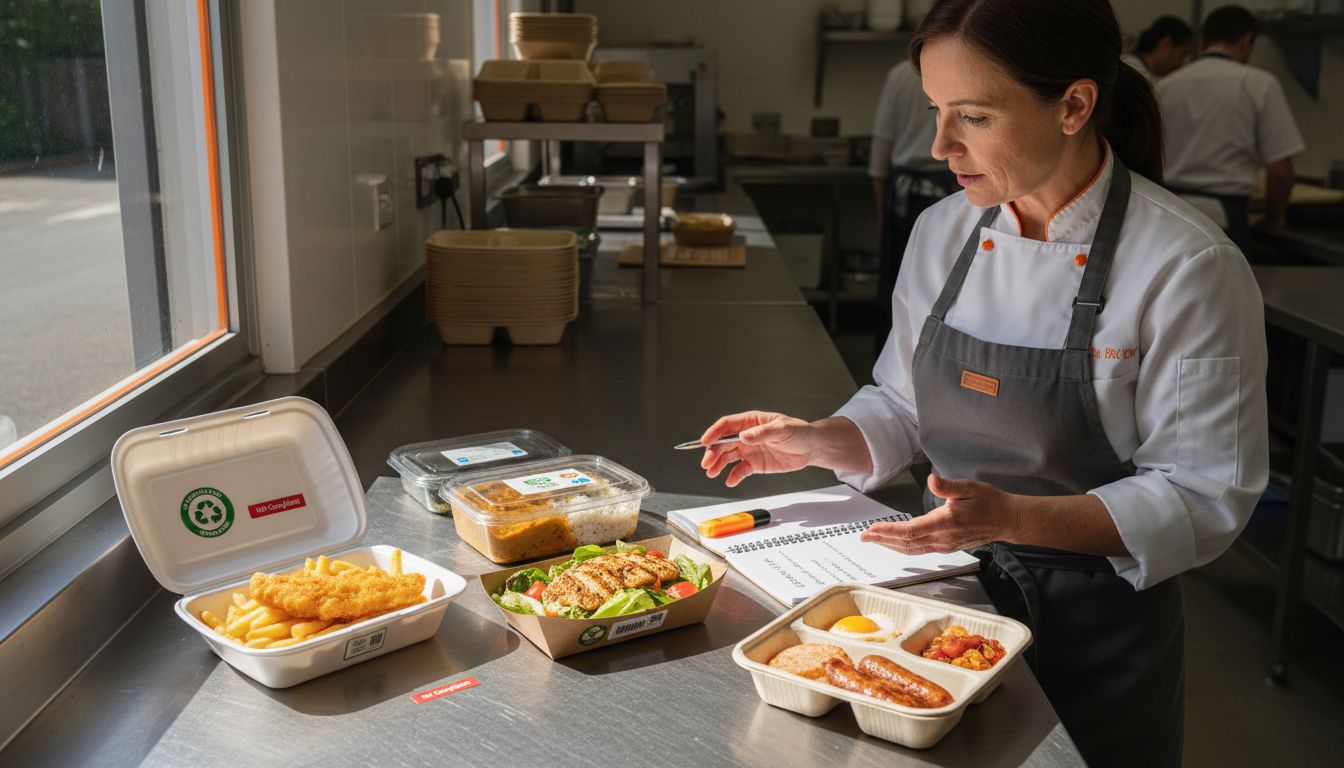 For more comprehensive insights into packaging selection, explore our guide on packaging in takeaway operations, which provides detailed strategies for choosing the right tray for specific food service needs.
Takeaway trays have become an integral component across various food service environments, enabling efficient and convenient meal distribution. According to tuptonhall, these trays are “commonly used in fast food establishments, cafeterias, and buffets to serve food that customers can consume off-site”, highlighting their critical role in modern dining operations.
In quick-service restaurants and similar establishments, takeaway trays serve multiple strategic purposes. sqa confirms that these containers are “utilized in counter/takeaway services, where food is packaged in disposable trays for customers to take away”, demonstrating their fundamental importance in streamlining food service processes.
Key operational uses of takeaway trays include:
For food service businesses looking to optimise their packaging strategies, understanding the nuanced applications of takeaway trays is crucial. Check out our takeaway packaging checklist to ensure your packaging meets operational and customer expectations.
In the food service industry, takeaway tray safety encompasses multiple critical considerations that extend beyond mere packaging. According to copeland, “ensuring hygiene and safety in takeaway services involves using food-grade, suitable packaging to prevent contamination”, underlining the fundamental importance of selecting appropriate materials and maintaining strict handling protocols.
Environmental sustainability has become a paramount concern in packaging selection. pfasfree highlights significant risks associated with traditional packaging, specifically warning about “the presence of PFAS chemicals in food packaging, which pose risks to human health and the environment”. This revelation has prompted a substantial shift towards more sustainable and safer packaging alternatives.
Key safety and environmental considerations include:
For businesses committed to maintaining the highest standards of food safety and environmental responsibility, understanding these nuanced considerations is essential. To develop a comprehensive approach to packaging, explore our guide on packaging in takeaway operations, which provides in-depth insights into best practices and emerging trends.
Navigating the regulatory landscape for takeaway trays requires a comprehensive understanding of UK food packaging standards. According to copeland, UK regulations mandate that food packaging “must be food-grade and suitable for its intended use, such as holding hot food”, emphasising the critical importance of sourcing packaging from reputable suppliers and maintaining stringent storage protocols.
The evolving regulatory environment continues to address emerging concerns about food packaging safety. pfasfree reports that the UK government is actively acknowledging “the need to address PFAS chemicals in food packaging”, signalling a proactive approach to potential health risks and environmental considerations.
Key compliance requirements for takeaway trays include:
For food service businesses seeking to stay ahead of regulatory changes, understanding these complex requirements is essential. Our guide on packaging in takeaway operations provides comprehensive insights into navigating these intricate compliance landscapes.
Food service businesses face a complex decision when selecting packaging solutions, with takeaway trays representing just one of several available options. According to energy, a comprehensive “comparative analysis of takeaway packaging options includes single-use items like expanded polystyrene trays and eco-friendly alternatives such as bagasse trays”, highlighting the diverse landscape of packaging choices.
Each packaging alternative brings unique advantages and limitations. Traditional options like polystyrene trays offer low cost and lightweight design, while newer alternatives such as biodegradable bagasse provide significant environmental benefits. Modern food service operations must balance practical considerations like food preservation, transportation efficiency, and sustainability when making packaging selections.
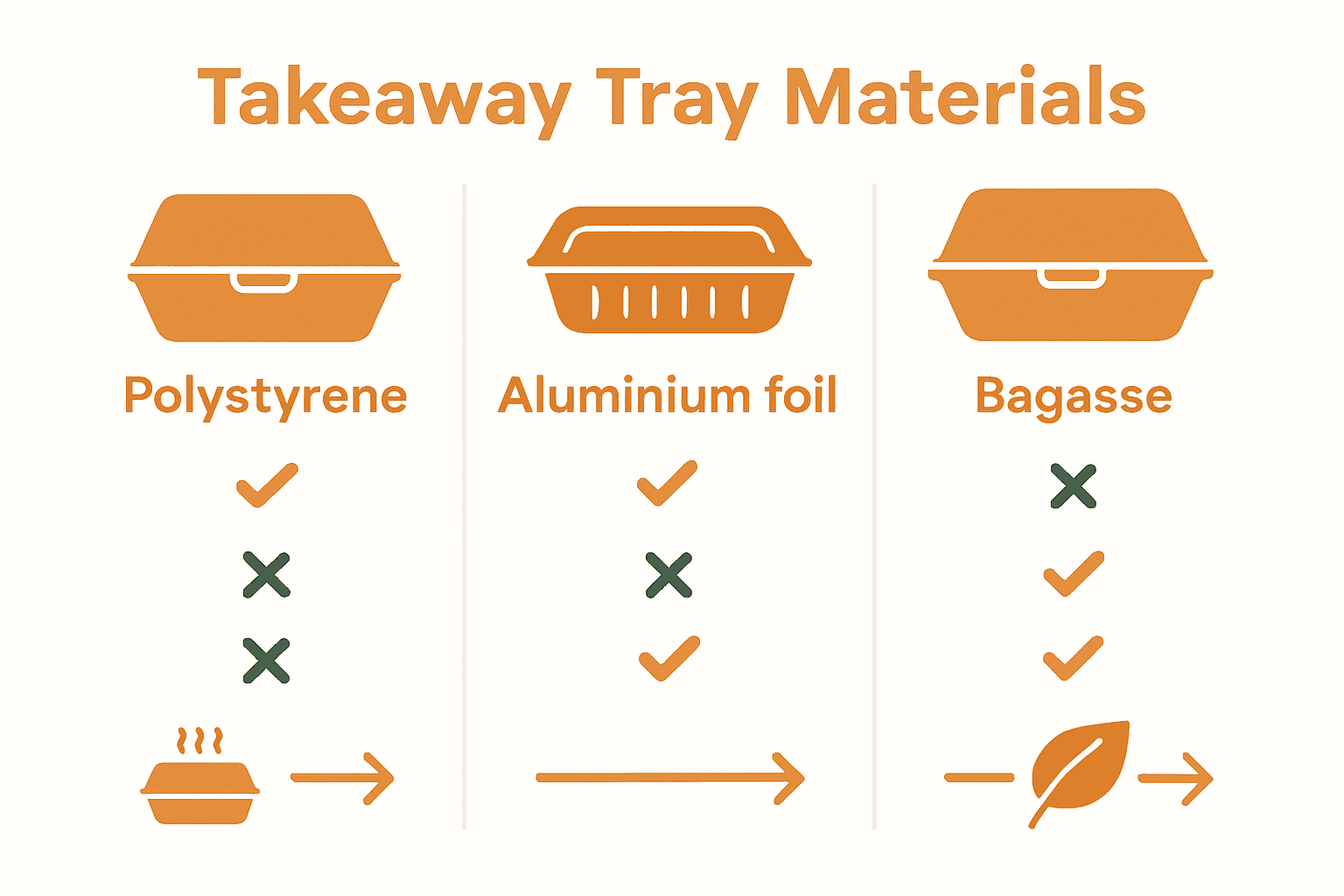
Key packaging alternatives to traditional takeaway trays include:
For food service businesses navigating these complex packaging choices, understanding the nuanced differences between alternatives is crucial. Our guide on types of takeaway bags provides additional insights into selecting the most appropriate packaging solution for specific operational needs.
If maintaining food quality while ensuring hygiene and sustainability is your priority, selecting the right takeaway trays is essential. With concerns like chemical-free materials and compliance standards highlighted in the article, finding packaging that balances safety, convenience and environmental responsibility can feel overwhelming.
Discover a wide range of reliable and eco-friendly takeaway tray options at Grab n Go Packaging. Our expertly selected disposables and containers are designed to meet the demands of fast food outlets, catering services and hospitality businesses. Act now to secure packaging that enhances customer satisfaction while keeping your operation compliant and sustainable. Visit our takeaway packaging checklist for practical tips, then explore all offerings to find your perfect solution today.
Takeaway trays are lightweight, portable, and leak-resistant. They often have compartmentalised sections for different food types and are made from materials like biodegradable paper, plastic, or sustainable composites. They are designed to maintain food quality during transportation.
Takeaway trays are commonly made from materials such as expanded polystyrene, polypropylene, aluminum foil, and biodegradable options like bagasse, which is derived from sugarcane fiber. Each material has its own advantages, such as durability or environmental sustainability.
Takeaway trays are widely used in fast food outlets, cafeterias, buffets, catering services, and food delivery platforms. They facilitate efficient meal packaging and distribution, allowing customers to conveniently take food away from the service location.
It is essential to use food-grade, chemical-free materials to prevent contamination and ensure safety. Environmental considerations include opting for biodegradable options and providing transparency about recyclability and sustainability in packaging materials.