Cart 0
How packaging preserves food quality for UK hospitality
Many hospitality owners view packaging as merely a container for transporting food from kitchen to customer. Yet packaging performs a far more sophisticated role, acting as an invisible guardian that preserves flavour, texture, and safety throughout the supply chain. For UK food service businesses, understanding how packaging technology prevents spoilage and extends shelf life directly impacts customer satisfaction and profitability. This guide explores the protective functions of modern packaging, from barrier properties to smart monitoring systems, alongside practical strategies for balancing preservation effectiveness with environmental responsibility in your operations.
Table of Contents
- Key takeaways
- Understanding packaging’s protective functions
- Advanced packaging technologies for extended shelf life
- Balancing packaging choices with sustainability and food waste
- Best practices for packaging and preservation in UK hospitality
- Discover packaging solutions tailored for UK hospitality
- Frequently asked questions
Key Takeaways
| Point | Details |
|---|---|
| Barrier role | Packaging forms barriers against oxygen moisture and light to protect flavour texture and safety throughout the supply chain. |
| Oxygen control | Vacuum sealing removes oxygen but should be used with proper refrigeration and clear use by date labelling to prevent anaerobic bacteria. |
| Light protection | Light blocking packaging preserves nutrients and colour and maintains visual appeal. |
| Sustainability impact | Packaging choices influence food waste and environmental sustainability, and UK guidelines emphasise the cold chain and clear labelling. |
| Advanced materials | Nanocomposite films enhance barrier performance allowing thinner packs and extending shelf life. |
Understanding packaging’s protective functions
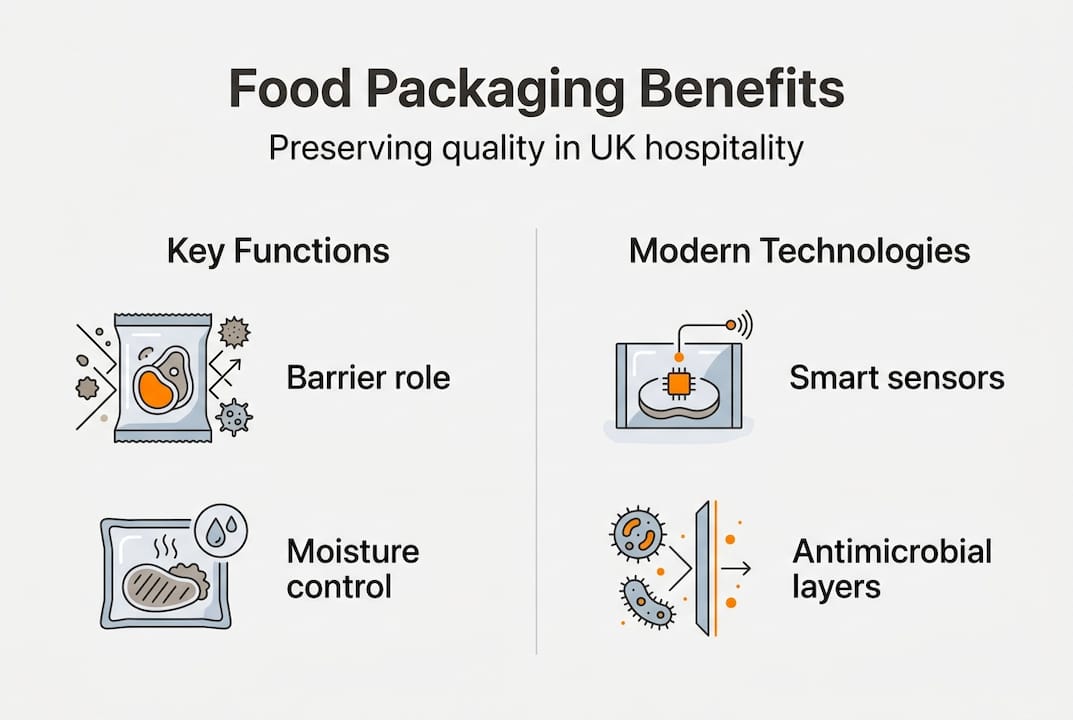
Packaging creates multiple defensive layers between your food and the environment. The most fundamental function involves forming a barrier against oxygen, which triggers lipid oxidation in fats and oils, turning them rancid and degrading nutritional value. Packaging acts as a barrier preventing oxidation and microbial growth, directly preserving the sensory qualities customers expect. When oxygen reaches meat, dairy, or fried foods, it accelerates deterioration that no amount of refrigeration can fully counteract.
Moisture control represents another critical preservation mechanism. Packaging regulates water activity within food products, creating conditions where spoilage organisms struggle to multiply. High barrier films prevent external moisture from softening crispy items like pastries whilst simultaneously trapping internal moisture in products like cooked meats that would otherwise dry out. This dual function maintains texture and prevents microbial colonisation that thrives in specific humidity ranges.
Light protection matters more than most hospitality operators realise, particularly for products containing vitamins and pigments. Photo-oxidation degrades nutrients and causes colour changes in dairy products, beverages, and prepared foods exposed to retail lighting. Opaque or UV-blocking packaging materials shield light-sensitive ingredients, preserving both nutritional content and visual appeal that influences purchasing decisions.
Modern materials enhance these barrier properties through sophisticated engineering. Nanocomposite films incorporate microscopic particles that create tortuous pathways for gas molecules, dramatically improving oxygen and moisture resistance compared to conventional plastics. These advanced materials allow thinner packaging to achieve superior protection, reducing material usage whilst extending shelf life.
Pro Tip: Vacuum sealing removes oxygen before sealing, but low-oxygen environments can encourage anaerobic bacteria like Clostridium botulinum in certain foods. Always combine vacuum packaging with proper refrigeration and use-by date labelling to maintain safety.
However, barrier technology requires careful application. Completely eliminating oxygen sometimes creates risks, as certain pathogenic bacteria thrive in anaerobic conditions. Understanding why packaging impacts food quality helps you select appropriate barrier levels matched to specific products and storage conditions.
“The right packaging transforms perishable ingredients into stable products that maintain quality from preparation through consumption, directly affecting customer satisfaction and operational efficiency.”
Key protective functions include:
- Oxygen exclusion preventing rancidity and browning
- Moisture regulation maintaining texture and inhibiting microbial growth
- Light blocking preserving colour and nutritional content
- Physical protection preventing contamination and mechanical damage
- Temperature moderation reducing heat transfer during brief exposure
Advanced packaging technologies for extended shelf life
Beyond passive barriers, active packaging systems interact with food or the internal atmosphere to extend preservation. Active packaging incorporates oxygen scavengers and antimicrobials that actively remove degradation triggers rather than simply blocking them. Oxygen scavenger sachets or films embedded with iron powder chemically bind residual oxygen inside sealed packages, achieving levels far below what mechanical vacuum sealing can accomplish.
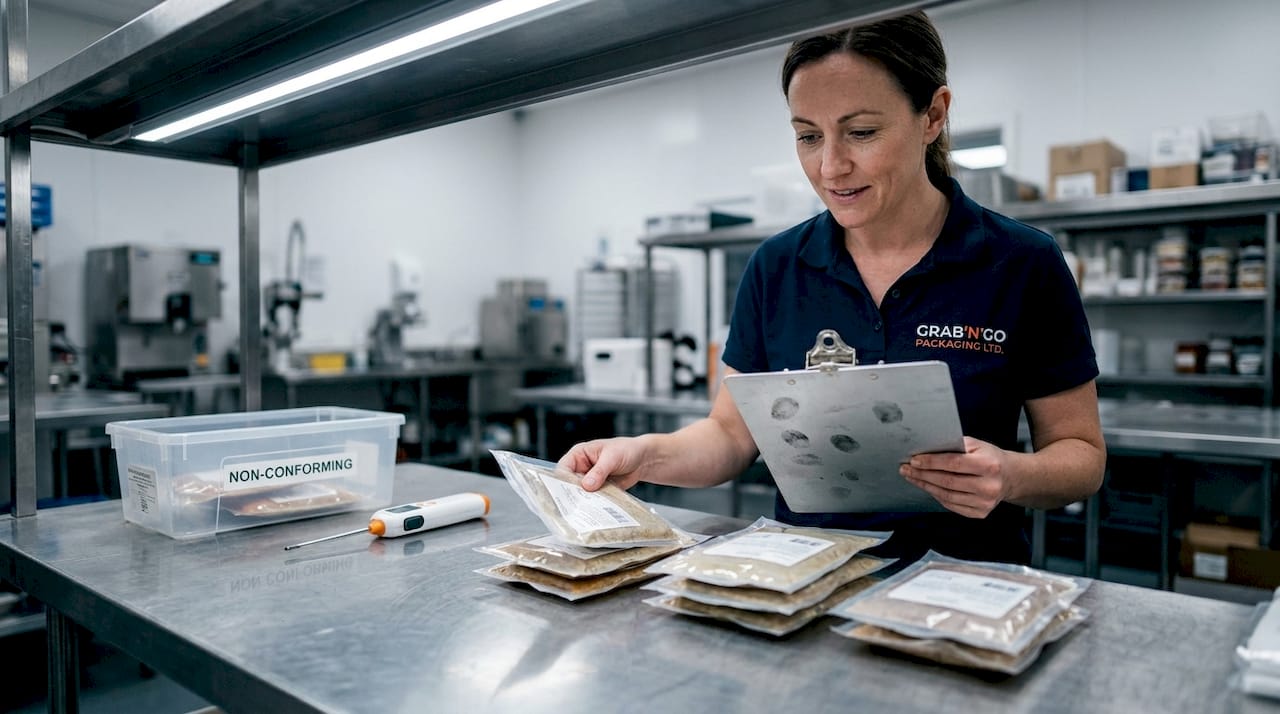
Antimicrobial packaging releases preservative compounds directly onto food surfaces, inhibiting bacterial and fungal growth without requiring additional chemical additives in the food formulation itself. Silver nanoparticles, essential oils, or organic acids incorporated into packaging films slowly migrate to create a protective zone that extends microbial lag phase. This technology proves particularly valuable for fresh-cut produce, sliced meats, and ready-to-eat meals where surface contamination poses the greatest risk.
Moisture management systems within active packaging absorb excess liquid that accumulates in sealed containers, preventing the soggy textures and accelerated spoilage that moisture promotes. Absorbent pads in meat trays and humidity-regulating films for baked goods maintain optimal moisture levels throughout distribution and storage.
Modified atmosphere packaging alters gas composition inside sealed containers to slow respiration in fresh produce and inhibit aerobic microorganisms in animal products. MAP typically reduces oxygen to 0-5% whilst increasing carbon dioxide to 20-80% depending on the product, creating conditions that dramatically slow spoilage processes. Nitrogen often serves as an inert filler gas, preventing package collapse whilst contributing no reactive effects.
Different foods require tailored gas mixtures for optimal preservation:
- Red meat benefits from 70-80% oxygen to maintain bright red colour, with carbon dioxide inhibiting bacteria
- Poultry and fish use low oxygen (0-10%) and high carbon dioxide (20-40%) to prevent oxidation and microbial growth
- Fresh vegetables require moderate oxygen (2-5%) to maintain respiration without anaerobic fermentation
- Baked goods use pure nitrogen to prevent mould whilst avoiding the acidic taste carbon dioxide can impart
Smart packaging uses sensors for real-time monitoring of temperature, freshness indicators, and gas composition. Time-temperature indicators change colour when products experience temperature abuse, providing visual confirmation of cold chain integrity. Freshness sensors detect volatile compounds released during spoilage, offering more accurate quality assessment than fixed use-by dates.
| Technology | Primary benefit | Best application | Limitation |
|---|---|---|---|
| Oxygen scavengers | Removes residual oxygen | Dried foods, coffee, cured meats | Requires hermetic seal |
| MAP | Slows respiration and microbial growth | Fresh produce, meat, dairy | Equipment cost, skill needed |
| Antimicrobial films | Inhibits surface bacteria | Ready meals, sliced products | Regulatory approval varies |
| Smart sensors | Monitors condition changes | High-value perishables, distribution | Higher unit cost |
Pro Tip: When implementing MAP, match gas mixtures precisely to product type and storage duration. Excessive carbon dioxide can cause package collapse or acidic off-flavours, whilst insufficient levels fail to inhibit spoilage adequately.
These technologies integrate seamlessly into existing operations once you understand their applications. Exploring 7 packaging best practices for UK hospitality provides implementation frameworks that align preservation technology with operational workflows and cost constraints.
Balancing packaging choices with sustainability and food waste
The environmental equation in packaging involves competing priorities that UK hospitality businesses must navigate carefully. Thicker, multi-layer packaging with superior barrier properties extends shelf life substantially, reducing food waste that represents both economic loss and environmental burden. Research demonstrates packaging thickness affects shelf life duration, with multi-material structures preserving ham for 35 days compared to 21 days for mono-material alternatives, directly impacting waste generation.
Yet these high-performance materials often combine incompatible plastics, aluminium, and paper layers that complicate or prevent recycling. Mono-material packaging offers superior recyclability through existing waste streams but may compromise barrier effectiveness, potentially increasing food spoilage rates. This trade-off requires evaluating whether preventing food waste through better packaging outweighs the environmental cost of less recyclable materials.
The carbon footprint calculation becomes complex when factoring complete lifecycle impacts. Food waste generates methane in landfills and represents wasted resources across production, transport, and refrigeration. Studies suggest that food waste environmental impact often exceeds packaging production impact by factors of 10 or more for perishable products. Therefore, packaging that prevents even modest food waste reductions can deliver net environmental benefits despite using more material.
Advanced packaging faces cost and environmental production criticism, particularly smart technologies requiring electronic components and specialised manufacturing. Small and medium enterprises find adoption challenging due to higher unit costs and technical complexity. However, these technologies offer waste reduction benefits that improve over time as production scales and costs decrease.
| Material approach | Recyclability | Shelf life performance | Food waste impact | Best for |
|---|---|---|---|---|
| Multi-layer films | Poor to moderate | Excellent barrier properties | Minimal waste | High-value perishables |
| Mono-material plastics | Good | Moderate barrier | Moderate waste risk | Products with shorter chains |
| Coated paper/card | Moderate | Limited moisture barrier | Higher waste potential | Dry or low-moisture foods |
| Compostable bio-plastics | Variable | Often lower barrier | Depends on disposal infrastructure | Low-risk products |
Practical considerations for UK hospitality operations include:
- Assess product value and spoilage risk when selecting packaging barrier levels
- Prioritise recyclable materials for lower-risk products with shorter shelf life needs
- Reserve high-barrier, multi-material packaging for premium or highly perishable items
- Communicate sustainability efforts to customers who increasingly value environmental responsibility
- Monitor local recycling infrastructure capabilities to ensure chosen materials can actually be processed
Pro Tip: Calculate your food waste costs before dismissing higher-performance packaging as too expensive. Preventing just 5% spoilage in high-value proteins often justifies premium packaging costs whilst delivering environmental benefits through waste reduction.
Exploring sustainable packaging options for UK food businesses helps identify materials that balance preservation effectiveness with environmental responsibility. The beverage sector offers relevant lessons, with sustainable packaging in beverages demonstrating how industries adapt to competing sustainability demands.
Best practices for packaging and preservation in UK hospitality
Implementing effective preservation strategies requires integrating packaging technology with operational protocols that maintain quality throughout your supply chain. UK guidelines require cold chain integrity and proper labelling as foundational elements of food safety management systems. Maintaining temperatures between 0-5°C for chilled foods prevents microbial multiplication even when packaging provides excellent barriers, as no packaging technology can compensate for temperature abuse.
Vacuum sealing perishables before refrigeration or freezing removes oxygen that accelerates degradation, but this technique demands attention to detail. Ensure complete air removal without crushing delicate foods, and verify seal integrity before storage. Incomplete seals allow oxygen infiltration that negates preservation benefits whilst creating false confidence in extended shelf life.
Labelling protocols must communicate critical information clearly and comply with traceability requirements:
- Apply freezing dates immediately when preserving prepared foods for later service
- Calculate and display accurate use-by dates based on product type and storage conditions
- Include reheating instructions that maintain food safety and quality
- Note any allergens or ingredients requiring disclosure under UK regulations
- Implement batch coding systems that enable rapid identification during quality issues
HACCP principles apply directly to packaging and preservation activities. Identify critical control points where contamination or quality loss could occur, establish monitoring procedures, and document corrective actions. Common control points include package sealing operations, temperature monitoring during storage, and verification of barrier integrity before distribution.
Packaging selection should match specific product characteristics and service models:
- High-moisture foods require excellent moisture barriers to prevent texture degradation
- Fatty products need oxygen barriers preventing rancidity development
- Items requiring reheating need heat-stable materials rated for microwave or oven use
- Products with extended holding times justify investment in MAP or active packaging systems
- Grab-and-go formats benefit from resealable closures maintaining freshness after opening
Pro Tip: Integrate IoT temperature sensors in refrigeration units and transport vehicles to receive alerts when conditions deviate from safe ranges. Real-time monitoring prevents discovering spoilage only after customer complaints occur.
Common pitfalls to avoid include:
- Overfilling packages, which prevents proper sealing and creates stress points causing leaks
- Using packaging designed for dry goods with high-moisture products, leading to rapid failure
- Neglecting seal quality verification, allowing microscopic leaks that compromise preservation
- Storing incompatible products together where strong odours migrate through packaging
- Assuming frozen storage eliminates all quality concerns, when oxidation and freezer burn still occur
Your packaging strategy should align with broader operational efficiency. Review UK food packaging best practices and 7 best food packaging practices for UK hospitality to develop comprehensive systems that protect food quality whilst supporting service speed and customer satisfaction.
Discover packaging solutions tailored for UK hospitality
Transforming preservation knowledge into operational reality requires access to packaging products engineered for food service demands. Grab & Go Packaging specialises in solutions designed specifically for UK catering and hospitality businesses, offering extensive ranges that address diverse preservation requirements across your menu.

From high-barrier films for extended shelf life to sustainable alternatives meeting environmental goals, the packaging product range provides options matching every application and budget. Whether you operate a busy takeaway, manage catering operations, or run a restaurant with grab-and-go offerings, selecting appropriate packaging directly influences food quality, waste reduction, and customer satisfaction. Explore UK catering packaging best practices alongside product specifications to make informed decisions. Discover sustainable packaging for catering businesses that balances preservation effectiveness with environmental responsibility, supporting your operational and sustainability objectives simultaneously.
Frequently asked questions
What is the main function of packaging in food preservation?
Packaging creates barriers protecting food from oxygen, moisture, light, and microbial contamination that cause spoilage and quality degradation. These protective functions maintain sensory characteristics, nutritional value, and safety throughout storage and distribution. Effective packaging extends shelf life by controlling the environmental factors that trigger deterioration processes.
How does modified atmosphere packaging work?
MAP replaces air inside sealed packages with specific gas mixtures tailored to product requirements, typically reducing oxygen whilst increasing carbon dioxide and nitrogen levels. This altered atmosphere slows respiration in fresh produce and inhibits aerobic microorganisms in meat and dairy products. Different foods require customised gas ratios, with red meat using high oxygen to maintain colour whilst poultry benefits from low oxygen preventing oxidation.
What are the challenges of flexible packaging in food preservation?
Flexible packaging can suffer seal failures, punctures, or material degradation that compromise barrier properties and allow contamination. Poor seal quality represents the most common failure mode, creating microscopic channels for oxygen and moisture infiltration. Additionally, some flexible materials offer limited barrier performance compared to rigid containers, requiring careful material selection matching product sensitivity and storage duration.
Why is cold chain integrity important in UK hospitality?
Maintaining proper refrigeration temperatures throughout storage and transport prevents microbial multiplication that leads to spoilage and foodborne illness risks. Even excellent packaging cannot compensate for temperature abuse, as warmth accelerates both microbial growth and chemical degradation reactions. UK food safety regulations mandate cold chain monitoring and documentation as critical control points in HACCP systems, with temperature breaches requiring product evaluation or disposal to protect customer safety.
Recommended
- Why Packaging Impacts Food Quality in the UK – Grab & Go Packaging
- Why Packaging Quality Matters for UK Hospitality – Grab & Go Packaging
- Food Packaging Best Practices for Efficient UK Catering – Grab & Go Packaging
- 7 Best Practices for Food Packaging Success in the UK – Grab & Go Packaging
- Eco-Friendly Packaging: Impact on Sustainable Living – EcoVibe Roast