Cart 0
What is a corrugated food box: eco-friendly packaging guide
Many food business owners assume packaging means plastic, yet corrugated food boxes now offer UK operators a genuinely sustainable alternative. These recyclable containers reduce carbon emissions by up to 69% compared to rigid plastic options whilst meeting strict UK environmental regulations. This guide explores what corrugated food boxes are, their environmental advantages, practical limitations, and how to integrate them effectively into your takeaway, delivery, or catering operations for maximum sustainability and customer satisfaction.
Table of Contents
- Key takeaways
- Understanding corrugated food boxes and how they work
- Environmental benefits and sustainability of corrugated food boxes
- Challenges and practical considerations for using corrugated food boxes
- Choosing and applying corrugated food boxes effectively in your business
- Explore eco-friendly corrugated food boxes with Grab & Go Packaging
- Frequently asked questions
Key Takeaways
| Point | Details |
|---|---|
| Sustainable materials | Corrugated food boxes are made from recyclable paper products and align with UK regulations for packaging sustainability. |
| Lower environmental impact | Life cycle assessments show corrugated packaging reduces global warming and energy use compared with rigid plastics across production, transport and end of life. |
| Handling limitations | The breathable and grease absorbing nature means protective liners are necessary for sauces and moist dishes to maintain hygiene and prevent sogginess. |
| Ideal applications | Perfect for takeaway, delivery and catering where customers value eco friendly packaging. |
Understanding corrugated food boxes and how they work
Corrugated food boxes are layered cardboard products featuring a fluted middle section sandwiched between two flat linerboards. This construction creates exceptional strength whilst remaining lightweight, making them ideal for transporting meals safely. The fluting provides cushioning and insulation, protecting food during delivery and maintaining temperature better than single-layer alternatives.
These boxes are manufactured primarily from recycled paper and cardboard, with over 80% recycled in Europe and the UK. This high recycling rate means most corrugated packaging enters a closed-loop system, reducing virgin material demand. The manufacturing process uses significantly less energy than plastic production, and the final product remains fully recyclable and compostable, aligning with UK plastic packaging regulations and environmental goals.
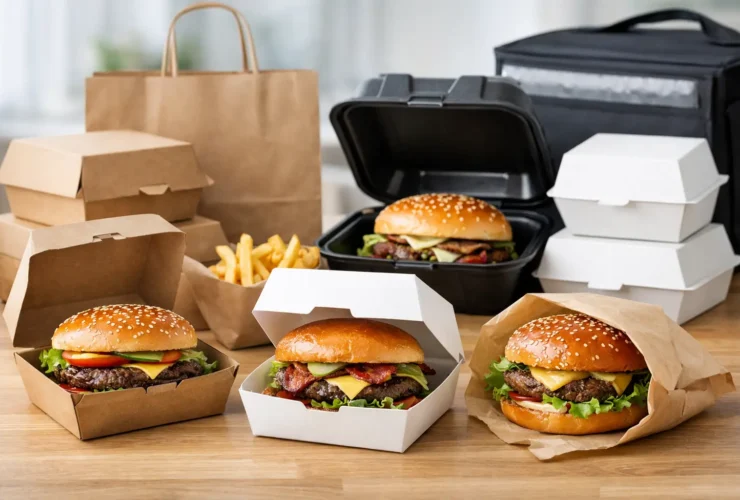
Common formats include pizza boxes, burger containers, meal boxes, and nested trays. Sizes range from small single-portion containers to large catering boxes holding multiple meals. The value of corrugated packaging extends beyond simple containment, offering businesses a versatile solution for diverse food types.
Key properties affecting food service applications include:
- Lightweight construction reduces transport costs and carbon emissions during delivery
- Natural breathability prevents condensation buildup that causes sogginess in fried foods
- Insulating properties maintain food temperature for 20 to 30 minutes during short journeys
- Biodegradable composition breaks down naturally if contaminated and unsuitable for recycling
- Customisable surfaces accept printing for branding without additional plastic coatings
The material’s breathability proves particularly valuable for items like fish and chips or pizza, where steam release prevents moisture accumulation. However, this same property means corrugated boxes absorb liquids and grease, requiring protective liners for saucy dishes. Understanding these characteristics helps operators select appropriate packaging for specific menu items whilst maximising environmental benefits.
Environmental benefits and sustainability of corrugated food boxes
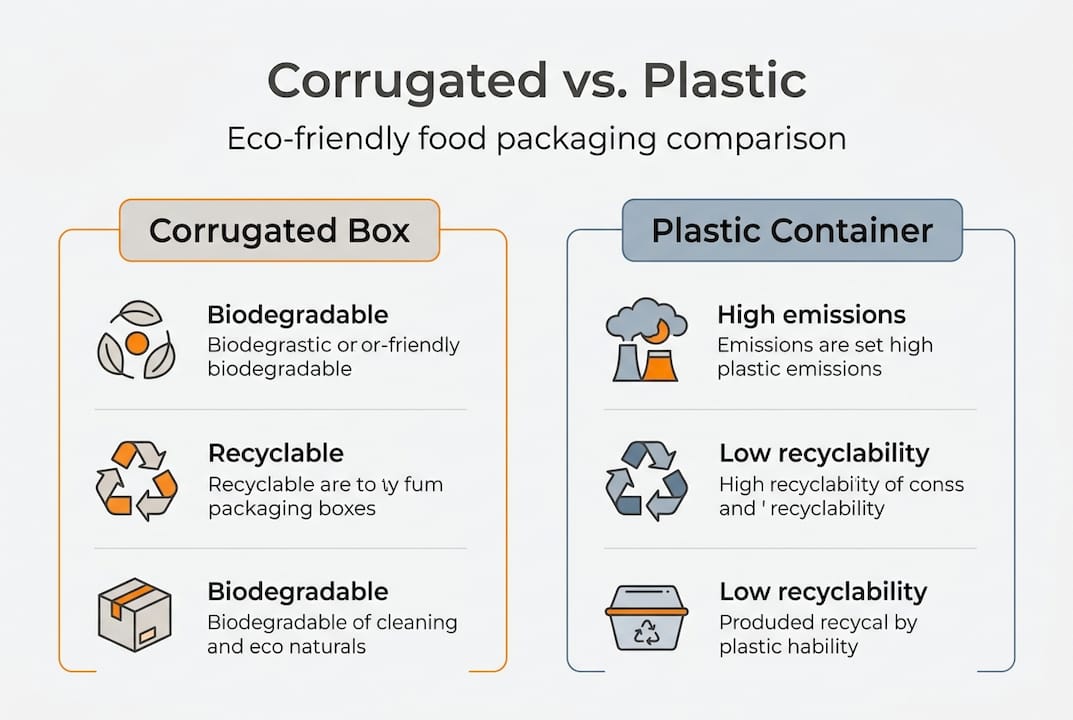
Corrugated food boxes deliver substantial environmental advantages over traditional plastic packaging. A comprehensive 2025 lifecycle assessment revealed that corrugated outperforms rigid plastic containers in global warming by 69%, energy use by 110%, and eutrophication impacts. These figures account for the entire product lifecycle, from raw material extraction through manufacturing, transport, use, and end-of-life disposal.
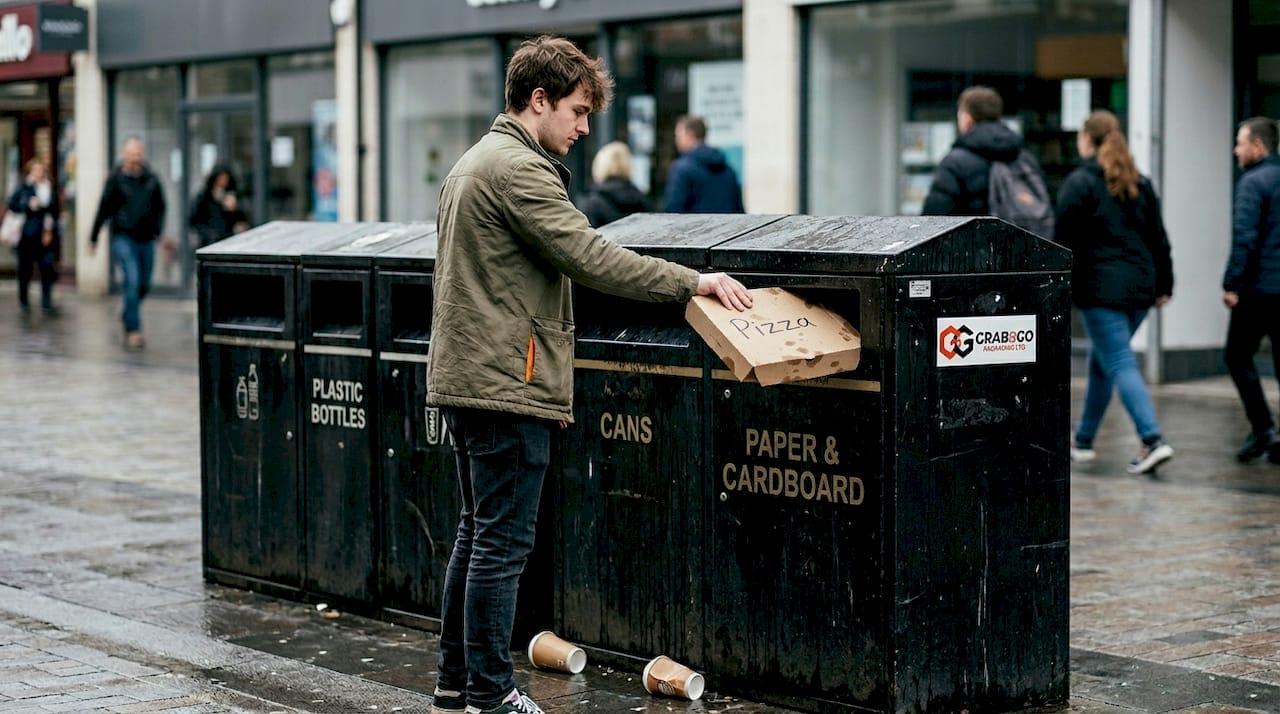
The carbon footprint reduction stems from multiple factors. Paper production requires less fossil fuel energy than plastic manufacturing, and the UK’s 82.5% paper recycling rate ensures most boxes re-enter production cycles. Transport emissions decrease significantly because corrugated boxes weigh substantially less than rigid plastic containers, reducing fuel consumption across distribution networks.
| Environmental metric | Corrugated boxes | Rigid plastic containers | Reduction |
|---|---|---|---|
| Global warming potential | 31% of baseline | 100% of baseline | 69% lower |
| Energy consumption | 47% of baseline | 100% of baseline | 110% lower |
| Water eutrophication | Significantly lower | Higher baseline | Notable reduction |
| End-of-life recycling | 82.5% UK rate | Limited infrastructure | Superior circularity |
For UK food businesses, corrugated packaging supports compliance with the Extended Producer Responsibility regulations launching in 2026. These rules require businesses to fund the collection and recycling of packaging they place on the market. Corrugated boxes integrate seamlessly with existing paper recycling infrastructure, reducing compliance costs compared to plastic alternatives requiring separate collection streams.
The Plastic Packaging Tax, charging £217.85 per tonne on packaging containing less than 30% recycled plastic, creates additional financial incentive to switch. Corrugated boxes avoid this tax entirely whilst offering superior eco-friendly packaging benefits that resonate with environmentally conscious consumers.
Pro tip: When evaluating packaging sustainability, request lifecycle assessment data from suppliers rather than relying on marketing claims. Genuine environmental benefits should be quantifiable across production, transport, and disposal phases.
The high paper recycling infrastructure in the UK facilitates true circular economy principles. Consumers recognise paper recycling symbols and participate actively, ensuring most boxes enter recycling streams rather than landfills. This consumer familiarity reduces contamination rates and increases material recovery, making corrugated boxes ideal for sustainable catering packaging strategies.
Challenges and practical considerations for using corrugated food boxes
Whilst corrugated boxes offer environmental advantages, operators must understand their limitations to use them effectively. The material’s hygroscopic nature means it absorbs moisture readily, potentially compromising structural integrity and food safety. Boxes exposed to steam, condensation, or liquid foods can weaken, collapse during transport, or harbour bacteria in damp fibres.
According to packaging specialists, porous bases trap bacteria and moisture without protective coatings, and weak stacking characteristics increase damage risk. Greaseproof liners become essential for oily foods like burgers, fried chicken, or curry dishes. Without barriers, grease soaks through cardboard, creating unsightly stains and potential contamination issues.
Key operational challenges include:
- Moisture sensitivity limits use with hot, steamy foods unless properly lined or vented
- Stacking strength decreases when boxes become damp, risking collapse during storage or delivery
- Pest attraction increases if food residues remain on damaged or improperly sealed boxes
- Temperature retention lasts only 20 to 30 minutes, unsuitable for extended delivery times
- Customisation costs exceed standard plastic containers when ordering small quantities
Reusable plastic containers provide superior sterilisation capabilities and withstand repeated washing at high temperatures. They stack efficiently without damage risk and handle moisture without structural compromise. However, these benefits come with higher upfront investment, increased transport emissions from return logistics, and washing infrastructure requirements that many small operators cannot justify.
| Factor | Corrugated boxes | Reusable plastic containers |
|---|---|---|
| Initial cost | Low | High |
| Moisture resistance | Poor without liners | Excellent |
| Hygiene maintenance | Single use, no cleaning | Requires washing infrastructure |
| Environmental impact | Lower lifecycle emissions | Higher upfront emissions, offset over multiple uses |
| Operational complexity | Simple disposal | Return logistics required |
Pro tip: For hot foods generating significant steam, use vented corrugated boxes with greaseproof paper liners. The vents release moisture whilst liners prevent direct contact between food and cardboard, maintaining both food quality and box integrity.
Effective corrugated box usage requires matching container properties to food characteristics. Dry items like sandwiches, salads, or baked goods work perfectly without modification. Greasy foods need liners. Liquid-heavy dishes may require plastic-lined corrugated or alternative packaging entirely. Understanding these distinctions prevents customer complaints and maintains food safety standards.
Proper sealing techniques also matter. Interlocking flaps provide adequate closure for most applications, but tape or stickers may be necessary for saucy dishes during transport. Operators should test packaging with actual menu items under realistic conditions before committing to large orders, ensuring boxes perform adequately throughout the delivery journey.
Storage conditions affect box performance significantly. Humid environments or proximity to steam sources can compromise boxes before use. Store corrugated packaging in dry locations away from cooking areas, and rotate stock to use older inventory first. These simple practices prevent quality issues and reduce waste from damaged packaging.
For comprehensive guidance on selecting appropriate containers for different food types, review takeaway box options and food packaging best practices to ensure your choices align with operational needs and sustainability goals.
Choosing and applying corrugated food boxes effectively in your business
Selecting optimal corrugated packaging requires systematic evaluation of your specific operational needs. Follow this structured approach:
- Analyse your menu to categorise items by moisture content, temperature requirements, and grease levels
- Match food categories to appropriate box styles, considering whether liners, venting, or special coatings are necessary
- Calculate volume requirements based on daily order patterns, accounting for peak periods and seasonal variations
- Request samples from multiple suppliers and conduct real-world testing with actual menu items during typical delivery timeframes
- Evaluate supplier certifications ensuring food safety compliance and verifiable recyclability claims
- Compare total cost of ownership including box price, liner costs, storage requirements, and waste disposal fees
- Implement a trial period with one or two menu items before rolling out across your entire operation
Food type determines packaging requirements significantly. Dry sandwiches, wraps, and salads need basic corrugated boxes without additional protection. Pizza boxes require grease-resistant coatings or papers to handle cheese oils. Hot, moist items like pasta dishes or curries demand boxes with greaseproof liners and secure sealing to prevent leakage during transport.
Transport conditions influence selection equally. Deliveries under 20 minutes tolerate standard corrugated boxes for most foods. Longer journeys require insulated options or alternative packaging maintaining temperature better. Consider whether drivers stack multiple orders, as bottom boxes must withstand weight without collapsing.
Pro tip: Customising boxes with your branding improves consumer perception and can reduce waste by encouraging customers to recycle properly. Printed recycling instructions directly on boxes increase participation rates and support your sustainability messaging.
Supplier certifications matter for regulatory compliance and genuine sustainability. Verify that packaging meets UK food contact material regulations, carries FSC or PEFC certification for responsible forestry, and includes clear recyclability labelling. Request documentation proving recycled content percentages rather than accepting marketing claims without evidence.
Storage and stacking practices prevent damage before boxes reach customers. Store corrugated packaging in dry areas away from heat and moisture sources. Stack boxes carefully to avoid crushing, and use shelving systems that distribute weight evenly. Rotate inventory using first-in, first-out principles to prevent degradation from extended storage.
Monitor packaging effectiveness through customer feedback and operational metrics. Track complaint rates related to leakage, structural failure, or food quality issues potentially linked to packaging performance. Survey customers about their recycling behaviour and satisfaction with your environmental initiatives. Use this data to refine packaging choices continuously.
Regular supplier reviews ensure you maintain optimal cost-performance balance as your business evolves. Market conditions change, new materials emerge, and volume discounts become available as you grow. Schedule quarterly packaging assessments to identify improvement opportunities and cost savings.
For detailed guidance on making informed packaging decisions, explore the packaging selection process and review takeaway container examples to see how successful operators match packaging to specific food service applications.
Explore eco-friendly corrugated food boxes with Grab & Go Packaging
Transitioning to sustainable packaging becomes straightforward when working with specialists who understand UK food service requirements. Grab & Go Packaging offers comprehensive corrugated solutions tailored specifically for takeaway, delivery, and catering operations seeking environmental benefits without compromising food safety or customer satisfaction.

Their product range includes boxes for diverse applications, from standard meal containers to specialised formats for specific cuisines. Expert guidance helps you navigate options, ensuring you select packaging that matches your menu characteristics, delivery logistics, and sustainability objectives. Competitive pricing and bulk purchasing options make the switch financially viable for businesses of all sizes whilst maintaining compliance with UK environmental regulations.
Pro tip: Contact packaging specialists before placing large orders to discuss customisation options, including branded printing and specific liner requirements. This consultation prevents costly mistakes and ensures your packaging supports both operational efficiency and marketing goals.
Explore their full range of eco-friendly packaging options, review the detailed packaging selection guide for decision-making frameworks, or discover specialised corrugated packaging solutions designed specifically for UK food businesses prioritising sustainability.
Frequently asked questions
What is a corrugated food box?
A corrugated food box is a layered cardboard container featuring a fluted middle section between flat surfaces, creating lightweight yet strong packaging for takeaway and delivery meals. These boxes are manufactured primarily from recycled paper and remain fully recyclable after use, making them an environmentally responsible alternative to plastic containers.
Are corrugated food boxes better for the environment than plastic containers?
Yes, corrugated boxes reduce global warming potential by 69% and energy consumption by 110% compared to rigid plastic containers across their entire lifecycle. They integrate seamlessly with UK recycling infrastructure, achieving over 82% recovery rates, and help businesses avoid the Plastic Packaging Tax whilst supporting Extended Producer Responsibility compliance.
Can corrugated boxes handle hot, greasy foods safely?
Corrugated boxes handle hot, greasy foods effectively when paired with greaseproof paper liners that prevent oil absorption and maintain structural integrity. Without protective liners, grease soaks through cardboard, weakening the container and creating potential hygiene issues. Proper liner selection and secure sealing ensure safe transport of diverse food types.
How do UK regulations affect corrugated food box usage?
UK regulations increasingly favour corrugated packaging through the Extended Producer Responsibility scheme launching in 2026 and the Plastic Packaging Tax charging £217.85 per tonne on packaging with less than 30% recycled content. Corrugated boxes avoid this tax entirely whilst leveraging established paper recycling infrastructure, reducing compliance costs for food businesses.
What are the main limitations of corrugated food boxes?
Moisture sensitivity represents the primary limitation, as corrugated material absorbs liquids and weakens when exposed to steam or condensation. Boxes also provide limited temperature retention beyond 20 to 30 minutes and require careful stacking to prevent crushing. These constraints necessitate proper food matching and may require supplementary packaging like liners for optimal performance.
How should food businesses store corrugated boxes to maintain quality?
Store corrugated boxes in dry locations away from cooking areas, steam sources, and direct moisture exposure to prevent premature weakening. Use shelving systems that distribute weight evenly, rotate inventory using first-in, first-out principles, and avoid overstacking which can crush boxes before use. Proper storage practices extend shelf life and ensure consistent packaging performance.
Recommended
- Corrugated Food Packaging: Sustainable Solutions for UK Restaurants – Grab & Go Packaging
- What Is Corrugated Packaging and Its Food Industry Value – Grab & Go Packaging
- Blog – Grab & Go Packaging
- 7 Practical Examples of Packaging Materials for Food Businesses – Grab & Go Packaging
- Inpakken zonder cadeaupapier: Creatief en Duurzaam – Kadopapier.net