
Cart 0

Role of Packaging in Restaurants – Impact on Branding and Compliance
Choosing the right packaging is no longer a simple afterthought for restaurants in the United Kingdom. As customers demand better food quality, safety, and sustainability, your packaging must now work harder than ever to protect meals, impress diners, and meet strict legal requirements. This article sheds light on the importance of protective materials and systems in British restaurants and explores how your packaging choices can help your business stand out in a crowded takeaway market.
Table of Contents
- Defining Packaging In UK Restaurants
- Types Of Restaurant Packaging Solutions
- Branding And Customer Experience Benefits
- UK Regulations And Legal Obligations
- Costs, Waste Management, And Common Pitfalls
Key Takeaways
| Point | Details |
|---|---|
| Packaging Importance | Packaging in UK restaurants is essential for food protection, brand communication, and compliance with regulations. Understanding its roles aids better decision-making in material selection. |
| Consumer Expectations | Modern consumers prioritise sustainability; restaurants must reflect these expectations through eco-friendly packaging choices to enhance brand loyalty. |
| Regulatory Compliance | Strict regulations surround food contact materials, requiring restaurants to adhere to hygiene standards and clear labelling to avoid penalties. |
| Cost Management | Effective tracking and optimisation of packaging costs, alongside waste management practices, are crucial for maintaining profit margins in the hospitality sector. |
Defining Packaging in UK Restaurants
Packaging in UK restaurants is far more than just a container. It encompasses all the protective materials and systems that enclose food, keeping it safe from contamination, maintaining quality, and enabling efficient service to customers. This definition goes beyond simple wrapping to include the entire ecosystem of materials and design choices that support restaurant operations.
In the British hospitality sector, protective food packaging systems serve dual purposes. They protect the food itself whilst simultaneously functioning as a commercial communication tool. Your packaging choice affects both how food arrives at the customer and what impression that customer forms about your restaurant.
The scope of restaurant packaging includes several key materials:
- Containers and boxes: Rigid or semi-rigid vessels holding prepared meals, pastries, or ingredients
- Wrapping materials: Greaseproof paper, foil, and films that protect sandwiches, baked goods, and takeaway items
- Bags and carriers: Durable bags for transport, designed to maintain food safety during delivery
- Cups and vessels: Drinks containers in various sizes for hot and cold beverages
- Cutlery and utensils: Disposable eating implements that complete the takeaway experience
In today’s UK market, packaging definitions must account for environmental and sustainability expectations. Modern British consumers increasingly expect restaurants to consider sustainable food packaging practices when selecting materials. This shifts how restaurants define and think about their packaging choices.
Your packaging also reflects regulatory compliance standards. UK restaurants must ensure all food contact materials meet Food Standards Agency guidelines, maintain hygiene standards, and provide accurate labelling. The definition therefore includes compliance infrastructure alongside the physical materials themselves.
For takeaway and delivery operations, packaging becomes especially critical. It must maintain food temperature, prevent spillage, protect against external contamination, and communicate your brand identity clearly. A clear definition helps you select appropriate materials for each use case.
Packaging in restaurants serves three simultaneous roles: food protection, brand communication, and regulatory compliance. Understanding this triple function helps guide every packaging decision you make.
Pro tip: Start by auditing your current packaging across all food categories—takeaway containers, wrapping materials, and delivery bags—to identify which items truly serve your operational needs versus which are selected by habit rather than purpose.
Types of Restaurant Packaging Solutions
Restaurant packaging solutions come in many forms, each designed for specific operational needs and customer expectations. Understanding the range available helps you select the right materials for different food types and service methods.
Rigid containers and boxes form the backbone of most takeaway operations. These range from compartmentalised meal boxes to single-item containers, accommodating everything from hot meals to desserts. Rigid solutions offer excellent protection and maintain shape during transport.
Flexible wrapping materials serve different purposes within your operation:
- Greaseproof paper: Ideal for sandwiches, pastries, and baked goods that release oils or moisture
- Kraft paper: Provides strength and sustainability for heavier items or environmentally conscious customers
- Foil wrapping: Retains heat effectively for hot foods and offers barrier protection
- Plastic films: Create moisture barriers for fresh items like salads or prepared ingredients
Disposable containers for restaurants address specific challenges in modern food service. Some prioritise insulation for temperature-sensitive foods, whilst others focus on sustainability credentials or branding opportunities.
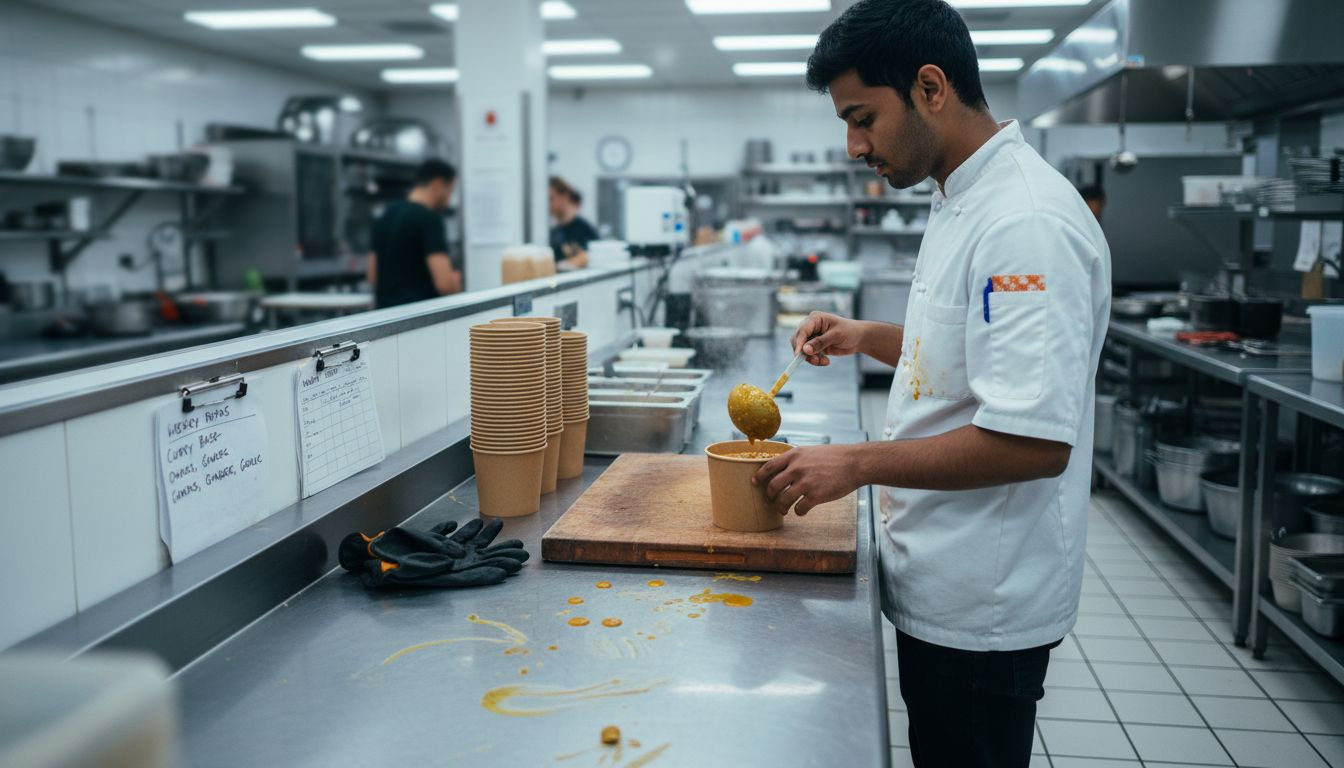
Beverage vessels require separate consideration. Hot drink cups need insulation and secure lids to prevent spillage, whilst cold drink containers must resist condensation. Cup sizes typically range from 8oz for espresso through to 32oz for larger cold beverages.
Bags and carriers complete the packaging ecosystem. Durable paper or plastic bags protect multiple items during delivery and create a professional unboxing experience. Handle strength matters significantly, especially for heavier orders or repeat customers.
Specialised packaging solutions address niche requirements. Fish and chips boxes provide grease resistance, whilst bagasse products offer compostable alternatives. Cutlery and napkins round out the complete packaging solution for self-service operations.
Here is a comparison of popular UK restaurant packaging materials by key business priorities:
| Material Type | Environmental Impact | Business Benefit | Common Drawback |
|---|---|---|---|
| Compostable Bagasse | Low carbon footprint | Aligns with consumer demands | Higher unit cost |
| Rigid Plastic | High recycling challenges | Provides excellent protection | EPR fees typically higher |
| Greaseproof Paper | Widely recyclable | Affordable, suits baked goods | Limited heat insulation |
| Aluminium Foil | Recyclable if clean | Retains heat for deliveries | Prone to food residue |
| Kraft Paper | Fully recyclable | Strong, eco-friendly appearance | Not moisture resistant |
Different food types demand different packaging approaches. Hot foods need insulation and moisture control, whilst fresh items need breathability and barrier protection against external contaminants.
When planning your packaging selection, consider how packaging affects food quality during delivery. The materials you choose directly impact whether food arrives at the customer in optimal condition.
Pro tip: Map your menu items by category—hot meals, fresh items, liquids, and baked goods—then assign appropriate packaging types to each category rather than using one-size-fits-all solutions across your entire operation.
Branding and Customer Experience Benefits
Your packaging is silent marketing. Every customer interaction with your branded containers, bags, and wrapping sends a message about your restaurant before they even taste the food. This makes packaging decisions far more strategic than most restaurant owners realise.
Innovative restaurant packaging directly influences how customers perceive your brand. Thoughtful design choices, quality materials, and attention to detail signal professionalism and care to your customers. These perceptions shape whether they return and recommend your restaurant to others.
Branding through packaging creates several tangible advantages:
- Visual recognition: Consistent colours, logos, and design make your brand instantly recognisable in crowded delivery apps or on the street
- Premium positioning: High-quality materials elevate perceived value, justifying competitive pricing and attracting quality-conscious customers
- Customer loyalty: Memorable unboxing experiences encourage repeat orders and social media sharing
- Differentiation: Distinctive packaging sets you apart from competitors, especially in saturated local markets
Customer experience extends beyond aesthetics. Practical features matter significantly. Tamper-evident seals reassure customers about food safety, whilst clear reheating instructions demonstrate you understand their needs after delivery.
Sustainability messaging on your packaging resonates strongly with modern UK consumers. When customers see compostable or recyclable materials, they feel confident supporting your business. This builds emotional connection beyond transactional relationships.
The unboxing experience creates psychological impact. When a customer opens their delivery and finds neat presentation, branded tissue, and protective inserts, they perceive greater value. This perception justifies premium pricing and encourages recommendations.
Branding consistency across all packaging touchpoints reinforces your restaurant identity. From bags to containers to napkins, cohesive design creates a professional impression that builds trust and recognition.
Packaging functions as your brand ambassador in customers’ homes. Once food arrives, your packaging continues communicating your values, quality standards, and attention to detail.
Consider how packaging design impacts food business perceptions. Strategic design choices drive customer satisfaction and encourage word-of-mouth growth.
Pro tip: Photograph your packaged meals from the customer perspective—how they appear on a doorstep or table—then assess whether your current packaging creates an Instagram-worthy moment that encourages customers to share and promotes your restaurant organically.
UK Regulations and Legal Obligations
Restaurant packaging isn’t a free-for-all in the United Kingdom. Strict regulations govern what materials you use, how you label them, and how you manage packaging waste. Understanding these obligations protects your business from fines and reputational damage.
The Food Standards Agency (FSA) maintains rigorous standards for all food contact materials. Any packaging touching food must meet hygiene requirements, prevent contamination, and not transfer harmful substances to meals. This applies regardless of whether packaging is single-use or reusable.
Extended producer responsibility requirements now affect restaurants placing packaging on the UK market. You must register, report packaging data annually, and contribute financially to packaging waste management systems. This represents a significant compliance shift for the hospitality sector.
Key regulatory obligations include:
- Registration: Most restaurants must register with the Environment Agency if placing over 25 tonnes of packaging on the market annually
- Data reporting: Accurate records of packaging types, weights, and materials used
- Recyclability compliance: Ensuring packaging meets recyclability standards or proving exemptions
- Payment of fees: Contributing to Extended Producer Responsibility schemes based on packaging volumes
Labelling requirements demand precision. Your packaging must clearly indicate contents, allergens, storage instructions, and disposal guidance. Misleading environmental claims (greenwashing) face regulatory scrutiny and penalties.
The Producer Responsibility Obligations Regulations 2024 establish these frameworks comprehensively. They define producer roles, establish size thresholds, and mandate recyclability assessments before materials reach customers.
Food safety standards require hygienic material sourcing. Suppliers must provide certifications confirming food contact compliance. You bear responsibility for verifying supplier credentials before using their packaging.
Non-compliance carries serious consequences. Penalties range from warnings to substantial fines, plus potential prosecution and reputational harm that damages customer trust.
Below is a summary of common compliance risks and their effects on UK restaurant operations:
| Compliance Risk | Operational Impact | Potential Consequence |
|---|---|---|
| Incorrect labelling | Customer safety at risk | Fines and reputational harm |
| Uncertified suppliers | Material may fail FSA checks | Packaging withdrawal needed |
| No recyclability proof | Missed EPR requirements | Increased waste fees |
| Missed registration | Illegal trading status | Business closure/fines |
Compliance isn’t optional in modern UK restaurant operations. Regulations exist to protect food safety, reduce environmental impact, and ensure fair competition.
Small restaurants sometimes assume they escape these obligations, but threshold exemptions apply only to specific circumstances. Most takeaway and delivery operations trigger full compliance requirements.
Pro tip: Audit your packaging suppliers immediately to confirm they provide FSA food contact certifications, then establish a compliance calendar reminder for your annual Extended Producer Responsibility registration deadline to avoid penalties and operational disruption.
Costs, Waste Management, and Common Pitfalls
Packaging costs represent a significant operational expense for UK restaurants, yet many owners fail to track or optimise them effectively. Understanding these costs alongside waste management obligations helps protect your profit margins and avoid costly mistakes.
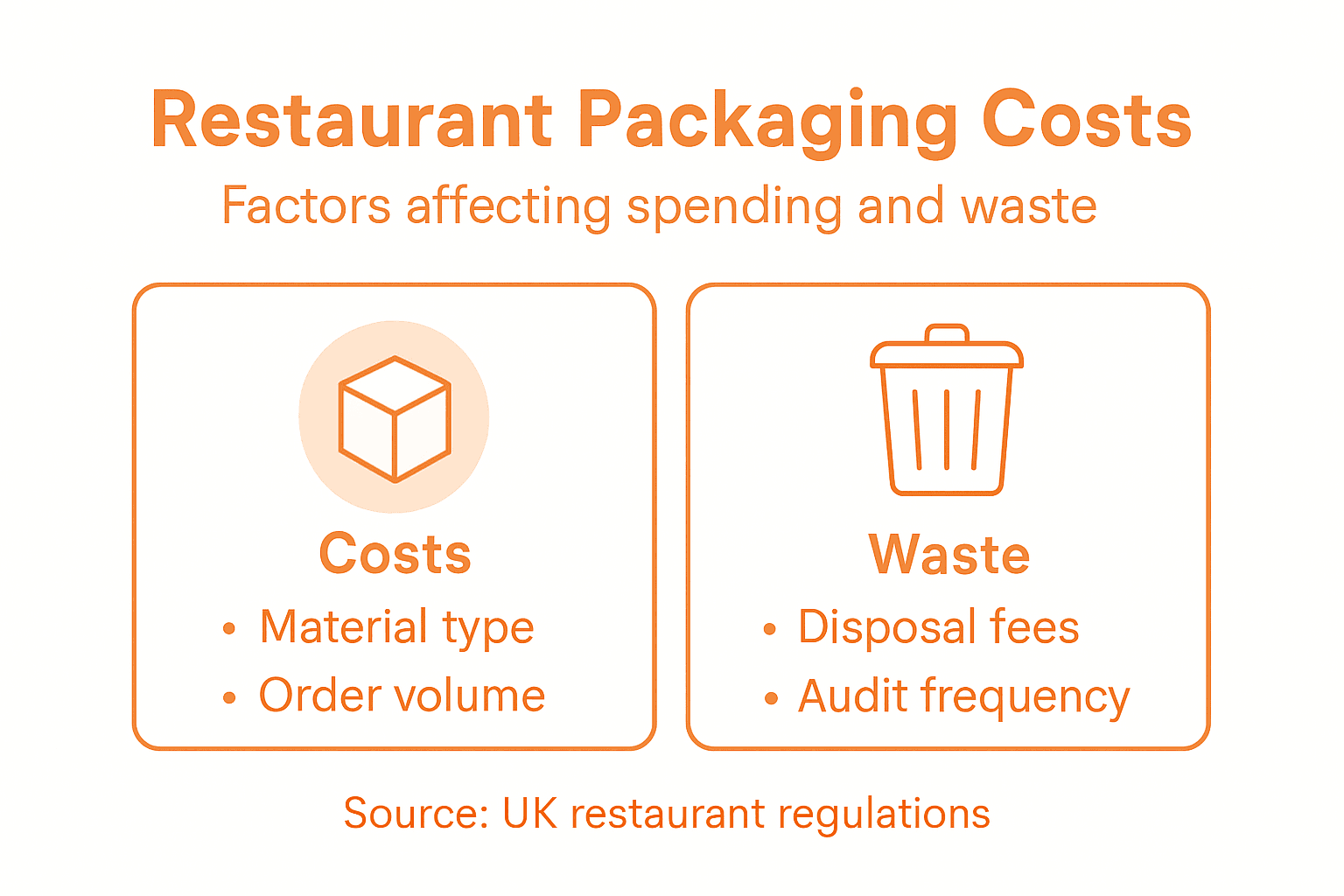
Direct packaging costs vary based on material selection, order volumes, and customisation. Branded containers cost more than plain alternatives, yet the branding investment often returns value through customer recognition and premium positioning. Bulk ordering reduces per-unit costs substantially, rewarding restaurants that plan ahead.
Food waste expenses in UK restaurants reveal the hidden financial burden. The sector loses approximately £682 million annually to food waste alongside millions of tonnes of packaging waste. Poor storage practices, inaccurate portion control, and inappropriate packaging contribute significantly to these losses.
Common cost-related pitfalls include:
- Over-ordering: Purchasing excessive packaging that expires or becomes obsolete before use
- Wrong material selection: Choosing inappropriate packaging requiring replacement and wasting budgets
- Inconsistent suppliers: Changing providers frequently instead of negotiating volume discounts
- No waste tracking: Failing to monitor packaging waste prevents identifying reduction opportunities
Extended Producer Responsibility fees now add mandatory costs. EPR waste disposal fees vary significantly by material type and recyclability. Non-recyclable packaging incurs higher fees, incentivising more sustainable choices that simultaneously reduce costs.
Waste management systems require proper infrastructure. Segregating packaging types enables recycling and reduces landfill disposal costs. Many restaurants overlook this, paying premium disposal rates for recyclable materials dumped as general waste.
Common operational mistakes damage finances:
- Underestimating order volumes, leading to rush purchases at premium prices
- Ignoring supplier minimum orders, resulting in inadequate stock and operational disruption
- Using oversized packaging, increasing material costs and waste unnecessarily
- No inventory management, causing spoilage of stored packaging materials
Every packaging decision carries financial consequences beyond the initial purchase price. Material choice, waste management systems, and supplier relationships directly impact profitability.
Temperature-sensitive packaging adds complexity. Insulated containers cost more upfront but prevent food spoilage during delivery, reducing waste and customer complaints that damage reputation and repeat business.
Pro tip: Conduct a quarterly packaging audit measuring actual usage against purchased quantities, then calculate per-item costs across all packaging types to identify which materials deliver best value and which purchases represent waste, informing more strategic supplier negotiations.
Elevate Your Restaurant Packaging for Branding and Compliance Success
Struggling to find packaging that meets strict UK regulations yet promotes your brand effectively? The article highlights the crucial role packaging plays in food protection, customer experience, and legal compliance. Key challenges include selecting materials that align with sustainability goals, ensuring regulatory adherence, and creating memorable branded packaging that boosts customer loyalty. Take control of these challenges by choosing packaging designed specifically for the hospitality sector’s needs.
Discover a wide selection of restaurant packaging materials tailored for takeaway, delivery, and dine-in at Uncategorized – Grab & Go Packaging.
Act now to upgrade your packaging with quality containers, eco-friendly bags, and customisable branding options to meet Food Standards Agency requirements and Extended Producer Responsibility guidelines. Visit Grab & Go Packaging today and secure packaging solutions that protect your food, comply with regulations, and amplify your brand image in an increasingly competitive UK marketplace.
Frequently Asked Questions
What are the primary roles of packaging in restaurants?
Packaging serves three main roles in restaurants: food protection, brand communication, and ensuring regulatory compliance. It protects food from contamination, enhances the customer’s perception of the brand, and adheres to legal standards for safety and hygiene.
How does packaging impact branding for restaurants?
Packaging acts as a silent marketing tool that communicates brand identity through consistent colours, logos, and quality materials. It enhances visual recognition, positions the restaurant as premium, encourages customer loyalty, and differentiates it from competitors.
What are the key compliance requirements for restaurant packaging?
Restaurants must adhere to Food Standards Agency guidelines, ensuring packaging materials prevent contamination and are safe for food contact. Also, they need to comply with Extended Producer Responsibility regulations that require registration and proper handling of packaging waste.
How can restaurants select appropriate packaging for different food types?
Restaurants should categorize their menu items—such as hot meals, fresh ingredients, and liquids—and assign suitable packaging types for each category. This ensures proper insulation, moisture control, and protection against contamination, enhancing food quality during delivery.
Recommended
- Role of Packaging in Hospitality – Driving Experience and Value – Grab & Go Packaging
- Role of Packaging in Marketing: Boosting Food Brands – Grab & Go Packaging
- Why Packaging Design Matters for UK Food Businesses – Grab & Go Packaging
- Why Packaging Impacts Food Quality in the UK – Grab & Go Packaging

