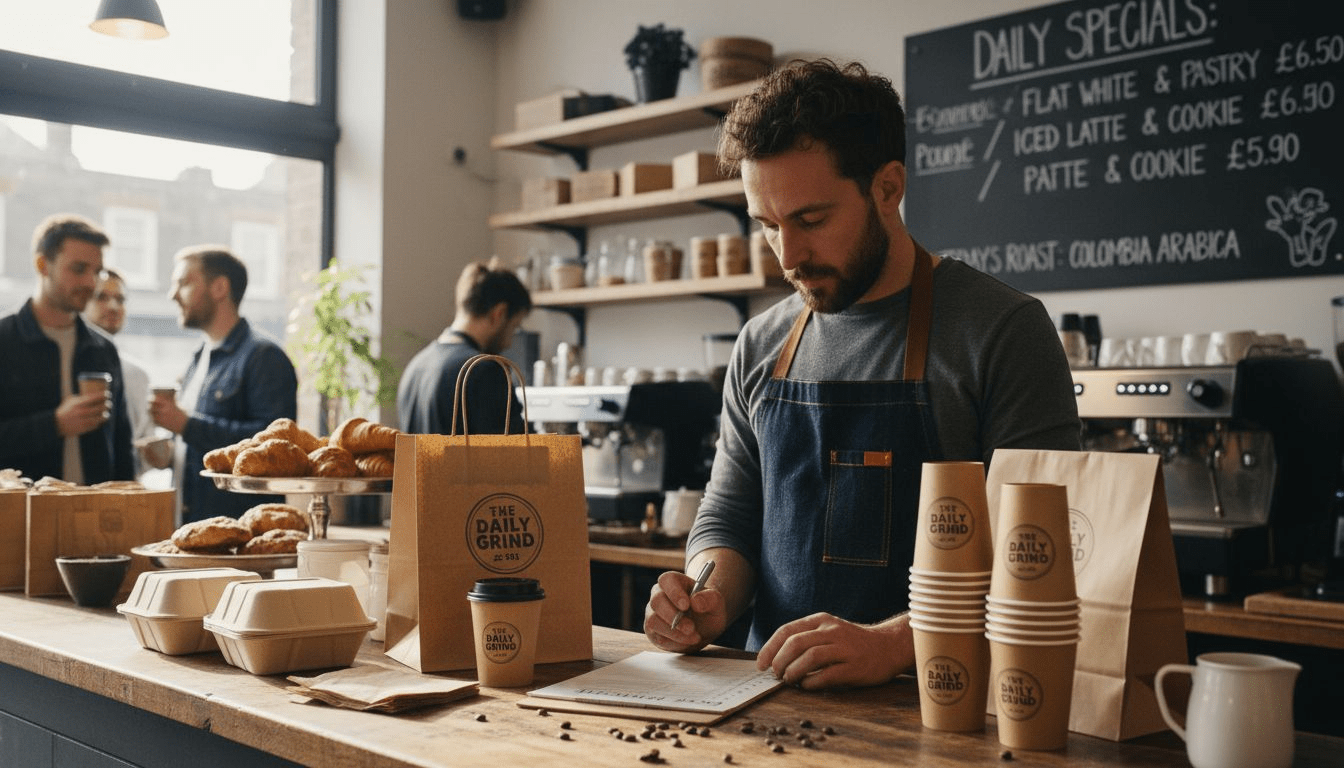
Selecting the right takeaway packaging for your coffee shop can feel overwhelming. New UK rules on single-use plastics mean you cannot rely on the same cups, lids, and containers you used before. The choices you make now affect both your legal compliance and your reputation with customers who care about sustainability and food safety.
This guide will show you how to meet updated government requirements and deliver a seamless experience at every step. You will learn how to pick packaging that is eco-friendly, durable, and suitable for your products, while protecting your business from common pitfalls. From choosing recyclable cups to displaying allergen information that keeps your customers safe, the following steps offer clear solutions you can put into practice immediately.
Get ready to discover practical packaging strategies that set your coffee shop apart and keep your customers coming back.
| Key Insight | Detailed Explanation |
|---|---|
| 1. Choose Compliant Takeaway Cups | Ensure your cups and lids comply with local regulations on single-use plastics to avoid fines and enhance customer satisfaction. |
| 2. Prioritise Eco-Friendly Food Containers | Select durable, eco-friendly containers that maintain product quality and showcase your environmental commitment to attract loyal customers. |
| 3. Invest in Branded Bags for Awareness | Use eye-catching branded bags to create marketing opportunities as customers carry them, boosting visibility and brand recognition. |
| 4. Provide Quality Cutlery and Napkins | Offer sufficient, high-quality cutlery and napkins to enhance customer convenience and satisfaction, resulting in a better overall experience. |
| 5. Ensure Accurate Labelling for Safety | Properly label products with allergen information and ingredients to protect customers and comply with legal requirements, safeguarding your business reputation. |
Your cup and lid choice defines the first physical interaction your customers have with your brand. The right pairing protects your coffee whilst creating a memorable unboxing moment that encourages repeat visits.
The UK packaging landscape has shifted significantly. As of October 2023, the government implemented restrictions on single-use plastic items, meaning you need cups and lids that comply with these regulations. Takeaway coffee cups with recyclable plastic linings remain permitted, but you must verify your supplier sources compliant materials.
Comply with local regulations first. Different local authorities enforce restrictions at varying pace, so contact yours to understand specific requirements. Your supplier should confirm whether products meet current legislation.
When reviewing cup options, prioritise these features:
Lid selection matters equally to cup choice. A poorly fitting lid ruins the customer experience regardless of cup quality. Test multiple lid styles with your standard cup sizes before committing to bulk orders.
Brand consistency through packaging builds customer recognition. Your cups become mobile advertisements when customers carry them through town. Investing in quality, visually appealing packaging returns value through word-of-mouth marketing and social media sharing.
Your packaging choice communicates whether you prioritise sustainability and customer experience—both factors that influence purchasing decisions in today’s market.
Consider these practical steps when selecting your cups and lids:
Pro tip: Order sample packs in multiple lid styles and cup sizes, then use them during real service for a week to identify which combinations your staff prefers and which perform best with your specific beverages—this real-world testing prevents costly mistakes when ordering bulk quantities.
Food containers are the workhorses of your coffee shop operation. They protect your products, preserve quality, and communicate your brand values to customers with every transaction.
Durability matters because containers that fail compromise your reputation. A flimsy box that falls apart or leaks during delivery damages customer trust immediately. You need packaging that performs consistently under real-world conditions.
Eco-friendly options have moved beyond niche territory into mainstream necessity. Your customers increasingly expect sustainable choices, and many actively seek businesses demonstrating environmental responsibility. The business case is clear: eco-conscious packaging attracts loyal customers willing to pay premium prices.
Consider these container characteristics when evaluating options:
Material selection determines both performance and environmental impact. Understanding different packaging material types helps you make informed decisions balancing durability with sustainability.
Pulp-based containers offer excellent insulation and compostability. They’re lightweight, cost-effective, and increasingly preferred by environmentally conscious consumers. Bagasse products (made from sugarcane waste) provide similar benefits whilst reducing reliance on virgin resources.
Plastic containers remain popular for certain applications because they’re lightweight and transparent. However, prioritise recyclable rather than single-use options where regulations permit.
Selecting durable, eco-friendly containers isn’t just about compliance—it’s about building customer loyalty and differentiating your business in a competitive market.
When sourcing containers, follow these steps:
Pro tip: Test containers with your actual products under operating conditions for at least one week before committing to bulk orders—this reveals hidden issues like moisture buildup, structural weakness, or lid fit problems that samples alone won’t demonstrate.
Branded bags transform ordinary transactions into marketing opportunities. Every customer carrying your bag through town becomes a moving billboard for your business, generating free exposure you couldn’t purchase through traditional advertising.
Visibility extends beyond the street. Social media has amplified the value of distinctive packaging. Customers photograph and share memorable packaging online, reaching audiences far beyond your physical location. A well-designed branded bag can generate dozens of posts monthly from satisfied customers.
Branding consistency builds recognition and trust. When customers see your distinctive bag design repeatedly, your business becomes synonymous with quality and professionalism. This psychological reinforcement influences future purchasing decisions and encourages loyalty.
Consider these essential elements when selecting branded bags:
Branding placement strategy determines visibility effectiveness. Bags carried at eye level need prominent logo placement on both sides. Custom packaging ideas for branding help you maximise your visual impact and customer reach.
Colour psychology matters significantly. Your bag colour should align with your brand identity whilst standing out on busy streets. Neutral colours with bold accent colours often perform better than overly trendy designs that date quickly.
Material selection communicates values. Kraft paper bags suggest sustainability and authenticity. Laminated paper offers durability and premium appearance. Cotton or canvas bags appeal to environmentally conscious customers willing to reuse packaging.
Your branded bags represent a cost-effective marketing channel that reaches customers repeatedly—making design investment a smart business decision.
When implementing branded bags, follow these steps:
Pro tip: Invest in branded tissue paper or shredded paper fill to complement your bags—this small detail elevates perceived value, creates Instagram-worthy packaging, and protects products whilst reinforcing your premium positioning.
Cutlery and napkins complete the takeaway experience. Without them, customers face frustration attempting to eat your food without proper tools, undermining the quality of your product and their satisfaction.
These items seem simple, but they significantly impact operational efficiency. When customers receive everything needed in their first visit, they don’t return asking for forgotten napkins or cutlery. This reduces queue interruptions and improves satisfaction scores.
Proper provision demonstrates professionalism and care. Customers notice when businesses include thoughtful touches like quality napkins and appropriately sized cutlery. These small gestures build positive brand perception and encourage recommendations.
Consider these factors when selecting cutlery and napkins:
Disposable cutlery has evolved significantly from early plastic designs. Modern options include biodegradable alternatives, wood or bamboo cutlery, and durable plastic options. Understanding disposable cutlery options helps you select products matching your operational needs and values.
Napkin quantities matter more than customers realise. Under-provision leaves customers dissatisfied and sticky. Over-provision wastes resources. Include approximately two additional napkins beyond what most customers need.
Napkin materials vary considerably. Single-ply paper napkins work for beverages only. Two-ply napkins provide better durability for food items. Bamboo or recycled napkins appeal to environmentally conscious customers and align with modern sustainability expectations.
Including quality cutlery and sufficient napkins transforms takeaway experiences from frustrating to delightful, creating memorable interactions that encourage repeat business.
When implementing cutlery and napkin provisions, follow these steps:
Pro tip: Include a small included napkin card or sticker indicating the quantity of napkins provided—this prevents customers from requesting additional napkins unnecessarily, reduces waste, and demonstrates thoughtful service that customers appreciate and remember.
Labelling and allergen information are non-negotiable legal requirements, not optional extras. Failing to provide proper information exposes your business to regulatory fines, customer harm, and serious reputational damage.
UK food businesses must provide clear allergen information for all foods, whether prepacked or prepared fresh. This applies to your coffee shop regardless of size. The law mandates highlighting 14 specified allergens including gluten, nuts, dairy, eggs, and shellfish among others.
Proper labelling protects vulnerable customers. People with severe allergies depend on accurate information to make safe choices. One mistake could trigger a medical emergency, creating liability issues that threaten your business viability.
Your packaging and labelling must include these essential elements:
Staff training on allergens is vital. Your team must understand which products contain allergens and communicate this information accurately to customers. A single mistake in verbal allergen communication can harm someone.
Clear allergen guidance for food businesses helps ensure compliance and customer safety through proper identification and labelling practices.
Label durability matters significantly. Packaging must endure handling without losing label integrity or information clarity. Smudged or illegible labels defeat their purpose entirely.
Proper labelling demonstrates professionalism whilst protecting your customers and business from serious harm—making investment in compliant labelling a fundamental business obligation.
When implementing labelling systems, follow these steps:
Pro tip: Create a colour-coded allergen system where specific allergens use consistent colours across all packaging—this helps staff quickly identify allergens during rush periods and provides visual cues that customers unconsciously register, adding an extra safety layer beyond written information.
Packaging storage and organisation directly impact your operational efficiency and bottom line. Poor planning leads to wasted space, expired stock, and emergency reorders at premium prices that crush profit margins.
Proper storage prevents damage and contamination. Packaging materials stored in damp environments deteriorate, becoming unsuitable for use. Temperature fluctuations can warp containers or compromise adhesive properties on labels and stickers.
Organisation saves time during busy service periods. When staff locate items quickly, order preparation accelerates. This reduces customer wait times and improves satisfaction whilst freeing staff for other tasks.
Develop a systematic approach to packaging management using these principles:
Reordering strategy prevents operational disruptions. Calculate your average weekly usage by product type, then establish reorder points triggering new purchases before stock depletes completely.
Bulk purchasing offers cost savings, but storage limitations create constraints. Balance savings against space availability and product shelf life. Ordering excessive quantities wastes money if items expire unused.
Develop relationships with reliable suppliers offering consistent quality and reasonable lead times. Emergency reorders cost significantly more than planned purchases, so reliable suppliers are worth their value.
Strategic packaging organisation transforms storage from a burden into a competitive advantage, improving efficiency whilst protecting your investment in quality materials.
When establishing your storage and reordering system, follow these steps:
Pro tip: Create a simple colour-coded system where different coloured stickers indicate product types and expiry dates on packaging boxes—this allows staff to quickly identify items during service without reading labels, significantly accelerating order preparation during peak trading periods.
Below is a comprehensive table summarising the essential strategies and guidance provided in the article regarding effective packaging practices for takeaway coffee shops, ensuring compliance, functionality, and customer satisfaction.
| Category | Key Considerations | Implementation Recommendations |
|---|---|---|
| Takeaway Cups and Lids | Prioritise recyclable and compostable materials. Ensure cups have good insulation and secure lids. | Evaluate suppliers for compliance with UK regulations. Test samples for performance under operational conditions and ensure materials’ durability and quality. |
| Food Containers | Choose eco-friendly and structurally strong containers. Align with local waste and recycling systems. | Select materials like pulp-based or bagasse for their sustainability. Verify the supplier’s compatibility with environmental standards. |
| Branded Bags | Ensure durability, visual appeal, and handle comfort. Use colours and designs that represent brand identity effectively. | Use prominent logo placement and clear branding to maximise marketing potential. Prioritise long-lasting and environment-friendly materials. |
| Cutlery and Napkins | Provide durable, properly sized utensils and adequate napkins. Use eco-friendly materials when feasible. | Train staff on correctly including these items for complete customer satisfaction. Test products under actual service conditions. |
| Labelling and Allergen Information | Implement clear and compliant labelling for allergens and ingredients. Meet legal UK food business standards. | Use allergen templates, provide durable labels, and train staff on proper certification and handling procedures. |
| Storage and Reordering | Organise packaging storage with labelled shelving and efficient stock rotation. Prevent damage through controlled environments. | Calculate average use rates of packaging items and establish reorder points. Maintain supplier contacts to ensure reliability. |
This table captures the core principles articulated in the article, assisting businesses in implementing efficient, customer-positive, and regulation-compliant takeaway packaging solutions.
Finding the right packaging that balances sustainability, durability and branding can feel overwhelming when running a busy coffee shop in the UK. This article highlights crucial challenges such as choosing compliant takeaway cups, durable food containers, branded bags that boost visibility and efficient storage systems. Meeting legal requirements for allergen labelling and providing quality cutlery and napkins further adds to the complexity.
Grabngo Packaging understands these unique pain points experienced by UK coffee shop owners. Our extensive range of eco-friendly takeaway cups, compostable food containers and custom printed bags offers you practical solutions tailored for your business. We also provide essential items like cutlery and napkins with options that support your sustainability goals. Managing your stock becomes simpler with our bulk-order capabilities and reliable delivery.
Discover all the packaging essentials in one convenient place at Grabngo Packaging. Make your coffee shop stand out with quality, compliance and style without the stress. Start your journey towards smarter packaging today and enjoy faster service, happier customers and confident branding.
Explore our range now and feel the difference in your daily operations. Visit Grabngo Packaging to browse products. For inspiring ideas on custom branding, check out Custom Packaging Ideas. Stay compliant and efficient by browsing our Disposable Cutlery Options to match your requirements precisely.
Choosing the right takeaway cups and lids involves prioritising features like recyclability, insulation properties, and quality lid fit. Request samples from suppliers to test how different combinations work with your beverages.
To ensure eco-friendly and durable food containers, look for materials that are compostable or recyclable and have good structural integrity. Test multiple samples under real-world conditions to assess their performance with your products.
Create effective branded bags by focusing on size flexibility, durability, and visual impact. Work with design mockups and order samples to see how your branding translates to the final product before purchasing in bulk.
Include durable cutlery and an appropriate number of quality napkins with each order to enhance customer satisfaction and avoid frustration. Determine the right quantity by testing different amounts with your most popular menu items.
Key labelling details for allergen information include clear allergen warnings, ingredient lists, and best-before dates. Train your staff on these details to ensure they can accurately communicate with customers.
Organise your packaging storage by clearly labelling areas and employing a first-in-first-out rotation. Set reorder points based on average weekly usage to streamline restocking and minimise stockouts.