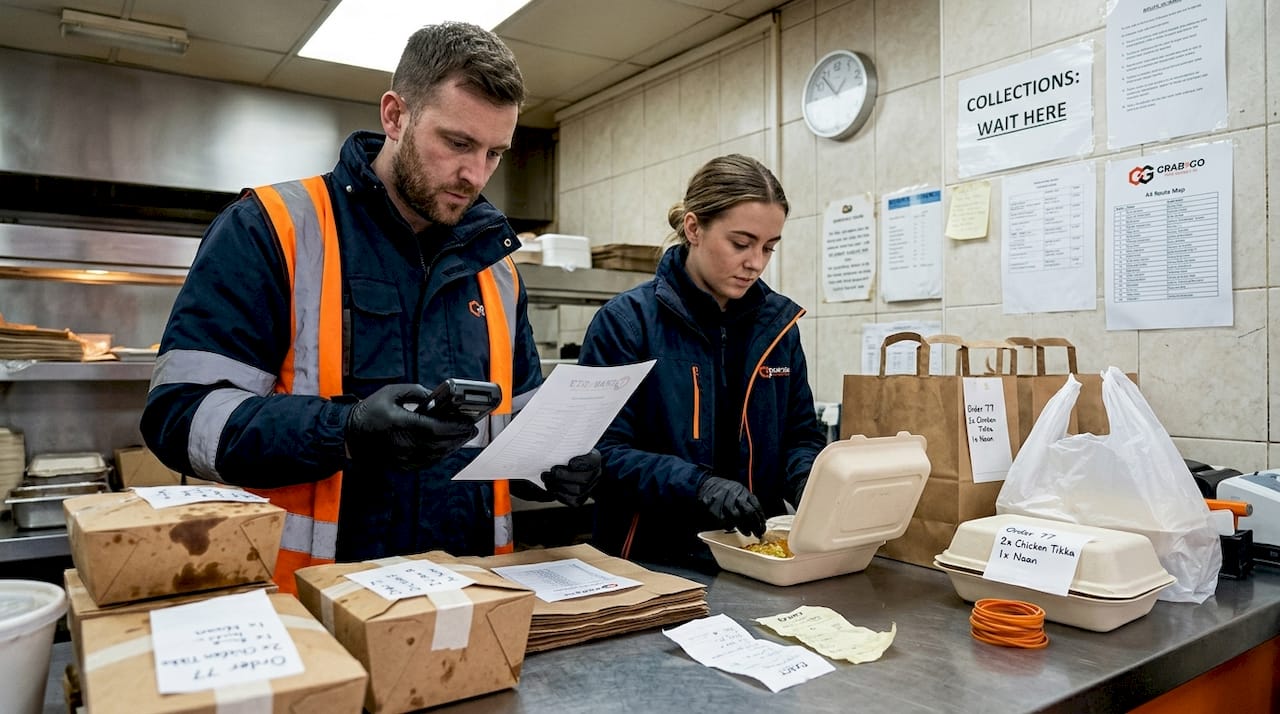
Leaking containers, cold chips, and soggy bases are not just customer complaints. They are signals that your packaging is letting your food down before it even reaches the table. Over 60% of consumers rank packaging quality among their top food delivery concerns, which means the wrong box can cost you repeat orders, five-star ratings, and ultimately revenue. This guide walks you through every stage of choosing the right packaging for your takeaway or food service business, from legal requirements and material choices to sustainability rules and practical testing, so you can make confident, informed decisions.
Table of Contents
- Why packaging matters for food businesses
- Core requirements: compliance, safety and labelling
- Materials comparison: balancing quality, cost and sustainability
- Extended producer responsibility (EPR), sustainability and recycling
- Practical checklist: choosing food packaging step by step
- Our perspective: the biggest decision most businesses get wrong
- Find food packaging solutions for your business
- Frequently asked questions
Key Takeaways
| Point | Details |
|---|---|
| Customer satisfaction | High-quality, compliant packaging dramatically boosts repeat business and reduces complaints. |
| Legal compliance essentials | Ensure packaging meets food safety regulations and labelling laws to avoid fines. |
| Material trade-offs | Balance barrier performance, cost, eco-friendliness and EPR fees when selecting packaging. |
| Step-by-step process | Auditing needs, checking compliance, and trialling options is the best way to pick packaging that works. |
Why packaging matters for food businesses
Your packaging is the first physical thing a customer touches when their order arrives. Before they taste a single bite, they have already formed an opinion based on how the box looks, whether it has leaked, and whether the food inside is still at the right temperature. That first impression shapes perceived value more than most business owners realise.
Good packaging does several jobs at once:
- Protects food from leaks, contamination, and spoilage during transit
- Retains heat or cold to preserve texture and flavour
- Communicates your brand’s professionalism and care
- Reduces the risk of customer complaints and negative reviews
- Supports compliance with food safety standards
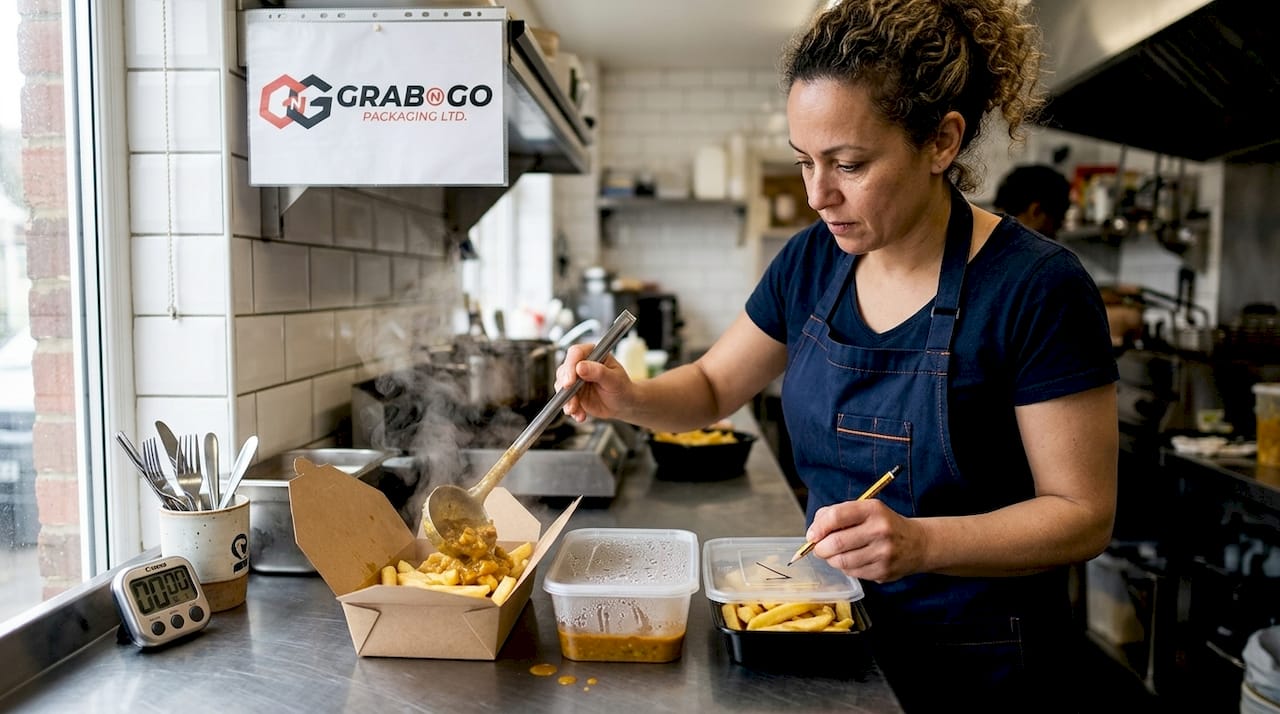
The relationship between packaging and food quality is direct and measurable. A curry that arrives in a flimsy container with a warped lid will taste worse to the customer, even if the cooking is identical to the version served in your restaurant. Perception matters enormously.
“Packaging is not just a container. It is the last touchpoint your kitchen controls before the customer opens their door.”
Packaging quality ranks among the top food delivery concerns for over 60% of consumers, which means investing in the right solution is not a luxury. It is a retention strategy. Businesses that treat packaging as an afterthought consistently see higher refund rates and lower repeat order percentages than those who treat it as part of the product itself.
Core requirements: compliance, safety and labelling
Before you choose a box or bag, you need to understand what the law requires. Getting this wrong is not just embarrassing. It can result in enforcement action, fines, or reputational damage that is very hard to recover from.
The foundation is food-safe materials. Under Regulation (EC) No 1935/2004, all materials in contact with food must not transfer substances into food in quantities that could endanger human health. This applies to every container, wrapper, and bag you use.
Labelling is equally critical. The Food Information Regulations 2014 require you to display:
- The name of the food
- A full ingredients list
- All 14 major allergens clearly highlighted
- Use-by or best-before dates where applicable
- Storage and preparation instructions
Natasha’s Law, which came into force in 2021, specifically covers Pre-Packed for Direct Sale (PPDS) foods. These are items you prepare and package on your premises before a customer selects them, such as a wrapped sandwich in a chilled cabinet. Every PPDS item must carry a full ingredients list with allergens emphasised. This is a non-negotiable requirement and one that catches many small businesses off guard.
| Regulation | What it covers | Who it applies to |
|---|---|---|
| Regulation (EC) No 1935/2004 | Food-safe materials | All food businesses |
| Food Information Regulations 2014 | Labelling, allergens, dates | All food businesses |
| Natasha’s Law (PPDS) | Full allergen labelling on pre-packed items | Businesses selling PPDS foods |
For a thorough breakdown of which materials meet these standards, the materials guide for food packaging is a practical starting point.
Materials comparison: balancing quality, cost and sustainability
Once you understand the legal baseline, the next question is which material actually works best for your menu. There is no single answer, because the right choice depends on what you are serving, how far it travels, and what your customers value.
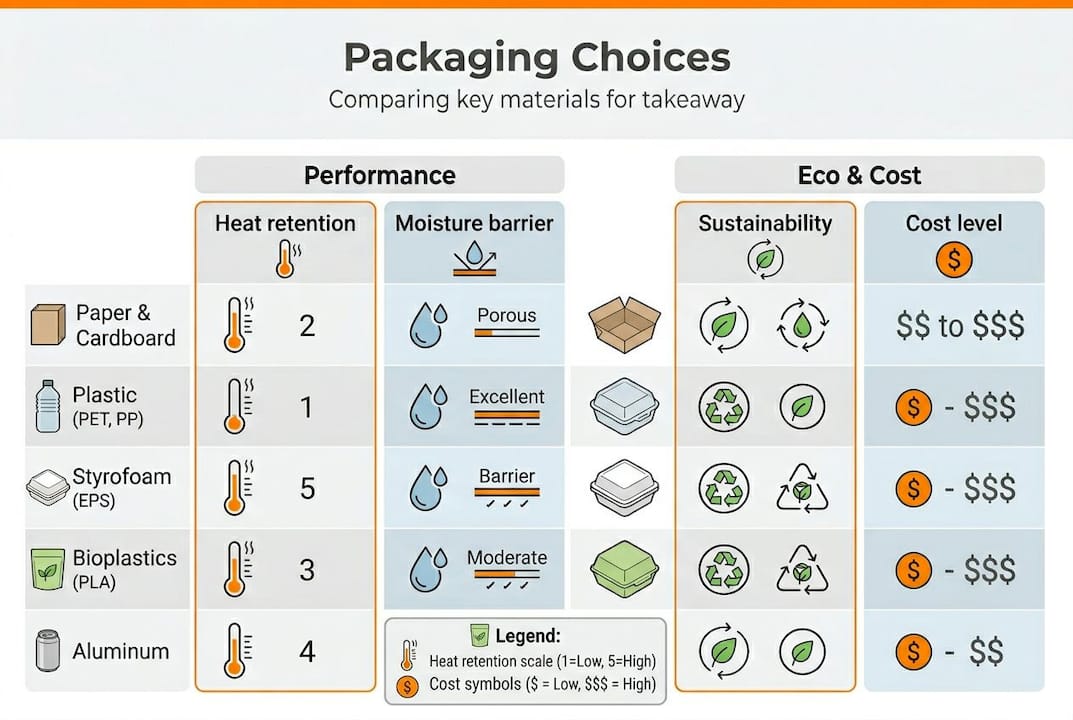
| Material | Heat retention | Moisture barrier | Eco credentials | Relative cost |
|---|---|---|---|---|
| Paperboard | Good | Moderate | Recyclable | Low to medium |
| Bagasse (sugarcane) | Excellent | Good | Compostable | Medium |
| Plastic (PET/PP) | Moderate | Excellent | Poor (EPR fees apply) | Low |
| Aluminium foil | Excellent | Excellent | Recyclable | Medium |
| Compostable PLA | Moderate | Moderate | Good (if composted) | High |
Compostable packaging scores well for customer appeal and aligns with tightening regulations, but it does not always outperform plastic on barrier properties. For wet dishes like curries or soups, plastic still offers superior leak resistance. The key is matching the material to the food, not simply choosing what sounds best on a menu card.
The types of packaging materials available to UK food businesses have expanded significantly, but so have the financial implications. EPR fees incentivise paper over plastic, making plastic containers progressively more expensive to use at scale. Factor this into your unit cost calculations now, not after your next bulk order.
Key considerations when choosing materials:
- Match barrier properties to your specific dishes
- Weigh EPR fee exposure against unit price savings
- Consider whether your customers have access to composting facilities
- Avoid materials that compromise food safety for the sake of eco branding
Pro Tip: Order samples of three to four material types and run your own heat and leak tests before committing to a bulk purchase. What works for a burger may fail completely for a noodle dish.
Extended producer responsibility (EPR), sustainability and recycling
Extended Producer Responsibility (EPR) is the government’s mechanism for making businesses financially accountable for the packaging they place on the market. For UK food businesses, understanding where you sit within this framework is increasingly important.
Here is how the thresholds work in 2026:
- Turnover under £1M or packaging under 25 tonnes per year: no registration required
- Turnover over £1M and over 25 tonnes: register and report data to the relevant authority
- Turnover over £2M and over 50 tonnes: pay disposal fees in addition to reporting
EPR fees vary by material, with plastic attracting approximately £423 per tonne compared to around £196 per tonne for paper. That difference adds up quickly for businesses ordering thousands of containers each month. Switching even a portion of your plastic packaging to paper or bagasse can produce a meaningful cost saving over a full year.
Sustainability is not just about choosing compostables and calling it done. The source and recyclability of your materials matter just as much. The FSA advises against ocean-bound plastics in food packaging due to contamination risks, recommending kerbside recycled materials only. This is a critical distinction when evaluating supplier claims.
“Sustainability in food packaging is not a marketing badge. It is a supply chain decision with real compliance and safety implications.”
Pro Tip: When a supplier claims their packaging is recycled, ask specifically whether it is kerbside-collected or ocean-bound. The FSA guidance is clear on this distinction and your customers deserve the truth.
For practical guidance on reducing packaging waste, understanding single-use packaging rules, and exploring eco-friendly packaging options suited to cafes and food service businesses, there are dedicated resources worth reviewing before your next order.
Practical checklist: choosing food packaging step by step
With all the background knowledge in place, here is a clear process you can follow every time you evaluate or switch packaging.
- Audit your menu and delivery method. List every dish and note its heat, moisture, and travel time requirements. A pizza needs different packaging to a salad bowl.
- Check regulatory compliance. Confirm all materials meet food-safe standards and that your labelling covers allergens, ingredients, and dates as required by law.
- Assess EPR exposure. Calculate your approximate annual packaging tonnage and turnover to determine whether you need to register, report, or pay disposal fees.
- Evaluate sustainability credentials. Prioritise materials with verifiable recycling origins and low EPR fees. Avoid ocean-bound plastics and unverifiable compostability claims.
- Consider customer experience. Think about ease of opening, presentation, and whether the packaging reflects your brand values.
- Order samples and test thoroughly. Fill containers with your actual dishes, seal them, and simulate delivery conditions. Check for leaks, heat loss, sogginess, and structural integrity after 30 to 45 minutes.
- Review and reorder. Once you find what works, standardise your selection and build supplier relationships that support consistent quality.
Over 60% of consumers cite packaging quality as a top delivery concern, which means this checklist is not just an operational exercise. It is a direct investment in customer satisfaction and retention. Following best practices for food packaging consistently will separate your business from competitors who treat packaging as a commodity.
Pro Tip: Build a simple spreadsheet tracking each packaging type, its cost per unit, EPR material category, and your test results. This makes future decisions faster and more consistent.
Our perspective: the biggest decision most businesses get wrong
After working with hundreds of UK food businesses, the pattern we see most often is not a lack of knowledge. It is a misplaced priority. Most SMEs either chase the lowest unit cost or chase the most impressive eco claim, and they neglect the one thing that actually drives customer satisfaction: real-world performance with their specific menu.
A compostable container that turns soggy under a portion of chips is not sustainable. It is wasteful. A cheap plastic tray that leaks curry into a delivery bag is not cost-effective. It is a refund waiting to happen. The sweet spot is where material performance, regulatory compliance, and cost intersect for your dishes, not for a generic food business.
The businesses that get this right do one simple thing differently. They test before they commit. They fill their own containers, seal them, leave them for 40 minutes, and open them as a customer would. That 40-minute test reveals more than any supplier specification sheet.
Reviewing packaging best practices through the lens of your own menu is the most practical step you can take today.
Find food packaging solutions for your business
Choosing the right packaging does not have to be complicated, but it does require the right information and the right supplier. Whether you are starting from scratch or reviewing your current setup, having access to a wide range of tested, food-safe options makes the process significantly easier.

At Grab N Go Packaging, we stock everything from bagasse containers to printed coffee cups, with options suited to every budget and menu type. Explore our in-depth packaging materials guide to match materials to your dishes, use our container selection guide to narrow down your options, and browse the full range in our shop to find solutions that work for your business today.
Frequently asked questions
What are the legal requirements for food packaging in the UK?
You must use food-safe materials compliant with Regulation (EC) No 1935/2004, include all required labelling under the Food Information Regulations 2014, and comply with Natasha’s Law if you sell PPDS foods. Failure to meet any of these requirements can result in enforcement action.
Which packaging types are best for hot food takeaway?
Insulated paperboard and bagasse are the strongest choices for heat retention and structural integrity during delivery. Avoid plain plastic lids that trap condensation and make food soggy before it arrives.
Does my SME have to pay EPR fees for packaging?
If your turnover exceeds £1M and you handle more than 25 tonnes of packaging annually, you must register and report. However, only businesses above £2M turnover and 50 tonnes are required to pay disposal fees, with plastic attracting significantly higher rates than paper.
How do I ensure packaging is truly sustainable?
Prioritise materials with low EPR fees and verifiable kerbside recycling origins. The FSA advises against ocean-bound plastics due to contamination risks, so always ask your supplier to confirm the source of any recycled content before ordering.
How can I test if packaging works with my menu?
Order small trial quantities across your full range and test each item under realistic delivery conditions, checking for leaks, heat loss, sogginess, and structural durability before placing a larger order.
Recommended
- Packaging design tips for UK food businesses to boost branding – Grab & Go Packaging
- 7 Best Practices for Food Packaging Success in the UK – Grab & Go Packaging
- Custom packaging tips for UK food businesses in 2026 – Grab & Go Packaging
- Takeaway Packaging Hygiene Guide for UK Food Businesses – Grab & Go Packaging
- Packaging solutions for e-commerce brand growth in 2026 | ParcelPlanet