Cart 0
Best Takeaway Packaging for Cafes
The rush usually shows up in the bin first. If your counter is covered in split lids, soggy bags or food boxes that do not quite fit the menu, your packaging is costing you time, waste and repeat business. Choosing the best takeaway packaging for cafes is not about buying the cheapest unit price. It is about matching each product to the way your café actually trades.
For most cafés, that means balancing hot drinks, cold drinks, sandwiches, bakery items, breakfast pots, lunch boxes and delivery orders without overcomplicating stock. The right range keeps service moving, protects food quality in transit and gives customers a cleaner, more professional handover. It also makes reordering easier when core lines come from one supplier rather than five.
What the best takeaway packaging for cafes needs to do
Good café packaging has a simple job. It needs to hold temperature, prevent leaks, stack well, travel well and look presentable in the customer’s hand. If it fails on any one of those points, the problem usually lands back with the operator.
A coffee cup that feels flimsy affects perception before the drink is even tasted. A salad bowl with a loose lid creates delivery complaints. A paper carrier bag that cannot handle two drinks and a toastie slows down front-of-house because staff start double-bagging orders. These are small failures, but in a busy service they add up fast.
That is why the best range is usually not the biggest possible range. It is a controlled set of dependable formats that cover your menu with minimal overlap. Cafés that buy well tend to standardise where they can and only add specialist lines where the menu genuinely needs them.
Start with drinks packaging
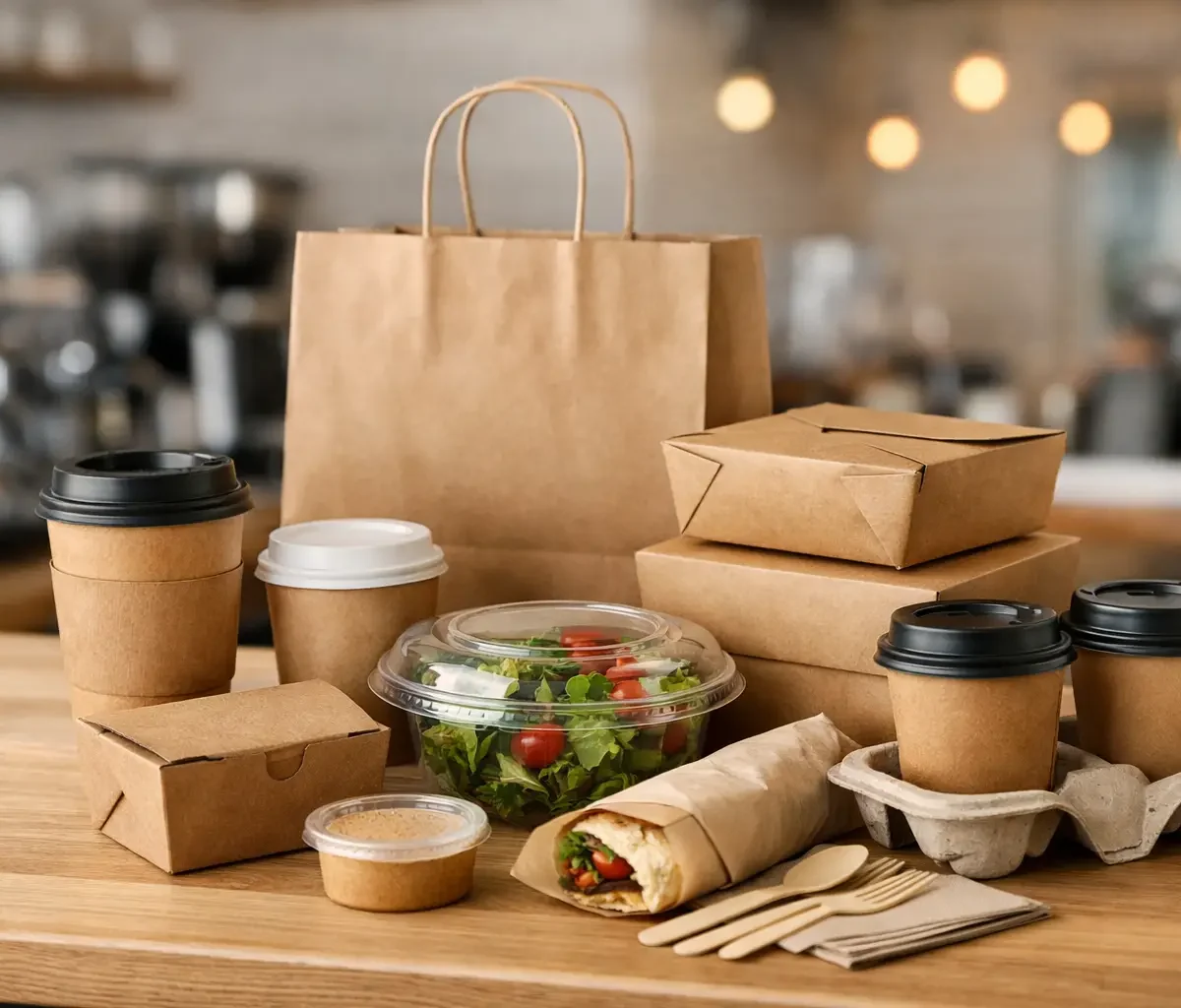
For many cafés, hot drinks are the highest-volume takeaway line, so cups and lids deserve more attention than they often get. Single wall cups can work for lower-cost service or where sleeves are used, but double wall cups usually give a better customer experience for grab-and-go coffee because they offer improved insulation and a more premium feel.
Cup size discipline matters too. If your menu is built around 8oz, 12oz and 16oz, buy lids that clearly match those sizes and avoid stocking near-identical formats from different manufacturers unless there is a good reason. Mixed systems create mistakes at the till and waste in the stockroom.
Cold drinks need the same level of planning. Smoothie cups, iced coffee cups and domed or flat lids should suit your actual serve size, not just what is cheapest per sleeve. If the cup is too tall for the drink, presentation looks poor. If the lid fit is inconsistent, you end up remaking orders. For cafés selling juices, shakes or frappes, clarity and crack resistance also matter because the drink is part of the visual sell.
Food packaging should match the menu, not fight it
Many cafés try to make one container do too much. That usually ends with compromised presentation and food that does not travel properly. Sandwich wedges are ideal for cold grab-and-go display, but they are not the answer for hot filled sandwiches or toasties. Burger boxes can work for some hot bakery lines, but only if the size and venting suit the product.
If your café sells a mix of cold lunch and hot savoury food, separate the categories. Deli bowls and salad containers are better for pasta, grain bowls and cut fruit because they keep the product visible and portioned neatly. Clamshell boxes or takeaway food boxes are a stronger choice for hot items that need structure and easy handling.
Breakfast and brunch menus often need the widest mix. A bacon roll, porridge pot and granola bowl all have different packaging requirements. This is where category depth helps. Buying from a supplier with cups, bowls, food containers, lids, cutlery and carrier bags in one place makes it easier to build a coherent range instead of patching together whatever is available.
Material choice is about performance as well as price
There is no single best material for every café. Paperboard, plastic, bagasse, foil and mixed-material formats all have a place depending on the food type, heat level, grease content and travel distance.
Paper-based formats often work well for bakery, sandwiches and lighter hot food, especially when presentation matters. Bagasse products can be a strong option for cafés that want a practical fibre-based solution across boxes, plates or bowls. Plastic deli containers still make sense for many cold applications because product visibility is a selling point and leak resistance is critical. Foil trays are useful where heat retention is more important than front-of-house appearance.
The trade-off is straightforward. The more demanding the food, the more packaging performance matters. A flaky pastry and a side salad are forgiving. A loaded panini, hot chips or a sauce-heavy rice box is not. Buying purely on appearance or purely on unit cost usually creates problems later.
Do not overlook lids, inserts and carry solutions
Operators often focus on the main container and treat the rest as accessories. In practice, lids and bags are where many complaints start. A secure lid can be the difference between a successful delivery and a refund. The same applies to cup carriers, napkins, cutlery and greaseproof paper.
Greaseproof paper is especially useful for cafés serving pastries, toasted sandwiches, burgers or baked goods. It improves presentation, helps with handling and gives you a simple route into branding. Printed greaseproof adds a professional finish without forcing a full redesign of every packaging line.
Carrier bags also need matching to order type. A light paper bag may be fine for one drink and a croissant, but it is the wrong choice for a heavier lunch order with multiple items. If customers regularly buy drinks and food together, make sure your bag sizes fit those combinations cleanly. Poor bag selection creates awkward packing and slower service at peak times.
Branded packaging earns its place when it is used well
For cafés, branding works best on high-frequency items that customers actually notice. Coffee cups are the obvious example. A personalised cup puts your name in the customer’s hand every day and can lift perceived quality without changing the drink itself.
Printed greaseproof is another practical option because it improves presentation across several food types. It is often a smarter starting point than branding every single container, particularly for independents watching cash flow. The aim is not to print on everything. It is to choose the lines that do the most work for your brand.
This is where bespoke packaging needs a commercial view. If a printed product slows lead times or forces you into stock levels that do not fit your turnover, it may not be the right first move. But for cafés with strong footfall or growing multi-site trade, branded essentials can support consistency and make the business look more established.
Buying in bulk only works if the range is controlled
Wholesale pricing matters, but overbuying the wrong formats is still expensive. The best takeaway packaging for cafes is usually built around a small number of repeat-use lines with dependable demand. Review what actually moves each week. If one bowl size covers 80 per cent of your salad trade, standardise around it. If a niche box only serves one occasional menu item, consider whether the menu should adapt instead.
Storage is part of the buying decision as well. Bulky cases can tie up back-of-house space, especially in smaller café sites. There is no value in chasing a lower case price if it creates clutter, counting errors or damaged stock. Practical ordering means balancing unit cost with storage, turnover and reorder frequency.
Working with a one-stop supplier can make that easier. Instead of splitting cups, lids, containers, bags and cleaning supplies across multiple accounts, you can simplify purchasing and keep day-to-day essentials moving through one system. For operators who need both stock lines and bespoke printed packaging, that joined-up approach saves time as much as money. Grab & Go Packaging Ltd is built around exactly that kind of trade buying.
Choose packaging around service style
A sit-in café with a modest takeaway trade needs a different setup from a delivery-led coffee shop or a lunch-heavy site near offices. If most customers walk five minutes back to work, heat retention and carry comfort matter more. If you rely on third-party delivery, stackability and leak resistance become a priority. If your trade is built on grab-and-go display, visibility and shelf presentation should lead the decision.
That is why there is no universal answer, even when buyers are asking the same question. The best packaging is the range that fits your menu, service speed, margins and customer journey with the least friction.
If you are reviewing your café packaging, start with the items that create the most complaints, waste or packing delays. Fix those first. The right cups, containers, wraps and bags will do more than tidy up service – they make the whole operation easier to run.