

TL;DR:
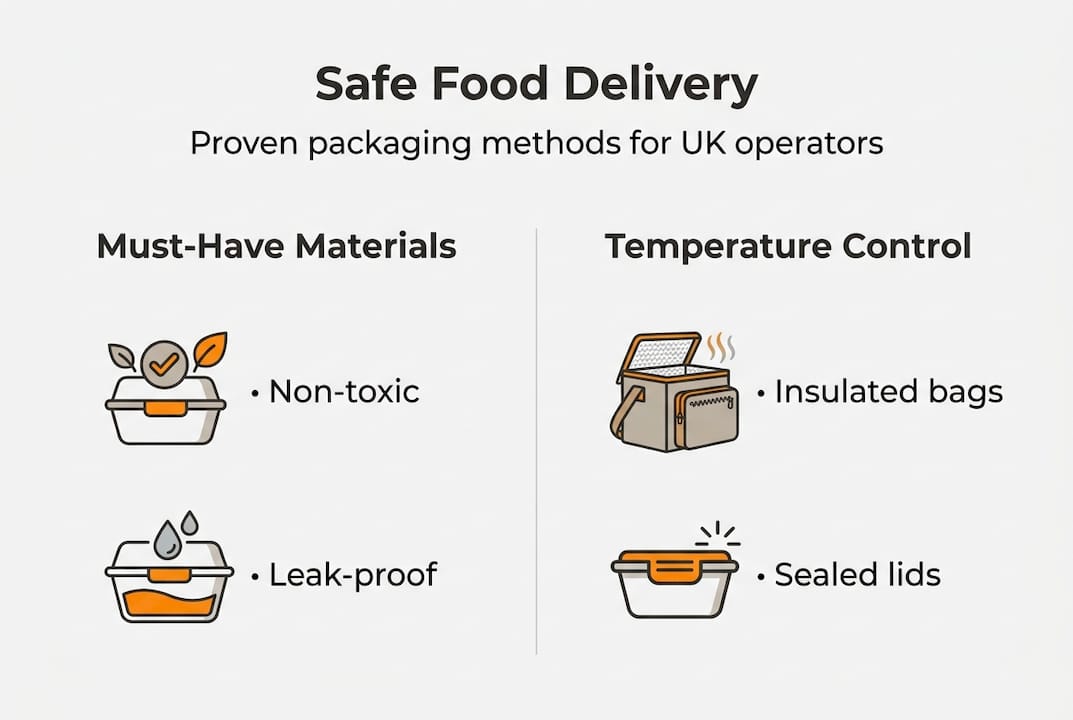
- UK food delivery packaging must be non-porous, non-toxic, and structurally secure to ensure safety and quality.
- Proper temperature control, sealing, and leak prevention are crucial for maintaining food safety during transit.
- Consistent staff training and monitoring feedback are essential to prevent packaging errors and improve delivery standards.
One cold, spilled, or contaminated delivery is all it takes to lose a loyal customer. In the UK food service sector, where online orders now account for a significant share of restaurant revenue, packaging failures translate directly into refund requests, negative reviews, and potential food safety investigations. Safe food delivery packaging is not simply a box and a bag. It is a structured system covering materials, temperature control, sealing procedures, and ongoing verification. This guide walks you through every step, from legal requirements and material selection to temperature management, leak prevention, and continuous improvement routines that keep your operation compliant and your customers satisfied.
| Point | Details |
|---|---|
| Compliant materials | Your packaging must be clean, non-toxic, leak-proof, and legally compliant in the UK. |
| Temperature safety | Maintain the correct heat or cold using insulated or heated containers on every delivery. |
| Prevent contamination | Careful sealing and separation prevent leaks and cross-contamination of food. |
| Regular checks | Routine inspections and logs help spot mistakes and improve packaging reliability. |
| Ongoing improvement | Track feedback and refine your methods to keep food safe and customers happy. |
Before you order a single container, you need to understand what UK food safety law actually demands of your packaging. The rules are clear: food-safe materials must be non-porous, non-toxic, and capable of protecting food from contamination at every stage of the delivery journey. That means your packaging cannot leach chemicals into food, cannot absorb liquids that harbour bacteria, and cannot allow outside contaminants to reach the product inside.
The Food Standards Agency also has a specific warning worth noting. Ocean-bound plastics are not recommended for food contact applications due to unresolved safety concerns around contamination and degradation. If a supplier is marketing recycled ocean-bound plastic containers as a sustainable option, treat that claim with caution until regulatory clarity improves.
Here is a quick summary of the core physical and material requirements your food packaging for delivery must meet:
| Requirement | Why it matters | Examples |
|---|---|---|
| Food-safe, non-porous material | Prevents bacterial growth and chemical transfer | Kraft board, PET, PP containers |
| Non-toxic composition | Protects consumer health and meets FSA standards | BPA-free plastics, food-grade foil |
| Secure sealing | Stops spills and cross-contamination | Snap-lid boxes, tamper-evident seals |
| Thermal compatibility | Maintains integrity under heat or cold | Insulated foil bags, vented hot boxes |
Pro Tip: Build a preferred supplier checklist that includes a compliance column. For each supplier, note whether their materials meet FSA food contact regulations, carry relevant certifications, and exclude ocean-bound plastics. Review it every six months.
Referring to food packaging best practices when onboarding new suppliers will save you from costly compliance errors down the line.
Temperature is where most UK delivery operations fall short. The law is not ambiguous: hot food must stay above 63°C, chilled food must remain between 0°C and 8°C, and frozen food must be kept at or below -18°C throughout transport. Breaching these thresholds is not just a quality issue. It is a food safety violation.
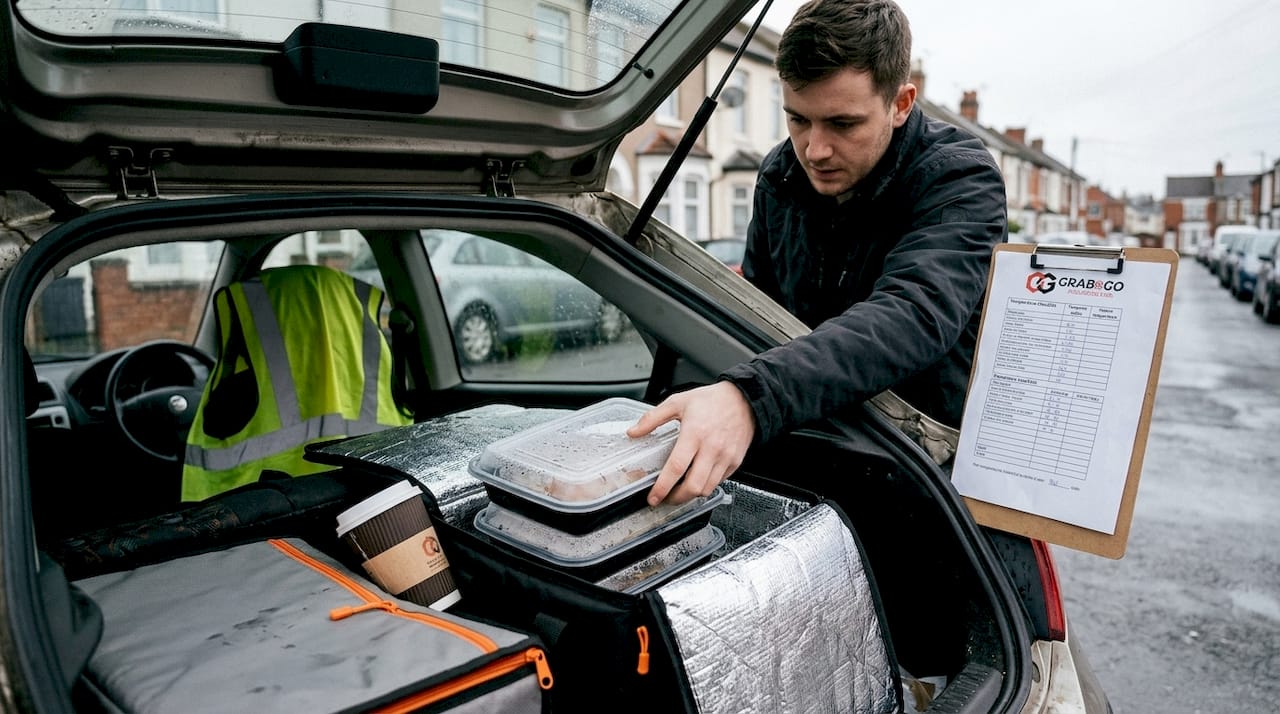
The challenge is that standard insulated bags, while useful, have limits. Insulated bags alone typically hold safe temperatures for 22 to 40 minutes. Heated delivery bags or phase-change material (PCM) packs extend that window to 60 to 120 minutes or more, making them essential for longer routes or winter deliveries.
Here is a step-by-step packing approach for temperature-sensitive orders:
| Method | Best for | Duration | Pros | Cons |
|---|---|---|---|---|
| Standard insulated bag | Short routes | 22 to 40 min | Low cost, lightweight | Insufficient for winter/long trips |
| Heated delivery bag | Medium to long routes | 60 to 120+ min | Consistent heat, reduces refunds | Higher upfront cost |
| Gel/ice packs | Chilled food | 1 to 4 hours | Reliable cold retention | Adds weight |
| PCM packs | Frozen or chilled | 2 to 6 hours | Precise temperature range | More expensive |
Pro Tip: Preheat your insulated bag by placing a hot water bottle inside for two minutes before loading. This simple step can add 10 to 15 minutes of effective heat retention at no extra cost.
Operators who switched to heated bag solutions reported that refund rates dropped by 72% compared to using standard insulated bags alone. That is a significant financial argument for upgrading your cold-weather setup. For a full breakdown of options, the delivery packaging guide covers the most current solutions available to UK operators. You can also find practical step-by-step advice on how to package takeaway food for different cuisine types.
Safety warning: Cross-contamination between allergens and ready-to-eat food is one of the most serious risks in food delivery. A nut-based sauce leaking into a dish labelled allergen-free can have life-threatening consequences. Always treat allergen separation as a non-negotiable step, not an optional extra.
Even perfectly temperature-controlled food can cause a complaint or a safety incident if it arrives spilled or mixed with another dish. Secure sealing is not just about presentation. It prevents cross-contamination between raw and ready-to-eat foods and stops allergens from migrating between dishes.
Choose your container type based on what you are packing:
Follow this packing workflow to prevent leaks and spills on every order:
For more detailed guidance on sealing techniques and container selection, the takeaway packaging tips resource covers common scenarios across different cuisine types. If you are managing a catering operation with complex multi-item orders, the catering packaging essentials guide offers practical frameworks for high-volume packing.
Even operators with good intentions make consistent packaging errors. The most damaging ones are rarely dramatic. They are small, repeated habits that accumulate into refunds, complaints, and food safety risks. Matching your packaging to your food type is fundamental: use leak-proof containers for saucy dishes, vented boxes for fried food, and always preheat containers and log temperatures for HACCP compliance.
Here are the top five mistakes UK food operators make, and how to fix each one:
Use this quick pre-dispatch inspection routine before every order leaves your site:
Pro Tip: Create a separate packaging log for allergen orders. Note the dish, the allergen present, the container used, and who packed it. This creates an audit trail and reinforces staff accountability.
The packaging hygiene guide offers detailed advice on maintaining clean packing environments, while the food delivery packaging process resource helps you build repeatable workflows that reduce errors at scale.
Getting the system right once is not enough. Packaging performance degrades over time if you do not actively monitor it. The good news is that you do not need expensive technology to track what is working and what is not.
Start by tracking these key metrics:
| Metric | How to track | Target |
|---|---|---|
| Refund rate for food quality | POS or delivery platform reports | Below 2% of orders |
| Customer complaints about temperature | Review monitoring tool or CRM | Zero complaints per week |
| Driver feedback on packaging integrity | Weekly driver debrief form | No reported leaks or spills |
| Temperature on arrival | Customer follow-up SMS or survey | Within legal thresholds |
Driver feedback is one of the most underused data sources in UK food delivery. Drivers see exactly what happens to packaging during transit. A short weekly checklist asking drivers to flag any leaks, collapsed containers, or temperature concerns gives you real-world intelligence at zero cost.
Customer follow-up messages also work well. A simple SMS sent 30 minutes after delivery asking whether the food arrived hot and intact generates useful data and signals to the customer that you care about quality.
Operators who invested in heated delivery solutions and tracked refund rates consistently saw a 72% reduction in cold-food complaints. That kind of data should drive your supplier and equipment decisions.
The food packaging best practices UK resource and the takeaway packaging checklist are both practical tools for building a structured review routine into your operation.
Here is something worth saying plainly: most packaging failures in UK food delivery are not caused by a lack of information or a shortage of good products. They happen because of workflow shortcuts and a culture that prioritises speed over pre-dispatch discipline.
The last-mile mindset is obsessed with getting orders out fast. That pressure is real. But skipping a sealing check or grabbing the wrong container because the queue is long is exactly where the damage happens. No container, however well-designed, compensates for a poorly trained team member rushing through the packing step.
Many operators invest in premium heated bags and tamper-evident containers, then fail to train staff on how to use them correctly or log temperatures consistently. The role of packaging in food safety is only realised when the human steps around it are equally robust. The fix is not another equipment purchase. It is a ten-minute daily briefing, a laminated checklist on the packing bench, and a culture where every person in the kitchen understands that the packaging step is as important as the cooking step.
Safe food delivery comes down to using the right materials, maintaining correct temperatures, sealing every order properly, and checking your results regularly. These are not complicated steps, but they require consistency and the right products behind them.

At Grab & Go Packaging, we supply UK food businesses with compliant, tested packaging solutions built for real delivery conditions. Whether you need guidance on selecting the right materials or want to browse options that meet current FSA standards, our food packaging materials guide is a strong starting point. For container-specific decisions, the disposable containers guide walks you through every format. When you are ready to stock up, shop our full range and find packaging that works as hard as your kitchen does.
Hot food must stay above 63°C, chilled food between 0°C and 8°C, and frozen food at or below -18°C throughout the delivery journey.
Use leak-proof, snap-lid containers and place liquids in a secondary sealed bag inside the delivery bag to provide a double layer of spill protection.
Ocean-bound plastics carry unresolved contamination risks and are not recommended by the FSA for food contact applications, regardless of sustainability claims.
Heated delivery bags or PCM packs maintain safe food temperatures for 60 to 120 minutes or more, making them the reliable choice for routes that exceed 25 minutes.