

Choosing the right packaging for each dish is not just about keeping food fresh—it shapes how customers view your restaurant, especially as delivery demand rises across the United Kingdom. Every menu item faces different transport challenges, whether it is retaining heat, preventing leaks, or protecting delicate presentations. This guide shows you how to match food with its ideal container, considering food safety regulations and branding opportunities so your business impresses with every delivery.
| Key Takeaway | Explanation |
|---|---|
| 1. Match Packaging to Menu Items | Use specific packaging for hot, cold, wet, and fragile items to maintain quality and customer satisfaction. |
| 2. Select Appropriate Materials | Choose materials that suit each item’s temperature and safety needs while complying with UK regulations. |
| 3. Implement a Clean Packing Station | Ensure a hygienic and well-organised packing area to prevent cross-contamination and protect food safety. |
| 4. Secure and Label Packages Effectively | Properly seal containers and clearly label them, including allergen and storage information to prevent confusion. |
| 5. Perform Quality Inspections | Establish a routine for inspecting orders to ensure they meet standards before delivery, reducing complaints and refunds. |
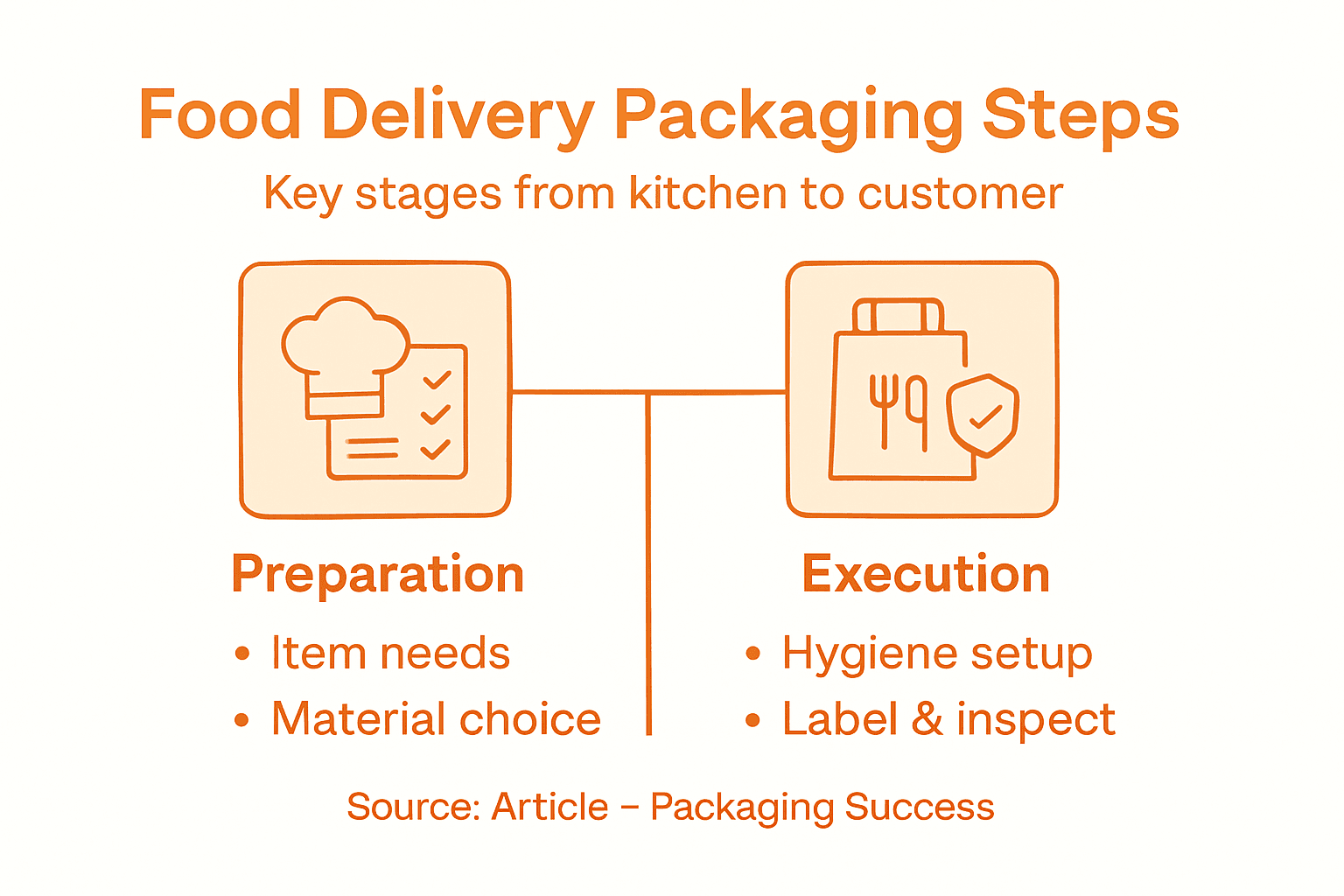
You cannot use the same packaging for everything on your menu. A fresh salad needs completely different protection than a hot curry, and your packaging choices directly affect how customers perceive your food when it arrives at their door. This step focuses on matching each menu item to its ideal packaging solution, considering temperature, moisture, structural integrity, and brand presentation.
Start by categorising your menu items into groups based on their delivery challenges. Hot items (curries, soups, pies) require insulated containers that retain warmth and prevent moisture loss. Cold items (salads, desserts, sandwiches) need breathable packaging that prevents condensation from making food soggy. Wet items (sauces, gravies, dressings) demand leak-proof containers with secure lids. Fragile items (pastries, cakes, delicate plating) require rigid packaging that prevents crushing. Each category has distinct requirements, and conflating them creates disappointed customers and wasted products.
Here is a quick comparison of common menu item packaging needs and container solutions:
| Menu Item Type | Main Challenge | Ideal Container Feature |
|---|---|---|
| Hot items | Retaining heat, leaks | Insulated, moisture-proof |
| Cold items | Preventing sogginess | Breathable, vented |
| Wet items | Avoiding spillage | Leak-proof with secure lid |
| Fragile items | Preventing crushing | Rigid, compartmentalised |
Next, examine the specific characteristics of each menu item within those categories. Consider how long the item sits in packaging during delivery. A pizza needs to stay crispy during a 45-minute journey, so breathable, vented boxes work best. A premium burger could lose its appeal if moisture accumulates for 30 minutes, so you might choose containers with moisture control features. Sticky items like baklava require parchment separators to prevent pieces sticking together. Understanding food contact material regulations and safety standards ensures your chosen containers comply with UK requirements whilst protecting your customers.
Consider your brand identity alongside functionality. The container is your customer’s first physical touchpoint with your business. A premium Indian restaurant would choose different packaging from a casual chip shop, even though both handle hot food. Your packaging communicates whether you’re budget-friendly or upmarket. Think about whether you want branded boxes, printed labels, or custom colours that reinforce your business identity. Research on packaging’s role in protecting food quality whilst promoting brand identity shows that thoughtful packaging choices influence customer satisfaction and repeat orders.
Test your packaging choices before rolling them out across your menu. Order samples of potential containers and pack your actual menu items in them. Seal them, let them sit at room temperature for the average delivery time in your area, then open them and assess the results. Does the food look appetising? Has moisture accumulated? Are hot items still hot? Are fragile items intact? Does the packaging feel sturdy enough to withstand delivery vehicle movements? This real-world testing prevents expensive mistakes once you’re fulfilling hundreds of orders weekly. You can also consult guidance on selecting disposable containers suited to your specific food business needs to compare options within your budget.
Account for cost differences between packaging types. Specialist containers cost more than basic options, but the expense protects your reputation and reduces replacement complaints. Balance premium packaging for your signature items with more economical solutions for simpler dishes. Calculate the packaging cost per item and factor it into your delivery menu pricing. If your packaging costs exceed what customers expect to pay for delivery, you might need to adjust portions, simplify presentations, or prioritise which items get premium packaging.
Pro tip Create a packaging matrix documenting each menu item, its assigned container type, lid style, and any necessary separators or liners, then review this monthly as your menu evolves and update container choices based on customer feedback about delivery condition.
Now that you understand what each menu item needs, it is time to choose the actual materials that will deliver your food safely whilst representing your business effectively. Your material selection affects not only how well your food arrives but also your environmental responsibility, legal compliance, and brand perception. Getting this right means fewer complaints, better reviews, and customers who feel confident ordering from you again.
Start by identifying which packaging materials genuinely suit your menu items. Polypropylene containers work brilliantly for hot curries and soups because they withstand heat and resist moisture. Paperboard boxes with a grease resistant coating are ideal for pizzas and fried foods. PET plastic clamshells protect delicate desserts and salads whilst remaining transparent so customers see what they are ordering. Cardboard cartons with wax coating handle wet items without falling apart. The key is matching material properties to your food’s specific demands rather than trying to make one container type work for everything. When selecting materials, remember that food contact packaging must comply with UK safety standards to protect your customers and your business from legal issues.
Branding transforms functional packaging into marketing. Your container is real estate you control. Many businesses miss this opportunity by choosing plain white boxes when branded alternatives cost only marginally more. Consider printing your business name, logo, and perhaps a simple tagline on your containers. This creates brand recognition when customers see your packaging in their homes and take photos for social media. Colour choices matter too. A vibrant orange box communicates energy and fun, whilst minimalist black conveys premium quality. Consistency across your packaging strengthens brand identity. If your menu includes multiple container sizes or types, ensure they share visual elements like your colour palette or logo placement so they feel cohesive as a collection.
Address sustainability and recyclability in your material choices because customers increasingly care about this, and UK regulations require it. Packaging recyclability assessment and clear labelling requirements are not optional luxuries but legal necessities under Extended Producer Responsibility. Include recycling symbols on your containers so customers understand how to dispose of them properly. Choose recyclable materials where feasible. Cardboard, paper, and many plastics are recyclable, but avoid contaminated or composite materials that cannot be processed. Including a small line on your packaging like “Please recycle me” or “Recyclable” reinforces this message and shows environmental responsibility. Some businesses even highlight their sustainability efforts on social media, turning eco-conscious choices into brand advantages.
Quality matters more than you might think. Flimsy containers that crumple during delivery damage both the food and your reputation. Thicker materials cost slightly more but prevent disappointment and returns. Test your chosen materials with actual menu items before committing to large orders. Does the container maintain its shape when stacked? Does the lid seal properly? Does the material feel substantial in hand? Customers form judgments about quality based on tactile experience, and cheap feeling packaging undermines perceived food quality regardless of how delicious your meal actually is. You can explore practical examples of packaging materials suited to different food business types to compare options that balance cost, durability, and branding potential.
Calculate your total packaging investment carefully. Material costs vary significantly between suppliers, so obtain quotes from multiple vendors. Compare not just unit price but also minimum order quantities, customisation options for branding, and delivery lead times. Sometimes ordering a larger quantity upfront for branded boxes costs less per unit and delivers stronger branding impact than standard boxes. Factor these costs into your menu pricing so your margins remain healthy. Work with a packaging supplier who understands food businesses and can advise on compliance, material durability, and customisation options that fit your budget.
Pro tip Order sample quantities of your top three material choices, pack actual menu items in each, and gather feedback from a few trusted customers about which container felt most premium and protected the food best before placing your full production order.
Your packing station is where meals transform from kitchen output into customer delivery. This space must be scrupulously clean, logically organised, and designed to prevent cross-contamination. A hygienic packing station protects your customers’ health, maintains your food safety rating, and builds trust in your brand. Without proper organisation here, even perfectly prepared food can become unsafe before it leaves your premises.
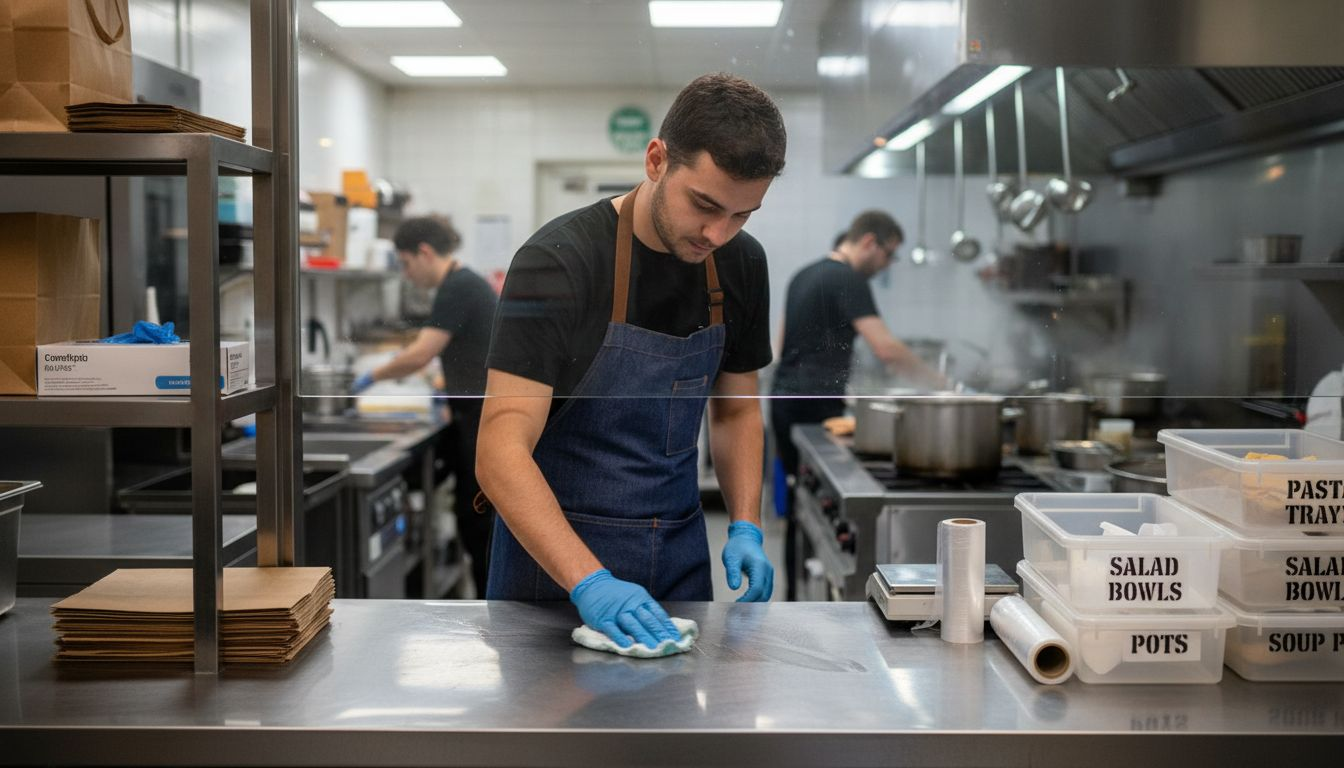
Begin by designating a dedicated space exclusively for packing. This area should be separate from food preparation zones to prevent contamination. Your packing station needs a large, clean work surface where staff can pack items without rushing or creating confusion. Install proper handwashing facilities nearby with soap and hot water, because staff must wash hands before handling packaging materials and clean containers. Ensure adequate lighting so packers can see clearly and catch any issues. Good ventilation matters too, especially if you are packing hot items that create steam or condensation. The layout should flow logically from receiving packed containers, through the packing process, to loading for delivery, minimising backtracking and confusion. Food hygiene standards require appropriate facility design to prevent cross-contamination during all food handling stages, and your packing station layout directly influences whether you meet these standards.
Organise your materials and equipment systematically. Keep packaging containers stacked neatly and within arm’s reach to avoid reaching across the work surface. Store labels, stickers, and branding materials in a dedicated drawer or shelf. Position lids, separators, and tissue paper in logical groupings matching your packing workflow. Keep cleaning supplies separate from packing materials in a clearly marked area. Assign specific locations for each item type so staff always know where to find things without hunting around. This organisation prevents delays and reduces the chance of contamination through unnecessary searching or handling. Temperature control matters as well. If you pack hot items, keep the station warm enough that items do not cool excessively before departure. If you pack cold items, position the station away from heat sources and consider keeping containers in a cool area until needed.
Implement rigorous cleaning and sanitation procedures. Wipe down the packing surface with food safe sanitiser at the start of each shift, between different food types, and whenever it becomes soiled. Train staff on proper cleaning techniques using approved sanitising solutions. Keep sanitising cloths fresh and replace them frequently rather than reusing the same cloth repeatedly. Equipment like scales, label applicators, or tape dispensers should be cleaned daily. Consider colour coded cleaning cloths to prevent cross-contamination (one colour for surfaces, another for equipment, et cetera). Store all cleaning supplies safely labelled and away from food contact surfaces. Document your cleaning routines so there is a clear record of hygiene maintenance. Safe food handling requires documented cleaning procedures and staff training on sanitation controls to prevent contamination throughout the packing process.
Train your staff thoroughly on hygiene procedures specific to packing operations. They must understand why these procedures matter, not just follow rules blindly. Explain how contamination happens and the health consequences. Show staff how to handle food items without touching them directly when possible (using gloves or utensils). Ensure everyone knows the handwashing procedure and when it is required. Go through the cleaning routines step by step so cleaning is consistent. Make hygiene expectations clear through visible signage, and reinforce them regularly. New staff should complete hygiene training before their first packing shift. Consider refresher training periodically, especially before busy seasons when shortcuts become tempting.
Monitor your packing station constantly and adjust procedures based on what you observe. If you notice staff cutting corners during peak times, address it immediately and discuss solutions together. If particular areas become dirtier faster than others, increase cleaning frequency or modify the layout. Keep records of any issues or complaints related to packing hygiene so you identify patterns. Your packing station is not static. It evolves as your business grows or your menu changes, so regularly review whether the current setup remains optimal.
Pro tip Create a simple daily hygiene checklist displayed at your packing station with items like “surfaces sanitised”, “handwashing station stocked”, and “equipment cleaned”, assigning staff to tick off each item as completed so accountability is clear and nothing is overlooked.
This is where your careful preparation pays off. Packing food securely and labelling it clearly transforms a collection of containers into a professional delivery experience. Poor packing leads to spilled sauces, crushed items, and angry customers. Unclear labels create confusion, allergen risks, and legal liability. Done properly, this step protects your food, your customers, and your reputation.
Start by placing food into the correct containers you selected earlier. For hot items, ensure the food is hot when packing, then seal the container immediately to trap heat and prevent condensation. Pack items as close to delivery time as possible to maintain temperature and freshness. For cold items, pack them last or keep them in a cool area until collection to prevent warming. Use separators strategically. Place tissue paper or parchment between layers of fried foods to prevent them sticking together. Put sauce in separate sealed containers unless your menu specifically describes sauce mixed in. This prevents sogginess and gives customers control over their meal. Ensure containers are not overfilled, which can cause lids to pop off during delivery or contents to spill. Leave enough space for proper sealing. Stack containers carefully, placing heavier items on the bottom and fragile items on top or in their own separate bag. Use cushioning materials like bubble wrap or padded bags for delicate items. Pack multiple items for a single order together in a carrier bag so the customer receives everything at once rather than items scattered around.
Securing the package properly is non-negotiable. Use tape specifically designed for food packaging that does not leave residue. Apply tape to seal container lids if your containers do not have secure latching mechanisms. Tape the delivery bag or box securely so it cannot open accidentally during transport. Make sure tape does not cover important information on the packaging. Place heavier items inside the bag first, then lighter items on top so weight is distributed properly. If you use insulated bags or thermal containers, pack ice packs or thermal liners appropriately to maintain temperature. Cold items need cold packs placed around them. Hot items need thermal liners or insulated containers. Test your packing by gently shaking a completed order to ensure nothing shifts or rattles inside.
Labelling is a legal requirement and a practical necessity. Prepacked food must display mandatory information including product name, ingredient list, allergens, weight, storage instructions, and producer contact details clearly and accurately on the packaging. Create a label system for your business. Labels should include the dish name, ingredients, allergen warnings (highlighting common allergens like nuts, dairy, gluten, shellfish), weight or portion size, and use-by or best-before date. Include storage instructions, such as “Keep refrigerated” or “Consume within 2 hours of delivery”. Add your business name and contact information so customers know who prepared their food. Make labels readable with clear fonts and appropriate text size. Use bold or contrasting colours for allergen warnings so they stand out. Place labels prominently on the front of containers where customers see them immediately. Consider using a label printer for consistency and professionalism rather than handwriting labels. If you offer multiple allergen variations of the same dish, label each clearly so there is no confusion.
Below is a summary of UK labelling and safety essentials for food packages:
| Labelling Element | Purpose | Impact on Delivery Business |
|---|---|---|
| Product name & ingredients | Informs customers of contents | Builds trust and clarity |
| Allergen information | Protects customer health | Reduces legal and refund risks |
| Use-by/storage instructions | Promotes safe consumption | Ensures food is eaten as intended |
| Business contact details | Supports traceability | Enables feedback and accountability |
Use labels to communicate with your delivery drivers as well. Include delivery instructions, customer name, address, and phone number on the outside of the order. Specify any special handling requirements like “fragile”, “keep upright”, or “do not stack”. This helps drivers treat your orders with appropriate care. Labels should include use-by dates, allergen information, and storage instructions to support safe catering practices throughout the delivery chain. Include your business name, logo, and perhaps a small thank you message on the label. This reinforces branding and adds a professional touch. If you use branded boxes or bags, ensure labels complement the design rather than looking cluttered. Balance information with visual appeal.
Implement a final quality check before any order leaves your premises. Open a few randomly selected orders weekly to verify items are packed correctly, labels are accurate and readable, and everything is secure. This quality control catches errors before they reach customers. Train staff on what proper packing looks like so standards remain consistent. Packing happens quickly during service, but rushing leads to mistakes. Build enough time into your order workflow so staff can pack carefully without pressure.
Pro tip Create a packing checklist template for staff to verify each order before sealing: lid secure, label present and readable, allergens highlighted, separators in place, and bag sealed, reducing errors and ensuring consistency across all deliveries.
You have assessed, selected, organised, packed, and labelled. Now comes the critical final checkpoint before your food reaches customers. Quality assurance inspection catches problems before they damage your reputation. A systematic inspection process ensures every order meets your standards for presentation, safety, and customer satisfaction. This step takes minutes but prevents hours of customer complaints and potential refunds.
Establish a clear inspection routine that happens the same way every single time. Designate a staff member or rotate the responsibility so someone is always checking orders before they leave. This person should be experienced and detail-oriented, someone who notices imperfections others might miss. Inspect orders during service rather than waiting until the end of the day, because you can still address issues whilst your kitchen is active. Create a quiet inspection area away from the packing station where you can examine orders without distractions. Use good lighting so you see problems clearly. Your inspection should verify packaging integrity, labelling accuracy, food quality, and order completeness. Systematic quality control procedures verify packaging materials, sealing integrity, labelling accuracy, and maintain records for traceability to ensure compliance with food safety standards.
Start by checking the external presentation. Does the bag or box look clean and intact? Are there any visible damage, tears, or stains? Is the label applied straight and readable? Do labels include all mandatory information without errors? Check the dish name, allergen warnings, use-by date, and business contact details. Look for spelling mistakes or incorrect allergen information, which could cause serious problems. Verify that the lid is sealed properly. Open it gently to check that the food inside looks appetising and correct. For hot items, is the food still steaming or warm to the touch? For cold items, do they feel appropriately cool? Check that portions match your menu description. A customer expecting a large curry should not receive a small portion. Verify that accompaniments are included if they should be. A curry without rice or naan is incomplete. Check that sauces are properly sealed in their own containers if they were packed separately.
Inspect for contamination or food safety issues. Look for signs of leakage inside the bag. Check that separators prevented items from touching inappropriately. Smell the container if something seems off. Trust your instincts. If the food smells wrong, do not send it. Remove the item and prepare a fresh one. Check that fragile items are unbroken. Open dessert containers slightly to verify cakes or pastries are intact and not crushed. Verify that temperature control measures are in place. Are thermal liners properly fitted? Are ice packs positioned correctly around cold items? Are hot items in appropriate insulated containers? Quality assurance assessments should include verification of packaging integrity, correct labelling, and compliance with safety standards to ensure consistent quality in food delivery services.
Verify order completeness by comparing the package contents against the order slip or receipt. Does it include everything the customer ordered? Are the quantities correct? Sometimes busy kitchens pack the wrong items or forget to include drinks or desserts. Catching these errors at inspection prevents upset customers and cancelled orders. Check that the customer name and delivery address are clearly indicated on the outside of the package so drivers deliver to the correct location. Review any special instructions. If a customer requested no onions, did your kitchen honour that request? Verify that the food matches any customisations the customer requested.
Document any issues you find during inspection. Keep a simple log noting what was wrong with rejected orders and why. Over time, patterns emerge. You might notice that certain items are consistently packed incorrectly or that particular staff members need additional training. Use this data to improve your process. If you find the same issue repeatedly, address it immediately with your team rather than hoping it goes away.
Random testing provides additional quality assurance. Open completed orders randomly throughout service to verify they meet standards. You might open one order per hour or one per five orders, depending on your volume. This spot checking catches systemic problems you might miss if you only inspect every order. Keep records of your inspections so you have documentation of your quality control efforts. This protects you if a customer later claims they received a substandard meal.
Pro tip Create a simple one-page inspection checklist listing all items to verify (exterior integrity, label accuracy, food temperature, portion size, special requests, accompaniments), laminate it, and place it at your inspection station so staff consistently check the same items every time without forgetting steps.
Your package has passed inspection and is ready to leave your premises. Now you need to prepare it for the journey to your customer’s door. This final step ensures food arrives safely, on time, and in perfect condition. Poor preparation here undoes all your careful work earlier in the process. A package left sitting in a warm delivery vehicle or handled roughly during transport can spoil perfectly packed food.
Coordinate timing carefully with your delivery partners or drivers. Do not pack orders too far in advance. Food packed an hour before pickup will be warmer or colder than food packed ten minutes before collection, affecting quality on arrival. Build your packing timeline around when deliveries actually leave your premises. If you work with a delivery service that collects orders at specific times, pack according to those schedules. Communicate with your drivers or delivery partners about pickup times and ensure they understand how to handle your packages. Fragile items need gentle handling. Hot items need thermal protection. Cold items need insulation. Make sure your delivery partners know which packages require special care by clearly labelling them. Provide drivers with contact information in case problems arise during delivery.
Prepare packages for stacking and transport safely. Stack packages in delivery vehicles with heavier items at the bottom and lighter items on top, just as you would in a bag. Secure packages so they cannot shift during vehicle movement or braking. If you use insulated bags, pack items efficiently inside them to maximise space and minimise movement. Do not overload bags to the point where seams might burst. Leave space so nothing gets crushed. For multiple orders going to the same area, group them together so your driver makes efficient stops. Consider using cardboard trays or organisers in delivery vehicles to keep packages separated and stable. Preparing packages for delivery requires meeting General Product Safety Regulation requirements including traceability, safety information, and proper labelling to ensure secure packing prevents damage during transport and handling.
Address temperature maintenance during delivery. Hot food loses heat quickly once packed, especially during longer delivery routes. If your average delivery time is 45 minutes, food packed at 90 degrees Celsius might arrive at only 65 degrees. For particularly temperature-sensitive items, consider using heat packs or insulated containers that maintain temperature longer. Cold food warms up similarly. Ice packs help but they melt over time, and if they leak into food packaging, they create contamination. Use sealed ice packs rather than loose ice. Position thermal liners appropriately so they protect food without excessive condensation. In summer months, cold items need more protection than in winter. Adjust your delivery preparations seasonally.
Communicate delivery expectations to customers. Include a note with estimated arrival time. Provide your business phone number so customers know how to contact you if delivery is delayed. For perishable items, include storage instructions like “refrigerate immediately upon arrival” or “consume within 2 hours”. This information protects your reputation if a customer receives food and does not refrigerate it promptly. Safe delivery preparation includes secure packaging, reliable transportation arrangements, timely dispatch, and clear communication with delivery partners to ensure customers receive food safely and on time. Consider including a simple thank you card or special promotion code for next time. These touches turn a delivery into an experience.
Track deliveries and gather feedback. If you use your own drivers, establish a system for them to confirm delivery completion. Photograph orders before handing them to customers if possible, creating documentation that they received food in good condition. Ask customers to provide feedback on packaging quality, temperature upon arrival, and overall condition. This feedback reveals whether your preparations are working or need adjustment. If customers report that food arrived cold or damaged frequently, you need to adjust your preparation methods. Perhaps your thermal liners are insufficient or your delivery routes are too long for your packaging strategy.
Keep contingency plans for delivery delays. Occasionally traffic, accidents, or vehicle problems delay deliveries beyond your control. Inform drivers what to do if they will be significantly delayed. Should they keep food in the vehicle for insulation or return it to you? Can they contact you for guidance? Prepare customers in advance by mentioning in your delivery information that delivery times are estimates and occasional delays happen. This manages expectations and reduces angry calls when deliveries run late.
Pro tip Create a delivery checklist for drivers including vehicle temperature check, package stacking order, heat and ice pack placement, and estimated delivery times so every driver prepares packages consistently and knows exactly what to do before leaving your premises.
Mastering food delivery packaging means overcoming challenges like heat retention, leak prevention, and clear allergen labelling while staying true to your brand identity. If you want to avoid common pitfalls such as soggy salads, crushed fragile items and spilled sauces, it is essential to source reliable packaging designed specifically for each of your menu’s unique needs. Our selections at Grab N Go Packaging empower food businesses to create that first-perfect impression — combining durability, hygiene, and professional branding.
Discover a comprehensive range of containers, bags and bespoke items that meet UK food contact regulations and sustainability standards while enhancing your customer experience. Act now to secure packaging that supports your success and reduces costly complaints. Ready to upgrade your packaging game? Explore our full catalogue at Grab N Go Packaging and transform how you deliver quality with every order.
Begin by categorising your menu items based on their delivery challenges, such as temperature, moisture, and fragility. For instance, hot items generally need insulated containers to retain heat, while cold items require breathable packaging to prevent sogginess.
Evaluate the specific properties of materials to ensure they protect your food effectively and comply with safety standards. For example, polypropylene containers are excellent for hot items like curries, while cardboard boxes with grease-resistant coating work well for pizzas.
Designate a specific packing area that is separate from food preparation zones. Maintain cleanliness by implementing a rigorous cleaning routine and ensuring that essential hygiene supplies, such as handwashing facilities, are readily accessible to staff.
Include the product name, ingredient list, allergen information, use-by date, and your business contact details. Ensure labels are clear and prominently positioned, as this will help customers understand the contents and promote safe consumption.
Coordinate your packing time with delivery schedules to ensure food quality is maintained. Pack orders shortly before they leave your premises, and utilise insulated bags or thermal containers to keep hot and cold items at the appropriate temperatures during transit.
Establish an inspection routine that verifies the packaging integrity, labelling accuracy, and food quality. Use a checklist to ensure all aspects are covered, such as checking for leaks, confirming the correct way of packing, and ensuring that the order is complete before it’s dispatched.