
Cart 0

Why reduce packaging waste for UK food businesses in 2026
Packaging waste from UK food service operations generates over 1.5 million tonnes annually, yet most businesses underestimate both the environmental cost and financial opportunity of reducing it. With the Extended Producer Responsibility scheme launching in 2026, food businesses face new compliance requirements alongside growing consumer demand for sustainable practices. This guide explains why reducing packaging waste delivers measurable benefits for your bottom line, environmental impact, and regulatory standing whilst addressing common misconceptions about costs and material choices.
Table of Contents
- Understanding The Environmental Impact Of Packaging Waste In Food Service
- How The UK Extended Producer Responsibility Scheme Shapes Packaging Waste Reduction
- Choosing Sustainable Packaging Materials To Reduce Waste Effectively
- Practical Steps For UK Food Businesses To Reduce Packaging Waste
- Explore Sustainable Packaging Solutions At Grab & Go Packaging
- Frequently Asked Questions
Key takeaways
| Point | Details |
|---|---|
| Environmental impact | Reducing packaging waste lowers landfill burden and cuts greenhouse gas emissions by up to 60% |
| EPR compliance | The 2026 scheme modulates fees based on recyclability, rewarding sustainable material choices |
| Cost savings | Waste reduction strategies can decrease disposal costs by up to 30% whilst improving efficiency |
| Material selection | Cardboard and compostable bagasse offer high recyclability compared to soft plastics |
| Operational benefits | Waste audits and staff training prevent contamination and maximise recycling rates |
Understanding the environmental impact of packaging waste in food service
Packaging waste from UK food service businesses creates significant environmental pressure through landfill accumulation and greenhouse gas emissions. When conventional packaging materials decompose in landfills, they release methane, a greenhouse gas 25 times more potent than carbon dioxide. The role of packaging in reducing waste extends beyond simple disposal, influencing entire supply chains and ecosystem health.
Reducing packaging waste lowers environmental impact by decreasing landfill waste and greenhouse gas emissions substantially. Sustainable packaging choices deliver measurable carbon footprint reductions that many businesses overlook when evaluating material costs alone.
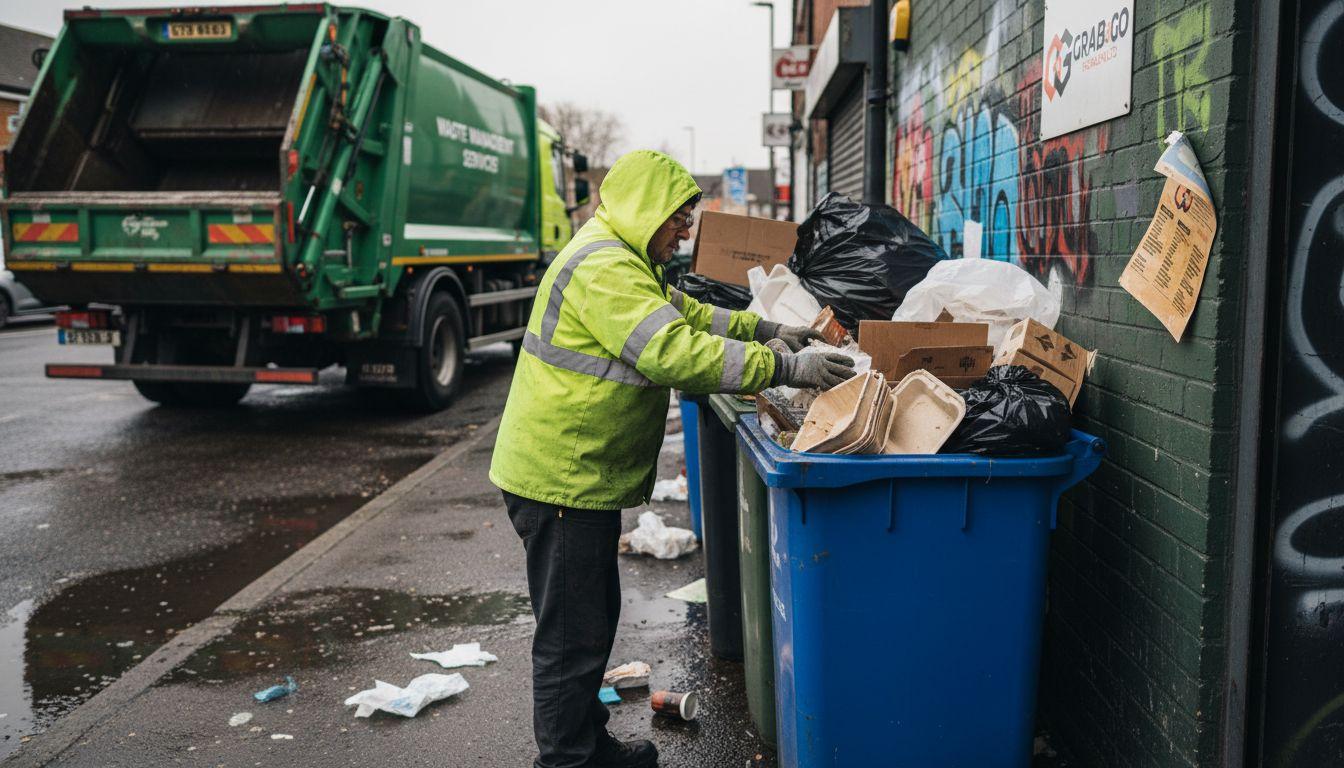
The environmental benefits multiply when food businesses switch to recyclable or compostable alternatives. Compostable packaging reduces greenhouse gas emissions by up to 60% compared to conventional plastics, creating a compelling environmental case alongside regulatory compliance. These materials break down naturally without releasing harmful methane, transforming waste streams into valuable compost rather than landfill burden.
Most businesses underestimate the true environmental cost of their packaging choices. A single takeaway container might seem insignificant, but multiply that by hundreds of daily orders across thousands of UK food service operations, and the cumulative impact becomes staggering. The environmental damage extends beyond visible waste to include resource extraction, manufacturing emissions, and transportation impacts before packaging even reaches your business.
Key environmental considerations for food service packaging:
- Landfill capacity in the UK faces increasing strain from packaging waste accumulation
- Methane emissions from decomposing packaging contribute significantly to climate change
- Marine pollution from packaging waste damages coastal ecosystems and wildlife
- Resource depletion occurs when virgin materials replace recyclable alternatives
“The shift to sustainable packaging isn’t just about compliance, it’s about recognising our responsibility to future generations and the ecosystems that support our food systems.”
Pro Tip: Calculate your business’s annual packaging volume by tracking orders for one month, then multiply by twelve. This baseline reveals the scale of your environmental impact and helps prioritise reduction efforts where they matter most.
How the UK Extended Producer Responsibility scheme shapes packaging waste reduction
The EPR scheme modulates disposal fees based on recyclability, fundamentally changing how businesses approach packaging decisions in 2026. This regulatory framework assigns financial responsibility to producers and importers for the entire lifecycle of packaging materials, creating direct economic incentives for sustainable choices.
Recyclability scores determine fee structures under the EPR scheme, with highly recyclable materials attracting lower costs whilst difficult-to-recycle packaging incurs premium charges. The modulation system rewards businesses that choose cardboard, aluminium, and glass whilst penalising reliance on composite materials and contaminated packaging that burden recycling infrastructure.
Understanding why single use packaging fits within EPR regulations requires recognising the distinction between recyclable single use items and problematic materials. Standard mixed recycling streams cannot accept soft plastics, black plastic containers, or heavily contaminated food packaging due to processing limitations and contamination risks that compromise entire recycling batches.
EPR compliance steps for food service businesses:
- Register with the environmental regulator if you handle or import packaging materials
- Calculate your packaging footprint across all materials used annually
- Assess recyclability scores for current packaging against EPR fee schedules
- Identify opportunities to switch to higher-scoring sustainable alternatives
- Implement tracking systems to monitor packaging volumes and material types
- Review supplier contracts to ensure EPR compliance responsibility is clearly allocated
The scheme affects cost allocation by packaging material but maintains overall fee neutrality across the system. However, individual businesses experience significant cost variations depending on their material choices, creating competitive advantages for early adopters of sustainable packaging.
UK food service businesses face unique EPR challenges compared to retail or manufacturing sectors. The fast-paced nature of food service operations, combined with contamination from food residue, complicates recycling efforts and affects fee calculations. Some hospitality-specific packaging categories remain underserved by current EPR guidelines, creating grey areas that businesses must navigate carefully.
“EPR represents the most significant regulatory shift in packaging responsibility for a generation, transforming waste from an afterthought into a strategic business consideration with direct financial implications.”
Pro Tip: Contact your packaging suppliers now to clarify who bears EPR responsibility for different materials. Many suppliers absorb these costs, but contracts vary, and understanding your obligations prevents unexpected fees when the scheme launches.
Choosing sustainable packaging materials to reduce waste effectively
Material selection directly determines your packaging waste reduction success and EPR fee exposure. UK food service businesses must balance environmental performance, cost considerations, food safety requirements, and operational practicality when evaluating packaging alternatives.
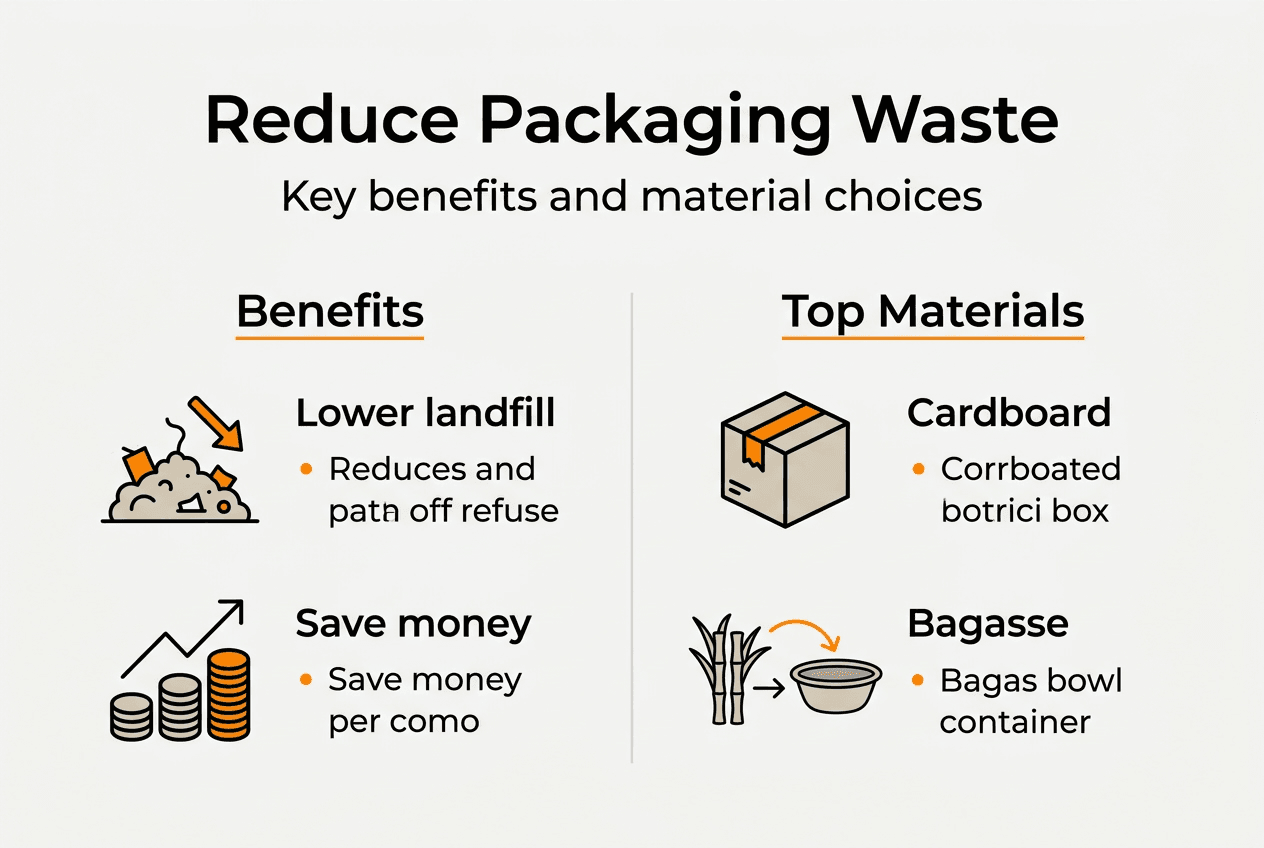
Cardboard achieves high recyclability rates when uncontaminated, making it ideal for dry foods, bakery items, and takeaway boxes. The UK’s established cardboard recycling infrastructure processes this material efficiently, and consumers recognise cardboard as recyclable, improving segregation compliance.
Compostable bagasse packaging, manufactured from sugarcane pulp, offers excellent environmental credentials for hot and cold foods whilst maintaining structural integrity. This material breaks down in commercial composting facilities within 90 days, though availability of such facilities varies regionally across the UK, affecting practical disposal options.
| Material | Environmental Impact | Recyclability | Cost vs Conventional | Food Service Suitability |
|---|---|---|---|---|
| Cardboard | Low carbon footprint | Excellent when dry | Comparable | Dry foods, bakery, pizza boxes |
| Compostable bagasse | Very low, biodegradable | Compostable only | 10-20% premium | Hot foods, bowls, plates |
| Paper | Low, renewable source | Excellent uncoated | Comparable | Wraps, bags, sandwich packaging |
| Hard plastic | Moderate, recyclable | Good if sorted | Lower upfront | Cold foods, salad containers |
| Soft plastic | High, rarely recycled | Poor, specialist only | Lowest | Avoid where possible |
Understanding types of packaging materials helps businesses match packaging to specific menu items whilst optimising recyclability. Soft plastics present particular challenges because standard kerbside recycling cannot process them, requiring specialist collection schemes that remain limited across the UK.
Contamination prevention strategies for busy kitchens:
- Provide separate bins clearly labelled for packaging, food waste, and general refuse
- Position recycling stations near packaging storage areas for immediate disposal
- Choose packaging with minimal food contact surfaces to reduce contamination
- Train staff to scrape containers before disposal when practical
- Avoid packaging with mixed materials that cannot be separated for recycling
Pro Tip: Conduct a waste audit before switching packaging materials by sorting one week’s waste into categories. This reveals which packaging types dominate your waste stream, allowing targeted material substitutions that deliver maximum impact for your investment.
When implementing sustainable packaging, consider the complete lifecycle including supplier proximity, transportation emissions, and end-of-life disposal infrastructure available in your area. A theoretically compostable material offers little environmental benefit if your region lacks commercial composting facilities and the packaging ends up in landfill anyway.
The cost premium for sustainable packaging continues narrowing as production scales increase and EPR fees penalise conventional materials. Many businesses discover that sustainable alternatives cost only 10-15% more upfront whilst delivering disposal cost savings, positive brand perception, and regulatory compliance that justify the investment.
Practical steps for UK food businesses to reduce packaging waste
Implementing packaging waste reduction requires systematic assessment, strategic planning, and operational changes that embed sustainability into daily workflows. Start by establishing your current packaging consumption baseline through comprehensive waste auditing.
Waste reduction implementation roadmap:
- Conduct a detailed waste audit sorting all packaging by material type and weight for one week
- Calculate annual packaging volumes and associated disposal costs from audit data
- Set measurable reduction targets such as 20% waste decrease within twelve months
- Identify high-volume packaging items where material substitution delivers greatest impact
- Research sustainable alternatives matching your food safety and operational requirements
- Trial new packaging with staff feedback before full implementation
- Establish monitoring systems tracking packaging usage monthly against targets
- Review and adjust strategies quarterly based on performance data and cost analysis
Prioritising reusable, recyclable, or compostable packaging when selecting suppliers transforms procurement from a purely cost-driven decision into a strategic sustainability initiative. Request recyclability certifications and EPR compliance documentation from suppliers to verify environmental claims and ensure regulatory alignment.
Staff training on waste segregation prevents contamination that renders recyclable materials worthless. Food packaging best practices emphasise clear communication about which materials belong in recycling streams versus general waste, supported by visual guides at disposal points.
Monitoring packaging usage regularly identifies waste patterns and opportunities for reduction. Many businesses discover significant waste from over-ordering, damaged stock, or packaging choices that exceed actual food portion requirements. Adjusting orders to match genuine needs eliminates this unnecessary waste whilst reducing costs.
Pro Tip: Partner with suppliers offering take-back or recycling support programmes that collect used packaging for proper processing. These schemes simplify compliance, guarantee appropriate disposal, and often provide data tracking that supports sustainability reporting requirements.
Understanding why packaging impacts food waste reveals additional reduction opportunities. Appropriate packaging extends food shelf life, reducing spoilage waste that often exceeds packaging waste by volume. Right-sizing portions and packaging together optimises both food and material efficiency.
Businesses can reduce waste disposal costs by up to 30% through waste reduction and sustainable packaging strategies. These savings accumulate from lower waste collection fees, reduced EPR charges, and improved operational efficiency that minimises material handling and storage requirements.
Engaging your team in waste reduction creates ownership and surfaces practical insights from staff who handle packaging daily. Front-line employees often identify simple changes like switching container sizes or eliminating unnecessary layers that management overlooks but deliver meaningful waste reductions.
Explore sustainable packaging solutions at Grab & Go Packaging
Reducing packaging waste requires reliable suppliers who understand UK food service needs and regulatory requirements. Grab & Go Packaging specialises in eco-friendly packaging solutions designed specifically for busy catering operations, hospitality businesses, and food service providers navigating the 2026 EPR landscape.

Our extensive range spans compostable bagasse containers, recyclable cardboard boxes, paper wraps, and sustainable alternatives across every food packaging category. Whether you need fish and chips boxes, coffee cups, or bespoke printed packaging that reinforces your brand whilst meeting environmental standards, our team provides expert guidance matching materials to your operational requirements.
Navigating sustainable packaging choices becomes straightforward with specialist support that considers food types, portion sizes, transportation needs, and disposal infrastructure. We help businesses understand EPR implications for different materials, ensuring your packaging decisions optimise both environmental performance and cost efficiency under the new regulatory framework.
Explore food packaging best practices through our resource centre, then browse our product catalogue to find sustainable solutions that fit your budget and operational workflow. Our streamlined ordering process supports both bulk purchasing for established operations and smaller orders for businesses testing new packaging approaches.
Frequently asked questions
How can reducing packaging waste benefit my food service business?
Reducing packaging waste cuts disposal costs by up to 30%, lowers your carbon footprint significantly, and ensures compliance with 2026 EPR regulations that penalise unsustainable materials. Additionally, sustainable packaging strengthens brand reputation among eco-conscious customers who increasingly choose businesses demonstrating environmental responsibility. These combined benefits create competitive advantages whilst supporting long-term operational efficiency.
What types of packaging materials are best for reducing waste in UK food service?
Cardboard and compostable bagasse rank highest for recyclability and environmental performance in food service applications. Cardboard excels for dry foods and bakery items, whilst bagasse handles hot and cold foods effectively. Soft plastics should be avoided where possible because standard recycling streams cannot process them, requiring specialist collection that remains limited across the UK.
How does the Extended Producer Responsibility scheme affect food businesses in 2026?
The EPR scheme modulates disposal fees based on packaging recyclability, with highly recyclable materials incurring lower costs than difficult-to-recycle alternatives. Food businesses must register if they handle or import packaging, then pay fees calculated on packaging volumes and material types. However, some hospitality-specific packaging categories have regulatory gaps that businesses should monitor as guidance evolves.
Can sustainable packaging actually save money compared to conventional options?
Sustainable packaging typically costs 10-20% more upfront but delivers savings through reduced disposal fees, lower EPR charges, and improved operational efficiency. When calculating total cost of ownership including waste collection, regulatory compliance, and brand value, sustainable options often prove cost-neutral or advantageous within 12-18 months. Early adoption also positions businesses favourably as regulations tighten and conventional packaging costs rise.
What is the first step for reducing packaging waste in my food business?
Conduct a comprehensive waste audit by sorting one week’s packaging waste into material categories and weighing each type. This establishes your baseline consumption, identifies high-volume waste streams where changes deliver maximum impact, and reveals contamination issues affecting recyclability. Use audit data to set measurable reduction targets and prioritise material substitutions that align with your budget and operational requirements.
Recommended
- Role of Packaging in Reducing Waste for UK Food Businesses – Grab & Go Packaging
- Why Single Use Packaging Matters for UK Food Businesses – Grab & Go Packaging
- 7 Best Practices for Food Packaging Success in the UK – Grab & Go Packaging
- Why Packaging Impacts Food Waste in UK Hospitality – Grab & Go Packaging
- 5 Eco-Friendly Packaging Options for Freeze-Dried Dog Food
- UK Dog Food Industry 2025 – Statistics & Trends

