
Reducing food waste can feel like an ongoing challenge for UK food service businesses. Packaging is a powerful tool that directly affects shelf life, food quality, and the amount discarded along the supply chain. With innovative packaging solutions now helping businesses meet stringent waste reduction targets and support environmental goals, choosing the right materials and strategies can help protect your products while enhancing your reputation for sustainability.
| Point | Details |
|---|---|
| Importance of Packaging | Effective packaging extends shelf life, reduces spoilage, and maintains product quality, presenting a vital strategy for minimising food waste. |
| Sustainable Materials | Transitioning to sustainable materials, such as compostable bioplastics and recycled paper, helps businesses lower their environmental impact while ensuring product integrity. |
| Regulatory Compliance | Adhering to packaging waste regulations is essential for UK food businesses, requiring regular audits and updates to their waste management practices. |
| Consumer Trends | Sustainability in packaging improves brand perception and aligns with consumer values, making it crucial for businesses to communicate their environmental initiatives effectively. |
Packaging plays a critical role in reducing food waste for UK food businesses, serving as an essential protective barrier that extends product shelf life and maintains quality. Complex packaging strategies can significantly minimise food spoilage and wastage throughout the supply chain.
Modern packaging solutions offer multiple waste reduction benefits for food businesses:
The UK food industry faces increasing pressure to reduce waste, with packaging emerging as a key strategic tool. Innovative packaging techniques can dramatically decrease the amount of food discarded, benefiting both environmental sustainability and business economics. Advanced packaging technologies enable businesses to meet stringent waste reduction targets while maintaining product integrity.
Food businesses must consider packaging not just as a container, but as an active participant in waste prevention. By selecting appropriate materials and designs, organisations can create packaging that actively preserves food quality, reduces spoilage, and extends usable product lifecycles.
Here is a summary of how innovative packaging technologies contribute to reducing food waste and improving business outcomes:
| Technology Type | Waste Reduction Benefit | Impact on Product Quality | Business Advantage |
|---|---|---|---|
| Modified Atmosphere | Slows spoilage via gas control | Preserves taste and texture | Enables longer shelf life |
| Active Packaging | Absorbs moisture/oxygen | Minimises contamination risk | Reduces returns/complaints |
| Smart Labelling | Tracks freshness in real time | Informs proper handling | Builds consumer trust |
| Portion-Control Packs | Minimises overconsumption | Supports accurate portioning | Cuts preparation waste |
Pro tip: Invest in high-quality, purpose-designed packaging that matches your specific food product’s preservation requirements to maximise waste reduction potential.
The UK food packaging industry is experiencing a transformative shift towards more sustainable and innovative materials that address environmental challenges. Cutting-edge packaging technologies are revolutionising how businesses approach packaging design and material selection.
Key sustainable packaging materials emerging in the market include:
Innovative material solutions are crucial for businesses seeking to reduce their environmental footprint. Compostable packaging systems now offer integrated waste management approaches that align with circular economy principles, enabling food businesses to minimise their ecological impact.

The development of sustainable packaging requires a holistic approach, considering not just environmental impact but also functional performance, cost-effectiveness, and regulatory compliance. Food businesses must balance technical requirements with sustainability goals, selecting materials that maintain product quality while reducing waste and environmental burden.
Pro tip: Conduct a comprehensive audit of your current packaging materials to identify opportunities for transitioning to more sustainable alternatives that meet both environmental and operational requirements.
UK food businesses are increasingly embracing reusable and compostable packaging solutions as critical strategies for reducing environmental impact. Comprehensive government packaging targets are driving significant innovation in sustainable packaging approaches across the food industry.
Key characteristics of reusable and compostable packaging include:
Compostable packaging systems represent a sophisticated waste management approach that goes beyond traditional recycling methods. Market growth projections for compostables indicate significant potential for scaling these innovative solutions across the UK food service sector.
Successful implementation requires careful consideration of infrastructure, consumer education, and waste management capabilities. Businesses must evaluate not just the environmental benefits, but also the practical implications of transitioning to reusable and compostable packaging solutions, ensuring that these alternatives meet both sustainability goals and operational requirements.
The table below compares compostable packaging solutions to reusable alternatives for UK food businesses:
| Packaging Solution | Environmental Benefit | Operational Challenge | UK Adoption Trend |
|---|---|---|---|
| Compostable | Reduces landfill waste | Requires industrial composting | Rapid growth projected |
| Reusable | Minimises single-use output | Needs collection infrastructure | Moderate, urban-centric |
Pro tip: Collaborate with local waste management facilities to understand their specific composting capabilities before implementing compostable packaging solutions.
UK food businesses face a complex landscape of packaging waste regulations designed to drive sustainable practices and reduce environmental impact. Devolved waste policies create a comprehensive regulatory framework that varies slightly across different UK nations.
Key regulatory requirements for food businesses include:
Packaging waste management has become a critical compliance area for UK food businesses. Plastic packaging waste strategies emphasise multiple approaches including removal, reuse, replacement, and enhanced recycling techniques.
The Environment Act 2021 provides the overarching legislative framework, establishing clear expectations for businesses to minimise packaging waste. Organisations must now actively track, report, and continuously improve their packaging strategies, moving beyond traditional waste management towards more circular and sustainable approaches.
Pro tip: Conduct an annual packaging waste audit to ensure ongoing compliance with evolving UK environmental regulations.
UK food businesses are increasingly recognising that sustainable packaging represents a strategic intersection of economic performance, brand perception, and environmental responsibility. Consumer perceptions of packaging demonstrate that sustainability is no longer optional but a critical business imperative.
Key strategic considerations for balancing cost and sustainability include:
Packaging innovation now requires a holistic approach that goes beyond simple waste reduction. Eco-friendly packaging technologies are enabling businesses to simultaneously extend food preservation, reduce waste, and enhance brand perception.
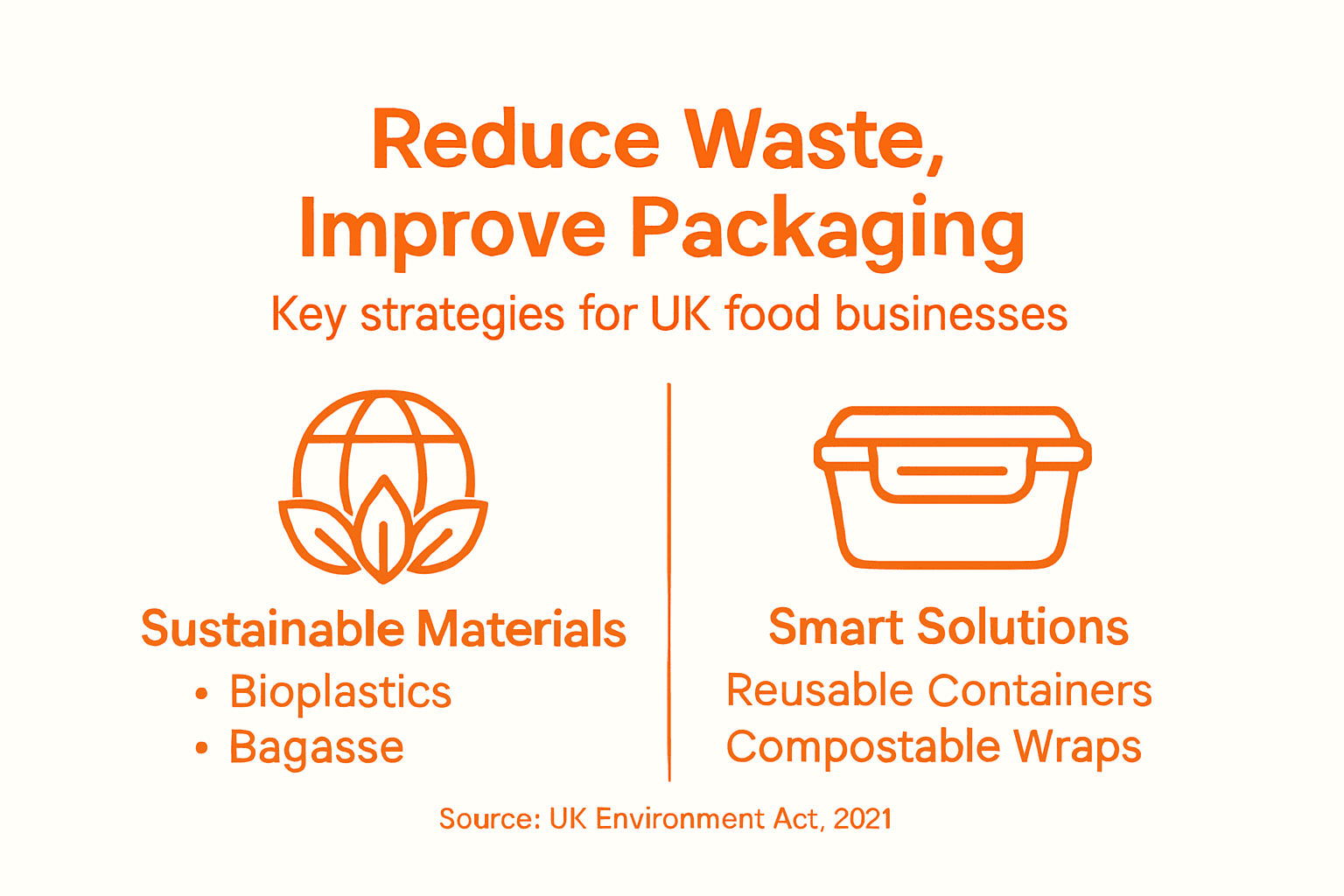
Successful strategies involve understanding that sustainability can be a competitive advantage. By carefully selecting packaging that reduces waste, communicates environmental commitment, and maintains cost-effectiveness, food businesses can create compelling value propositions that resonate with environmentally conscious consumers.
Pro tip: Conduct periodic consumer research to understand how your packaging choices impact brand perception and align with customer sustainability expectations.
The challenge for UK food businesses today is clear: reduce food waste while maintaining product quality and complying with strict regulations. Innovative packaging solutions like portion-control packs, compostable materials, and smart labelling are essential tools to protect your products, extend shelf life, and meet consumer demand for sustainability. At Grab n Go Packaging, we understand these critical needs and offer a diverse range of packaging supplies designed to help your business reduce waste and enhance brand reputation.
Discover how our selection of specialised containers, biodegradable bags, and customised packaging options can support your sustainability goals right now. Don’t let outdated packaging sabotage your progress towards waste reduction targets. Visit Grab n Go Packaging to explore effective packaging solutions tailored for UK food businesses seeking reliable, eco-friendly, and cost-efficient products. Take control of your packaging strategy today and lead your business towards a greener future.
Packaging acts as a protective barrier that extends product shelf life, prevents spoilage, protects against physical damage, and maintains product quality, thereby significantly reducing food waste.
Innovative packaging technologies, such as modified atmosphere and active packaging, slow down the spoilage process and minimise contamination risks, which helps in maintaining the taste and texture of the food products.
Sustainable packaging materials include compostable bioplastics, bagasse packaging made from sugarcane waste, recycled paper and cardboard, and biodegradable polymers that break down naturally in the environment.
Food businesses should consider factors such as the environmental impact, functional performance, cost-effectiveness, sustainability goals, and regulatory compliance when selecting packaging materials and designs.