
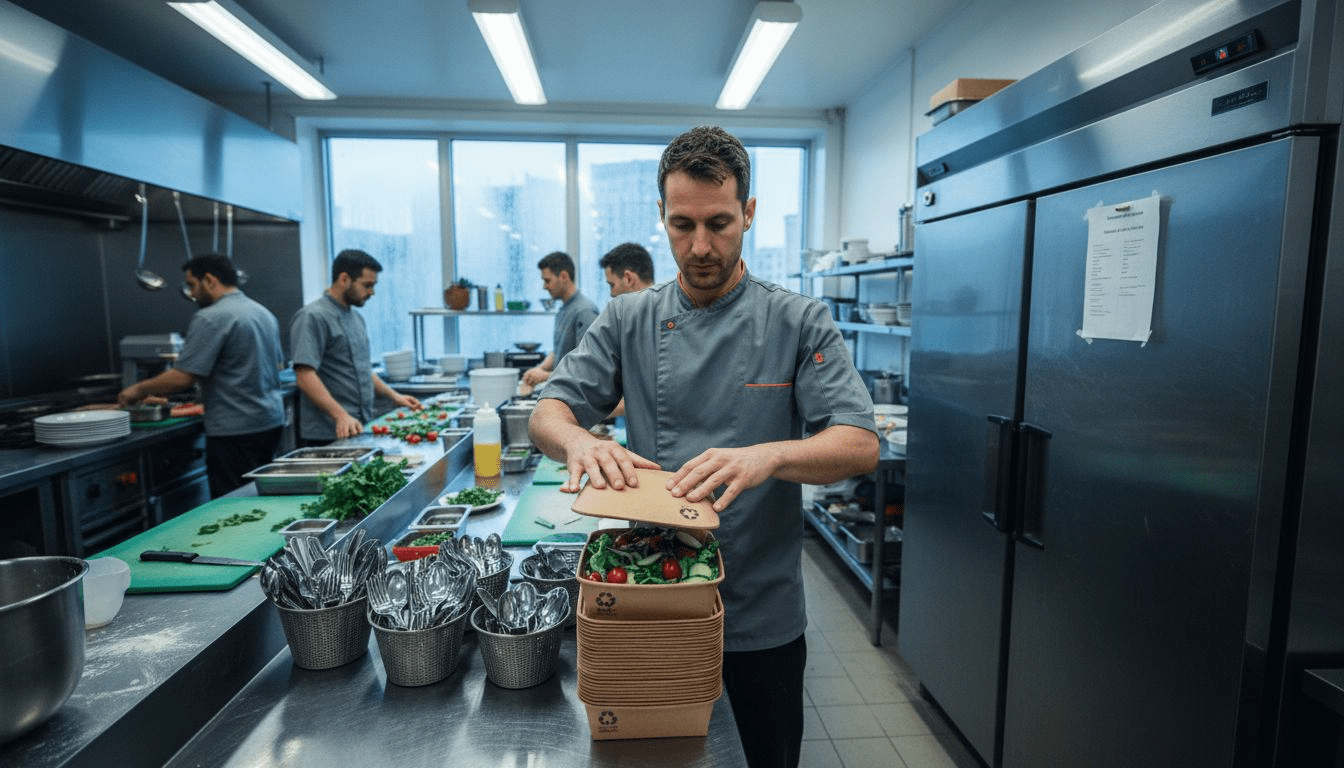
Every catering business faces the challenge of balancing practical needs with environmental responsibility. With growing demand for eco-friendly solutions, choosing the right packaging is about more than just food safety—it is key for building trust and standing out in the British market. This guide helps you make informed sustainable choices that fit your operation, follow UK regulations, and enhance your brand’s impact.
| Key Takeaway | Explanation |
|---|---|
| 1. Assess your packaging needs | Understand container sizes, materials, and regulatory compliance before making purchases. |
| 2. Choose eco-friendly materials | Evaluate options like compostable containers and bagasse for sustainable catering solutions. |
| 3. Use sustainable branding | Transform eco-friendly materials into marketing tools that reflect your business values. |
| 4. Ensure compliance with standards | Adhere to UK regulations regarding packaging disposal and sustainability certifications. |
| 5. Monitor ongoing performance | Regularly track feedback on packaging effectiveness and adjust for continuous improvement. |
Assessing your packaging needs is the foundation of building a sustainable catering operation. Before you buy anything, you need to understand exactly what your business requires—from container sizes to material types to regulatory compliance.
Start by mapping out your entire menu and service style. Different dishes demand different packaging solutions. Hot items need containers that withstand temperature, whilst cold salads require breathable options that prevent condensation.
Document your current packaging usage patterns.
Review your customer feedback and operational data. Check past orders, customer complaints, and delivery success rates. Poor packaging choices often show up as damaged deliveries or customer returns.
Understanding your precise packaging needs prevents wasteful overordering and ensures sustainable choices actually work for your service model.
Consult regulatory requirements for food safety and sustainability. The UK has specific standards for food contact materials, and many regions now mandate reduced single-use plastics. Consider using guidance on healthier and sustainable catering practices to verify your packaging meets current standards.
Assess your current supplier relationships and budget constraints. Sustainable packaging sometimes costs more upfront, but often delivers savings through waste reduction and brand loyalty gains.
Pro tip: Create a simple spreadsheet tracking your top 5-10 packaging items by weekly volume, cost, and current material type—this data becomes invaluable when comparing sustainable alternatives and calculating true cost savings.
Choosing the right sustainable materials is where your commitment to environmental responsibility becomes tangible. This step transforms your assessment data into concrete packaging choices that work for your operation and your brand values.
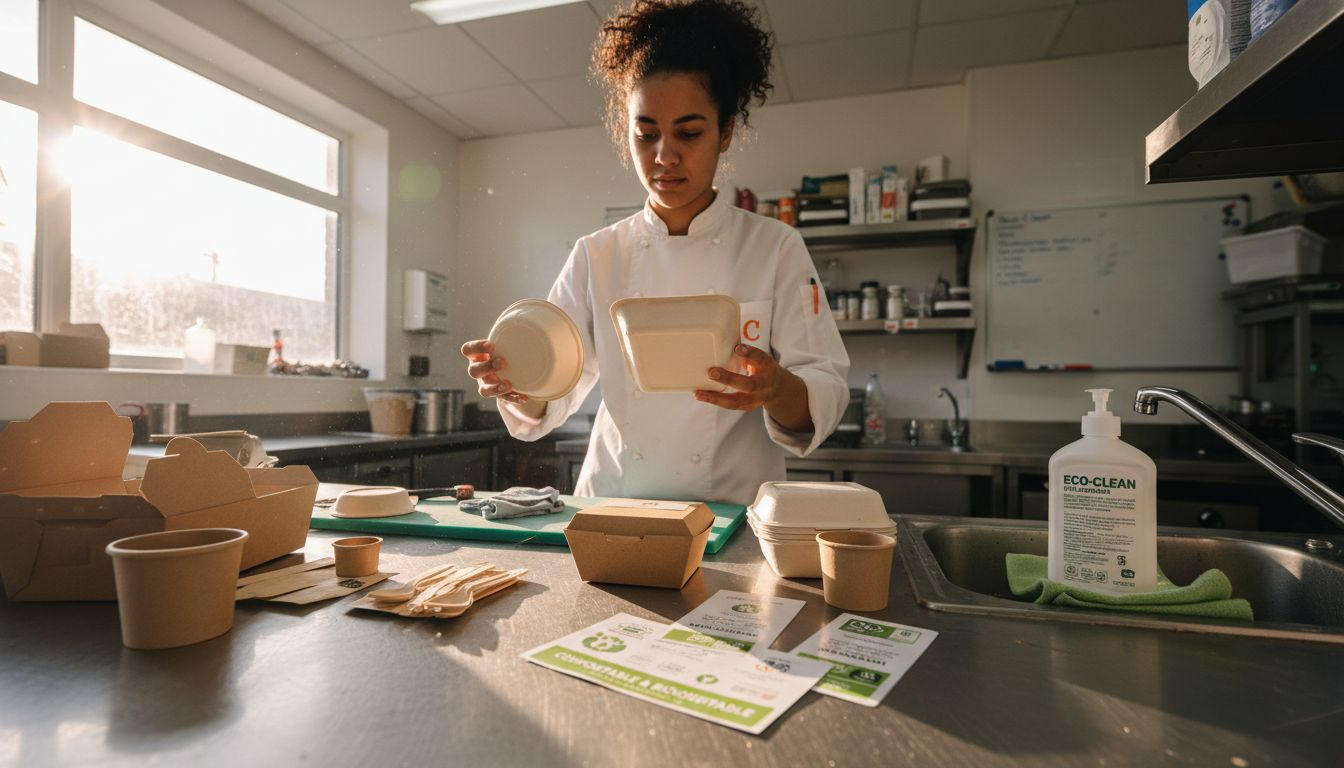
Start by evaluating the most common materials available for catering. Bagasse, biodegradable cutlery, and compostable containers are increasingly practical options that reduce your environmental footprint without compromising functionality.
Consider these key material categories for your business:
Test your top choices before committing to bulk orders. Request samples from suppliers and use them in real service conditions. Check how containers hold up with your typical food temperatures, handling, and delivery times.
For easy comparison, here is an overview of common eco-friendly catering packaging materials and their typical business impacts:
| Material Type | Best Use Cases | Environmental Benefit | Estimated Cost Impact |
|---|---|---|---|
| Bagasse containers | Hot foods, meal trays | Compostable, renewable fibre | Slightly higher initial cost |
| Compostable takeaway box | Mixed menu, salads | Rapid biodegradability | 10–30% above standard containers |
| Recyclable cardboard | Bakery, pizza, dry goods | Easily recycled, less waste | Comparable to regular cardboard |
| Plant-based cups | Beverages, cold drinks | Reduces single-use plastics | Moderate price increase |
| Wooden cutlery | Premium events, snacks | Fully biodegradable, no toxins | 5–20% above plastic cutlery |
Your customers will notice the quality difference between cheap compostable options and genuinely durable, well-designed sustainable packaging.
Verify supplier credentials and certifications. Look for materials certified as genuinely compostable or recyclable by recognised standards. Greenwashing happens frequently in this space, so confirm that claims match independent certifications.
Calculate the actual cost per unit across multiple suppliers. Sustainable materials often cost 10-30% more initially, but this typically recovers through improved customer retention and reduced waste costs.
Pro tip: Request a small trial order of your top three material choices, then track customer feedback and operational performance over two weeks—this real-world data eliminates guesswork and ensures your final selection actually works for your catering style.
Your sustainable packaging is a silent marketing tool that works every time a customer receives their order. This step shows you how to transform eco-friendly materials into brand ambassadors that reinforce your catering company’s values and identity.
Start by designing your brand story into the packaging itself. Your logo, colours, and messaging should communicate not just what you sell, but why you chose sustainable materials. Customers want to know they’re supporting a responsible business.
Consider these branding opportunities on your sustainable packaging:
Work with your packaging supplier to understand sustainable packaging design and regulatory compliance requirements for the UK market. Ensure your printed materials meet food safety standards whilst clearly communicating your eco-credentials.
Test your branded packaging with existing customers before scaling up. Gather feedback on visual appeal, readability, and whether the sustainable message resonates with your audience.
Customers remember brands that align with their values—sustainable packaging with thoughtful branding creates emotional connection that standard disposables simply cannot match.
Calculate the cost difference between plain and branded sustainable options. Often, custom printing adds only 5-15% to your unit cost, making it an affordable investment in brand recognition and customer loyalty.
Pro tip: Include a brief QR code on your branded packaging linking to your sustainability story—this transforms packaging into a direct customer engagement tool and builds trust in your environmental practices.
Compliance is not optional—it’s the foundation that protects your business and proves your commitment to genuine sustainability. This step ensures your packaging choices meet UK regulations and recognised environmental standards.
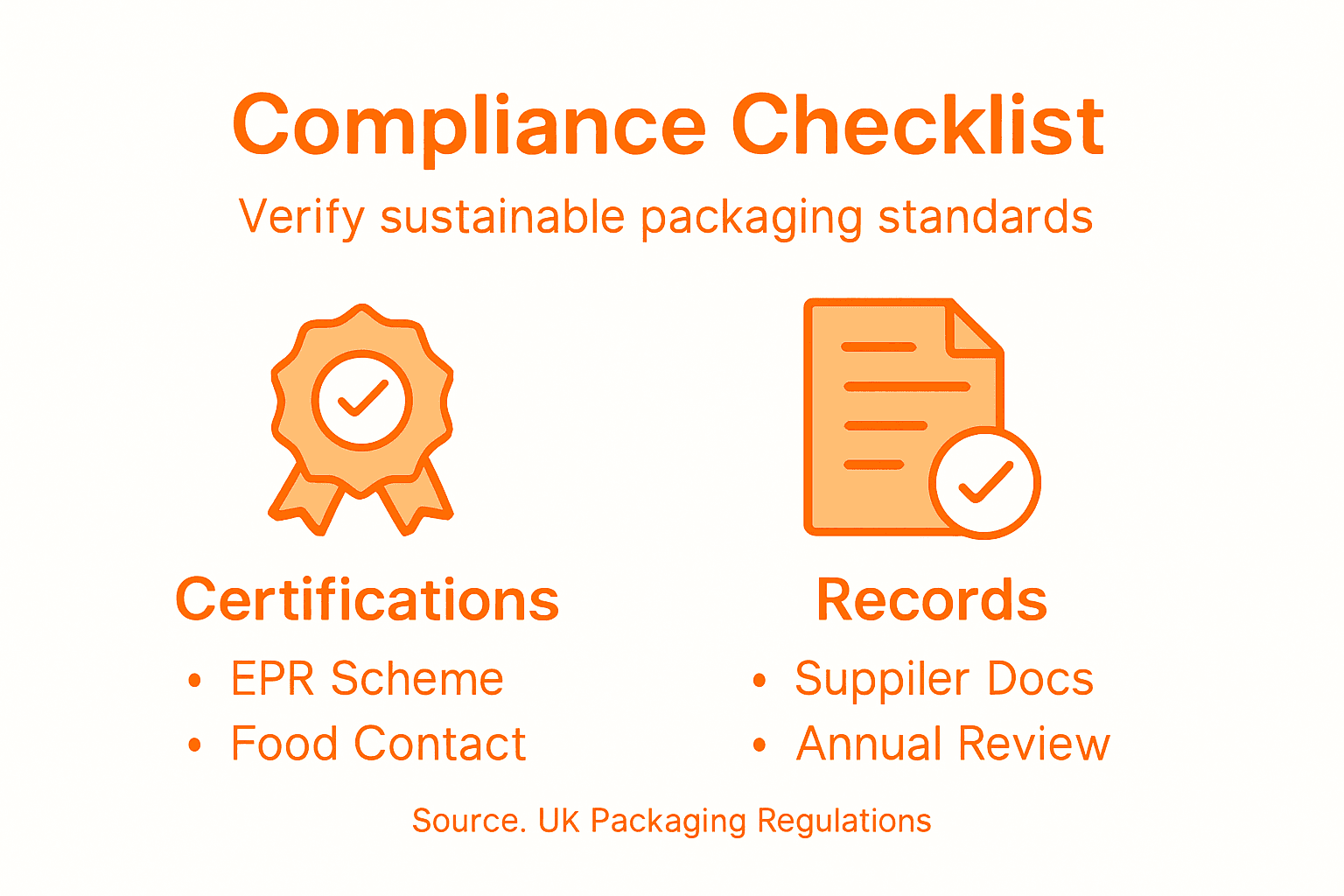
Understand the key regulatory framework affecting your catering business. The UK has introduced Extended Producer Responsibility (EPR) requirements and recycling targets that impact packaging choices. Your sustainable materials must align with these evolving standards to avoid penalties and maintain customer trust.
Start by reviewing current packaging legislation affecting your operation:
Consult UK packaging legislation and guidance provided by industry bodies to understand your specific obligations. Your packaging supplier should be able to confirm which certifications their materials hold.
Verify that your chosen materials carry recognised certifications. Look for accreditations from organisations like BPI (Biodegradable Products Institute) for compostable items or FSC (Forest Stewardship Council) for paper-based products.
Greenwashing carries real reputational risk—certifications from independent bodies prove your sustainability claims are genuine, not just marketing language.
Documentation matters. Keep records of your packaging certifications, supplier declarations, and compliance checks. This protects you if regulations tighten and demonstrates due diligence to customers who care about accountability.
Review compliance annually as standards evolve. Set a calendar reminder to check for new UK packaging regulations each year and update your supplier agreements accordingly.
To understand evolving UK compliance, review how key standards influence sustainable catering packaging choices:
| UK Regulation/Standard | Main Focus | Business Action Required |
|---|---|---|
| Extended Producer Responsibility (EPR) | Packaging disposal tracking | Register packaging, report volumes |
| Food contact material regulations | Safety and hygiene | Request supplier certifications |
| Recycling targets | Material recovery | Label products, choose certified items |
| Compostable labelling requirements | Accurate eco claims | Use approved compostable logos |
| Waste disposal rules | Local compliance | Partner with compliant disposal firms |
Pro tip: Ask your packaging supplier for a written sustainability compliance statement detailing which certifications each product holds—this document becomes invaluable for your own customer communications and regulatory audits.
Implementing sustainable packaging can be challenging when balancing cost, compliance and customer expectations. This article highlights key pain points such as choosing the right eco-friendly materials, ensuring regulatory compliance and enhancing your brand through smart packaging choices. If you want to reduce waste while improving operational efficiency and connecting emotionally with eco-conscious customers Grab & Go Packaging is your partner for success.
Discover a wide range of eco-friendly containers cutlery and cups that align with UK sustainability standards in our Uncategorized – Grab & Go Packaging section.
Take the next step towards responsible catering and make your sustainable packaging vision real today. Visit Grab & Go Packaging for competitive pricing simple bulk ordering and branded options that help your business stand out and comply with ever-evolving regulations. Start transforming your packaging strategy now and win loyal customers who value your genuine commitment to the environment.
To assess your catering packaging requirements, start by mapping out your menu and service style. Document your current container usage, noting sizes, materials, and customer feedback to understand your specific needs and avoid overordering.
Consider materials like Bagasse containers for hot foods, compostable takeaway boxes for mixed menus, and recyclable cardboard for items like pizza and bakery goods. Research these options, request samples, and test their functionality with your food items before making larger purchases.
You can implement branding by using custom printed boxes and branded compostable cups that feature your logo and messaging about sustainability. Work with your packaging supplier to incorporate your brand story into the design, ensuring it resonates with your environmentally conscious customers.
Verify compliance with Extended Producer Responsibility (EPR) requirements and food contact material regulations. Regularly check relevant legislation affecting your packaging to ensure your materials meet all necessary safety and sustainability standards.
Track the effectiveness of your sustainable packaging by collecting customer feedback and monitoring how your packaging performs in real service conditions. Conduct small trials over two weeks to gather data on operational performance and customer satisfaction, allowing for informed adjustments moving forward.