
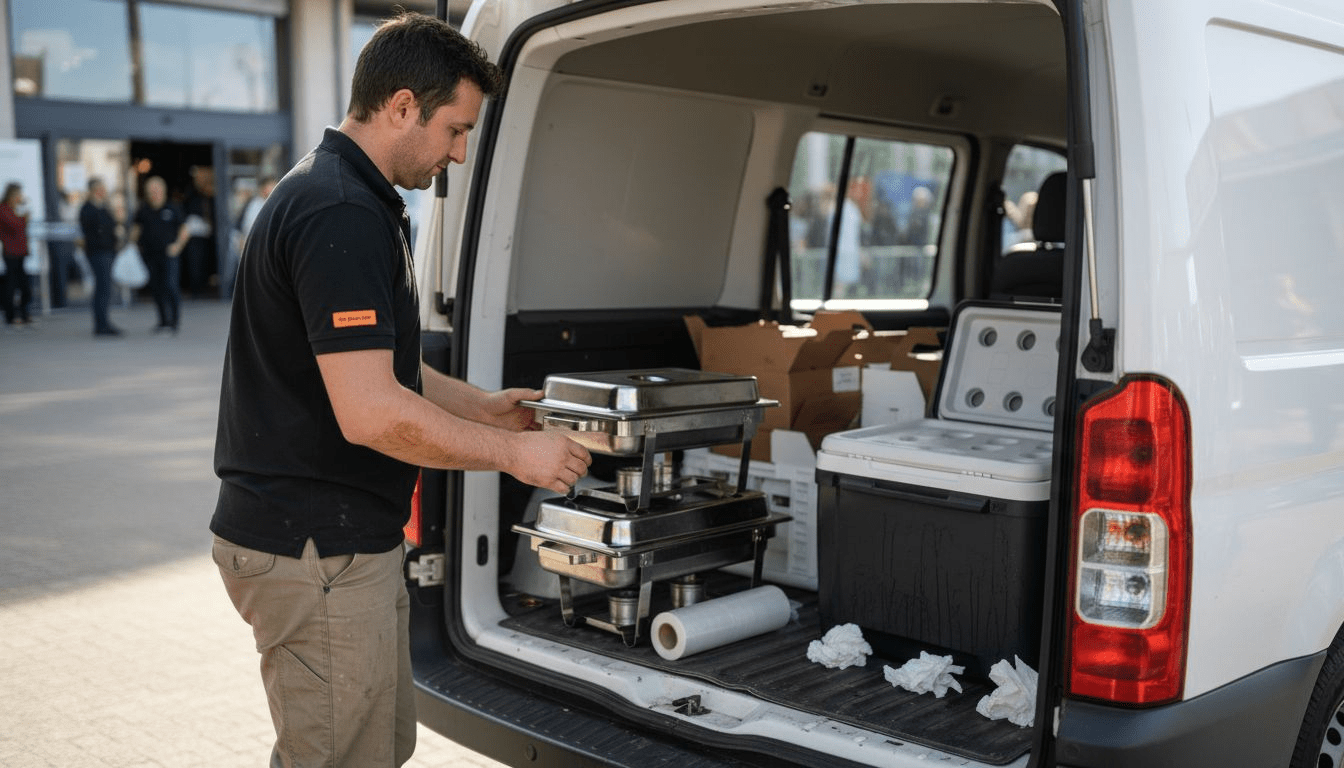
Packing and transporting food for your catering business comes with plenty of challenges. Every journey risks spills, contamination, or even food spoilage if you are not equipped with the right packaging. Finding reliable solutions is vital for keeping your dishes fresh and your customers happy.
This listicle will guide you through practical choices and features that give your food the best protection. You will discover how to balance safety, style, and environmental considerations without making life complicated. From durable containers to innovative eco-friendly materials, you are about to unlock real-world strategies that make your packaging work smarter for you.
| Takeaway | Explanation |
|---|---|
| 1. Prioritise durable containers | Choose containers that withstand temperature changes and structural stress to maintain food quality and safety during transport. |
| 2. Opt for eco-friendly packaging | Select biodegradable and recyclable materials to reduce environmental impact and appeal to eco-conscious consumers in the food service industry. |
| 3. Invest in custom branded packaging | Use unique packaging designs to enhance brand visibility and customer recall, ensuring your containers reflect your business identity. |
| 4. Implement portion control strategies | Use appropriately sized containers to manage serving sizes effectively, improving customer satisfaction and reducing waste. |
| 5. Ensure tamper-evident features | Integrate tamper-evident packaging to guarantee food safety, building customer trust and protecting your brand’s reputation. |
Transporting food safely requires more than just grabbing any container off the shelf. Food container durability is critical for maintaining food quality and preventing contamination during transit.
When selecting containers for catering services, several key factors determine their effectiveness. The right packaging must withstand temperature variations, resist potential structural damage, and maintain food integrity throughout transportation. Food packaging safety standards are paramount in ensuring customer health and satisfaction.
Key considerations for selecting durable food containers include:
Professional caterers should prioritise containers made from high-quality polypropylene or food-grade stainless steel. These materials offer excellent durability and can withstand repeated use and washing.
Investing in quality containers is not an expense but a critical investment in your food service’s reputation and customer safety.
Pro tip: Always conduct a simple drop test with empty containers to assess their structural integrity before purchasing bulk quantities.
In today’s environmentally conscious marketplace, catering businesses must prioritise sustainable packaging strategies. Selecting eco-friendly packaging is no longer optional but a critical business imperative.
The food service industry faces increasing pressure to reduce environmental impact while maintaining food safety and quality. Sustainable packaging innovations are transforming how businesses approach their packaging choices.
Key considerations for eco-friendly packaging include:
Modern catering businesses can choose from innovative materials like bagasse (sugarcane pulp), bamboo fibre, and compostable plant-based plastics. These alternatives offer robust performance while significantly reducing environmental impact.
Sustainable packaging is not just an environmental choice but a strategic business decision that resonates with environmentally aware consumers.
Pro tip: When selecting eco-friendly packaging, always request certifications that verify the material’s sustainability credentials and compliance with UK environmental regulations.
In the competitive food service landscape, packaging is more than just a container. It is a powerful branding tool that communicates your business’s identity, values, and professionalism to every customer.
Custom printed packaging transforms ordinary containers into marketing assets that extend your brand’s reach far beyond the initial point of sale. Custom packaging ideas allow businesses to create memorable customer experiences through strategic visual design.
Key elements of effective custom printed packaging include:
Small details like using your brand’s signature colours or incorporating a clever tagline can transform packaging from functional to remarkable. Customers are more likely to remember and recommend businesses with distinctive, well-designed packaging.
Your packaging speaks volumes before a single bite is taken. Make it count.
Pro tip: Invest in professional graphic design services to ensure your custom packaging looks polished and truly represents your brand’s unique personality.
Portion control is a critical aspect of food service that directly impacts customer satisfaction, cost management, and operational efficiency. Selecting the right container sizes can make a significant difference in your catering business’s profitability and reputation.
Choosing appropriate packaging involves understanding the delicate balance between customer expectations and economic practicality. Catering packaging checklists can help businesses streamline their portion control strategies.
Key considerations for effective portion sizing include:
Successful portion control requires a strategic approach that considers menu diversity, customer demographics, and pricing structures. Small containers can suggest value, while generously sized packaging can communicate abundance and quality.
Precision in portion sizing is the silent ingredient that separates good catering from great catering.
Pro tip: Invest in a range of container sizes and conduct regular customer feedback surveys to fine-tune your portion control strategy.
In an era of heightened food safety awareness, protecting customer health is paramount for catering businesses. Tamper-evident packaging provides a critical line of defence against potential contamination and demonstrates your commitment to customer wellbeing.
Tamper-evident features serve as a visual and functional guarantee that food has not been compromised during transportation or storage. These protective mechanisms reassure customers and protect your business’s reputation.
Key tamper-evident packaging strategies include:
Modern packaging technology offers sophisticated solutions that go beyond simple visual indicators. Some advanced systems integrate microperforations or unique closing mechanisms that make unauthorized access immediately apparent.
Trust is earned through visible commitment to food safety.
Pro tip: Invest in high-quality tamper-evident packaging and train your staff to recognise and properly apply these safety features for maximum protection.
In the fast-paced world of catering, efficient storage solutions can dramatically improve operational productivity. Stackable packaging designs offer a strategic approach to maximising limited kitchen and storage spaces.
Stackable container technologies have revolutionised how food service businesses manage their packaging inventory. These innovative designs allow containers to nest compactly when empty and stack securely when full, creating significant space savings.
Key benefits of stackable packaging include:
Professional catering operations should prioritise containers with ergonomic features such as reinforced corners, secure lids, and consistent sizing. This approach ensures both practical storage and food safety standards are met simultaneously.
Intelligent packaging design transforms storage from a challenge into a strategic advantage.
Pro tip: Invest in modular container systems with adjustable configurations to provide maximum flexibility for different food types and storage requirements.
Every catering business faces the challenging balance between maintaining high-quality packaging and managing operational costs. Smart purchasing decisions can help you achieve both financial prudence and professional presentation.
Packaging quality considerations play a critical role in determining your overall food service success. Understanding how to optimise your packaging strategy without compromising standards is key to long-term sustainability.
Strategies for cost-effective packaging selection include:
Successful catering businesses view packaging as an investment rather than an expense. By selecting versatile, high-quality containers that can be used across multiple menu items, you can significantly reduce long-term costs.
Quality packaging is not an expense. It is a strategic investment in your brand’s reputation.
Pro tip: Develop relationships with packaging suppliers who offer flexible pricing models and can provide sample batches for thorough testing before committing to large orders.
Below is a comprehensive table summarising the main factors, strategies, and insights discussed throughout the article on selecting and utilising food containers and packaging for catering purposes.
| Category | Key Points | Considerations |
|---|---|---|
| Choosing Durable Containers | Select containers made of high-quality materials such as polypropylene or food-grade stainless steel. Ensure they can withstand temperature variations, resist damage, and maintain food safety. | Temperature resistance, material strength, seal quality, and weight capacity are critical aspects. |
| Adopting Eco-Friendly Packaging | Prioritise materials that are biodegradable, recyclable, and sourced from renewable resources. Certifications to confirm compliance with environmental regulations are highly advised. | Reducing environmental impact aligns business practices with modern consumer values. |
| Custom Packaging for Branding | Incorporate consistent colours, visible logo placement, and unique design features. Leverage professional design services to create impactful packaging. | Provides branding opportunities and enhances customer perception of professionalism. |
| Ensuring Portion Control | Utilise appropriately sized containers to manage portion sizes, balanced price-efficiency, and meet customer expectations. Tailor options for diverse menu items and demographic preferences. | Supports operational efficiency and customer satisfaction while minimising waste. |
| Implementing Tamper-Evident Features | Incorporate security bands, shrink-wraps, and advanced seals to ensure food safety during transport and storage. Staff training is essential for effective application of such features. | Boosts customer trust and reinforces a commitment to safety. |
| Optimising Space with Stackable Designs | Select stackable, space-saving container designs that ensure storage efficiency and optimise operational space. Features like interlocking designs and reinforced corners are beneficial. | Reduces storage footprints and improves logistical management. |
| Balancing Costs and Quality | Perform durability assessments, purchase in bulk for discounts, and source versatile containers usable across menu items to minimise costs without sacrificing quality. | Cost-effective strategies ensure sustainability while maintaining product standards. |
Navigating the challenges of safe, durable, and sustainable food packaging need not overwhelm you. If you seek reliable options that address food container durability, eco-friendly materials, and custom printed branding as highlighted in the article, it is crucial to partner with a packaging supplier who understands these critical needs. Grab & Go Packaging offers a wide selection to support portion control, tamper-evident features, and space-saving designs that cater to your operational demands.
Discover the difference with Uncategorized – Grab & Go Packaging where quality meets variety. Act now to enhance your catering service reputation and efficiency by exploring tailored packaging solutions at https://grabngopackaging.co.uk/. Transform your packaging strategy into a competitive advantage today.
Durable food containers should be made from high-quality polypropylene or food-grade stainless steel. Ensure the materials resist temperature variations and prevent leaks to maintain food integrity during transport.
Choose biodegradable, recyclable, or plant-based materials for your packaging. Evaluate your current supplies and gradually transition to more sustainable options to reduce your environmental impact over time.
Custom printed packaging enhances brand recognition by showcasing your logo and unique design elements. Incorporate your brand’s colour scheme and contact information to leave a lasting impression on customers.
Analyze your menu offerings and consider customer preferences to select appropriate container sizes. Conduct regular feedback surveys to fine-tune your portioning strategy and ensure consistent serving volumes.
Opt for packaging with sealed security bands or breakable seals to ensure food safety. Inspect your packaging regularly to maintain clear evidence of tampering and reassure your customers about their safety.
Select stackable packaging designs that allow for efficient use of space in your kitchen. Look for containers that can nest compactly when empty and stack securely when full to improve your operational productivity.