
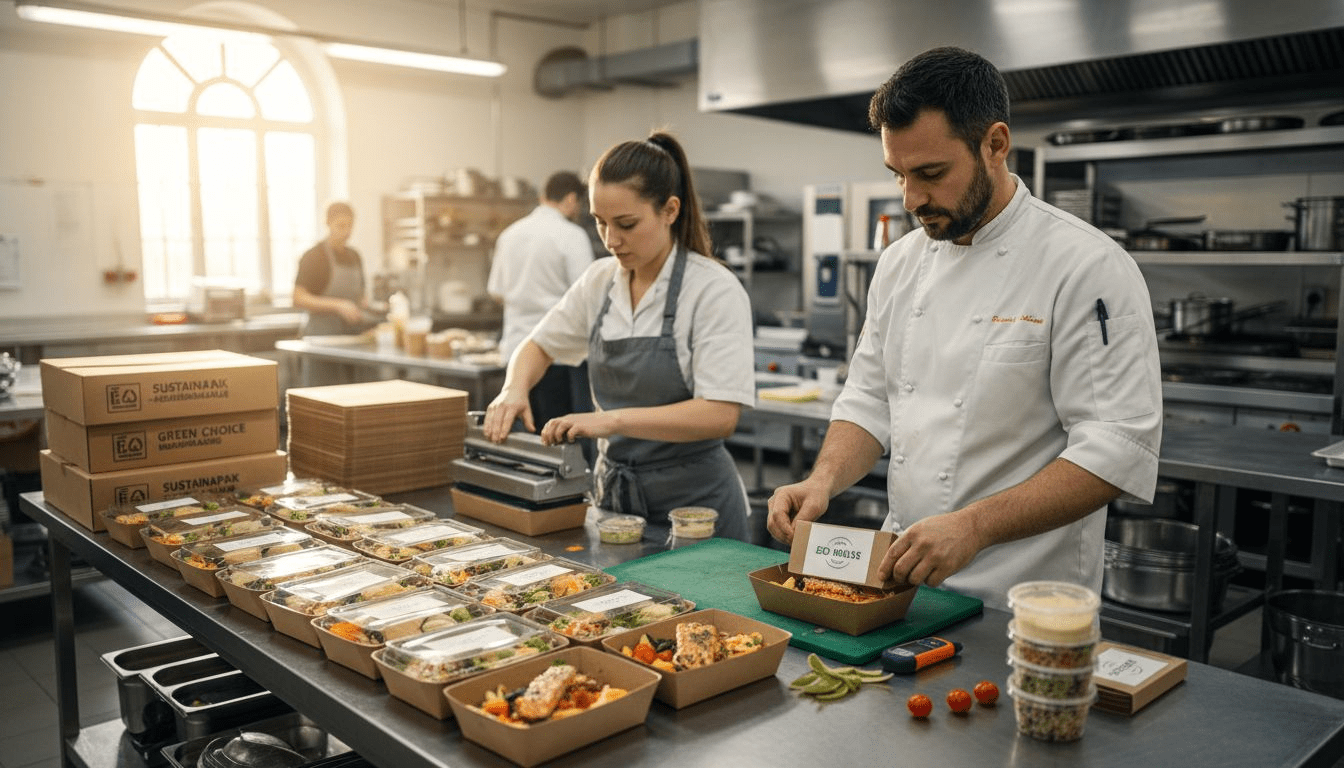
Every catering manager knows that choosing the right packaging can make or break your customer’s experience. Balancing food safety, UK legal requirements, and sustainability is no easy task when menus are diverse and customer expectations are high. By understanding how compliant, well-designed packaging can enhance your brand and cut unnecessary waste, you set your business apart in a competitive market. Discover how thoughtful packaging choices create lasting impressions and support responsible environmental practices.
| Important Insight | Clear Explanation |
|---|---|
| 1. Assess Packaging Needs Thoroughly | Evaluate each menu item’s specific requirements for optimal packaging and compliance with food safety regulations. |
| 2. Choose Sustainable Materials | Prioritise recyclable or biodegradable packaging options to align with modern consumer values and environmental regulations. |
| 3. Customise for Brand Appeal | Create visually appealing packaging that reflects your brand identity and enhances customer experience while ensuring compliance with labelling guidelines. |
| 4. Implement Effective Packing Processes | Establish systematic and hygienic packing workflows to maintain food quality and meet regulatory requirements. |
| 5. Regularly Verify Packaging Performance | Monitor packaging effectiveness through waste tracking and customer feedback to continuously improve sustainability and food quality. |
Designing the right packaging strategy is fundamental to successful catering operations, ensuring your food arrives fresh, appetising, and professionally presented. When assessing your menu’s packaging needs, you’ll want to create a comprehensive approach that considers multiple critical factors.
Start by thoroughly analysing each menu item’s unique characteristics. Different foods require different packaging solutions. Hot dishes need containers with excellent thermal insulation, while cold salads demand moisture-resistant packaging that prevents wilting. Food packaging regulations provide essential guidelines for ensuring your selections meet legal standards.
Consider these key packaging assessment criteria:
Your packaging must also account for practical logistical considerations. Stackable containers can optimise delivery vehicle space, while leak-proof designs prevent messy transportation. Some catering businesses benefit from using modular packaging systems that accommodate multiple menu items efficiently.
Matching packaging precisely to your menu items transforms logistics from a challenge into a strategic advantage.
Beyond functionality, consider sustainability. Modern customers appreciate environmentally responsible packaging choices that demonstrate your commitment to reducing waste. Look for biodegradable or recyclable options that align with your brand’s values.
Pro tip: Invest in sample packaging and conduct real-world transportation tests to validate your chosen containers’ performance before fully committing to a specific solution.
Choosing packaging solutions that balance regulatory compliance, environmental responsibility, and practical functionality is crucial for modern catering businesses. Your selections must navigate complex requirements while demonstrating a commitment to sustainability and food safety.

Understanding the extended producer responsibility regulations is fundamental to making informed packaging decisions. These guidelines require businesses to consider the entire lifecycle of packaging materials, emphasising waste reduction and recyclability.
Consider the following key criteria when selecting packaging:
Metal packaging offers an excellent sustainable option. Metal packaging manufacturers highlight that metal containers are 100% recyclable, highly durable, and provide superior protection for food items. These characteristics make them an increasingly popular choice for environmentally conscious catering businesses.
Sustainable packaging is not just an environmental choice—it’s a strategic business decision that resonates with modern consumers.
When evaluating packaging solutions, prioritise materials that offer multiple benefits. Biodegradable options like bagasse, recycled cardboard, and compostable plastics can significantly reduce your environmental footprint while meeting stringent food safety requirements.
Here is a comparison of common packaging materials used in UK catering and their core benefits:
| Material Type | Sustainability Benefit | Food Protection Ability | Regulatory Considerations |
|---|---|---|---|
| Recycled cardboard | High recyclability | Basic barrier, lightweight | Widely compliant, eco-friendly |
| Compostable plastic | Fully biodegradable option | Moisture and grease resistance | Requires composting facilities |
| Metal containers | 100% recyclable, reusable | Excellent durability, heat retention | Compliant with food safety standards |
| Bagasse (sugarcane) | Natural and compostable | Sturdy for wet foods | Meets most UK sustainability criteria |
Pro tip: Request sample packaging from multiple suppliers and conduct thorough testing to ensure the materials meet your specific operational needs and sustainability goals.
Packaging represents far more than a simple container for your food—it’s a powerful communication tool that can transform your brand’s visibility and customer perception. By strategically designing your packaging, you create a memorable brand experience that extends well beyond the meal itself.
Understanding food packaging and labelling guidelines is crucial when developing your custom packaging strategy. These regulations provide a framework for creating designs that are not only visually appealing but also legally compliant and informative.
Consider these key branding customisation elements:
Innovative businesses are finding creative ways to showcase their brand personality. Sustainable packaging solutions demonstrate how packaging can communicate environmental commitment while maintaining aesthetic appeal.
Your packaging is a silent ambassador—make sure it speaks volumes about your brand’s quality and values.
When designing custom packaging, balance visual creativity with practical functionality. Consider how your design will look in different contexts—from delivery platforms to customer social media posts—ensuring consistent brand representation.
Pro tip: Invest in professional design consultation to create packaging that truly captures your brand’s essence and resonates with your target audience’s aesthetic preferences.
Creating a robust packing process is essential for maintaining food quality, ensuring customer satisfaction, and meeting stringent UK food safety regulations. Your packing workflow must balance speed, hygiene, and precision to deliver exceptional results.
Safer Food Better Business guidelines provide a comprehensive framework for developing meticulous food handling and packaging procedures. These standards are crucial for maintaining consistent quality and legal compliance in your catering operation.
Key elements of an efficient packing process include:
Professional catering businesses must develop systematic approaches that minimise contamination risks. Legal compliance resources emphasise the importance of structured procedures that protect both food quality and consumer health.
Efficiency in packing is not about speed—it’s about creating a repeatable, safe system that delivers consistent results.
Implement standardised training programmes that ensure every team member understands and follows your established packing protocols. Document each step of your process, creating clear guidelines that can be easily referenced and updated.
Pro tip: Conduct regular internal audits of your packing processes, treating them as dynamic systems that can always be refined and improved.
Effective packaging verification is a critical strategy for reducing waste and maintaining the highest standards of food quality in your catering operation. By systematically assessing your packaging performance, you can dramatically improve sustainability and operational efficiency.
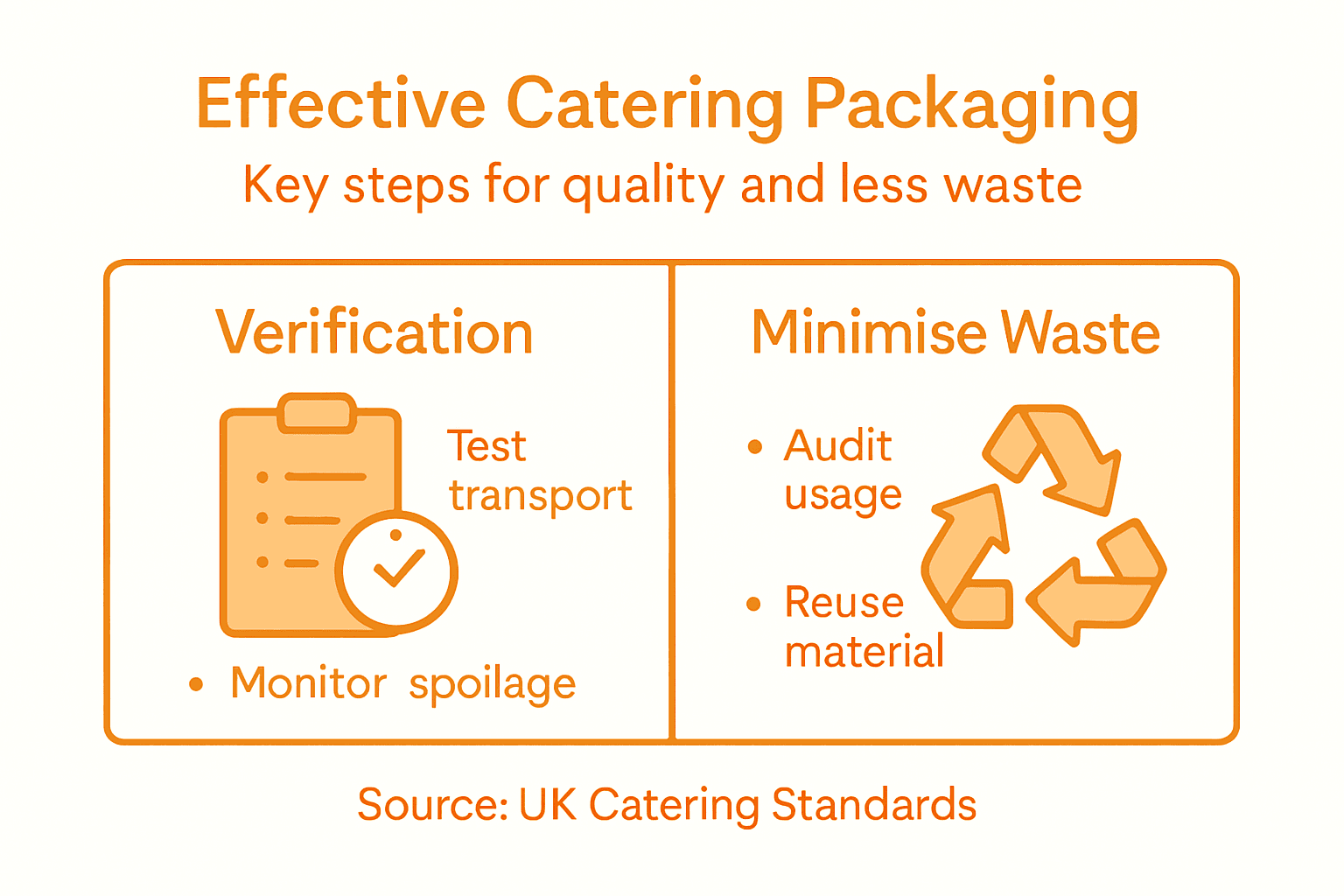
Packaging and labelling guidelines provide essential frameworks for understanding how packaging directly impacts food preservation and waste reduction. These standards help catering businesses develop robust evaluation methods.
Implement comprehensive waste verification strategies:
Waste measurement techniques enable businesses to transform raw data into actionable insights. Understanding precise waste generation patterns allows targeted interventions in packaging selection and usage.
Effective waste reduction is not about perfection—it’s about continuous, incremental improvement.
Establish a systematic review process that regularly evaluates packaging performance across multiple dimensions. Consider implementing digital tracking systems that provide real-time insights into packaging effectiveness and waste generation.
The following table summarises four strategies to measure and improve packaging effectiveness:
| Verification Strategy | Key Metric | Typical Tools | Business Outcome |
|---|---|---|---|
| Packaging weight tracking | Material usage per order | Digital scales | Identifies cost-saving opportunities |
| Spoilage monitoring | Food waste percentage | Inventory software | Improves packaging selection |
| Customer integrity feedback | Satisfaction score | Online surveys | Pinpoints packaging weaknesses |
| Thermal testing | Temperature retention time | Data loggers | Ensures food quality preservation |
Pro tip: Create a dedicated waste reduction dashboard that visualises key packaging performance metrics, making complex data immediately understandable for your team.
Efficient and compliant food packaging is essential for UK catering businesses striving to maintain food quality, reduce waste, and impress customers. If you want to overcome challenges like selecting sustainable materials, ensuring temperature retention, and creating packaging that strengthens your brand, our wide range of trusted supplies can support your goals. Discover containers, disposables, and innovative materials designed to satisfy rigorous food safety standards while appealing to environmentally conscious consumers.
Explore our carefully curated collection at Uncategorized – Grab & Go Packaging to find the perfect packaging solutions that balance practicality and sustainability. Make the smart choice now and streamline your packaging process with high-quality products from Grab & Go Packaging. Don’t wait—equip your business today with packaging that protects your food, highlights your brand, and helps you comply with UK regulations.
When assessing food packaging for catering, consider temperature retention, portion size compliance, material durability, and hygiene standards. Conduct a thorough analysis of each menu item, and choose packaging that meets these requirements to enhance food quality during transport.
To select sustainable packaging solutions, prioritise materials that are recyclable or biodegradable, and ensure compliance with food safety standards. Assess the environmental impact of your chosen options and aim to incorporate at least one sustainable material into your packaging strategy.
Effective customisation strategies include aligning the colour palette with your brand identity, integrating your logo, and incorporating unique shapes or designs. Create packaging that reflects your brand’s personality, which can raise brand visibility and customer engagement during delivery.
Develop a safe and efficient packing process by implementing clear workflow guidelines and sanitisation protocols at a dedicated packing station. Ensure temperature controls and regular quality checkpoints are in place to maintain food safety and quality consistently.
To verify the effectiveness of your catering packaging, track metrics like spoilage rates and material usage per order. Conduct regular assessments and adjust your packaging choices based on the data collected to achieve continuous improvement in your packaging operations.
Common packaging materials that help minimise waste include recycled cardboard, compostable plastics, and metal containers. Evaluate the recyclability and durability of each material to ensure they meet your catering needs while also supporting your sustainability goals.