
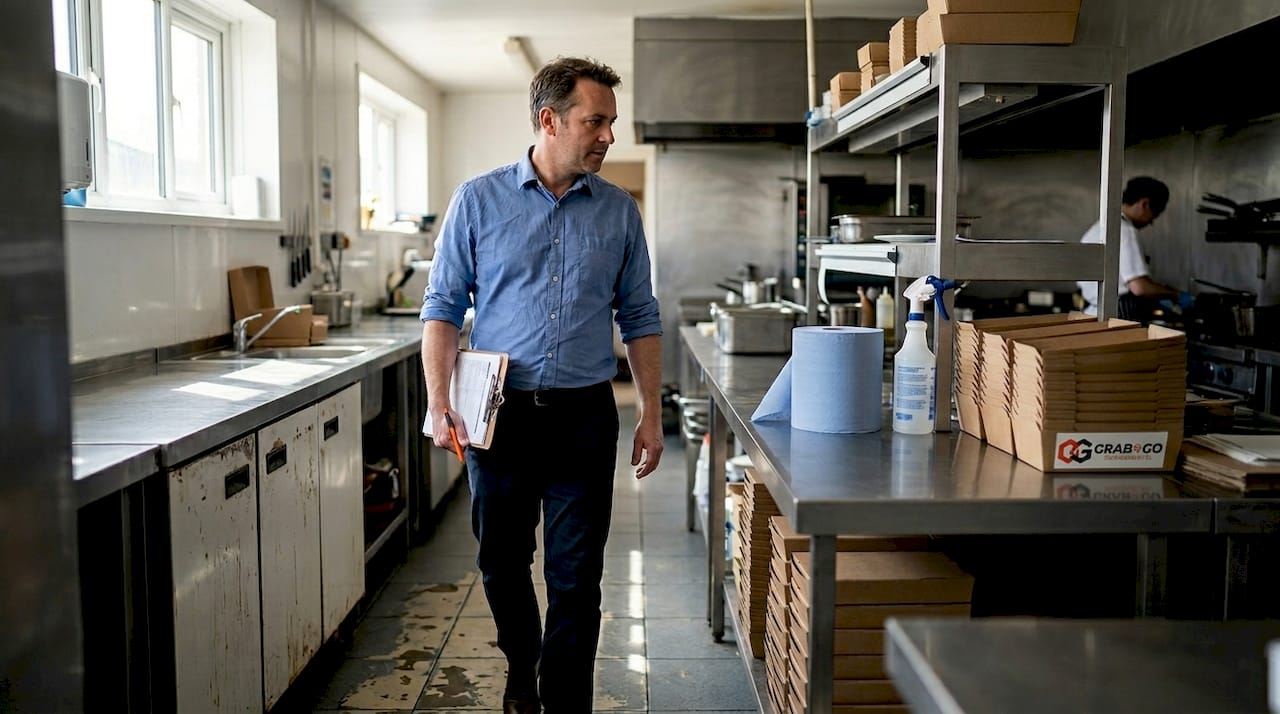
Packaging hygiene is one of the most overlooked control points in UK food service, yet it sits right at the heart of contamination risk. A single lapse, whether it is storing new packaging near raw waste or handling containers without gloves, can trigger customer complaints, failed Environmental Health inspections, or even a product recall. UK food contact regulations require operators to ensure materials are safe before they ever touch food. This guide walks you through every stage of a robust packaging hygiene workflow, from understanding your legal obligations to documenting your processes for audit readiness.
| Point | Details |
|---|---|
| Follow UK food contact laws | Always use certified, compliant packaging to avoid contamination and legal trouble. |
| Prep with the right tools | Organise your workspace for efficient, effective cleaning and packaging hygiene. |
| Standardise cleaning steps | Adopt a reliable, documented workflow including two-stage cleaning and careful waste management. |
| Differentiate packaging types | Apply specific protocols for disposable and reusable containers to maximise safety and sustainability. |
| Track and improve | Leverage logs or digital solutions to verify, audit, and continuously enhance hygiene performance. |
Before you can fix a problem, you need to know exactly what you are dealing with. Packaging hygiene failures fall into three main categories: chemical, microbiological, and physical contamination. Chemical risks arise when packaging materials leach substances into food, particularly with heat or acidic products. Microbiological risks occur when surfaces or packaging carry pathogens from poor handling. Physical contamination, such as fragments of damaged packaging entering food, is less common but equally serious.
The core legal framework for UK operators is Regulation (EC) No 1935/2004, which governs food contact materials and requires they do not transfer substances to food in quantities that could harm health. Post-Brexit, the UK has retained equivalent provisions, but UK-EU SPS alignment is expected to tighten food contact material rules further in 2026 and beyond. Staying ahead of those changes now is far less costly than scrambling to comply later.
Here are the core contamination risks every operator should know:
Packaging controls must be integrated into your HACCP (Hazard Analysis and Critical Control Points) plan or your Safer Food, Better Business (SFBB) system. That means identifying packaging as a critical control point, setting measurable limits, and recording corrective actions when something goes wrong.
| Risk type | Example | Control measure |
|---|---|---|
| Chemical | Ink migration from printed wrap | Use food-grade certified materials only |
| Microbiological | Bacteria on reused containers | Two-stage clean and disinfect protocol |
| Physical | Cracked lid fragment in meal | Inspect packaging before use, discard damaged stock |
| Cross-contamination | Raw meat near sandwich boxes | Separate storage zones, colour-coded systems |
For a broader look at best practices for food packaging in the UK context, it is worth reviewing how leading operators structure their procurement and handling policies alongside their hygiene controls.
Once you are clear on requirements, preparation is the next critical step. Getting the right tools in place before you start any workflow is what separates reactive kitchens from consistently compliant ones.
A well-prepared packaging hygiene station should include the following essentials:
Surface and storage cleaning routines matter just as much as the products you use. Two-stage cleaning, which means cleaning first to remove visible debris and then disinfecting to kill pathogens, is the standard for any surface or equipment that comes into contact with packaging. Skipping straight to disinfection without cleaning first is a common mistake that leaves organic matter behind, reducing the effectiveness of the disinfectant significantly.
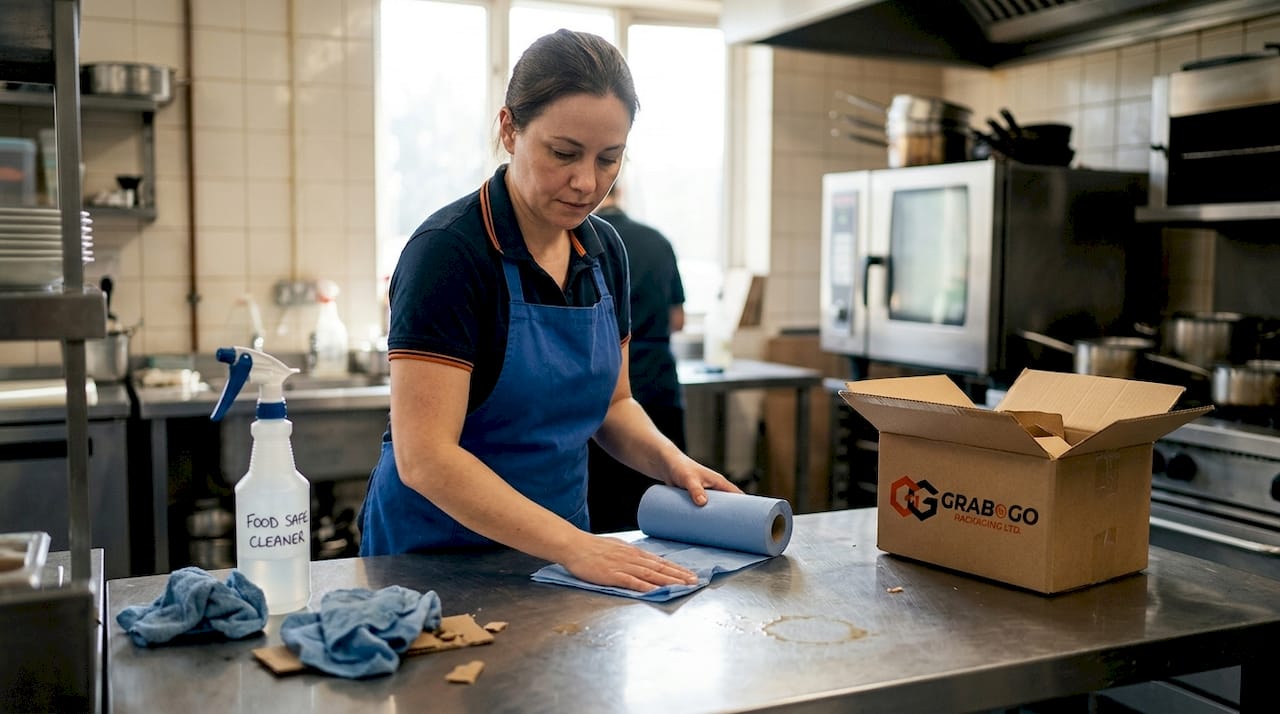
Pro Tip: Use disposable blue roll rather than reusable cloths for wiping packaging surfaces and storage areas. Cloths harbour bacteria between uses even when rinsed, whereas blue roll is discarded after a single wipe, eliminating cross-contamination risk entirely.
Here is a quick comparison to help you decide between disposable and reusable toolkit options:
| Toolkit element | Disposable option | Reusable option |
|---|---|---|
| Surface wiping | Blue roll (discard after use) | Colour-coded cloths (launder at 60°C+) |
| Gloves | Single-use nitrile (change between tasks) | Heavy-duty rubber (clean and dry after each use) |
| Bins | Bin liners replaced each shift | Hard plastic bins sanitised daily |
| Storage containers | Sealed cardboard inners | Labelled plastic tubs with lids |
Reviewing food packaging best practices alongside your setup will help you align your workspace with current UK catering standards. If you are unsure which types of packaging suit different workflow stages, categorising by material and food contact risk is a useful starting point.
With your supplies and setup in place, here is a practical workflow you and your team can follow to ensure compliance and reduce risk at every stage of the day.
Per-shift
“Consistent two-stage cleaning procedures for packaging areas are a non-negotiable baseline for any food service operator seeking to maintain compliance and protect customers.”
Pro Tip: Keep a daily cleaning log at every packaging station. When an Environmental Health Officer visits, a complete, dated log is one of the fastest ways to demonstrate compliance. It also helps you spot patterns, such as recurring issues at a particular station, that point to a training gap or workflow problem.
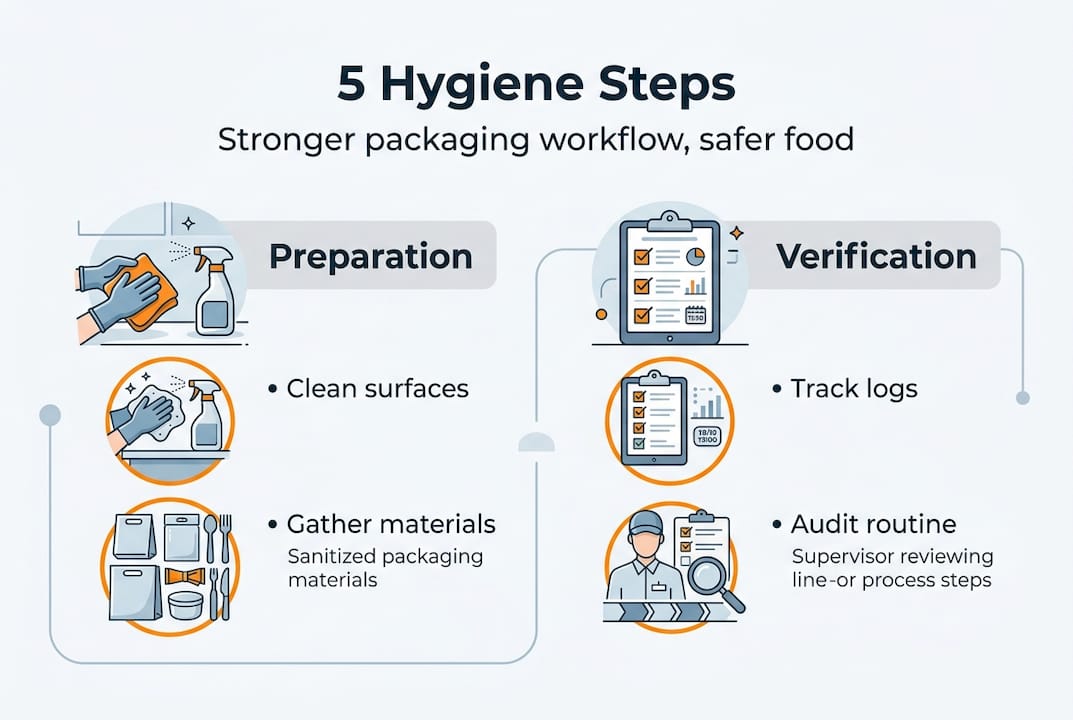
For a deeper look at packaging hygiene workflow steps and how they connect to broader food safety obligations, cross-referencing your HACCP documentation with your cleaning schedule is strongly recommended. You will also find catering packaging essentials useful when building out your supply checklist.
Different packaging types require their own approach. The rules for a reusable container are not the same as for a single-use box, and mixing up protocols is one of the most frequent sources of hygiene failures in UK kitchens.
For reusable containers, follow this standard operating procedure:
Reusable packaging guidance from the Food Standards Agency is clear: containers must be thoroughly washed and stored in labelled, separate areas to prevent cross-contamination between raw and ready-to-eat food uses.
For single-use packaging, the key rules are simpler but just as important:
The most common mistake operators make is failing to keep raw and ready-to-eat packaging completely separate. A sandwich box stored next to raw meat packaging, even briefly, creates a genuine contamination pathway. Packaging choices around soft plastics and reusables also carry sustainability implications, and the two considerations, hygiene and environmental impact, need to be balanced thoughtfully.
| Packaging type | Cleaning requirement | Storage rule | When to discard |
|---|---|---|---|
| Reusable container | Full wash and disinfect after each use | Labelled, separate from single-use | Any visible damage or staining |
| Single-use box or tray | No cleaning, use once only | Sealed, away from raw food areas | After single use, no exceptions |
| Soft plastic wrap | Avoid for high-risk workflows | Sealed roll storage, cool and dry | Any tear or contamination |
Pro Tip: Where feasible, opt for single-material reusable containers such as stainless steel or hard polypropylene. They are easier to clean thoroughly, less prone to harbouring bacteria in surface scratches, and more cost-effective over time. Browse sustainable packaging for catering to find options that balance hygiene performance with environmental responsibility. You can also explore the disposable containers guide for single-use options that meet food-grade safety standards.
Effort is wasted if it cannot be demonstrated or improved. Closing your workflow loop is as essential as the cleaning itself.
The Food Standards Agency’s SFBB packs provide tailored standard operating procedures including cleaning schedules and record-keeping templates specifically designed for UK food businesses. Using these as a baseline saves time and ensures your documentation meets what inspectors actually look for.
Here is what every operator should be documenting:
When it comes to choosing between paper and digital tracking, both work, but the difference in efficiency is significant. Digital tools cut logging time and complaint rates substantially, as demonstrated by Freshpak’s workflow upgrade, which accelerated audit preparation and reduced hygiene-related complaints. Digital systems also make it easier to spot trends and act on them quickly.
| Tracking method | Advantages | Limitations |
|---|---|---|
| Paper logs | Low cost, no tech required | Prone to loss, harder to audit remotely |
| Digital tools | Fast retrieval, trend analysis, remote access | Requires device and training investment |
For further reading on aligning your documentation with eco-friendly packaging guidance, combining sustainability reporting with hygiene records is increasingly expected by major retail and hospitality clients.
Here is an uncomfortable truth: most packaging hygiene failures we see are not caused by ignorance of the rules. They are caused by workflows that are too complicated for staff to follow consistently, or by managers who assume a policy document equals actual compliance.
The sites that perform best in audits are rarely the ones with the most elaborate systems. They are the ones where every team member understands a simple, site-specific routine and follows it without being reminded. That requires training that goes beyond a one-off induction and documentation that staff actually use rather than fill in retrospectively.
Sustainability and hygiene are sometimes framed as competing priorities, but that is a false tension. Choosing the right reusable or compostable packaging from the outset, rather than retrofitting hygiene protocols around unsuitable materials, resolves most of the conflict. Digital logging tools are underused in smaller operations, yet they consistently free up management time for the hands-on monitoring that actually prevents breaches. Keep it simple, keep it consistent, and build your workflow around your site’s real risks rather than a generic template.
Ready to turn guidance into action? At Grab & Go Packaging, we stock a wide range of safety-tested, food-grade packaging materials designed to support compliant, efficient workflows for UK food service operators.

Whether you need guidance on choosing the right materials through our food packaging materials guide, or you are comparing options in our disposable containers guide, we have the resources to help you make informed decisions. If sustainability is a priority alongside hygiene, our sustainable packaging for catering range offers certified, eco-conscious options that do not compromise on food safety standards. Browse our full catalogue and find packaging that works as hard as your team does.
Use food-safe, approved cleaning and disinfecting products that meet UK regulatory standards, following a two-stage clean and disinfect workflow. Always check that products are suitable for food contact surfaces before use.
Keep packaging waste in colour-coded, lidded bins positioned at least 1 metre from prep areas, removing waste frequently based on the risk level of the area. High-risk zones require more frequent removal than general storage areas.
Operators should log cleaning, disinfection, and waste procedures daily using paper logs or digital tools, and audit records regularly for completeness. Digital tools reduce logging time and make audit preparation significantly faster.
Yes, provided they are thoroughly washed after every use, inspected for damage, properly labelled, and stored separately from single-use packaging and raw food contact materials. Discard any container showing cracks or staining immediately.