

Greaseproof paper stands out in busy kitchens thanks to its ability to block oil and moisture. In fact, this dense material resists liquid absorption even during high-heat cooking, making it a favorite among chefs and food service professionals. From lining baking trays to wrapping fresh pastries, understanding greaseproof paper can help you keep food looking and tasting its best while minimizing mess and waste.
| Point | Details |
|---|---|
| Greaseproof Paper Overview | A high-density, oil-resistant paper used for food wrapping and cooking, preventing oil and moisture penetration. |
| Types and Treatments | Various forms, including uncoated, siliconized, and wax-coated, serve distinct culinary applications, affecting performance in cooking and wrapping. |
| Environmental Benefits | Greaseproof paper reduces plastic waste and is biodegradable, providing a sustainable packaging option for food service businesses. |
| Alternatives | Options like parchment paper and aluminum foil serve different purposes, making it essential to choose based on specific food preparation needs. |
Greaseproof paper is a specialized culinary and packaging material designed to resist oil and grease penetration. According to Cambridge Dictionary, it’s “a type of paper that does not allow oil through, commonly used in cooking to line tins and wrap food items”.
Greaseproof paper is manufactured through a meticulous refining process that creates an exceptionally dense paper with remarkable resistance to liquids. As Linwood Raker explains, this paper is “naturally resistant to oil and grease due to a refining process, making it suitable for wrapping and storing food”.
The key characteristics of greaseproof paper include:
For food service businesses, greaseproof paper serves multiple critical functions. Learn more about its advantages in our guide on greaseproof paper uses, which explores how this versatile material can enhance food presentation and preservation.
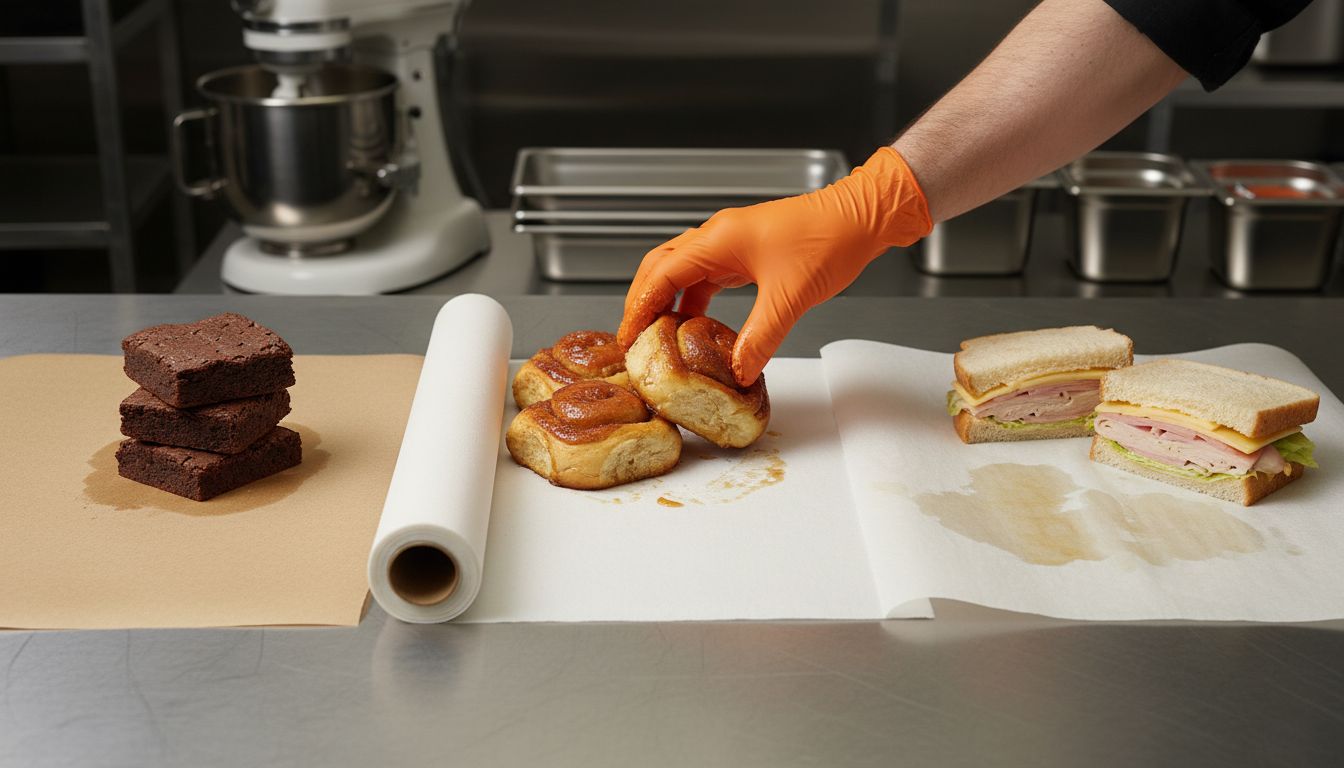
Greaseproof paper comes in various forms and treatments, each designed to meet specific culinary and packaging requirements. According to Bacofoil, there’s a crucial distinction between greaseproof paper and baking paper: while baking paper is siliconized on both sides to prevent food sticking, greaseproof paper typically lacks this special coating.
The primary types of greaseproof paper include:
For food service businesses, understanding these variations is critical. Siliconized papers offer superior non-stick properties, making them ideal for baking and cooking applications where food release is paramount. Traditional greaseproof papers might require light greasing before use, which can impact preparation time and food presentation.
The manufacturing process plays a significant role in paper performance. Linwood Raker highlights that greaseproof paper is created through a “refining process” that naturally enhances its resistance to oils and greases. This means different treatments can significantly alter the paper’s functionality, whether for wrapping, cooking, or food preservation.
Explore more about how to effectively use different greaseproof paper types in our comprehensive guide, which provides in-depth insights for food service professionals seeking to optimize their packaging and cooking strategies.
Greaseproof paper operates through a sophisticated mechanism of preventing liquid penetration, making it an essential material in food preparation and packaging. According to Linwood Raker, its “natural resistance to oil and grease stems from its dense, uncoated structure achieved through a refining process, making it effective for wrapping and storing food”.
The fundamental functioning of greaseproof paper involves multiple protective mechanisms:
Unlike standard papers, greaseproof paper creates a robust barrier against liquids. Bacofoil highlights that this paper “lacks a silicone coating”, which means its protective qualities are inherent to its manufacturing process rather than relying on external treatments.
For food service professionals, understanding these functional properties is crucial. The paper’s unique structure allows it to maintain food quality, prevent leakage, and provide a clean, professional presentation.
Discover more about selecting the right greaseproof paper for your specific needs in our comprehensive guide, which offers detailed insights into matching paper types with specific food service requirements.
Greaseproof paper serves an incredibly diverse range of applications within food service and packaging industries. Its unique properties make it an indispensable material for businesses seeking reliable, versatile food presentation and preservation solutions.
The primary uses of greaseproof paper encompass several critical areas:
Food service professionals rely on greaseproof paper for its exceptional barrier properties. Whether in cafes, restaurants, or catering operations, the paper provides a clean, professional presentation while maintaining food quality and preventing messy leakages. Different weights and treatments allow businesses to select precisely the right paper for specific culinary applications.
Explore our comprehensive guide to packaging in takeaway operations to understand how strategic paper selection can transform your food service presentation and operational efficiency.
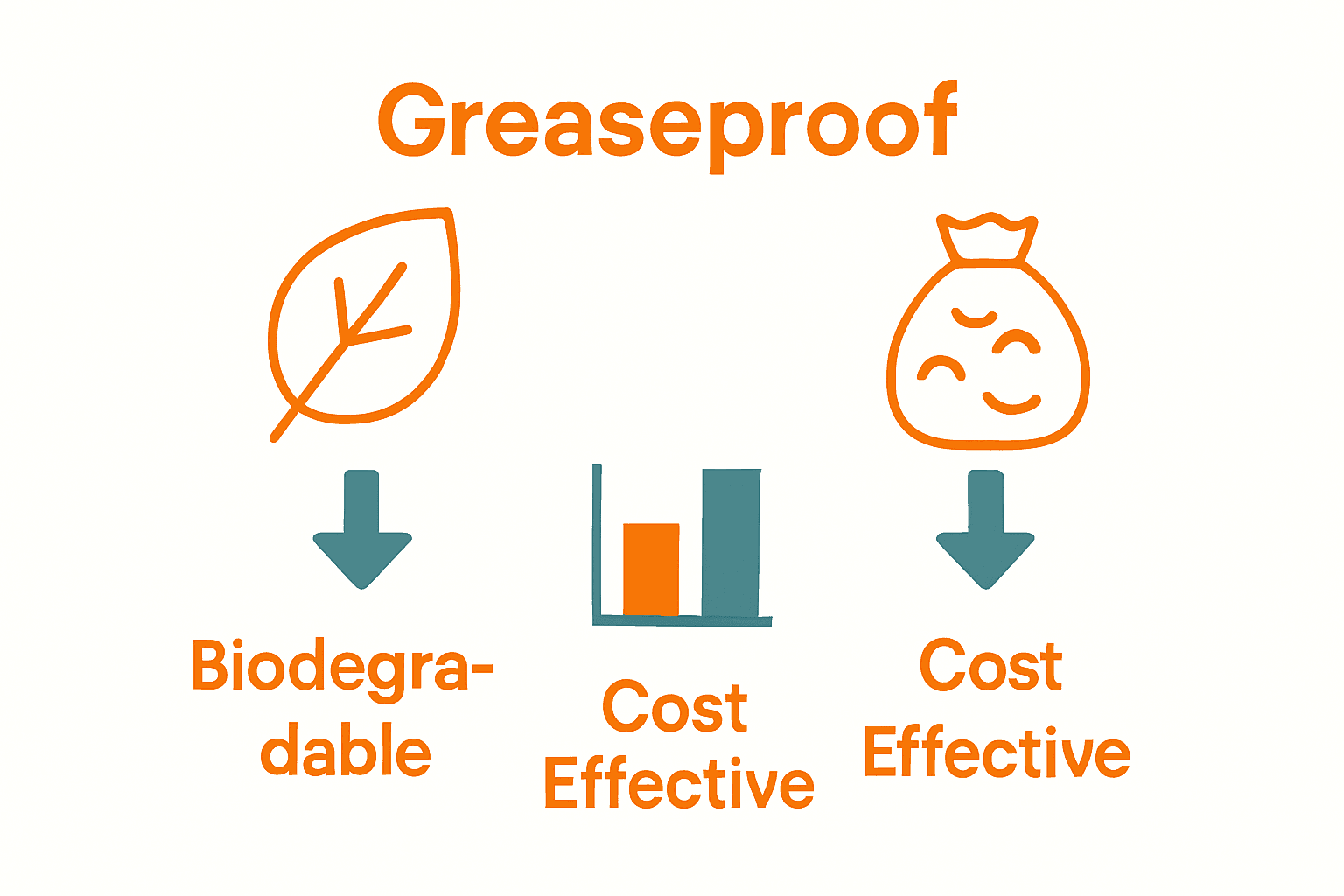
Greaseproof paper offers significant environmental and economic benefits for food service businesses seeking sustainable and cost-effective packaging solutions. Its unique characteristics provide multiple advantages that extend beyond simple food wrapping functionality.
The key environmental advantages include:
From a cost perspective, greaseproof paper delivers substantial financial benefits for food service operations. The material is typically more affordable than specialized plastic or silicone packaging, requires minimal additional processing, and can help businesses reduce overall packaging expenses while maintaining high-quality food presentation standards.
Discover how strategic packaging choices can optimize your business’s environmental and economic performance in our comprehensive guide to takeaway packaging, which provides insights into making smart, sustainable packaging decisions that balance cost-effectiveness with environmental responsibility.
Navigating the world of food packaging requires understanding the nuanced differences between various paper and wrapping alternatives. Bacofoil highlights that different papers serve distinct purposes, noting that “baking paper, siliconized on both sides, is ideal for cooking and baking to prevent sticking, whereas greaseproof paper requires greasing and is better suited for wrapping and presenting food”.
Key alternatives to greaseproof paper include:
Choosing the right alternative depends on specific operational requirements. Parchment paper works best for high-temperature baking, while plastic wrap excels at cold food storage. Aluminium foil provides excellent heat retention for hot foods, making each material suitable for different culinary scenarios.
Explore our comprehensive guide to selecting the right packaging for your food service needs, which offers detailed insights into matching packaging materials with specific food preparation and presentation requirements.
Choosing the right greaseproof paper solves common challenges faced by food businesses such as preventing oil leakage, maintaining food presentation, and ensuring hygienic packaging. The article highlights key terms like “natural resistance,” “refining process,” and “siliconized papers” that matter for your daily operations. If you want to avoid messy leakages and improve your customers’ experience, selecting quality greaseproof paper tailored to your needs is essential.
Discover a broad range of greaseproof paper and other food packaging supplies designed precisely for hospitality and food service sectors at Grab n Go Packaging. Whether you need standard sheets or bespoke printed solutions, our collection supports your goal of combining durability with cost-effectiveness.
Take control of your food presentation and packaging quality today. Visit Grab n Go Packaging to explore our products and elevate your food business with trusted greaseproof paper options. Don’t delay enhancing your packaging strategy—order now and witness the difference in convenience and professionalism.
Greaseproof paper is used for various culinary and packaging applications, including wrapping takeaway foods, lining baking trays, creating hygienic food separation layers, and preventing moisture and oil transfer in packaging.
Greaseproof paper prevents oil and grease penetration through its dense, uncoated structure, which is achieved via a refining process that enhances its resistance to liquids and grease.
The main difference is that baking paper is siliconized on both sides to prevent sticking, while greaseproof paper typically lacks this coating and may require light greasing for optimal use in cooking and wrapping.
Yes, greaseproof paper is often biodegradable and compostable, reduces plastic waste compared to synthetic packaging, and has a lower carbon footprint due to minimal chemical processing during production.