

Grease stains and soggy packaging are a constant headache for anyone in the food business. With over 60 percent of takeout orders containing oily or moist foods, the right choice of packaging is crucial to keep meals fresh and appetizing. Greaseproof paper has emerged as a trusted option thanks to its ability to stop oil and moisture from breaking through, helping restaurants and cafes deliver food that looks and tastes its best.
| Point | Details |
|---|---|
| Definition | Greaseproof paper is a specialized packaging material resistant to oil and grease, crucial for food service businesses. |
| Key Features | It offers molecular-level oil resistance, high tensile strength, and maintains food presentation quality. |
| Variety | Different types of greaseproof paper cater to specific food service needs, such as standard, high-performance, bleached, unbleached, and siliconized. |
| Best Practices | Proper storage and handling are essential for optimal performance; avoid moisture and extreme temperatures to maintain integrity. |
Greaseproof paper represents a specialised packaging material designed to withstand oil and grease, making it an essential solution for food service businesses. According to Merriam-Webster, it is defined as a “heavy, stiff waxed paper that is resistant to grease and oil, commonly used in cooking and food packaging”.
The primary characteristic of greaseproof paper is its remarkable ability to prevent oil and grease from penetrating or seeping through its surface. As Cambridge Dictionary explains, this specialized paper “does not allow oil through” and is particularly useful for lining cooking tins and trays. Its unique composition ensures that food items remain contained without creating messy or soggy packaging scenarios.
Food service professionals appreciate greaseproof paper for several critical reasons:
Whether you’re running a busy cafe, restaurant, or catering service, understanding how to use greaseproof papers can significantly enhance your packaging strategy and customer experience.
Greaseproof paper operates through a sophisticated manufacturing process that transforms ordinary paper into an extraordinary packaging solution. According to research from University of Huddersfield, the paper is created through a specialized technique called beating, where cellulose fibers undergo extensive hydration, causing them to break up and become gelatinous, ultimately resulting in a dense, oil-resistant surface.
The manufacturing process involves several critical stages that distinguish greaseproof paper from standard packaging materials. During production, the paper’s cellulose fibers are meticulously treated to create microscopic barriers that prevent oil and grease from penetrating the material. This unique structure allows the paper to maintain its integrity even when exposed to high-fat foods, making it an ideal choice for food service professionals who require reliable packaging solutions.
Key technical features of greaseproof paper include:
For businesses looking to enhance their packaging strategy, exploring bespoke greaseproof paper options can provide customized solutions tailored to specific operational needs.
Greaseproof paper is not a one-size-fits-all solution, but rather a versatile material with multiple variations designed to meet specific food service requirements. According to research from IPPTA, these papers are produced by refining paper stock to create sheets with “very low porosity,” resulting in surfaces resistant to oils while maintaining unique characteristics for different applications.
The primary classifications of greaseproof paper can be categorized based on their specific properties and intended use:
Here’s a comparison of the main types of greaseproof paper and their typical uses:
| Type of Greaseproof Paper | Key Characteristics | Common Food Service Uses |
|---|---|---|
| Standard Greaseproof Paper | Basic oil resistance | Wrapping sandwiches Lining trays |
| High-Performance Greaseproof | Enhanced moisture and oil barrier | Takeaway food Oily pastries |
| Bleached Greaseproof Paper | White appearance Improved hygiene |
Bakery packaging Cakes and pastries |
| Unbleached Greaseproof Paper | Natural brown Eco-friendly |
Organic food outlets Deli services |
| Siliconized Greaseproof Paper | Non-stick surface High heat stability |
Baking Reusable pastry sheets |
Professional food service businesses must carefully select greaseproof paper grades that align with their specific operational needs. Factors such as food type, temperature requirements, and presentation standards play crucial roles in determining the most appropriate paper variant.
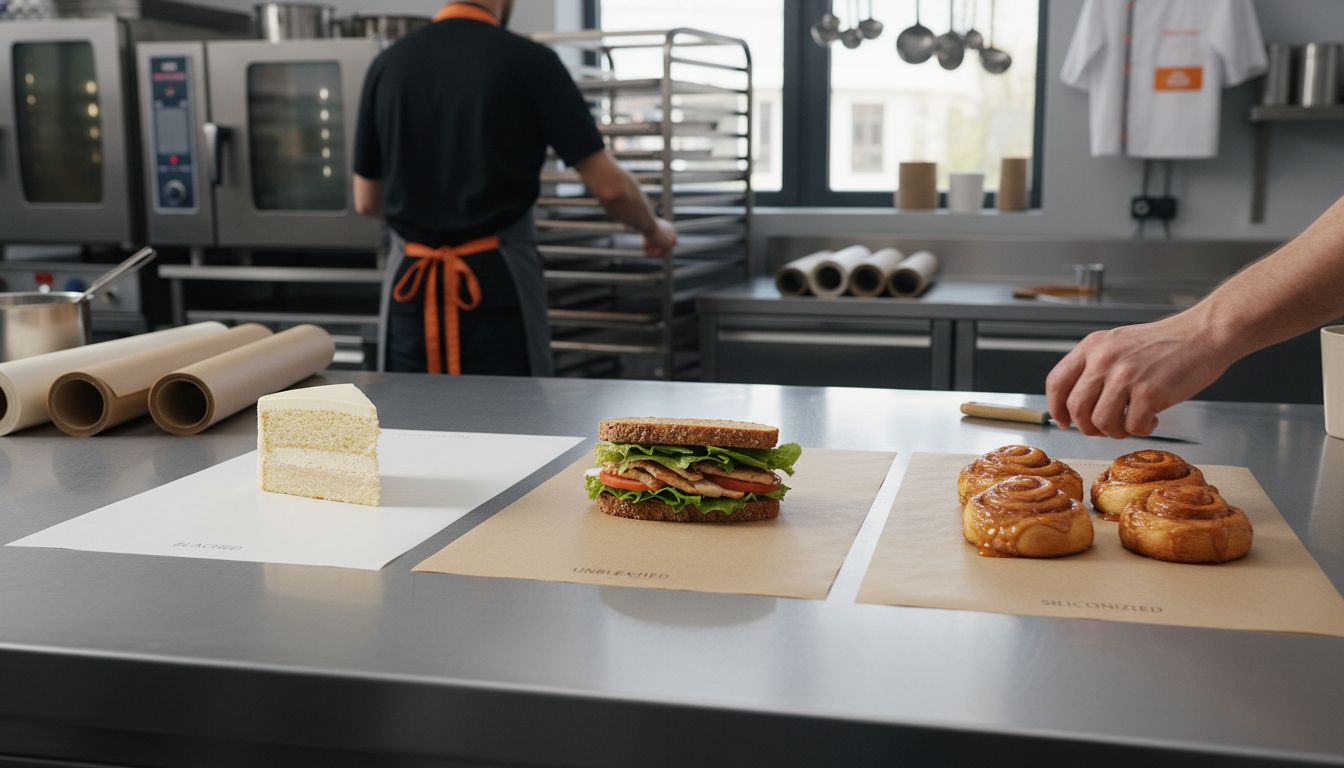
To optimize your packaging strategy and understand the nuanced selection process, exploring our guide on greaseproof paper advantages can provide deeper insights into making the right choice for your business.
Greaseproof paper has become an indispensable tool in modern food service and catering industries, addressing multiple packaging challenges with remarkable versatility. According to Linwood Raker, it is “commonly used for wrapping and storing food items, particularly those with grease or moisture, due to its natural resistance to oil and grease”.
The primary applications of greaseproof paper span across various food service segments:
Professional catering businesses rely on greaseproof paper not just for its functional properties, but also for its ability to maintain food presentation and hygiene standards. From preventing soggy packaging to ensuring clean and professional food handling, this versatile material has transformed how food is packaged and transported.
To elevate your packaging strategy and understand the nuanced requirements of modern food service, our comprehensive guide on takeaway packaging offers invaluable insights for businesses seeking to optimize their packaging solutions.
Greaseproof paper stands out as a superior packaging solution compared to traditional alternatives like wax paper, offering food service businesses significantly enhanced performance and versatility. While wax paper might seem similar, it fundamentally differs in key functional characteristics that make greaseproof paper the preferred choice for professional food handling.
Key comparative advantages of greaseproof paper include:
The primary distinctions between greaseproof paper and wax paper become particularly pronounced in professional food service environments. Wax paper, which is coated with a thin layer of paraffin wax, becomes brittle and can potentially melt when exposed to high temperatures, whereas greaseproof paper maintains its structural integrity and protective qualities.
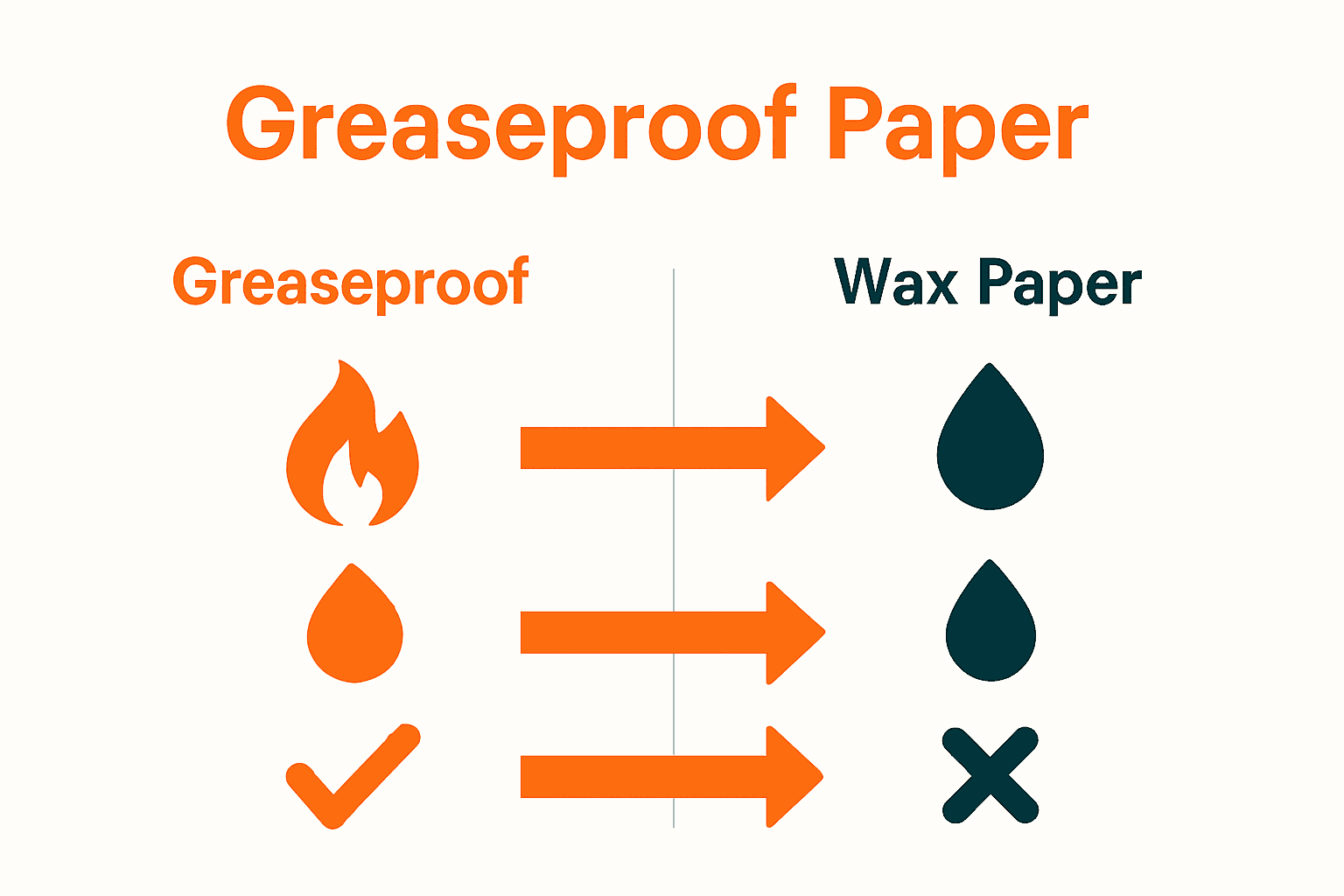
To optimize your packaging strategy and understand the nuanced requirements for food packaging, our guide on using greaseproof papers provides comprehensive insights for food service professionals seeking the most effective packaging solutions.
Greaseproof paper requires careful handling and storage to maintain its optimal performance and protective qualities in food service environments. Professional businesses must pay close attention to preservation techniques that ensure the material remains effective and ready for use.
Key storage and handling guidelines include:
Environmental disposal is an important consideration for responsible food service businesses. According to Worcestershire County Council, greaseproof paper “is made to repel fat, and its coating makes it unsuitable for recycling” and should be disposed of in the standard black or grey waste bin.
To ensure food safety and maintain professional standards, businesses should implement systematic protocols for greaseproof paper management. This includes regular quality checks, proper storage, and understanding the material’s specific handling requirements to prevent potential contamination or performance degradation.
Our comprehensive guide on using greaseproof papers offers additional insights for food service professionals seeking to optimize their packaging practices.
Managing grease and moisture in food packaging presents a real challenge for many food service businesses. The article highlights how greaseproof paper offers a reliable barrier against oil seepage while maintaining the quality and presentation of your products. If you are striving to prevent packaging mess and improve customer satisfaction, selecting the right type and grade of greaseproof paper is vital. Businesses keen on combining durability, heat resistance and oil proofing will appreciate the specialised options available.
Discover a wide range of greaseproof papers tailored to your exact food business needs at Grab-n-Go Packaging. From standard rolls ideal for sandwich wrapping to bespoke greaseproof paper for premium bakery goods, we have the quality supplies to transform your packaging. Act now to benefit from competitive pricing and fast ordering through our easy online platform. Learn more about the advantages and practical uses by visiting our guides on how to use greaseproof papers and explore our curated bespoke greaseproof paper options. Step up your packaging game today with materials that protect, present, and perform, only at Grab-n-Go Packaging.
Greaseproof paper is used primarily for packaging food items, particularly those that contain oils or grease, such as pastries, takeaway meals, and sandwiches. It helps prevent leakage and maintains food presentation quality.
Greaseproof paper is superior to wax paper because it has a higher heat resistance, acts as a better oil barrier, and does not transfer chemical residues to food items, making it more suitable for professional food handling.
There are several types of greaseproof paper, including standard, high-performance, bleached, unbleached, and siliconized options, each designed for specific applications in food service, such as bakery packaging and takeaway solutions.
Greaseproof paper should be stored in a cool, dry environment away from direct sunlight, kept sealed to avoid moisture absorption, and handled with clean, dry hands to maintain its protective qualities.