Cart 0
Which Cups Keep Coffee Hot Best?
The answer to which cups keep coffee hot is not just “the thickest one”. For cafés, takeaways and mobile coffee operators, heat retention depends on cup wall construction, lid fit, drink size, serving time and how customers actually carry the drink away. A cup that keeps a flat white hot for ten minutes at the counter may perform very differently on a delivery run or a cold morning commute.
If you are buying in bulk, the right choice is usually the cup that balances heat retention, hand comfort, cost and service speed. That matters more than chasing the hottest possible hold time on paper. In practice, the best-performing coffee cups are usually insulated ripple wall, double wall and well-made reusable travel cups with secure lids.
Which cups keep coffee hot for longest?
For most takeaway coffee service, insulated cups outperform standard single wall cups. The extra layer, or textured outer wall in the case of ripple cups, slows heat loss and makes the drink easier to hold without a separate sleeve.
Single wall paper cups are the most basic option. They are widely used, cost-effective and suitable for fast turnover, especially where the drink is consumed quickly. The trade-off is obvious – heat escapes faster, and the outside of the cup gets hot sooner. If you serve smaller drinks for immediate consumption, they can still work well, but they are not usually the strongest answer if your main question is which cups keep coffee hot best.
Double wall cups add a second paper layer with an air gap between the two. That extra insulation helps hold temperature longer than single wall alternatives and improves customer comfort. For many coffee shops, this is the practical middle ground. They look smart, perform well, and remove the need for sleeves in many cases.
Ripple wall cups go a step further on grip and insulation. Their corrugated outer layer creates more air pockets, which helps reduce heat transfer. They are a strong option for busy takeaway environments, especially in winter or where customers are walking with drinks in hand. They also tend to feel more premium, which can support presentation.
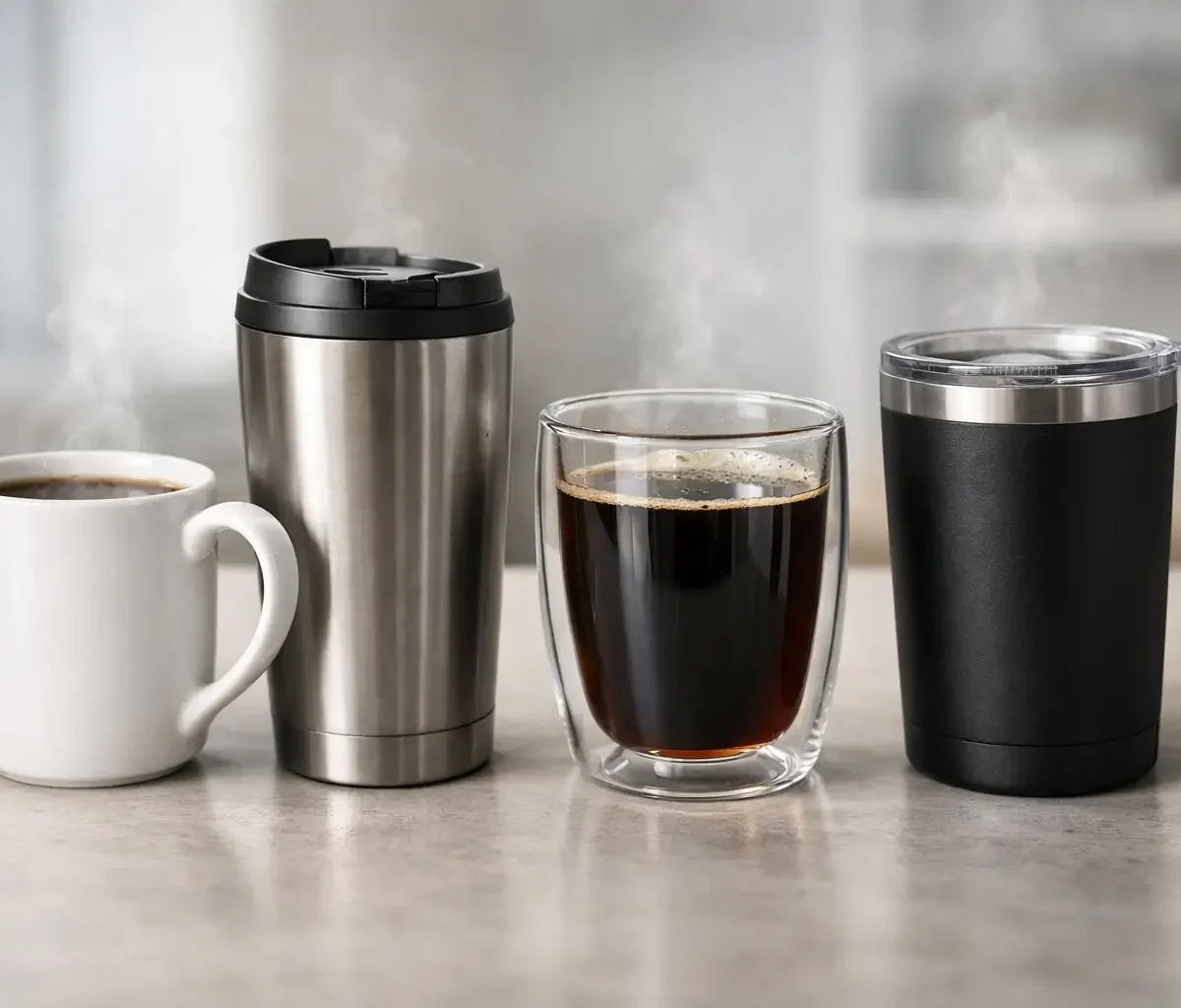
Reusable travel cups, especially those with insulated stainless steel interiors, keep coffee hot for far longer than most disposable formats. That said, they are not always the answer for every operator. They suit refill schemes, office coffee service and customers who bring their own cup, but they do not replace the everyday speed and convenience of disposable stock in most high-volume settings.
Why cup construction matters more than cup material alone
A common mistake is assuming material tells the whole story. Paper, plastic and steel all behave differently, but construction usually matters more in day-to-day coffee service.
A thin paper cup with a poor lid will lose heat quickly. A well-designed double wall paper cup with a tight-fitting lid can keep a drink acceptably hot through a normal takeaway journey. Likewise, a reusable cup may have excellent insulation, but if the drinking hole stays open or the lid does not seal properly, temperature drops faster than expected.
Air gaps are one of the biggest reasons some cups perform better than others. Double wall and ripple wall cups trap air between layers, and that air slows down heat transfer. This is why they often punch above their weight compared with standard paper cups.
Lid performance matters too. A lot of heat escapes through the top of the cup, not just the sides. If your cup choice is strong but your lid fit is inconsistent, you may still end up with lukewarm drinks and unhappy customers. Buying cups and lids that are designed to work together is a practical step that often gets overlooked.
Best cup types for different coffee service models
The best cup depends on how you trade. A city-centre grab-and-go kiosk has different priorities from a garden centre café or a delivery-led dessert shop adding hot drinks.
For fast takeaway counters
Double wall and ripple wall cups are usually the strongest choice. They keep drinks hotter for longer than single wall options, feel better in the hand and help reduce the need for sleeves. That supports quicker service and simpler stockholding.
If you are serving espresso-based drinks for immediate consumption, a single wall cup may still be acceptable at the right price point. But if customers regularly walk away with drinks, insulated formats tend to deliver a better experience.
For delivery and longer travel times
Heat retention becomes more demanding once drinks are in transit. In that case, cup insulation and lid security both matter more. Ripple wall cups are often a safer option than single wall cups, especially when paired with reliable sip lids.
Drink size also affects performance. Larger drinks can stay warm longer because there is more liquid mass, but they also need sturdy cups and lids to avoid leaks and heat loss in handling.
For offices, events and refill schemes
Reusable insulated cups are best if the aim is maximum heat retention over a longer period. They are particularly suitable where customers stay on site or bring their own cup. For operators running sustainability-led service models, they can work well alongside disposable backup stock.
The trade-off between heat retention, comfort and cost
The cup that keeps coffee hottest is not always the one that makes most commercial sense. Better insulation generally costs more, so the decision should match your menu, customer behaviour and average dwell time.
Single wall cups are economical and easy to stock in volume. If your customers typically order, collect and drink straight away, there may be no need to over-specify. On the other hand, if customers complain that drinks cool too quickly, the cost saving can disappear in remakes, poor reviews and a weaker overall impression.
Double wall and ripple wall cups usually cost more per unit, but they can reduce the need for sleeves and improve perceived quality. For many operators, that makes them good value rather than just a premium extra.
Reusable cups offer the best heat retention in many cases, but they come with a different commercial model. They are not a direct like-for-like replacement for standard takeaway cup stock.
Branded cups still need to perform
Custom print can lift presentation, but it should not come at the expense of usability. If you are investing in bespoke coffee cups, the print format should sit on a cup specification that actually suits hot drink service.
A branded single wall cup may look sharp, but if it feels too hot to hold or lets heat drop too quickly, the brand message is not doing much work. Many operators get better results by applying custom branding to double wall or ripple wall cups, where the appearance and the practical performance support each other.
This is especially relevant for growing coffee shops and hospitality brands that want consistency across sites. Standardising the right cup format helps maintain both customer experience and visual presentation.
How to choose the right hot cup for your business
Start with your service pattern. Think about how long customers usually hold the drink before they finish it, whether they walk away or sit in, and whether delivery is part of the mix. Then look at your average drink sizes, your lid requirements and whether you currently use sleeves.
If heat retention is the main issue, test single wall against double wall or ripple wall in your actual trading environment rather than relying on assumptions. A quick in-service trial often makes the difference obvious. Staff feedback matters here as well. If baristas find one cup easier to lid, stack and serve quickly, that operational gain counts.
It also helps to review the wider range, not just one cup line. Many buyers want a one-stop supplier that can cover coffee cups, lids, food boxes, bags, napkins and cleaning essentials in the same order. That simplifies purchasing and reduces the friction of managing multiple vendors. For businesses reviewing both standard and branded cup options, suppliers such as Grab & Go Packaging are set up around that practical buying model.
So, which cups keep coffee hot best?
For most takeaway coffee businesses, double wall and ripple wall paper cups are the strongest all-round answer. They offer better heat retention than single wall cups, improve hand comfort and suit the pace of everyday service. If your priority is longest possible heat hold, reusable insulated travel cups perform best, but they fit a narrower use case.
The right cup is the one that keeps the drink hot long enough for your customers, while still working for your costs, service flow and brand presentation. Get that balance right, and the cup stops being a basic consumable and starts doing its job properly.