Cart 0
How to Package Hot Food Properly
The quickest way to ruin a good takeaway order is to pack hot food in the wrong container. Chips go limp, fried items sweat, sauces leak, and by the time the customer opens the bag, the food looks like it lost the journey. If you want to know how to package hot food properly, the answer is not one product for every dish. It is choosing packaging that suits heat, steam, travel time, and presentation.
For food businesses, packaging is part of service. It protects food quality, controls mess, supports portioning, and affects whether customers come back. A burger shop, café, chicken takeaway and mobile caterer will all need a different mix of containers, wraps, trays and bags. The practical approach is to match the packaging to the food format rather than trying to make one stock line do every job.
How to package hot food for different menu items
Hot food creates two main packaging problems – heat loss and condensation. If steam has nowhere to go, crispy food softens quickly. If the pack is too ventilated, food cools too fast. The right balance depends on what you are serving.
For fried food such as chips, chicken strips, onion rings and battered items, airflow matters. Burger boxes, chip cartons, food trays and some hinged containers work well when they allow a little ventilation. Completely sealing very hot fried food can trap moisture and damage texture within minutes.
For saucy dishes such as curries, pasta, rice meals and loaded fries, leak resistance matters more. Lidded microwaveable containers, foil containers with lids, or heavy-duty deli bowls can hold heat well while keeping liquid contained. In these cases, a tighter seal usually makes sense because presentation and spill prevention are the priority.
For bakery and café items served warm, such as paninis, toasties, baked potatoes and pastries, the best option often sits somewhere in the middle. You want enough structure to protect the product, but not so much sealing that the item turns soggy. Sleeves, wraps, sandwich packaging and vented boxes are often a better fit than fully closed tubs.
Choose containers by food type, not just size
A common buying mistake is choosing packaging by portion size alone. Capacity matters, but shape, material and lid fit matter just as much.
Burger boxes are built for stacked products that need protection without being crushed. Clamshell boxes can also support branding well, especially when paired with printed greaseproof paper that improves presentation and helps absorb excess oil. For burgers, wraps on their own may be cheaper, but boxes usually travel better in delivery bags and keep the build more intact.
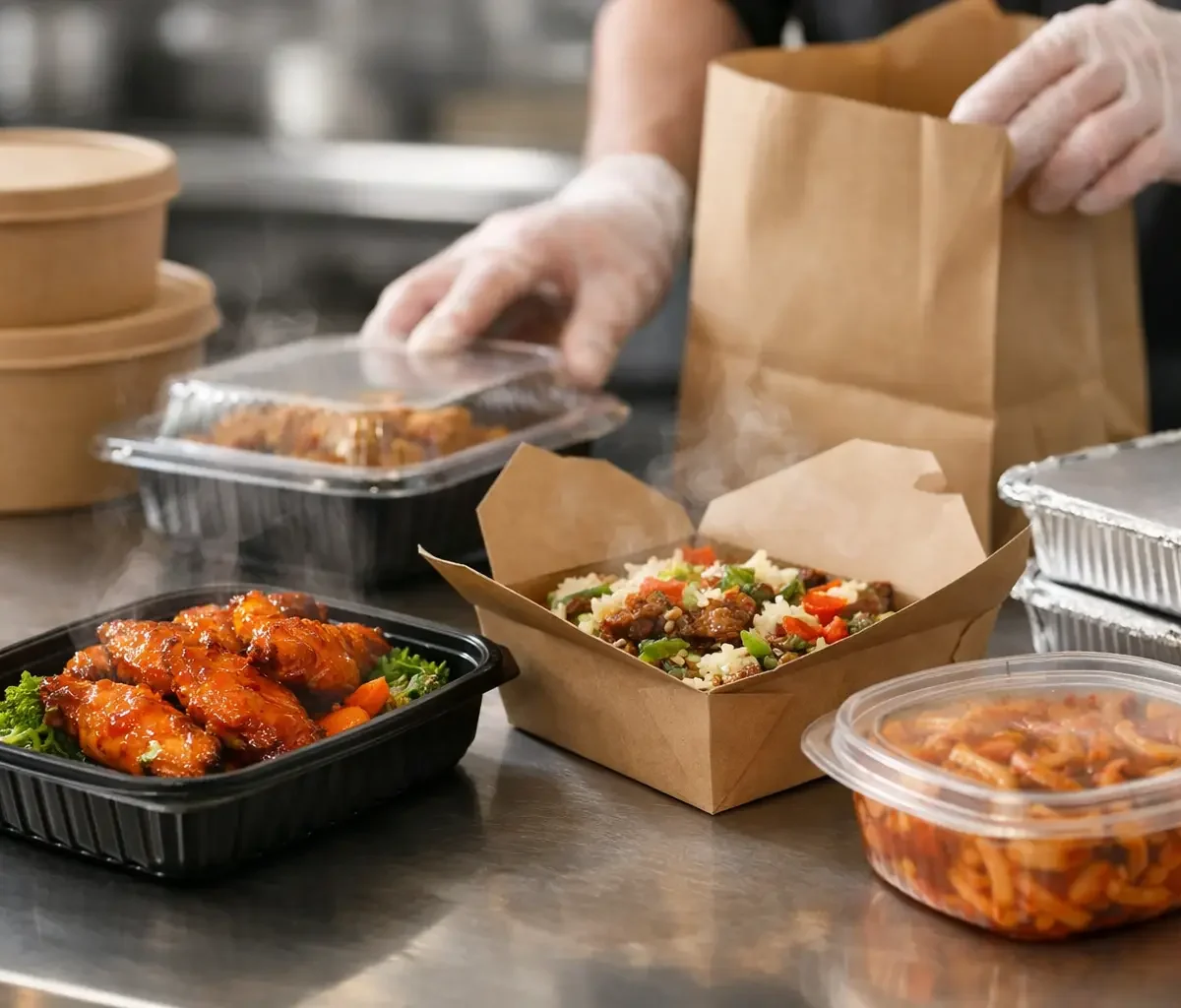
Foil trays are useful for meals that need strong heat retention, especially grilled meats, rice dishes and oven-finished food. They are practical for takeaway and catering, but they are not ideal for every menu item. Fried food can sweat in foil if packed too soon, and appearance can be more functional than premium unless you balance it with neat presentation.
Bagasse containers are a solid option for many hot foods because they offer decent insulation, good rigidity and a more natural presentation. They suit cafés, fast-casual outlets and operators who want a cleaner look across mixed menu items. That said, not every bagasse pack handles heavy sauces or long delivery runs equally well, so testing matters.
Plastic food containers still have their place in hot food packaging where visibility, stackability and secure lids are important. The key is using formats designed for hot fill and takeaway use, not treating all plastic containers as interchangeable.
Keep food hot without trapping too much steam
If you are working out how to package hot food for collection or delivery, timing is just as important as the packaging itself. Packing food straight off the pass while it is still releasing heavy steam can create problems even in a well-chosen container.
For fried items, a short settling time before closing the lid can help preserve texture. You do not want food sitting long enough to cool, but giving excess steam a moment to escape often improves results. For grilled or roasted items, this is less of an issue because the goal is usually heat retention over crispness.
Layering also helps. Greaseproof paper can separate products, absorb some moisture and improve presentation at the same time. This is especially useful for burgers, wraps, fried chicken and mixed sharing boxes. Bespoke printed greaseproof adds branding without changing your packing routine, which is one reason many growing operators use it across multiple menu lines.
Bagging matters too. A strong carrier bag helps hold the order securely, but overpacking everything into one tight bag can damage food structure and trap heat where you do not want it. If an order includes both crisp fried items and lidded saucy dishes, keep them arranged upright and separated where possible.
Match lids, wraps and inserts to the job
The container is only part of the system. Lids, wraps, cup carriers, cutlery packs and inner wraps all affect how the order performs in transit.
A poorly fitting lid causes obvious problems – leaks, heat loss and complaints. But an overly tight seal can be just as bad for foods that need to breathe. This is why many operators keep more than one container style in stock for similar portion sizes. A vented or lighter-close pack may suit fried sides, while a tighter-seal bowl or tub suits wet dishes.
Wraps are useful for handheld food that customers eat quickly, but they are not always enough for delivery. A wrapped burger inside a box usually arrives better than a wrapped burger loose in a bag. The same goes for loaded sandwiches and toasties. If the item is likely to be stacked, compressed or carried with other products, outer protection earns its keep.
Inserts and liners can improve results without changing your full packaging range. Greaseproof sheets, foil sheets and food-safe paper liners can help with moisture control, oil absorption and cleaner presentation. For businesses selling premium takeaway, small details like this often make the pack look more considered.
Think about travel time and service model
A five-minute walk-in collection order and a 30-minute delivery run should not always be packed the same way. The longer the travel time, the more pressure on the packaging.
For short journeys, you can prioritise speed and simplicity. For longer delivery routes, you need stronger structure, better lid security and more thought around ventilation. Fish and chips are a good example. Packaging needs to manage heat and moisture carefully or quality drops quickly. Fried chicken and chips face the same issue, especially when packed in bulk for family meals.
If you run delivery through third-party platforms, consistency matters even more. Drivers may stack orders, tilt bags or leave them waiting for pickup. That means containers need to be reliable under less controlled conditions. Cheap packaging can look like a saving on paper, but if it leads to remake costs or poor reviews, the margin disappears fast.
Cost matters, but so does pack performance
Every buyer wants to control packaging spend, especially across high-volume lines. The useful question is not just what each unit costs. It is what each unit does.
A lower-cost container that leaks, collapses or spoils the food is expensive in practice. A slightly better pack that reduces complaints and keeps food looking right may be better value over time. This is particularly true for businesses trying to build repeat custom, improve delivery standards or present a more professional brand.
Standard stock lines are often the right starting point for fast-moving takeaway operations. They simplify ordering and keep costs predictable. As the business grows, it can make sense to introduce bespoke elements such as printed cups, branded greaseproof or personalised packaging on hero products where branding gets noticed.
For many operators, buying from one supplier across containers, lids, bags, wraps, cups and cleaning supplies also saves time behind the scenes. It makes stock control easier and reduces the hassle of managing multiple orders for everyday essentials.
Practical checks before you commit to a packaging line
Before ordering in volume, test packaging with real menu items. Fill it as you would during service, close it straight away, leave it for the typical journey time, then open it and check heat, texture, leakage and appearance. Do this for collection and delivery conditions if you offer both.
Pay attention to how the pack stacks on the counter, fits in carrier bags, and handles mixed orders. A container can look fine on its own and still create problems in a busy service window. Procurement should support operations, not slow them down.
If you are reviewing your takeaway packaging range, keep it practical. You do not need endless options, but you do need the right formats for your best-selling hot foods. Grab & Go Packaging Ltd supplies the sort of core lines that food businesses rely on every day – from burger boxes and foil trays to deli bowls, greaseproof paper and carrier bags – so the aim should always be simple: pack hot food in a way that protects quality, supports service, and still looks right when it reaches the customer.
Good hot food packaging does not call attention to itself. It just does the job properly, every single order.