
Cart 0

Custom packaging tips for UK food businesses in 2026
Selecting the right custom packaging for your food business is more complex than choosing attractive boxes. Your packaging must protect products, comply with strict UK regulations, reflect your brand identity, and meet sustainability expectations. With new legislation taking effect in 2026 and consumer demand for eco-friendly solutions rising, making informed packaging choices has never been more critical. This guide provides practical tips to help UK food businesses navigate material options, regulatory requirements, and design considerations that enhance both brand impact and food safety.
Table of Contents
- 1. Key Criteria For Effective Custom Packaging
- 2. Common Custom Packaging Options For UK Food Services
- 3. Comparison Of Sustainability, Cost And Performance In Packaging Materials
- 4. Navigating UK Packaging Regulations In 2026
Key takeaways
| Point | Details |
|---|---|
| Custom packaging strengthens brand recognition | Tailored designs increase customer recall by up to 30% and build loyalty through consistent visual identity |
| Material selection affects product quality | Food-safe, moisture-resistant materials extend shelf life and maintain freshness during transport and storage |
| UK regulations require strict compliance | The Product Regulation and Metrology Act 2025 mandates accurate measurements and labelling from 2026 onwards |
| Sustainability influences purchasing decisions | Biodegradable and recyclable materials boost eco-credentials and appeal to environmentally conscious consumers |
| Design impacts user experience | Proper packaging protects contents, simplifies handling, and creates memorable unboxing moments for customers |
1. Key criteria for effective custom packaging
When selecting packaging for your food business, you need to balance multiple factors that directly affect product quality, customer satisfaction, and legal compliance. Custom food boxes offer practical and business advantages for UK food companies, but only when chosen strategically.
Start with precise sizing. Your packaging must fit products snugly to control portions, reduce material waste, and optimise transport costs. Loose packaging allows movement that damages contents, whilst oversized boxes waste money on unnecessary materials and shipping fees. Measure your products carefully and test samples before committing to large orders.
Material selection determines food safety and shelf life. Choose food-grade materials that resist moisture, prevent contamination, and maintain appropriate temperatures. Cardboard works well for dry goods, whilst thermal liners protect temperature-sensitive items. Materials must meet UK food contact regulations to ensure they don’t transfer harmful substances to your products.
Compliance with UK legislation is non-negotiable. The Product Regulation and Metrology Act 2025 introduces stricter requirements for packaging accuracy and labelling. You must declare quantities precisely, display allergen information clearly, and include origin details. The Extended Producer Responsibility scheme requires you to report packaging data and pay fees based on recyclability, even if you run a micro-business.
Sustainability shapes consumer perception and brand reputation. Today’s customers actively seek businesses that prioritise environmental responsibility. Choosing recycled, recyclable, or biodegradable materials demonstrates your commitment to reducing waste. This decision affects not only your environmental impact but also your competitive position in a market where eco-credentials matter.
Design must balance protection, handling ease, and storage efficiency. Your packaging should stack securely, open conveniently, and display your brand effectively. Consider how customers will interact with your packaging from purchase through disposal. Poor design frustrates users and damages your reputation, whilst thoughtful packaging creates positive experiences that encourage repeat business.
Pro Tip: Test packaging with actual products under real conditions before ordering bulk quantities. Ship samples to yourself, store them at various temperatures, and evaluate how well they protect contents and maintain freshness.
Key considerations include:
- Product dimensions and weight capacity requirements
- Temperature control needs for hot or cold items
- Moisture resistance for sauces, soups, and beverages
- Stackability for efficient storage and transport
- Opening mechanisms that customers find intuitive
- Disposal methods that align with local recycling programmes
For comprehensive guidance on optimising your packaging strategy, review best practices for food packaging success that address these criteria systematically.
2. Common custom packaging options for UK food services
UK food businesses use a wide range of box styles based on product type and delivery model. Understanding the strengths and limitations of each option helps you match packaging to your specific needs.
Bakery boxes typically feature windowed designs that showcase products whilst protecting them from contamination. These boxes use grease-resistant cardboard that prevents oil seepage and maintains structural integrity. They work brilliantly for cakes, pastries, and bread but lack the insulation needed for temperature-sensitive items. Standard bakery boxes cost less than specialised containers but offer limited customisation for branding.
Meal containers serve hot and cold prepared foods with leak-resistant seals and compartmentalised designs. Materials range from recyclable cardboard with moisture barriers to biodegradable plastics made from plant fibres. These containers excel at preserving food quality during short delivery times but may not maintain temperature for extended periods. They accommodate various portion sizes and stack efficiently for bulk orders.
Snack packaging includes bags, pouches, and small boxes designed for portable consumption. Greaseproof paper works well for chips and fried foods, whilst sealed pouches protect crisps and dried snacks from moisture. These options offer excellent branding opportunities through custom printing but require careful material selection to prevent staleness. Snack packaging must balance protection with ease of opening for on-the-go customers.
Beverage cups and lids come in multiple sizes with thermal properties suited to hot or cold drinks. Double-walled paper cups provide insulation without requiring separate sleeves, whilst clear plastic cups showcase colourful beverages. Custom printing on cups creates mobile advertisements as customers carry your brand through public spaces. However, plastic options face increasing scrutiny over environmental impact, pushing businesses towards compostable alternatives.
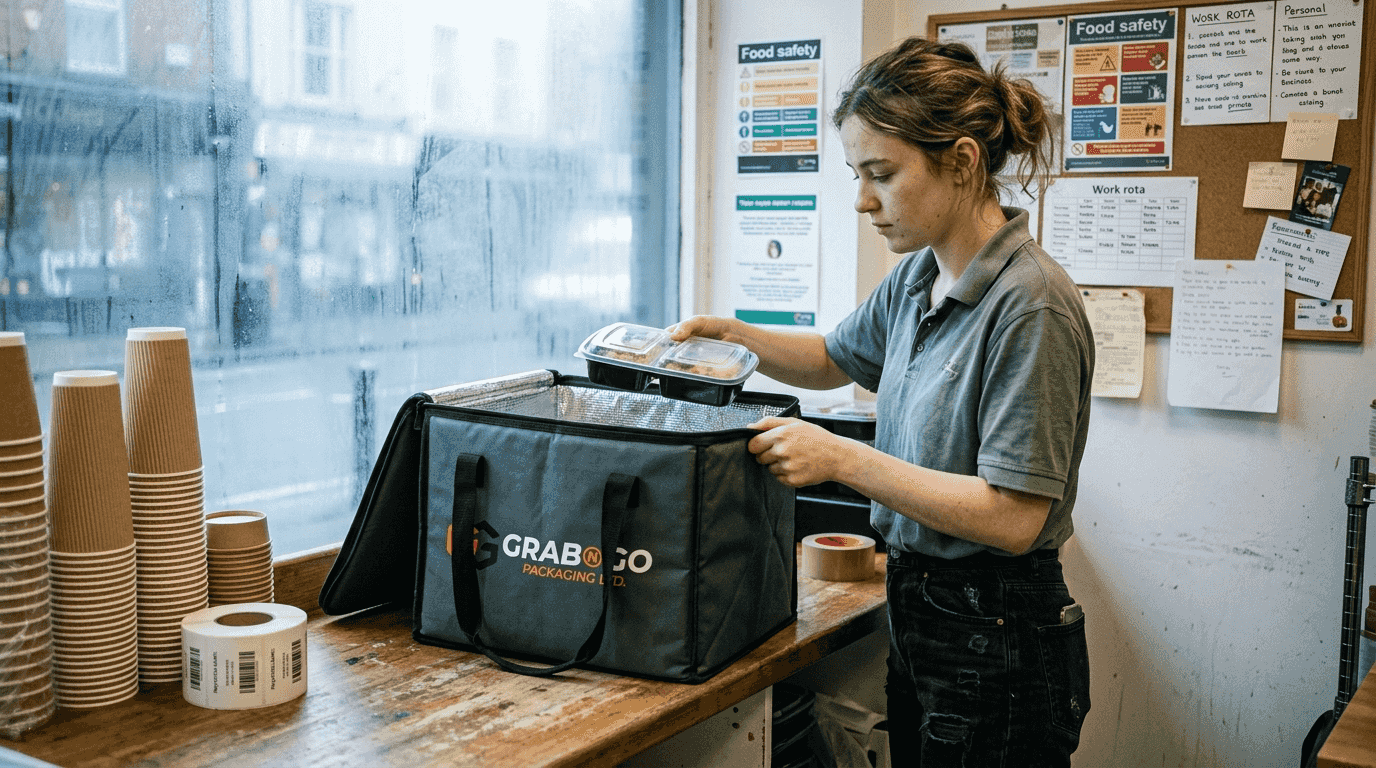
Thermal liners and insulated containers maintain temperature stability for delivery services. These solutions use materials like recycled cotton, wool, or plant-based foams to create thermal barriers. They extend freshness significantly compared to standard packaging but add cost and bulk. Thermal packaging proves essential for businesses promising hot delivery or shipping perishable items over distance.
Speciality containers address unique product requirements. Fish and chips boxes feature vented designs that release steam whilst containing grease. Sushi containers use clear lids that display contents attractively. Pizza boxes provide structural support and ventilation to prevent sogginess. Each speciality format optimises specific food characteristics.
Explore diverse takeaway containers for UK food businesses to identify options that match your menu and service model. Consider these factors:
- Leak resistance for saucy or liquid items
- Temperature retention for hot or frozen products
- Ventilation requirements to prevent condensation
- Microwave and oven safety for reheating
- Portion control and presentation appeal
- Compatibility with delivery bags and vehicles
3. Comparison of sustainability, cost and performance in packaging materials
Choosing packaging materials requires weighing sustainability, cost, food safety, and performance. Materials impact food safety, shelf life and sustainability perceptions, making this decision crucial for your business strategy.
| Material | Sustainability | Cost | Food Safety | Thermal Performance |
|---|---|---|---|---|
| Recycled Cardboard | High recyclability, biodegradable | Low to moderate | Excellent when treated | Moderate with liners |
| Polystyrene Foam | Low recyclability, persistent waste | Very low | Good moisture barrier | Excellent insulation |
| Biodegradable Plastics | Compostable, plant-based | Moderate to high | Good when certified | Variable by type |
| Vegan Thermal Liners | Sustainable, reusable | Moderate | Excellent, non-toxic | Superior long-term |
Recycled cardboard dominates the UK food packaging market due to its balance of affordability, functionality, and environmental credentials. It biodegrades naturally, accepts custom printing beautifully, and consumers recognise it as eco-friendly. However, cardboard requires protective coatings for moisture resistance, adding slight cost and potentially complicating recycling. It provides adequate thermal performance when combined with insulating liners but cannot match specialised thermal materials.
Polystyrene foam offers exceptional insulation and costs very little, making it attractive for businesses focused on budget. It protects temperature-sensitive foods effectively and weighs almost nothing, reducing shipping costs. Yet polystyrene faces mounting criticism for environmental persistence and poor recyclability. Only 35% is recycled despite representing 40.5% of European plastic production for food packaging. Many customers actively avoid businesses using polystyrene, viewing it as environmentally irresponsible.
Biodegradable plastics made from cornstarch, sugarcane, or other plant materials offer a middle ground. They provide moisture barriers and flexibility similar to conventional plastics whilst breaking down in commercial composting facilities. Initial costs run higher than traditional materials, but prices continue falling as production scales. Ensure any biodegradable plastic carries proper certification, as some products labelled “biodegradable” require specific conditions to decompose.
Vegan thermal liners represent premium sustainable options for temperature-critical products. Swiftpak’s Vegan Thermal Liner maintains stable temperature for over 48 hours using sustainably sourced materials. These liners cost more upfront but deliver superior performance for businesses shipping frozen desserts, fresh meat, or prepared meals requiring extended cold chain protection. Customers appreciate receiving products in pristine condition, reducing complaints and refund requests.
Pro Tip: For temperature-sensitive products like gelato, seafood, or meal kits, invest in quality thermal liners rather than standard packaging. The higher material cost pays for itself through reduced spoilage, fewer customer complaints, and enhanced brand reputation for quality.
Small businesses face particular challenges balancing eco-friendliness with budget constraints. Consider these strategies:
- Start with recycled cardboard for most products, upgrading specific items to premium materials
- Negotiate volume discounts with suppliers for sustainable materials
- Educate customers about your packaging choices to justify slightly higher prices
- Test biodegradable options on limited product lines before full conversion
- Partner with local composting programmes to ensure proper disposal
“Sustainable packaging isn’t just an environmental choice, it’s a business strategy. Customers increasingly select brands that demonstrate environmental responsibility, and packaging serves as the most visible proof of your values.”
Learn more about packaging materials for food businesses and explore food packaging sustainability insights to stay current with evolving options and regulations.
4. Navigating UK packaging regulations in 2026
UK packaging regulations have tightened significantly with new laws taking effect in 2026. The Product Regulation and Metrology Act 2025 mandates accurate product measurements from 2026 onwards, creating compliance obligations for all food businesses regardless of size.
Follow these essential steps to ensure legal compliance:
-
Declare quantities accurately on all packaging using metric measurements. Your stated weight or volume must match actual contents within legally specified tolerances. Random spot checks by trading standards officers can result in fines and product recalls for inaccurate declarations.
-
Display allergen information prominently in clear, legible text. List all ingredients that may trigger allergic reactions, emphasising them in bold or contrasting colours. Failure to declare allergens properly exposes you to serious legal liability and endangers customer health.
-
Include country of origin details for primary ingredients when required. Post-Brexit rules demand clear indication of UK versus imported ingredients. Products sold in Great Britain must carry “Not for EU” labelling if they don’t meet EU standards.
-
Report packaging data to comply with the EPR scheme requirements. You must pay fees based on recyclability of materials used. Register with the relevant environmental authority and submit annual returns detailing packaging weights and types.
-
Maintain accurate records of packaging suppliers, materials specifications, and compliance certificates. Trading standards may request documentation during inspections. Organised records demonstrate due diligence and simplify audits.
-
Update labels regularly as regulations evolve and ingredient sources change. Review packaging quarterly to ensure ongoing compliance with current rules. What satisfied regulators last year may not meet 2026 requirements.
Even micro-businesses must comply with these regulations. There are no exemptions based on company size or turnover. The government recognises that food safety and consumer protection apply equally regardless of business scale. Budget time and resources for compliance activities as essential operating costs.
Penalties for non-compliance range from warning notices and improvement orders to substantial fines and criminal prosecution for serious violations. Trading standards officers have authority to seize non-compliant products and prohibit sales until issues are corrected. Beyond legal consequences, non-compliance damages your reputation and erodes customer trust.
“Packaging compliance isn’t optional paperwork, it’s fundamental to operating legally in the UK food industry. The costs of non-compliance far exceed the investment required to get packaging right from the start.”
Special considerations apply to specific product categories. Organic foods require certification marks from approved bodies. Products making health claims must substantiate statements with scientific evidence. Alcohol packaging needs duty stamps and age restriction warnings. Frozen foods must display storage instructions and use-by dates prominently.
For comprehensive guidance on meeting regulatory requirements whilst optimising your packaging strategy, review UK food packaging best practices that address compliance systematically.
Explore grab & go packaging solutions for your food business
Now that you understand the criteria, options, and regulations shaping effective packaging decisions, you’re ready to explore solutions tailored to your specific needs. Grab & Go Packaging specialises in helping UK food businesses navigate these choices with confidence.

Our custom packaging shop offers materials that comply with 2026 UK regulations whilst supporting your sustainability goals. Whether you need thermal containers for delivery services, branded bakery boxes for retail, or eco-friendly takeaway packaging, we provide options that protect your products and enhance your brand identity. Discover why packaging customisation matters for building customer recognition and loyalty. Our team understands the unique challenges facing food service businesses and can recommend solutions that balance cost, performance, and environmental responsibility. Explore our range today and find packaging that reflects your brand values whilst meeting practical requirements. For comprehensive guidance, review our UK catering packaging best practices to optimise every aspect of your packaging strategy.
Frequently asked questions
What materials are best for sustainable custom food packaging?
Biodegradable cardboard and vegan thermal liners offer excellent sustainability whilst maintaining food safety standards. Recycled cardboard provides the most cost-effective eco-friendly option for most applications, accepting custom printing and breaking down naturally. For temperature-sensitive products, vegan thermal liners made from plant-based materials deliver superior performance without environmental harm. Choosing materials certified as recyclable or compostable boosts your eco-credentials and appeals to environmentally conscious customers.
How do UK regulations affect packaging sizes and labelling in 2026?
Accurate declared quantities are legally required under the Product Regulation and Metrology Act 2025 to avoid fines and product seizures. Your packaging must state exact weights or volumes in metric units, matching actual contents within specified tolerances. Labels must include comprehensive allergen information, country of origin details, and “Not for EU” marking when applicable. Trading standards officers conduct random inspections and can impose substantial penalties for non-compliance, making accurate labelling essential for legal operation.
What are practical tips for small food businesses when choosing packaging?
Prioritise packaging that balances ease of handling, product protection, and brand impact within your budget constraints. Start with recycled cardboard for most products, upgrading specific items to premium materials where performance justifies the cost. Test samples under real conditions before ordering bulk quantities to verify they protect contents and maintain freshness. Balance initial costs with long-term benefits like reduced spoilage and enhanced customer satisfaction. Educate customers about your sustainable packaging choices to justify any price premiums and build loyalty.
How does custom printing on packaging impact my food business?
Custom packaging increases brand recall by up to 30% and boosts customer loyalty by 20% through consistent visual identity. Custom printed packaging transforms every order into a marketing opportunity as customers carry your branded boxes through public spaces. Professional designs communicate quality and attention to detail, differentiating your business from competitors using generic packaging. Custom printing costs more initially but delivers measurable returns through improved brand recognition, customer retention, and word-of-mouth referrals that drive growth.
Recommended
- 7 Best Practices for Food Packaging Success in the UK – Grab & Go Packaging
- Food Packaging Best Practices for Efficient UK Catering – Grab & Go Packaging
- Why Single Use Packaging Matters for UK Food Businesses – Grab & Go Packaging
- Why Packaging Design Matters for UK Food Businesses – Grab & Go Packaging
- Types of restaurant refrigeration for efficient food storage in 2026

