
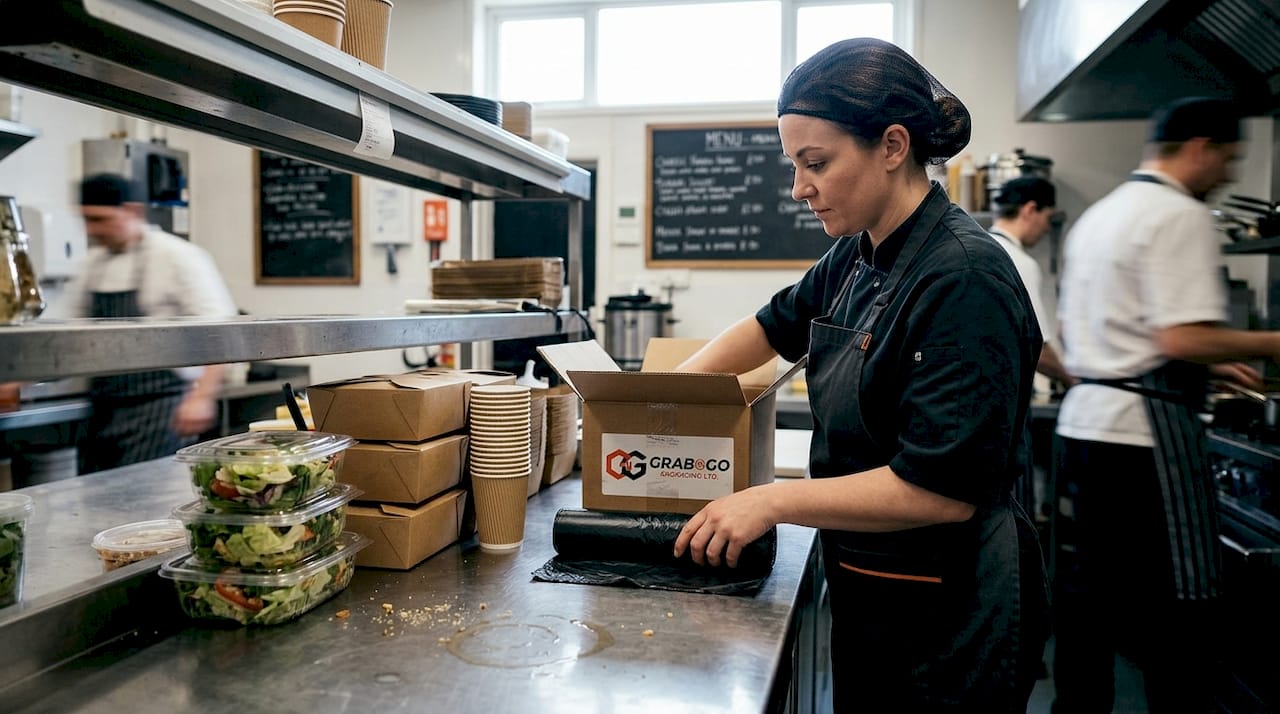
Choosing the right disposable packaging for your catering business sounds straightforward until you’re weighing up compostable bagasse against recyclable plastic, factoring in the UK plastic packaging tax, and trying to keep costs under control while your customers increasingly expect greener choices. The range of products available has never been wider, but that also means the decision has never been more complex. This guide cuts through the noise, covering the main types of catering disposables, how to compare them, and which options suit different operations, from busy takeaways to large-scale events.
| Point | Details |
|---|---|
| Selection criteria matter | Evaluating disposables against sustainability, practicality, and cost ensures better decisions for your catering business. |
| Eco-friendly options growing fast | Compostable disposables like bagasse are expanding rapidly in the UK, appealing to environmentally conscious customers. |
| Branding boosts business | Custom-printed paper and cardboard packaging enhances your professional image and attracts client loyalty. |
| Regulations changing | UK disposal laws and taxes are pushing catering businesses toward greener, recyclable, and compostable options. |
| Match disposables to needs | Choose the right disposable item for each catering scenario—hot food, cold, events, or takeaways—for efficiency and customer satisfaction. |
Before you start browsing product catalogues, it pays to have a clear set of criteria. Buying on price alone is one of the most common mistakes catering businesses make, and it often leads to packaging that leaks, looks cheap, or ends up costing more in waste disposal. Material type and sustainability are now core considerations for UK food businesses, not optional extras.
Here are the key factors to work through before placing any order:
Using a structured packaging selection criteria process saves time and reduces costly ordering mistakes.
Pro Tip: When comparing disposables, factor in what happens after the meal. Packaging that goes straight to landfill carries a hidden cost, both financially and reputationally, especially if your customers are environmentally conscious.
Plastic disposable containers remain one of the most widely used packaging formats in UK catering, and it is easy to see why. They are sturdy, leak-proof, and available in a huge range of sizes, from small sauce pots to large multi-compartment meal trays. Transparent lids make cold food displays look professional, and they stack efficiently for storage and transport.
However, plastic containers face regulatory scrutiny that is only increasing. The UK plastic packaging tax, introduced in 2022 and revised in 2026, applies to plastic packaging manufactured in or imported into the UK that contains less than 30% recycled content. This directly affects your procurement costs if you are buying virgin plastic products.
Common uses for plastic disposable containers include:
The shift towards best packaging practices means many caterers are now opting for rPET (recycled polyethylene terephthalate) containers, which meet the 30% recycled content threshold and reduce tax liability. Reviewing your packaging types overview regularly ensures you stay compliant and competitive.
Pro Tip: Use clear plastic containers specifically for cold food presentation. The visual appeal of a well-presented salad or dessert through transparent packaging genuinely influences purchasing decisions at point of sale.
Paper and cardboard packaging has become the go-to choice for a huge number of UK catering businesses, and the reasons go beyond eco-credentials. Paper and cardboard disposables offer unmatched versatility across food types, service styles, and branding opportunities. From a simple sandwich box to a fully printed takeaway bag carrying your logo, the format works across almost every catering context.
Key uses and benefits include:
The sustainable packaging guidelines from WRAP recommend prioritising paper and cardboard formats with recycled content or FSC certification. Many paper products are now certified compostable, meaning they can go into food waste streams alongside the food itself, simplifying disposal for your team.
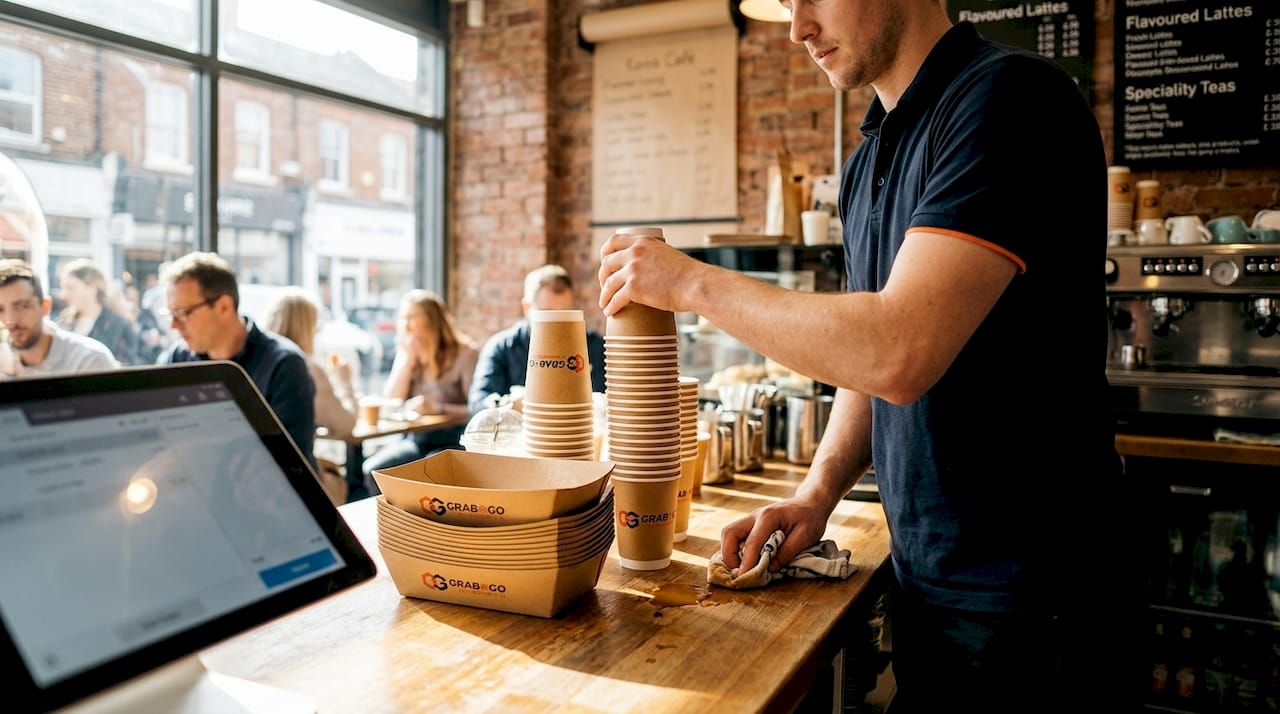
Branding is where paper packaging really earns its place. Printed coffee cups carrying your brand travel out of your premises with every customer, acting as mobile advertising. Reviewing paper packaging essentials helps you identify which formats deliver the most value for your specific operation.
Pro Tip: Even a simple two-colour print on a kraft takeaway cup creates a far stronger brand impression than a plain white cup. The cost difference per unit is minimal, but the cumulative brand impact is significant.
Bagasse is the fibrous material left over after sugarcane juice is extracted. It would otherwise be waste, but processed into disposable packaging it becomes one of the most practical and genuinely sustainable options available to UK caterers. Bagasse is a fast-growing eco-friendly option in UK catering, and its adoption has accelerated significantly as businesses respond to customer demand for greener choices.
Bagasse products available for catering include:
Beyond bagasse, PLA (polylactic acid) is another compostable material derived from plant starch, commonly used for clear cups and lids where transparency matters. Understanding the bagasse packaging impact helps you communicate your sustainability story to customers with confidence.
One important distinction: most bagasse and PLA products require industrial composting rather than home composting. This means you need a food waste collection service or access to an industrial composting facility for these products to fulfil their environmental promise. Reviewing sustainable catering packaging options alongside your waste disposal arrangements ensures your eco-claims are accurate. The eco-friendly alternatives guide from the British Caterers Association provides further detail on disposal routes.
Packaging gets most of the attention, but disposable cutlery, napkins, and accessories are equally important to the overall catering experience. A beautifully presented meal in a branded container loses its impact if it arrives with a flimsy plastic fork that snaps on first use. Switching to biodegradable cutlery is a straightforward, cost-effective upgrade that most catering businesses can make immediately.
The main options and their characteristics:
The UK disposable cutlery regulations have already banned certain single-use plastic cutlery items, making the switch to alternatives not just a preference but a legal requirement in some cases. Reviewing your delivery packaging essentials and container options overview alongside your cutlery choices ensures a consistent, compliant kit.
Pro Tip: Offer wooden cutlery as standard rather than on request. It costs marginally more than plastic alternatives but immediately signals your commitment to sustainability, which resonates strongly with today’s catering customers.
With so many options available, a side-by-side comparison helps clarify which format suits your operation. UK businesses should weigh eco-impact and cost carefully for each disposable type before committing to bulk orders. The table below summarises the key criteria for the main categories, and you can explore food packaging for delivery considerations separately if delivery is a core part of your business.
| Type | Eco-credentials | Cost | Branding potential | Heat retention | Best for |
|---|---|---|---|---|---|
| Plastic containers | Low to medium (rPET better) | Low | Limited | Medium | Cold food, sauces, salads |
| Paper and cardboard | Medium to high | Low to medium | High | Medium | Takeaway, hot food, drinks |
| Bagasse | High | Medium | Medium | High | Hot meals, events, buffets |
| Compostable PLA | High | Medium to high | Medium | Low to medium | Cold drinks, clear lids |
| Wooden cutlery | High | Low to medium | Low | N/A | All service types |
| Paper napkins | Medium to high | Low | Medium | N/A | All service types |
This table is a starting point. Your specific menu, service style, and customer base will influence which combination of disposables works best for your business.
The right disposable type genuinely improves catering efficiency and customer satisfaction when matched correctly to the service context. A one-size-fits-all approach rarely works across the variety of situations catering businesses face.
Here is a practical guide by service type:
The best UK disposables review from Catering Insight highlights sustainability as a genuine business differentiator in 2026, not just a marketing claim.
“Businesses that invest in sustainable packaging are not just reducing their environmental footprint. They are actively building customer loyalty and differentiating themselves in a competitive market.”
The combination of practical performance and visible sustainability commitment is what separates good packaging decisions from great ones.
If you have worked through this guide and are ready to source the right disposables for your operation, Grab & Go Packaging makes it straightforward. The range covers everything from everyday essentials to premium branded solutions, all available for bulk or small orders with competitive pricing.

Browse the full shop catering disposables range to find containers, cutlery, cups, bagasse products, and more in one place. If you are still working out which formats suit your business, the essential packaging materials guide covers the fundamentals clearly. For businesses looking to strengthen their brand presence, custom printed cups are a high-impact, low-cost starting point that delivers results from the very first order.
Bagasse and paper products are heat resistant and safe for hot food service, making them the strongest choice for hot meals, soups, and beverages in catering operations.
Plastic containers are permitted but subject to the plastic packaging tax and stricter recycling requirements, which is why many businesses are transitioning to rPET or compostable alternatives.
Prioritise compostable materials like bagasse and certified paper products, and confirm that your waste disposal arrangements support industrial composting where required.
Yes. Custom printed packaging is available across paper cups, cardboard containers, bags, and napkins, giving your brand consistent visibility at every customer touchpoint.
Paper and cardboard typically offer the best balance of cost, branding potential, and sustainability credentials for most UK catering operations.