

Not all recyclable packaging is created equal, and assuming otherwise can undermine your sustainability efforts. The term recyclable packaging carries a precise definition in the UK, involving multiple assessment stages and criteria that directly affect whether your takeaway containers, coffee cups, or food boxes actually get recycled. Understanding these distinctions helps you make smarter purchasing decisions, reduce contamination, and genuinely support a circular economy rather than simply ticking a compliance box.
| Point | Details |
|---|---|
| Five stage RAM | The UK defines recyclable packaging through five stages classification collection sorting reprocessing and application to determine whether it earns a green rating. |
| Colour coded ratings | Green amber and red ratings show how widely or reliably packaging can be recycled across the UK. |
| Contamination reduces recycling | Contamination from oil grease or food residues can significantly reduce recycling viability for otherwise recyclable packaging. |
| Material specific guidance | Recyclability varies by material with plastics like PET HDPE and PP generally green when clean, while paper can turn red if contaminated. |
| Verify with local contractor | Always verify packaging ratings with your local waste contractor since collection and processing capabilities vary. |
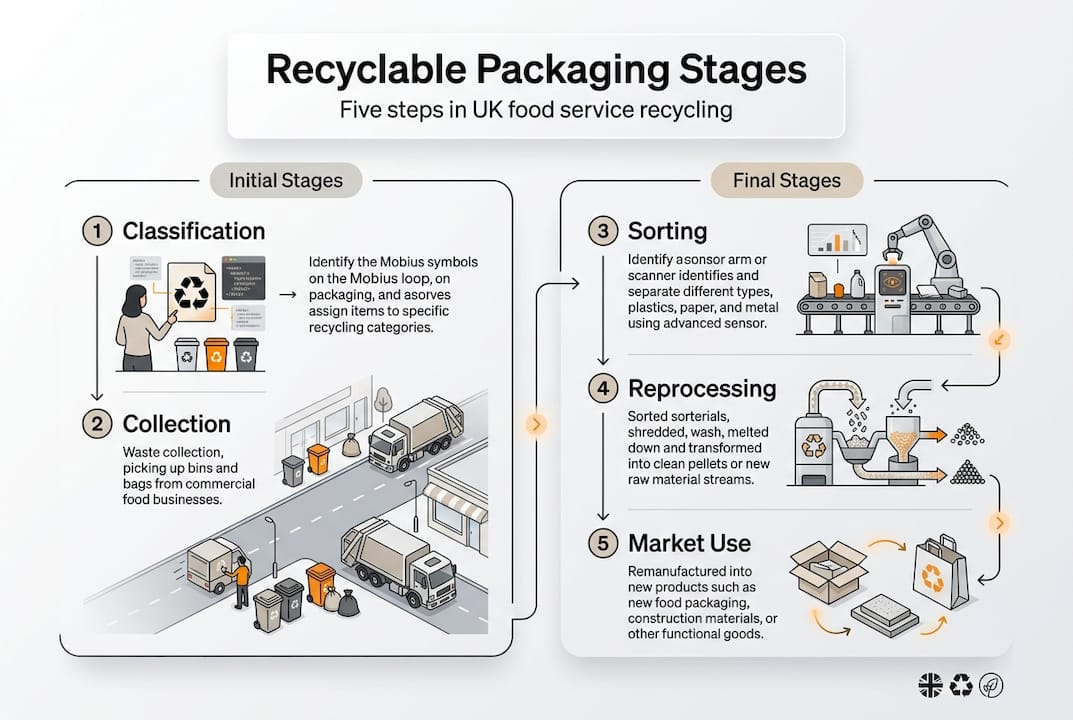
The UK defines recyclable packaging through five distinct stages: classification, collection, sorting, reprocessing, and application. This Recycling Assessment Methodology, commonly called RAM, evaluates each packaging item against these criteria to assign a recyclability rating. Your coffee cup or salad container must successfully navigate all five stages to earn a green rating, the highest recyclability designation.
Classification forms the foundation, where assessors examine whether packaging components should be evaluated separately or as a single predominant material. A paper cup with a plastic lid, for instance, requires separate assessment of each element. Collection evaluates whether your local authority or commercial waste service actually accepts the packaging type. Sorting determines if existing facilities can successfully separate the material from other waste streams. Reprocessing assesses whether the material can be transformed into usable raw material, and application confirms that recycled content can replace virgin materials in new products.
The rating system uses three colours:
This framework directly supports circular economy principles by favouring packaging design that facilitates recycling and material reuse. Food service operators who understand these stages can select packaging that genuinely contributes to sustainability rather than ending up in landfill despite recyclable labelling.
Pro Tip: Always verify packaging ratings with your specific waste contractor, as local collection capabilities vary significantly across UK regions.
Rigid plastic containers like PET bottles, HDPE tubs, and PP trays typically receive green ratings when clean, making them among your most reliably recyclable options. These materials pass through standard sorting facilities effectively and maintain value in recycling markets. However, contamination drastically changes this picture. A clean salad container recycles easily, whilst the same container with dressing residue may be rejected.
Paper and board packaging presents a more complex scenario. Clean paperboard earns green ratings, but grease and oil contamination renders it non-recyclable, shifting the rating to red. Your pizza boxes, burger wrappers, and chip containers often fall into this contaminated category. The fibres in paper cannot be separated from oil during reprocessing, polluting entire batches of recycled material.

| Material type | Typical rating | Key consideration |
|---|---|---|
| Rigid PET/HDPE/PP | Green | Must be clean and free from food residue |
| Paper and board | Green to Red | Grease contamination downgrades to red |
| Soft plastics (films) | Red | Require specialist collection, rarely accepted kerbside |
| Glass | Green | Heavy and breakage-prone for food service |
| Aluminium | Green | Lightweight and highly recyclable when clean |
| Compostables | Red | Not suitable for standard UK recycling streams |
Soft and flexible plastics, including most food wrapping films and carrier bags, generally receive red ratings without access to specialist takeback schemes. These materials jam sorting machinery and contaminate other recycling streams. Labels covering more than 60% of packaging surface area create amber ratings even on otherwise recyclable containers, as they interfere with material identification and processing.
Compostable packaging, despite its eco-friendly marketing, typically earns red recyclability ratings. These materials require industrial composting facilities, which remain limited across the UK, and they actively contaminate conventional recycling streams when mis-sorted. Understanding these distinctions helps you avoid common packaging mistakes that undermine sustainability goals.
Pro Tip: Request recyclability assessments from your packaging suppliers, and prioritise those who provide RAM ratings for their products.
Food residue represents the single biggest barrier to successful packaging recycling in food service operations. Even packaging designed for recyclability becomes worthless when contaminated with sauces, oils, or food particles. Contamination reduces UK recycling rates significantly, as recycling facilities must reject entire loads when contamination levels exceed acceptable thresholds. Your greasy pizza box contaminates clean cardboard in the same collection bin, potentially sending the entire batch to incineration or landfill.
The economics drive this strict approach. Recyclers sell recovered materials to manufacturers who demand consistent quality. Contaminated batches reduce material value and increase processing costs, making them financially unviable. A single sauce-covered container can compromise hundreds of clean items in the same sorting batch.
Labels and sleeves create nuanced recyclability challenges. When labels exceed 60% of surface area, packaging drops from green to amber rating regardless of the base material’s recyclability. The label material often differs from the container, complicating separation and reprocessing. Shrink sleeves, whilst popular for branding, frequently use different plastic types than the bottles they cover, creating sorting difficulties.
Compostable packaging presents a particularly complex edge case:
The limited UK infrastructure for industrial composting means compostable packaging often ends up in general waste, negating its intended environmental benefit. Worse, when customers place compostable items in recycling bins, these materials contaminate otherwise recyclable batches. The visual similarity between compostable and conventional plastic packaging exacerbates this sorting challenge.
Multi-material packaging creates additional complications. A sandwich container with a cardboard base and plastic window requires separation before recycling, which rarely happens in practice. These hybrid designs typically receive amber or red ratings because sorting facilities cannot efficiently process them. Understanding these edge cases helps you reduce packaging waste by avoiding problematic designs from the outset.
Pro Tip: Implement a simple three-bin system in your operation: clean recyclables, contaminated items for general waste, and organic waste, with clear visual guides for staff and customers.
Translating recyclability knowledge into operational improvements requires systematic changes to your purchasing, handling, and disposal processes. Start with these practical steps:
Minimising contamination demands attention throughout your operation. Encourage customers to scrape excess food into separate bins before disposing of packaging. Position recycling bins with clear visual instructions showing acceptable items. Train staff to recognise contamination risks and intervene when necessary. These small process changes dramatically improve the actual recycling rate of your packaging, not just its theoretical recyclability.
Supplier relationships play a crucial role. Work with packaging providers who understand RAM assessments and prioritise recyclable design. Request documentation showing how their products perform across all five recyclability stages. Challenge suppliers to justify packaging choices and explore alternatives when current options receive poor ratings. Your purchasing decisions signal market demand for genuinely recyclable solutions.
Staff and customer education amplifies these efforts:
The long-term benefits extend beyond environmental impact. RAM supports circular economy principles by favouring designs that replace virgin materials with recycled content. Your packaging choices today influence the availability and cost of recycled materials tomorrow. Businesses that embrace recyclable packaging early often benefit from improved brand perception, customer loyalty, and regulatory compliance as sustainability standards tighten.
Consider conducting quarterly reviews of your packaging selection process to incorporate new recyclable options as they become available. The packaging market evolves rapidly, with innovations in materials and collection infrastructure creating opportunities that didn’t exist months earlier. Staying informed positions your operation to adopt improvements quickly and maintain competitive advantage through sustainable practices.
Navigating recyclable packaging choices becomes straightforward when you partner with specialists who understand both sustainability requirements and food service realities. Grab & Go Packaging offers an extensive range of sustainable packaging solutions specifically designed for UK food businesses, from coffee shops to full-service restaurants.

Our team provides expert guidance on selecting packaging that balances recyclability, functionality, and cost-effectiveness for your specific menu and service style. We stock green-rated options across categories, helping you avoid the contamination pitfalls and edge cases that undermine recycling efforts. Streamline your procurement with easy online ordering and reliable UK delivery, ensuring you never compromise on sustainability whilst managing operational demands. Explore our sustainable packaging range and discover how simple genuinely recyclable packaging can be.
Rigid plastics like PET bottles, HDPE containers, and PP trays rank among the easiest to recycle when kept clean and free from food contamination. Clean paperboard and aluminium also recycle effectively through standard UK collection systems. The key factor is ensuring packaging remains uncontaminated, as even highly recyclable materials become worthless when mixed with food residue.
Food residues downgrade packaging from recyclable to non-recyclable by interfering with reprocessing machinery and contaminating recycled material batches. Grease, oils, and sauces cannot be separated from paper fibres during recycling, rendering entire loads unusable. Implementing cleaning stations or separate disposal for heavily soiled packaging dramatically improves your actual recycling outcomes versus theoretical recyclability.
Compostable packaging generally receives red recyclability ratings and should not enter standard UK recycling streams. These materials require industrial composting facilities operating at specific temperatures, which remain limited across the UK. When mis-sorted into recycling bins, compostables contaminate conventional plastic recycling batches, causing more environmental harm than benefit.
Prioritise packaging with green RAM ratings and verify your waste contractor actually collects those materials in your area. Educate staff on preventing contamination through proper food scraping and bin separation. Work directly with suppliers who provide recyclability documentation and design packaging for circular economy principles. Regular audits of your packaging choices and disposal processes identify improvement opportunities before they become costly waste management problems.