
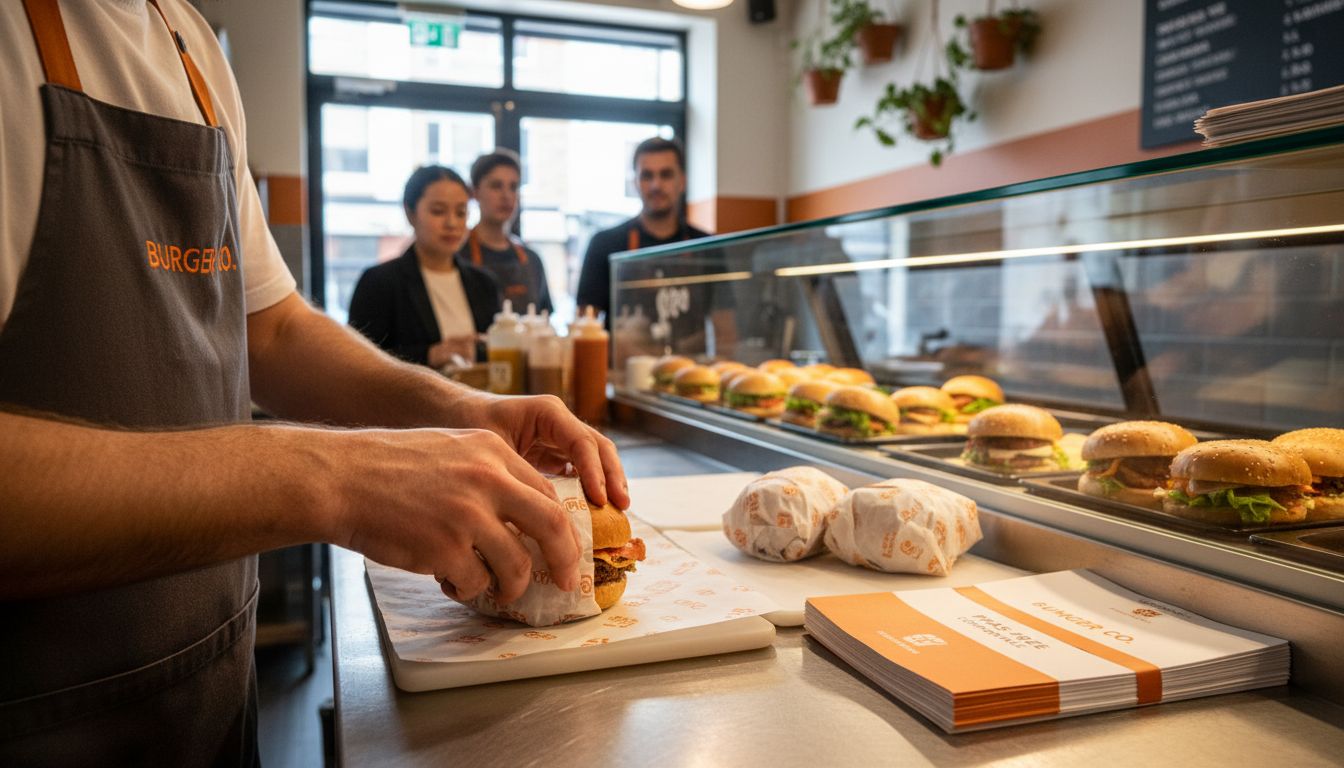
Most british food businesses are now turning to packaging that keeps products both fresh and attractive. With over 60 percent of customers saying packaging quality influences their food choices, the demand for greaseproof wrapping has never been higher. Greaseproof materials stop oil from soaking through, helping food arrive clean and presentable, whether in cafes or takeaways. Understanding the types and benefits of these wraps can guide you toward the right choice for today’s demanding market.
| Point | Details |
|---|---|
| Greaseproof Wrapping Functionality | Greaseproof wrapping is essential in food service to prevent oil and grease from damaging packaging, thereby ensuring food quality during transport. |
| Types of Greaseproof Wraps | Various types of greaseproof wraps, including polymer-coated and bio-wax options, offer different levels of grease resistance and environmental friendliness. |
| Food Quality Preservation | These wrappings block grease and moisture, maintaining the original flavour, aroma, and presentation of food items. |
| Sustainability and Compliance | The industry is moving towards PFAS-free and biodegradable materials to meet food safety regulations and reduce environmental impact. |
Greaseproof wrapping represents a specialized packaging solution engineered to prevent oil and grease from penetrating packaging materials. According to Cameo, this material is technically an imitation parchment crafted from chemical wood pulp that has been chemically hydrated, resulting in a semitransparent and glossy surface with exceptional grease-resistant properties.
The fundamental purpose of greaseproof wrapping extends far beyond simple containment. Knowway highlights that these materials are strategically designed to resist oil and grease penetration, preventing absorption that could potentially cause staining or structural damage to packaging. This makes greaseproof wrapping critically important for food service businesses that handle oily, greasy, or moisture-rich food products.
Key characteristics of greaseproof wrapping include:
For food service professionals, greaseproof wrapping represents more than just packaging material. Why Use Greaseproof Paper provides essential insights into how this innovative material helps businesses maintain food quality, presentation, and customer satisfaction by ensuring that packaging remains clean, intact, and professional throughout food transportation and service.
Greaseproof wraps represent a diverse category of packaging materials engineered to protect food products from grease and oil penetration. According to Clean Production, these wraps come in multiple variations including polymer coatings like EcoARMOUR, bio-wax coatings such as Ecowax4, proprietary treatments like Enshield4, and acrylic latex coatings exemplified by FlexSHIELD4.
The production process of greaseproof wraps involves sophisticated techniques to enhance their protective capabilities. Diva Portal explains that manufacturers create these wraps by using highly beaten pulp to produce dense paper with fine pores, then applying specialized coatings like carboxymethyl cellulose, starch, polyvinyl alcohol, and sometimes fluorochemicals to improve grease resistance.
Common types of greaseproof wraps for food service businesses include:
For food businesses seeking the most appropriate greaseproof wrapping solution, What is Greaseproof Paper offers comprehensive insights into selecting the right type of wrap based on specific food packaging requirements and performance characteristics.
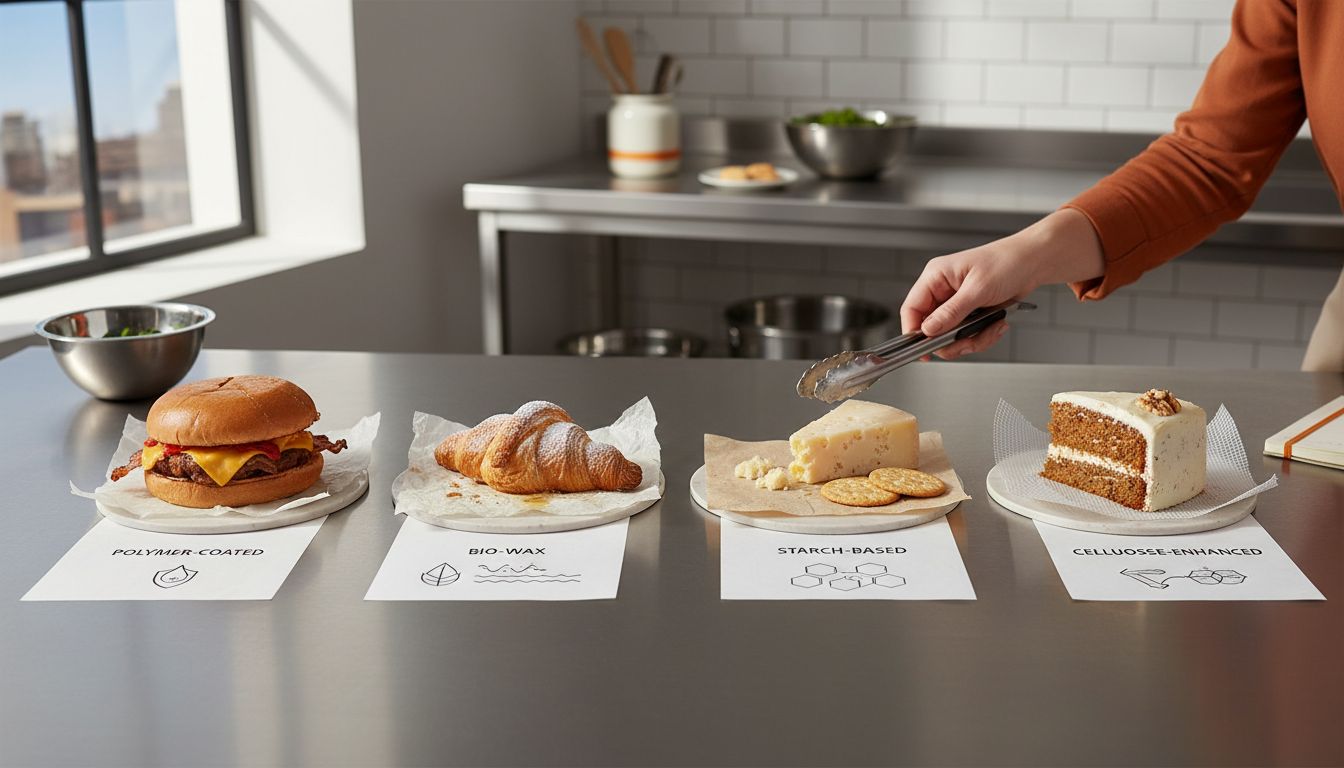
Greaseproof wrapping serves as a critical protective barrier for maintaining food quality and integrity across various culinary applications. Diva Portal highlights that these specialized wrappings create an advanced barrier against grease and moisture, preventing contamination and preserving the freshness of food products through their uniquely dense paper structure with fine pores.
The protective mechanisms of greaseproof wrapping extend to multiple food categories. According to Diva Portal, these wrappings are particularly effective for preserving the quality of diverse food items including tea, coffee, cocoa, biscuits, cake, cashew nuts, and cheese. By blocking grease migration, these wrappings maintain the original flavor profile and prevent unwanted contamination that could compromise food quality.
Key food quality protection strategies include:
Food service businesses looking to understand the comprehensive benefits of protective packaging can explore 7 Key Advantages of Greaseproof Paper for Food Businesses to gain deeper insights into how these innovative wrapping solutions safeguard food quality throughout storage and transportation.
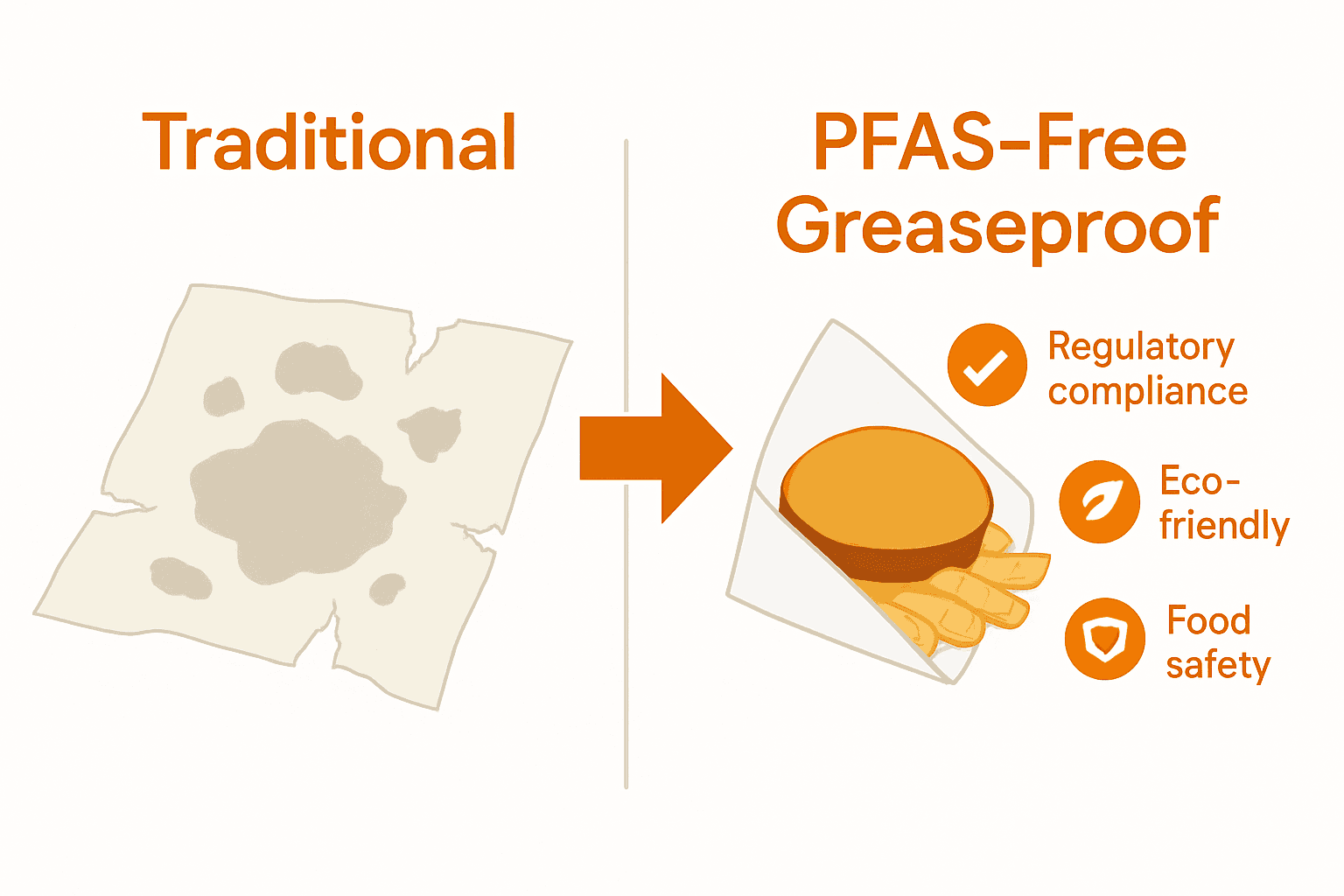
Food safety regulations have become increasingly stringent, compelling manufacturers to develop greaseproof wrapping solutions that meet rigorous environmental and health standards. Clean Production reports that manufacturers are actively developing PFAS-free greaseproof papers to address critical health and environmental concerns, with innovative products like Grease-Gard4 FluoroFree4 and thinbarrier OGR eco offering grease resistance without using harmful fluorochemicals.
The food packaging industry is experiencing a significant transformation towards safer, more sustainable materials. Pack Node highlights that companies like Carccu are introducing PFAS-free greaseproof papers that provide high levels of grease resistance while eliminating potentially harmful chemical compounds. These advancements demonstrate a commitment to protecting both consumer health and environmental sustainability.
Key regulatory compliance considerations for greaseproof wrapping include:
Food service businesses seeking comprehensive guidance on navigating these complex regulatory landscapes can explore How to Use Greaseproof Papers for Food Businesses to understand best practices in selecting compliant and safe packaging solutions.
Food packaging sustainability has become a critical consideration for modern businesses seeking environmentally responsible solutions. Pack Node highlights innovative approaches like Carccu’s biodegradable and compostable greaseproof papers, which offer cost-effective alternatives that maintain high performance while reducing environmental impact.
Alternative packaging solutions are emerging as powerful alternatives to traditional single-use materials. Food Preserving demonstrates how reusable options like beeswax food wraps can provide sustainable packaging solutions. These innovative materials, crafted from natural substances like beeswax and cotton fabric, offer long-term cost savings and significantly reduce plastic waste compared to conventional packaging methods.
Key considerations for sustainable packaging choices include:
Food service businesses looking to explore comprehensive sustainable packaging strategies can gain deeper insights through Sustainable Packaging: Why Eco-Friendly Options Matter for Your Business, which provides essential guidance on making environmentally responsible packaging decisions.
Managing grease and oil in food packaging is a challenge many food businesses face daily. From maintaining food quality to ensuring regulatory compliance, the stakes are high. This article highlights the importance of using specialized greaseproof wrapping that not only prevents grease penetration but also enhances the customer experience through clean, professional presentation and increased shelf life.
Discover the perfect packaging materials tailored for your food service needs at Grab N Go Packaging. Whether you require bespoke greaseproof papers or reliable stock options, our collection supports your goals of sustainability, safety, and cost efficiency. Act now to secure packaging that protects your food and your brand reputation with ease. Explore the benefits of high-quality greaseproof wrapping by visiting our site, and learn more about how to use proper wrapping for enhanced food safety at How to Use Greaseproof Papers for Food Businesses.
Take the next step and browse our extensive range designed specifically for the food and hospitality industry today.
Greaseproof wrapping is a specialized packaging solution designed to resist oil and grease penetration, keeping food products clean and intact during storage and transportation.
Greaseproof wrapping creates a barrier against grease and moisture, preserving the original flavour, aroma, texture, and appearance of food items while extending their shelf life.
Common types of greaseproof wraps include polymer-coated wraps, bio-wax wraps, starch-based wraps, and cellulose-enhanced wraps, each offering varying levels of grease and moisture resistance.
The key benefits include preventing grease seepage, maintaining food quality, ensuring a clean presentation, and complying with food safety regulations, ultimately enhancing customer satisfaction.