
Cart 0
Reusable Takeaway Tableware Wholesale Guide
If you are reviewing reusable takeaway tableware wholesale options, the real question is not whether reuse is a good idea. It is whether the range, pack format and return model will work in your day-to-day service without slowing staff down or creating extra cost. For cafés, takeaways and food operators, reusable tableware has to earn its space in the stockroom just like cups, lids, containers and bags do.
That is why wholesale buying matters. You are not choosing a single product in isolation. You are building a service system around portion sizes, menu types, washing capacity, storage, customer behaviour and reorder frequency. Get that right and reusable lines can support presentation, reduce repeat spend on certain disposables and help you offer a more considered front-of-house experience.
What reusable takeaway tableware wholesale really means
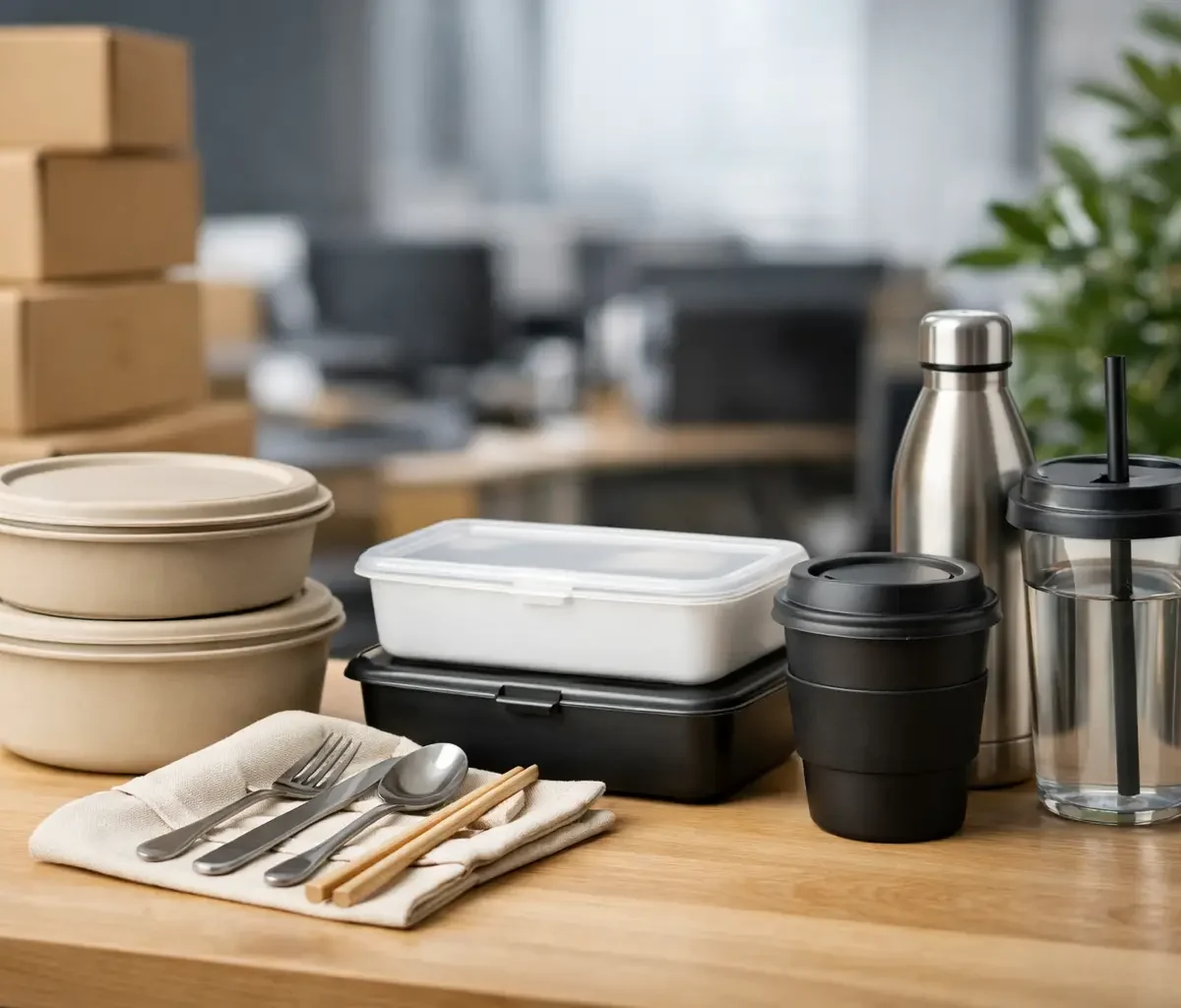
In practical terms, reusable takeaway tableware wholesale covers the supply of durable foodservice items sold in trade quantities for repeat commercial use. That can include reusable cups, bowls, trays, cutlery, food pots and lidded containers designed for takeaway or grab-and-go service.
The key difference from standard catering tableware is turnover. These products need to cope with repeated handling, transport, washing and restacking. A bowl used in a dine-in setting has one job. A bowl used for takeaway has several – hold temperature, travel securely, stack efficiently and come back in usable condition if you are operating a return scheme.
For many buyers, the wholesale part is just as important as the product itself. Consistent stock, sensible case quantities and the ability to source related lines from one supplier can make the difference between a workable system and a patchy one.
Who should consider reusable takeaway tableware wholesale
Not every food business needs to move heavily into reuse, and not every menu suits it. The strongest fit is usually operators with a repeat local customer base, on-site collection points or a deposit-return setup that customers understand quickly.
Coffee shops are often the easiest starting point because reusable cups are familiar and straightforward to wash, stack and issue. Salad bars, deli counters and fast-casual lunch operators can also make good use of reusable bowls and food pots, especially where customers are nearby and likely to return regularly.
It becomes more complex for high-volume delivery-led businesses. If most orders leave through aggregators and travel across a wide area, return rates can be harder to manage. In that case, a mixed model often works better – reusable for selected channels, with disposable or fibre-based options still covering the rest of the operation.
Choosing the right products for your menu
The biggest mistake is buying on principle rather than format. A reusable item has to suit the food first. If it does not protect quality, customers will not care that it is reusable.
For hot drinks, focus on cup size consistency, lid fit and grip. If your current menu runs across 8oz, 12oz and 16oz, check whether the reusable range mirrors that structure or forces a change at till level. That sounds minor until staff are reaching for the wrong lids during a morning rush.
For hot food, look closely at venting, leak resistance and stack height. Rice dishes, noodles, curries and pasta all behave differently in transit. Some need a tighter seal, while others need steam release to stop food going soft. Burgers, chips and fried food raise another issue – condensation. In some cases, reusable trays or boxes can look smart but still underperform compared with a well-matched disposable pack.
Cold food is usually simpler. Salad bowls, deli pots and dessert containers tend to be lower risk if lids fit properly and the material remains clear or presentable after repeated washing.
Material, weight and durability
Material choice affects cost, feel and lifespan. Lightweight products reduce carrying weight and can lower transport costs, but very light constructions may feel less substantial to customers. Heavier reusable items can improve perceived quality, though they take up more room and may increase breakage risk if the material is brittle.
You should also think about how items look after repeated cycles. Scratching, staining and lid warping show up quickly in busy service. A product that looks tired after a short period will start to undermine presentation, even if it is technically still usable.
Lids and compatibility matter more than most buyers expect
Lids are often where reusable systems succeed or fail. Buyers rightly focus on the bowl or cup, but if the lid fit is inconsistent, you create leakage, customer complaints and wasted time at packing stations. Wholesale purchasing should make compatibility clear across all matching sizes and replacements.
Buying reusable takeaway tableware wholesale with margins in mind
Reusable lines are not automatically cheaper. They are a different cost model. The unit price is higher, and the return comes over time through repeated use, fewer replacements and stronger customer retention in some models.
That means buyers should look beyond headline unit cost. You need to weigh purchase price against expected lifespan, washing labour, storage needs, breakage, loss rates and the practical return rate. A product that lasts 200 uses on paper is not giving you that value if half your stock never comes back.
This is where wholesale supply becomes useful. Trade packs let you standardise quickly, but they also make it easier to test in sensible volumes rather than overcommitting. Start with the products that have the clearest use case in your business, then expand once the process is proven.
For independent sites, a limited rollout is often the best route. For multi-site groups, consistency across locations matters more. Standardised product codes, repeat ordering and aligned sizing save time for procurement and reduce confusion in store.
Operational questions to settle before you buy
Reusable tableware is an operations decision as much as a packaging decision. Before placing a wholesale order, be clear on how the items will move through your business.
First, think about wash capacity. If your kitchen or back-of-house setup cannot process returns efficiently, stock will bottleneck. Second, plan storage both for clean stock and returned items waiting to be washed. Third, train staff on when reusable items should be offered and how they should be checked before reissue.
Customer communication also matters. If you are running a return or deposit model, the process must be simple enough to explain in one sentence at the till. Complicated rules reduce uptake and slow queues.
Reusable takeaway tableware wholesale and branding
There is also a presentation angle. Reusable service items can support a more polished brand image, especially when paired with other coordinated packaging such as printed greaseproof, branded cups or personalised sleeves. For operators trying to look more established without overcomplicating service, that consistency helps.
That said, branding only makes sense if the product will stay in circulation long enough to justify the spend. If your loss rate is likely to be high, plain stock may be the more commercial choice. Bespoke branding works best when you already know your return model holds up.
When a mixed packaging model is the smarter option
For many operators, the answer is not full replacement. It is a practical mix of reusable and disposable formats across the menu. That approach often gives better control over cost and service.
For example, reusable cups may suit collection orders and regular local trade, while standard takeaway containers still make more sense for longer-distance delivery. Reusable salad bowls might work for office lunch customers, but fried foods may still need packaging designed specifically for ventilation and heat retention.
A broad supplier relationship helps here because buyers can source both reusable lines and the everyday essentials that still keep service moving – cups, lids, takeaway containers, greaseproof, carrier bags and cleaning products. That is often more efficient than trying to split every category across separate vendors.
What good wholesale supply should look like
When comparing suppliers, product choice is only part of the picture. Availability, case quantities and category coverage matter just as much. If you can source reusable cups but not matching lids, replacement parts or complementary takeaway packaging, ordering becomes fragmented very quickly.
The strongest wholesale partners make buying simpler. They help you match products to menu formats, buy in workable quantities and keep your broader packaging range aligned. For many food businesses, that one-stop approach is more valuable than chasing small savings on isolated lines.
Grab & Go Packaging Ltd sits in that part of the market – practical trade supply for operators who need service essentials to be easy to source, easy to reorder and suitable for real foodservice conditions.
Reusable takeaway tableware wholesale can be a smart move, but only when it fits your menu, your customers and your back-of-house setup. Buy for the way you actually trade, not the way packaging trends say you should, and you will make better decisions that hold up during a busy service.