
Cart 0
Catering Disposables UK: What to Stock
A busy service can unravel quickly when the basics are wrong. Lids that do not fit, containers that steam up, weak carrier bags, or cutlery that feels flimsy all create problems that land at the counter, in delivery bags, and in customer reviews. For catering disposables UK buyers, the priority is not simply buying boxes of stock. It is choosing the right combination of products that keeps service moving, protects food, and makes repeat ordering easier.
For cafés, takeaways, mobile caterers and hospitality teams, disposables are part of daily operations rather than an afterthought. They affect speed of service, portion control, presentation, transport and storage. Buy too cheaply and you may end up with leaks, breakages and waste. Buy too broadly from multiple suppliers and procurement becomes harder than it needs to be. The practical route is to build a disposables range around your menu, your service style and your reorder pattern.
How to choose catering disposables UK businesses actually need
The best starting point is your menu, not the product catalogue. A coffee-led site needs dependable cups, lids, carriers, napkins and stirrers. A chicken shop or takeaway needs containers that hold heat without ruining texture, plus greaseproof and strong bags. A deli or salad concept needs clear bowls, secure lids and cutlery that travels well. If you are catering for events, stackability, transport and quick setup matter as much as appearance.
This is where many buyers overcomplicate things. They look at every size and material available instead of narrowing the decision to food type, holding time and method of service. If an item is eaten within minutes on site, one format may work perfectly. If the same food goes out for delivery and sits in a rider bag for twenty minutes, you may need a different one. It depends on how your customers actually receive the product.
Volume matters too. A small site can sometimes manage with a tighter range of versatile stock items. A growing multi-site business usually benefits from standardising cup sizes, lid fits, burger box formats and bag specifications across locations. That makes ordering simpler and reduces the risk of one branch using substitutes that weaken consistency.
The core categories that keep service moving
Cups and lids are often the first category to get attention, and rightly so. Hot drinks need cups that feel secure in hand, lids that fit correctly and sleeve options where needed. Cold drinks bring their own requirements, especially for smoothies, iced coffee and soft drinks where clarity, dome lid options and straw compatibility all affect the customer experience. If drinks are a high-margin part of your offer, presentation matters just as much as cost per unit.
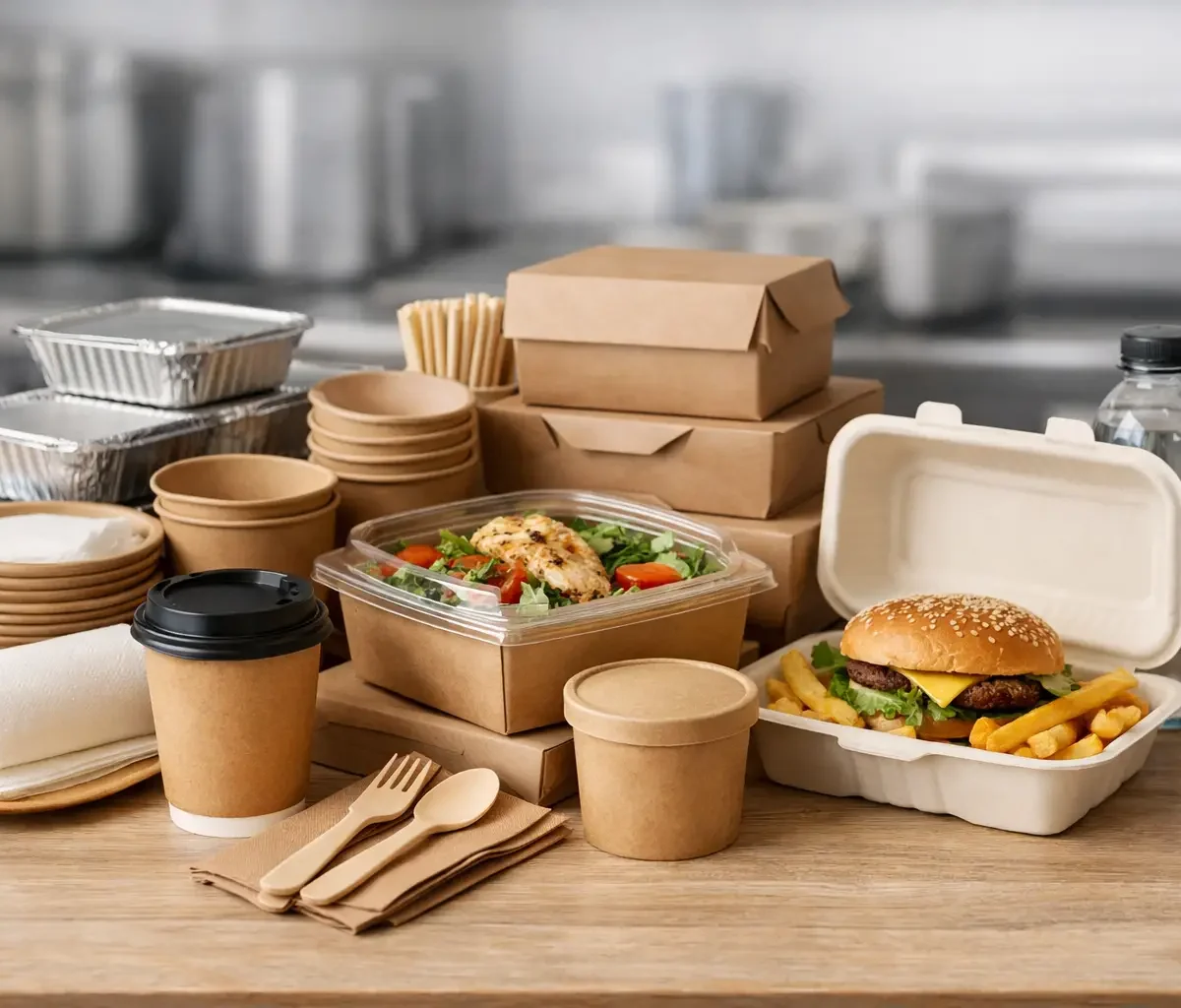
Food containers are the next major area. Takeaway boxes, foil trays, deli bowls, hinged containers and burger boxes all solve slightly different problems. Foil works well for heat retention and oven use, while bagasse and paperboard formats can suit lighter takeaway applications or operations that want a different look and feel. The right choice depends on whether you are serving curries, grilled items, chips, burgers, salads or mixed meals. One box rarely does every job well.
Greaseproof paper is easy to overlook, yet it does a lot of work. It improves presentation, helps with portioning and keeps food from sticking to trays or baskets. For burger shops, sandwich bars and bakeries, printed greaseproof can also strengthen branding without changing the food itself. It is a simple upgrade that often has more visual impact than operators expect.
Cutlery, napkins and straws may seem like minor lines, but they shape convenience and customer perception. If a fork snaps halfway through a salad bowl or loaded fries, the issue is memorable for the wrong reason. These small service items need to match the food being served, not just tick a box on the order form.
Carrier bags tie the whole order together. Strength, size and handle style all matter. A bag that is too large wastes money and lets contents shift around. Too small and it becomes difficult to pack quickly. For delivery-heavy businesses, this category deserves more attention than it usually gets.
Matching disposables to food formats
A fish and chip shop has very different needs from a coffee kiosk. Heat, moisture and grease all behave differently depending on the menu. That is why a product-led buying approach works best.
For fried food, ventilation and grease resistance are key. Packaging that traps too much steam can soften coating and spoil texture before the customer gets home. For burgers and wraps, structure matters. You need packaging that holds shape during transport and still presents well when opened. For deli meals and salads, clarity and lid security often take priority because the product is part of the display.
Pizza and larger meal formats need another level of consideration. Box rigidity, stackability and ease of carrying become operational issues during busy periods. Mobile caterers and event operators may also need serving essentials that are lightweight, easy to transport and quick to unpack on site.
No single material is best in every situation. The right choice comes down to the food, the distance travelled, and the price point of your offer. A premium item may justify a more polished presentation. A fast-moving value menu may need a tougher focus on unit cost and speed.
Cost control without false economy
Most trade buyers are balancing margin pressure with customer expectations. That makes catering disposables UK sourcing a purchasing decision with direct impact on profit. The cheapest unit price is not always the cheapest operational choice.
If lids split, if soup containers leak, or if staff need to double-bag orders, the real cost increases quickly. You are paying in waste, remakes, complaints and slower packing times. A slightly better product can reduce those losses. The trick is knowing where quality matters most and where a simpler option is perfectly adequate.
It also helps to buy in sensible volume. Wholesale pack sizes usually improve value, but only if you have the storage and turnover to use them efficiently. Slow-moving lines can tie up cash and clutter stock areas. Fast-moving staples such as cups, lids, containers and napkins are where volume buying tends to make the most sense.
A one-stop-shop approach can also save money in less obvious ways. Fewer suppliers mean fewer minimum orders to manage, less admin, and fewer compatibility issues between product ranges. For busy operators, that time saving has value.
Branding and consistency matter more than many operators think
Plain stock packaging does the job, but branded packaging can work harder for the business. Printed greaseproof paper, personalised coffee cups and other bespoke items help create a more recognisable service without overcomplicating the operation.
This is especially useful for independent operators who want to look established, and for growing businesses that need consistency across sites. Branding does not need to cover every product line to be effective. Often, one or two high-visibility items are enough to sharpen presentation and make the brand feel more considered.
There is a trade-off, of course. Bespoke stock requires planning, lead time and commitment to a design. For some businesses, especially seasonal or rapidly changing concepts, standard stock may offer more flexibility. But for operators with stable demand, branded essentials can add polish at a practical level.
What good ordering looks like
The best buying process is simple. Start with your core menu lines and identify the products that service depends on every day. Standardise where possible. Make sure lids match cups, containers fit portions, and bag sizes suit your average order. Then separate your stock into high-volume essentials and lower-volume specials.
From there, review usage patterns. Which lines move every week? Which ones sit too long? Which items cause staff complaints or packing delays? The answers usually show where range can be tightened or improved.
It also pays to think beyond packaging alone. Cleaning supplies, napkins and front-of-house consumables often belong in the same order cycle. Bringing these everyday essentials together can make stock control more efficient and reduce the risk of running short on something basic during a busy week.
For buyers who want range, repeatability and straightforward reordering, that is where a broad supplier model is useful. Grab & Go Packaging Ltd serves this need well by combining everyday service essentials with bespoke branded options that help food businesses buy practically and present professionally.
The strongest disposables setup is rarely the most complicated. It is the one that fits the menu, holds up during service, and can be reordered without friction. If your packaging works quietly in the background, your team can focus on food, speed and customer experience – which is exactly where the attention should be.