
TL;DR:
- Genuine compostable packaging requires certified standards and proper industrial or home composting conditions.
- Most UK compostable packaging ends up in general waste due to infrastructure limitations.
- Clear disposal guidance and verified certifications are essential for environmental and regulatory compliance.
Compostable packaging sounds straightforward until you try to use it responsibly. Many UK food service operators assume that switching to compostable cups, containers, or cutlery is an instant environmental win. The reality is more complicated. Less than 1% of plastic packaging in the UK is genuinely compostable, and even certified products often end up in general waste because the disposal infrastructure simply isn’t there. This guide cuts through the confusion, explains what compostable packaging actually means in legal and practical terms, and gives you the knowledge to make decisions that genuinely benefit your business and the environment.
| PointDetailsCompostable not genericOnly packaging certified under strict European norms can be described as compostable.Industrial vs home compostingMost compostable packaging needs industrial facilities, not home or landfill disposal.Operational limits persistFew local councils collect compostables, so disposal may end up as general waste.Certification vitalAlways demand recognised certification from suppliers to avoid greenwashing risks.Communicate clearlyTrain staff and clearly label to ensure proper disposal and regulatory compliance. |
|---|
The word ‘compostable’ gets used loosely, but it has a specific legal meaning. Under UK and EU law, compostable packaging must fully break down into carbon dioxide, water, and biomass within a defined
time-frame, leaving no toxic residue. This is not the same as simply decomposing. The breakdown must happen under controlled conditions, and the resulting material must meet quality standards safe for soil use.
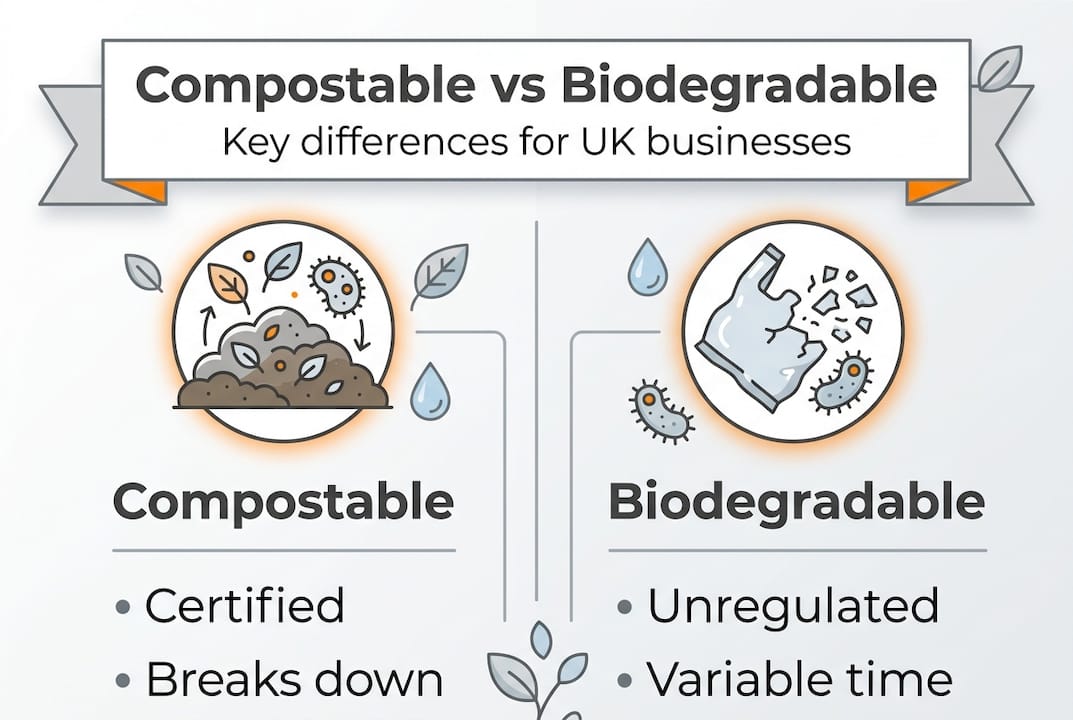
This is where the confusion with ‘biodegradable’ begins. Biodegradable is an unregulated term. Almost everything biodegrades eventually, including plastic, but that process can take hundreds of years and leave harmful microplastics behind. As the ASA makes clear, compostable packaging is certified to strict standards such as EN 13432 and OK Compost Industrial, whereas biodegradable claims are vague and unregulated. Using ‘biodegradable’ loosely on your packaging or marketing could breach ASA guidelines and expose your business to greenwashing accusations.
Recyclable packaging is different again. Recyclable products are collected, sorted, and reprocessed into new materials. Compostable packaging, by contrast, is designed to be composted, not recycled. In fact, compostable packaging placed in a recycling bin can contaminate entire batches of recyclable material. Understanding these distinctions matters enormously when choosing UK food packaging materials for your operation.
| FeatureCompostableBiodegradableRecyclableRegulated definitionYes (EN 13432, OK Compost)NoPartiallyDisposal routeIndustrial or home compostingUnspecifiedKerbside recyclingLeaves toxic residueNo (if certified)PossiblyNoSuitable for recycling binNoNoYesSuitable for food waste binSometimesNoNo |
|---|
For a broader look at your options, our recyclable packaging guide covers how recyclable materials compare across food service contexts. If you are serious about reducing packaging waste, understanding these categories is the essential first step.
Key certifications to look for: EN 13432 (industrial composting), OK Compost Industrial, OK Compost Home, EN 17427 (home composting). If a product carries none of these, treat any compostable claim with scepticism.
Pro Tip: Never rely on green leaf logos or vague ‘eco’ labels alone. Always ask your supplier for the specific certification number and verify it on the TÜV Austria or DIN CERTCO registry.
Understanding what’s legally compostable is just step one. Here’s how material choice and certification make a difference for your business.
The most common compostable materials used in UK food service include PLA (polylactic acid), bagasse, palm leaf, paper-based laminates, and CPLA. Each has different properties and composting requirements.
PLA is a bioplastic made from plant starch, often maize. It looks and feels like conventional plastic, which makes it popular for cold drink cups and lids. However, PLA requires industrial composting at temperatures above 58°C to break down properly. It will not degrade in a home compost bin or landfill within any reasonable
time-frame.
Bagasse is made from sugarcane fibre left over after juice extraction. It is robust, heat-resistant, and widely used for takeaway containers and plates. Bagasse is generally certified to EN 13432 and breaks down faster than PLA under industrial conditions.

Palm leaf products are pressed from naturally fallen leaves and require no adhesives or chemicals. They are home compostable in many cases and are among the most genuinely sustainable options available.
| MaterialCommon usesCertificationComposting routePLACold cups, lids, cutleryEN 13432, OK Compost IndustrialIndustrial onlyBagasseContainers, plates, traysEN 13432IndustrialPalm leafPlates, bowlsOK Compost HomeHome or industrialPaper laminateHot cups, wrapsEN 13432IndustrialCPLAHot cup lids, cutleryEN 13432Industrial |
|---|
The distinction between industrial and home compostable certification is critical. Most food service packaging is industrial-only, meaning it fails to break down in home compost bins, food waste collections, or landfill. This is one reason why, despite growing adoption, over 99% of UK plastic packaging is not compostable. The hospitality sector alone generates 1.1 million tonnes of food waste per year, yet only a tiny fraction of associated packaging reaches a certified composting facility.
Thoughtful packaging design for food businesses should factor in the composting route from the outset, not as an afterthought.
How to check for genuine certification:
Pro Tip: Verify certification using the TÜV Austria or DIN CERTCO registries directly. A quick search takes two minutes and protects you from inadvertently making misleading claims to your customers.
Knowing your options is vital, but how do these choices play out in real-world food service?
Compostable packaging offers genuine environmental advantages over conventional plastic when managed correctly. It can reduce reliance on fossil-fuel-derived materials, support food waste capture, and signal your commitment to sustainability to increasingly eco-conscious customers. Under the UK’s Extended Producer Responsibility (EPR) framework, using certified compostable packaging can also support compliance efforts, particularly where food waste and packaging waste are managed together.
However, the limitations are significant and often underestimated.
“Compostables can aid food waste capture for EPR compliance, but only if proper collection infrastructure exists. Some facilities reject them due to processing issues.” WRAP
The infrastructure gap is the biggest practical challenge. Most UK local councils do not accept compostable packaging in food waste collections. When compostable packaging enters the general waste stream, it goes to landfill or incineration, where it offers no environmental benefit over conventional plastic. Contamination is another risk: compostable packaging mixed with recyclable materials can render entire recycling batches unusable.
Key operational pros and cons:
Our range of eco-friendly disposables includes certified options suited to UK food service, and our disposable container options cover a variety of materials so you can match the right product to the right use case.
To maximise the business and environmental benefits, follow these proven best practices.
The single biggest mistake food businesses make is purchasing certified compostable packaging and then saying nothing to staff or customers about how to dispose of it. Without clear guidance, even the best-certified product ends up in the wrong bin. The ASA requires clear disposal information for any compostable packaging claim, meaning vague marketing language like ‘eco-friendly’ or ‘planet-friendly’ without disposal context could land you in trouble.
Procurement checklist for compostable packaging:
Once you have the right products, communication is everything. Staff need to know which bin each item goes into, and customers benefit from simple, clear on-pack messaging. Avoid technical jargon on customer-facing materials. A simple label stating
industrially compostable only, not suitable for home composting or
recycling is far more useful than a green leaf logo.
Staff and customer training topics:
For practical inspiration, our takeaway container examples show how UK food businesses are presenting sustainable packaging to customers clearly and effectively.
Pro Tip: If a supplier cannot provide written certification documentation and clear disposal guidance, do not use their product for any environmental marketing claim. Verbal assurances are not enough if the ASA comes knocking.
Having explored the benefits and challenges, here is an honest assessment of where compostable packaging fits in UK food service today.
We see well-meaning businesses invest significantly in certified compostable packaging, only to find that their local waste contractor sends it straight to general waste. The composting infrastructure in the UK simply has not kept pace with the growth in compostable products. Most councils treat compostable packaging as contamination, not as a resource.
This creates a real reputational risk. If you tell customers your packaging is compostable but it ends up in landfill, you have not delivered on that promise. Customers are becoming more informed, and greenwashing accusations, even unintentional ones, cause lasting damage.
The uncomfortable truth is that for many UK food businesses right now, switching to compostable packaging without a verified local composting route delivers limited environmental benefit. That does not mean you should avoid it entirely. It means you should be honest about what it can and cannot do.
Focus on the waste hierarchy first: reduce the amount of packaging you use, then reuse where possible, and only then specify compostable materials where a genuine disposal route exists. Our guide to reduce packaging waste is a practical starting point for that conversation.
Clear, honest communication with your customers will always serve you better than impressive-sounding claims you cannot fully back up.
Ready to put compostable packaging knowledge into action? Here’s how to source options tailored to UK food service.
At Grab & Go Packaging, we stock a carefully selected range of certified sustainable packaging designed for real food service environments. Whether you are looking for bagasse containers, PLA cups, or paper-based alternatives, our eco-friendly disposables range makes it straightforward to find products that match your values and your budget.

Not sure where to start? Our container selection guide walks you through the key decisions step by step, from material choice to certification requirements. When you are ready to browse, our full shop packaging solutions catalogue gives you access to competitive pricing on bulk and small orders alike. Sourcing sustainable packaging does not have to be complicated.
Look for certifications such as EN 13432, OK Compost Industrial, or OK Compost Home printed on the product, and ask your supplier for documentation. Most food packaging is industrial-only compostable, so verify the specific certification type before making any disposal claims.
Not always. Most UK local authorities do not accept compostable packaging in food waste collections, meaning it typically ends up in general waste. Check with your local council or waste contractor, as UK infrastructure gaps mean acceptance varies significantly by area.
‘Compostable’ must meet strict certifications and fully break down into safe compost within defined conditions, whereas ‘biodegradable’ is unregulated and may leave harmful residues over an undefined
time-frame.
Certified compostable packaging can support EPR compliance, but only when correctly disposed of through an appropriate facility. Compostables support EPR compliance only if the local infrastructure exists to process them properly.
Rarely. Most certified food service packaging requires industrial composting facilities operating at high temperatures to break down correctly, and most food packaging is industrial-only compostable rather than suitable for home compost bins.