
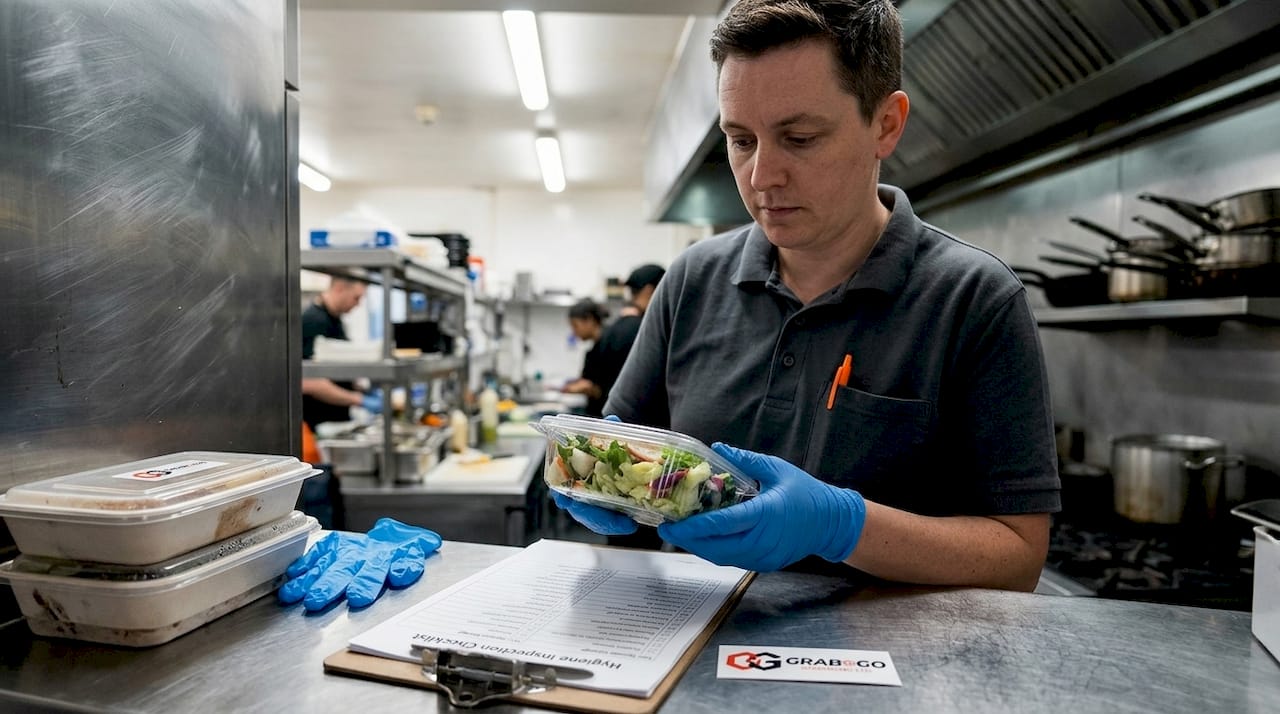
Not all packaging protects food equally. Whilst many containers appear secure, they fail to deter or reveal tampering when it matters most. The UK food industry faces mounting pressure to comply with updated food safety standards, and businesses that overlook tamper proof solutions risk fines, reputational damage, and lost customer trust. This article unpacks what tamper proof packaging truly means, its critical role for your business, legal obligations you must meet, and how to choose the right options for your operation.
| Point | Details |
|---|---|
| Clear legal obligations | UK food regulations require visible and reliable safeguards for takeaway and delivered foods. |
| Boosts customer trust | Tamper proof packaging demonstrates care and responsibility, attracting safety-conscious customers. |
| Many solutions available | From simple tear seals to complex traceable lids, there’s an option for every budget and need. |
| Common pitfalls exist | Weak or poorly applied seals can create false positives and compliance risks if not chosen carefully. |
Tamper proof packaging is designed so unauthorised access is either impossible or leaves visible evidence. This distinction matters because compliance is driven by Food Safety Act 1990 and BRCGS standards, which mandate integrity checks and sealed loads. Understanding the difference between tamper proof and tamper evident is essential for choosing the right solution.
Tamper proof packaging prevents opening entirely, whilst tamper evident packaging reveals when someone has accessed the contents. Both serve critical roles in food packaging best practices, but tamper evident solutions are more common in food service because they balance security with practical handling.
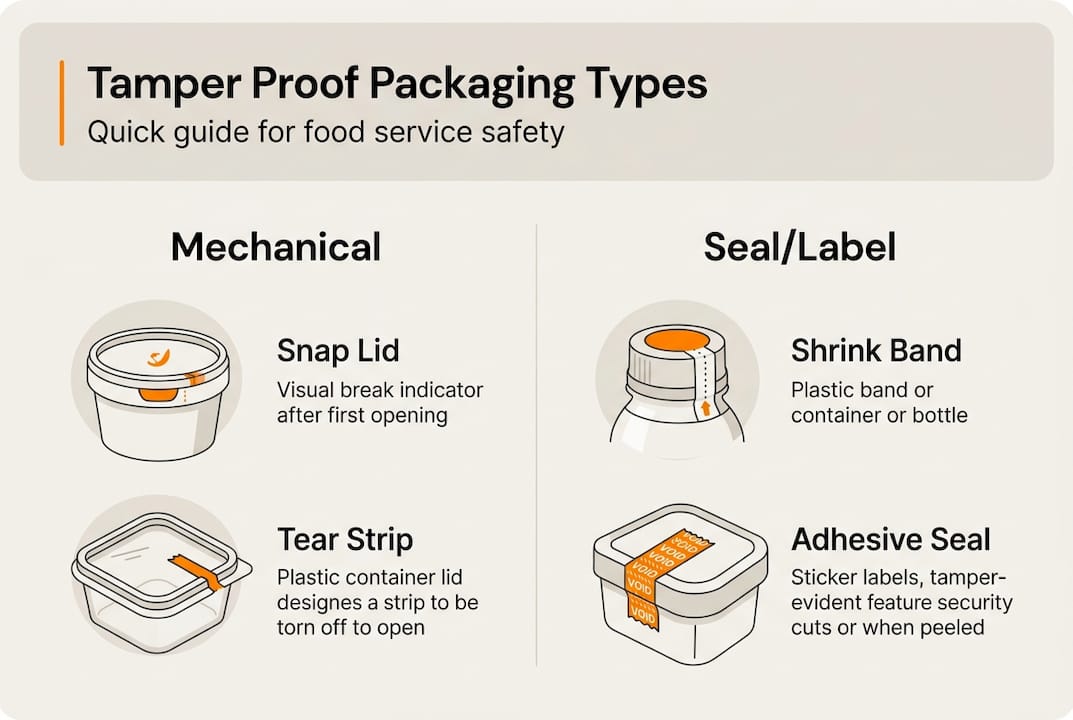
Common tamper proof features include:
These features appear on pre-prepared salads, takeaway containers, bottled drinks, and bulk ingredients. Each provides visual proof that food has remained untouched from preparation to consumption.
Pro Tip: Always test your tamper evident packaging under realistic handling conditions before rolling it out across your operation. A seal that breaks too easily creates false alarms, whilst one that’s too subtle fails to provide the visual reassurance customers expect.
The key is choosing packaging that matches your food type, transit conditions, and customer expectations. A coffee cup needs different protection than a chilled meal kit, and understanding these distinctions helps you avoid both under-protection and unnecessary complexity.
Recent regulations demand visible safeguards for delivery and takeaway food, and customer expectations for food safety have never been higher. High-profile cases of food tampering have made consumers more vigilant, and businesses without tamper proof solutions face increased risk.
A compliance breach can carry substantial fines, negative press coverage, and lost revenue. Beyond legal consequences, failing to protect food integrity damages the trust you’ve built with customers. When someone orders from your business, they’re trusting you to deliver safe, untouched food.
Vulnerable items must be placed in secondary tamper-evident containers for regulatory due diligence. This requirement reflects the FSA’s recognition that certain foods face higher tampering risks during transit and storage.
| Risk Factor | Impact Without Tamper Proof Packaging | Mitigation With Tamper Evident Solutions |
|---|---|---|
| Customer trust | Uncertainty about food integrity | Visible proof of untouched contents |
| Legal compliance | Potential fines and enforcement action | Documented due diligence |
| Brand reputation | Negative reviews and lost business | Professional, safety-focused image |
| Operational costs | Waste from rejected orders | Reduced disputes and returns |
“Food businesses must demonstrate they’ve taken all reasonable precautions to prevent tampering. Tamper evident packaging provides the visible evidence regulators and customers expect.”
The business case extends beyond avoiding problems. Tamper evident packaging supports your brand values and demonstrates responsible practice. When customers see intact seals on their orders, they recognise your commitment to their safety. This recognition builds loyalty and differentiates your business in a competitive market.
For takeaway packaging hygiene, tamper proof solutions work alongside other safety measures to create comprehensive protection. They’re not a replacement for proper food handling, but they’re an essential component of modern food packaging best practices.
The Food Safety Act 1990 establishes that food must meet expected standards, and packaging shouldn’t mislead consumers or allow tampering. This foundational requirement underpins all subsequent regulations and industry standards.
Compliance is driven by Food Safety Act 1990, BRCGS standards, and FSA guidelines. BRCGS for Storage and Distribution specifically mandates sealed loads and robust integrity checks, creating clear expectations for businesses handling food.
The FSA’s due diligence requirements mean you must use secondary tamper-evident containers for vulnerable foods. Vulnerable foods include items that are ready to eat, unpackaged during preparation, or particularly susceptible to contamination.
Edge cases require special attention. Large containers may need numbered seals for higher-risk cargos, whilst returns handling demands protocols that prevent compromised packaging from re-entering your supply chain. The law requires you to treat these situations with the same rigour as standard operations.
Common breaches to avoid include false positives from weak seals and non-compliance with secondary packaging requirements. A seal that breaks during normal handling creates confusion and waste. Equally problematic is using primary packaging alone when regulations require secondary tamper evident protection.
Pro Tip: Keep records of your packaging suppliers’ compliance statements and test certificates. When inspectors ask for evidence of due diligence, these documents demonstrate you’ve verified your packaging meets regulatory standards.
For food packaging for delivery, understanding these regulations helps you choose solutions that protect both your customers and your business. The FSA food safety management guidance provides detailed requirements worth reviewing regularly.
Mechanical locks, adhesive seals, shrink bands, tear strips, and tamper-evident labels each serve different purposes in food service. Understanding when and why to use each type helps you match packaging to your specific needs.
Mechanical locks like snap lids work well for rigid containers used in delivery. They provide clear visual and tactile evidence when opened, and they’re reusable in some cases. However, they can be more expensive than single-use alternatives.
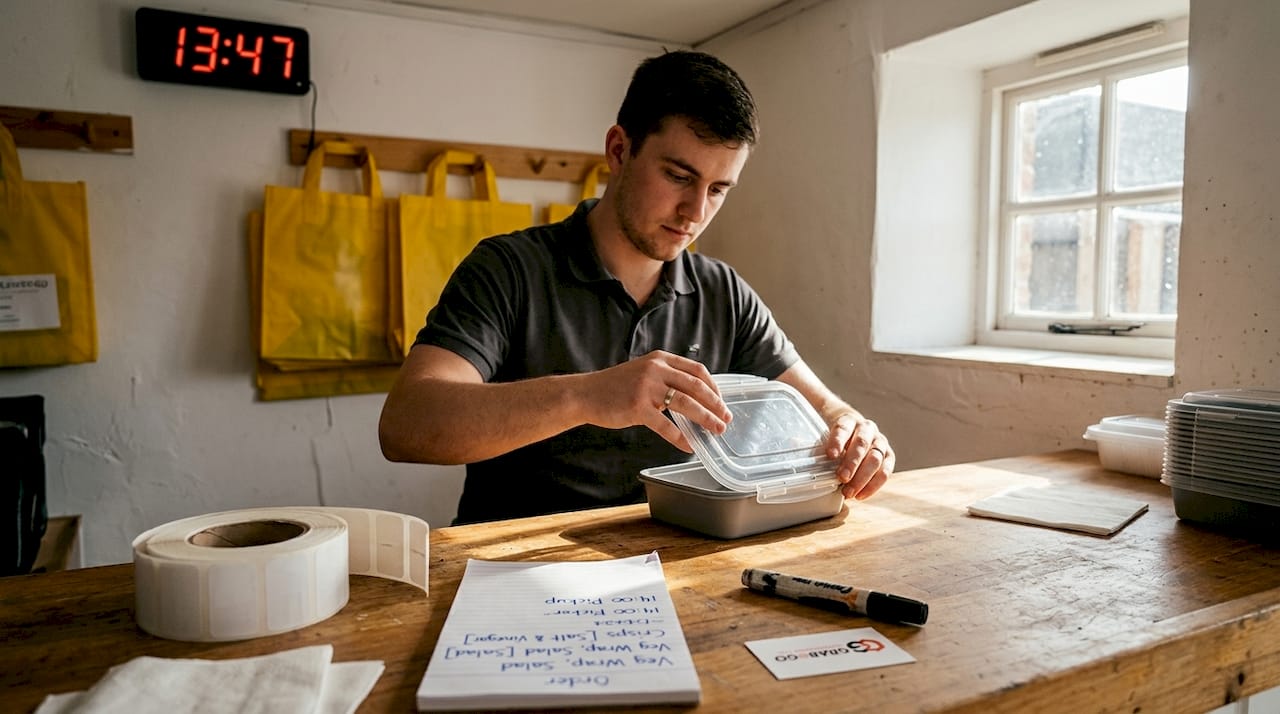
Adhesive seals offer versatility across container types. They’re cost-effective, easy to apply, and leave obvious residue when removed. The drawback is they can lose adhesion in humid or cold conditions, creating false positives.
Shrink bands provide excellent tamper evidence for bottles and jars. They must be cut or torn to access contents, leaving unmistakable proof of tampering. They’re ideal for retail display and bulk transport but require heat application equipment.
Tear strips integrate into packaging design, offering clean removal for customers whilst showing clear evidence of access. They work particularly well for takeaway containers and meal kits.
Tamper-evident labels combine branding opportunities with security. They can display your logo whilst providing the same protective function as plain seals.
| Packaging Type | Best Use Cases | Tamper Resistance | Cost | Sustainability |
|---|---|---|---|---|
| Mechanical locks | Delivery containers, reusable packaging | High | Medium to high | Good (reusable) |
| Adhesive seals | General purpose, varied containers | Medium | Low | Fair (single-use) |
| Shrink bands | Bottles, jars, retail display | High | Medium | Fair (recyclable) |
| Tear strips | Takeaway boxes, meal kits | Medium to high | Low to medium | Good (integrated) |
| Tamper labels | Branded packaging, premium items | Medium | Medium | Fair (single-use) |
Bulk versus small container handling and numbered seals for higher-risk cargos require different approaches. Large containers often need multiple seals or specialised locking mechanisms, whilst small containers can use simpler solutions.
Practical drawbacks exist for every option. False positives waste packaging and create customer confusion. Loss of seal integrity during handling undermines the entire purpose of tamper evident protection. Testing under realistic conditions before full implementation prevents these issues.
Emerging trends include recyclable materials that maintain tamper evidence and digital traceability systems that log seal status electronically. These innovations address sustainability concerns whilst enhancing security.
For selecting disposable containers, consider how tamper evident features integrate with your existing operations. The right choice balances security, cost, usability, and environmental impact. Understanding packaging materials helps you evaluate which tamper proof options work with your preferred container types.
Matching packaging type to food, transit risk, and handling environment starts with assessing your specific operation. A coffee shop delivering hot drinks faces different challenges than a caterer transporting cold buffet items.
Consider these factors when selecting tamper proof packaging:
Reviewing suppliers requires checking compliance statements and verifying certifications. Ask suppliers for documentation showing their packaging meets BRCGS or FSA guidelines. Request samples and test them under your actual operating conditions before committing to large orders.
Pro Tip: Create a simple checklist for staff to verify seal integrity before dispatch. Include visual checks for proper adhesion, correct placement, and absence of damage. This takes seconds per order but prevents costly mistakes.
Staff training should cover checking seals and reporting issues. Train team members to recognise what proper seals look like and what constitutes evidence of tampering. Equally important is teaching them how to apply seals correctly, ensuring consistent protection across all orders.
Common pitfalls include:
Continuous improvement comes from regular audits and customer feedback. Review rejected orders to identify patterns. If customers frequently report broken seals, investigate whether the packaging suits your handling process or if staff need additional training.
All tamper proof packaging must withstand reasonable handling without false positives or accidental breakage. This standard ensures packaging provides genuine security rather than creating operational headaches.
Listening to customer feedback reveals how well your tamper evident packaging performs in real-world conditions. Customers notice when seals are difficult to remove or when they fail to provide clear evidence of integrity. Their input helps you refine your approach.
For comprehensive guidance, review food packaging success tips and takeaway packaging tips. These resources provide additional context for implementing tamper proof solutions effectively.
Putting compliance and trust front and centre with your packaging doesn’t need to be complicated. Grab & Go Packaging specialises in helping UK food service businesses find tamper evident solutions that work in real operations, not just on paper.

Our range includes adhesive seals, tear-strip containers, shrink bands, and tamper-evident labels suitable for everything from coffee cups to meal kits. Each option comes with clear compliance information and practical guidance on application. We understand you need packaging that protects food integrity whilst fitting smoothly into your workflow.
Whether you’re launching a delivery service, upgrading existing packaging, or responding to regulatory requirements, we can help you choose solutions that match your specific needs. Our team provides expert advice on selecting packaging that balances security, cost, and sustainability.
Explore our food packaging materials guide for detailed comparisons of tamper evident options. If you’re looking to combine security with branding, our custom printed coffee cups demonstrate how tamper evident features integrate with professional presentation.
Whilst not every food item requires it, UK law and industry standards strongly favour tamper-evident packaging for takeaway and delivery, especially for vulnerable or unpackaged foods. The Food Safety Act 1990 and FSA expectations for visible safeguards make it a practical necessity for most operations.
Tamper proof aims to prevent any access, whilst tamper evident shows visible signs if access occurs. Both are used commonly in UK food service, with tamper evident being more practical for most applications because it balances security with ease of use.
Check compliance statements with suppliers and confirm packaging meets BRCGS or FSA guidelines for integrity, handling, and visual evidence. Request documentation showing the packaging has been tested to withstand reasonable handling without false positives.
Do not serve the contents, log the incident, and follow your business’s food safety protocols to investigate and report. Treat broken seals as potential contamination events until you’ve determined the cause and verified food safety.