
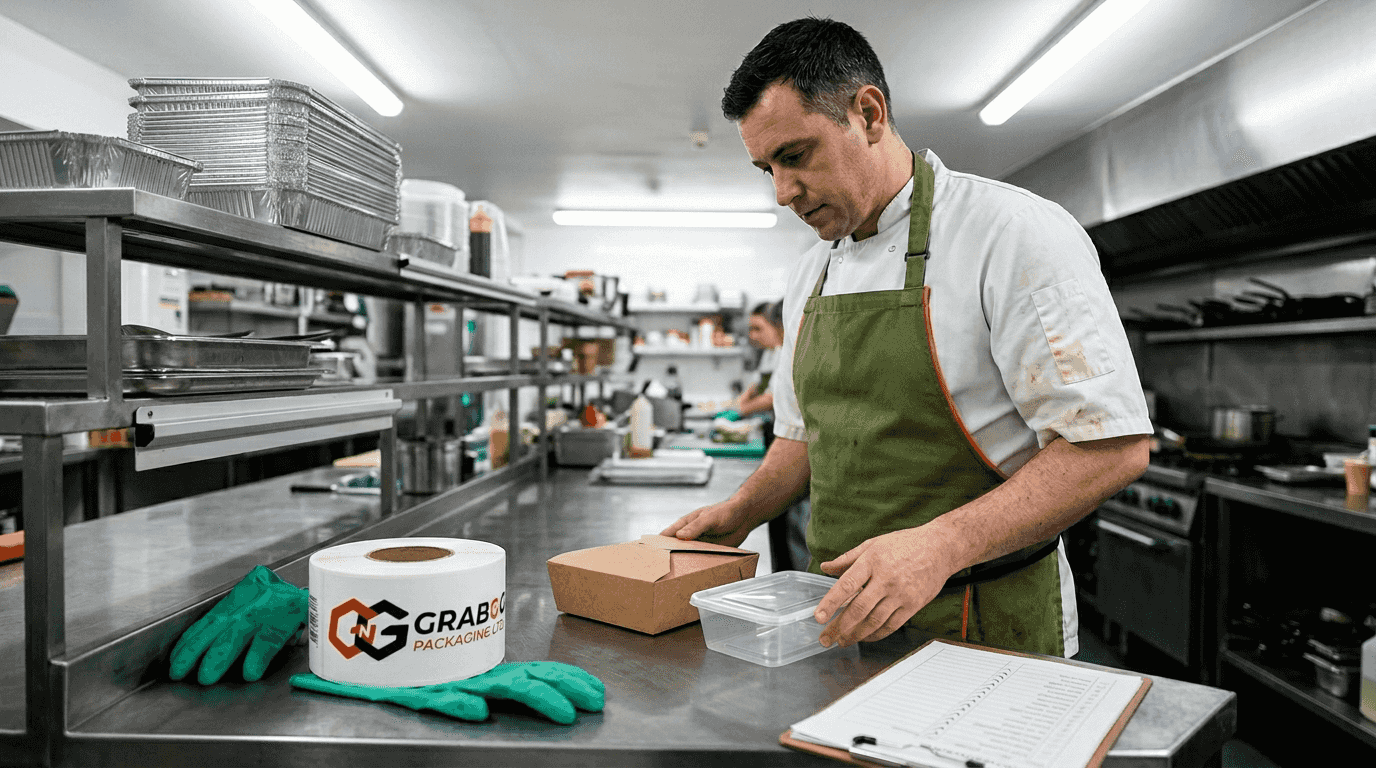
Choosing the right food packaging materials has become increasingly complex for UK food businesses in 2026. You’re juggling evolving regulations, sustainability demands, cost pressures, and the need to protect food quality whilst maintaining your brand identity. Extended producer responsibility rules now require proof of recycling and separate waste disposal fees, making compliance more critical than ever. This guide cuts through the confusion, providing clear, practical insights into materials, regulations, and sustainable innovations that help you make informed packaging decisions for your takeaway, restaurant, or catering operation.
| Point | Details |
|---|---|
| Paper and cardboard lead | These recyclable materials dominate UK food packaging for affordability and versatility |
| Custom printing builds brands | Printed packaging creates memorable customer experiences and strengthens brand recognition |
| EPR compliance is mandatory | UK businesses must prove recycling and pay disposal fees separately from October 2025 |
| Sustainable plastics evolve | SSPP Challenge innovations deliver over 1.5 million tonnes CO2 savings by 2030 |
| Strategic selection matters | Balancing functionality, compliance, sustainability, and cost optimises packaging performance |
Selecting appropriate packaging materials requires understanding how different options perform in real-world food service scenarios. Each material brings distinct advantages and limitations that directly impact food protection, customer experience, and operational efficiency.
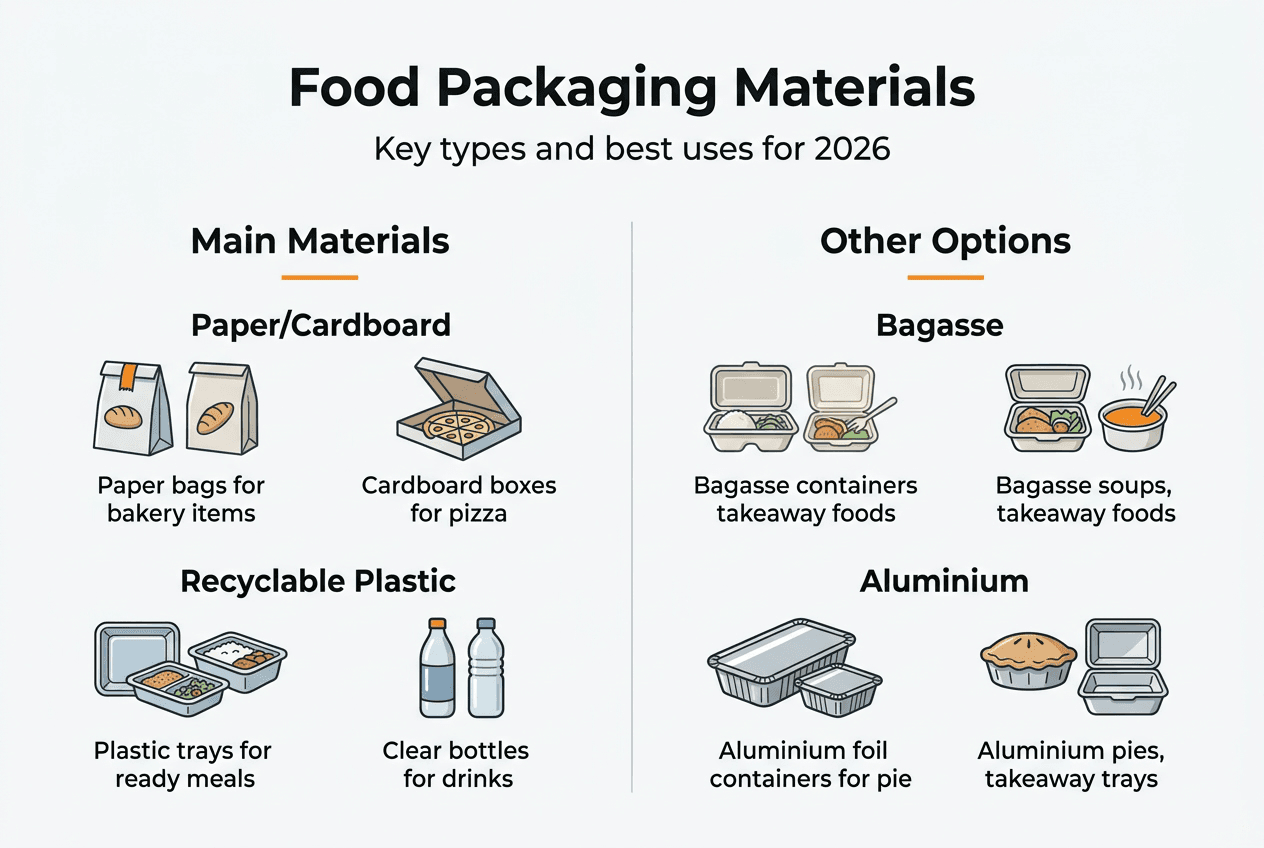
Paper and cardboard packaging are workhorses in the UK food industry due to their affordability, customizability, and protective qualities. These materials excel at absorbing grease, maintaining structural integrity during transport, and providing excellent surfaces for custom printing. You’ll find them in everything from fish and chips boxes to coffee cup sleeves, burger containers, and bakery bags.
Plastic packaging comes in multiple forms, each suited to specific applications. Recyclable plastics like PET and HDPE offer transparency for showcasing products whilst providing moisture barriers that paper cannot match. They’re ideal for salads, cold desserts, and fresh produce where visibility matters. However, choosing recyclable options has become essential as regulations tighten and customer expectations shift towards sustainability.
Metal containers, primarily aluminium, serve specialised roles where heat retention or barrier properties are paramount. Catering businesses use foil containers for hot meals requiring oven reheating or extended temperature maintenance. Bioplastics and bagasse products represent emerging alternatives, offering compostability for businesses committed to circular economy principles.
Common food packaging materials and applications:
| Material Type | Best Applications | Key Advantage | Consideration |
|---|---|---|---|
| Paper/Cardboard | Hot foods, dry goods | Recyclable, printable | Limited moisture barrier |
| Recyclable Plastic | Cold foods, liquids | Transparent, protective | Must meet EPR rules |
| Bagasse | Hot/cold meals | Compostable | Higher cost |
| Aluminium | Catering, reheating | Heat resistant | Not microwave safe |
Custom printed packaging transforms functional containers into marketing tools that reinforce your brand identity with every order. Your logo, colours, and messaging on packaging creates consistent touchpoints that customers remember long after finishing their meal.
Understanding why single use packaging remains prevalent helps you appreciate the hygiene and convenience factors driving material choices. Simultaneously, recognising how packaging impacts food quality ensures you select materials that preserve freshness, prevent contamination, and maintain temperature appropriately.
Pro Tip: Test packaging materials with your actual menu items before committing to bulk orders. Hot, greasy foods behave differently than cold salads, and real-world performance often differs from supplier specifications.
Following food packaging best practices ensures your material choices align with operational efficiency, regulatory compliance, and customer satisfaction simultaneously.
Regulatory compliance has shifted from optional best practice to mandatory requirement for UK food businesses. Understanding extended producer responsibility obligations prevents costly penalties whilst supporting environmental goals.
UK organisations that supply packaging must meet EPR regulations, providing recycling evidence and paying disposal fees. This applies whether you manufacture, import, or simply use packaging materials in your food service operations. The regulations create accountability throughout the supply chain, ensuring businesses contribute to recycling infrastructure costs.
The critical change effective from October 2025 requires organisations to pay waste disposal costs separately from recycling obligations. Previously, some businesses could offset obligations through recycling credits, but this separation eliminates such workarounds. You now prove recycling achievement for each specific material type without substitution between categories.
Key EPR compliance requirements:
No substitution between materials means you cannot use excess paper recycling credits to cover plastic shortfalls. Each material stream requires independent evidence and payment, forcing more precise tracking and procurement decisions.
“Compliance isn’t just about avoiding penalties. It’s about demonstrating environmental responsibility to customers who increasingly choose businesses aligned with their values. Meeting EPR requirements positions your brand as forward-thinking and accountable.”
Staying informed about evolving regulations protects your business from unexpected compliance gaps. The government regularly updates guidance, thresholds, and reporting requirements as the EPR system matures. Subscribe to official updates and consult with packaging suppliers who understand current obligations.
Implementing packaging strategies that reduce waste simultaneously improves compliance and operational efficiency. Less packaging means lower EPR fees, reduced procurement costs, and enhanced sustainability credentials.
Recognising why eco-friendly packaging matters for customer perception helps you view compliance as opportunity rather than burden. Customers notice businesses making genuine environmental efforts, translating regulatory requirements into competitive advantages.
Pro Tip: Work with packaging suppliers who provide EPR compliance documentation and recycling evidence as standard. This simplifies your record-keeping and ensures materials meet regulatory standards before they reach your premises.
Sustainable packaging innovation accelerates rapidly, offering solutions that satisfy regulatory requirements whilst delivering environmental benefits beyond basic compliance. Understanding these developments helps you make forward-looking material choices.
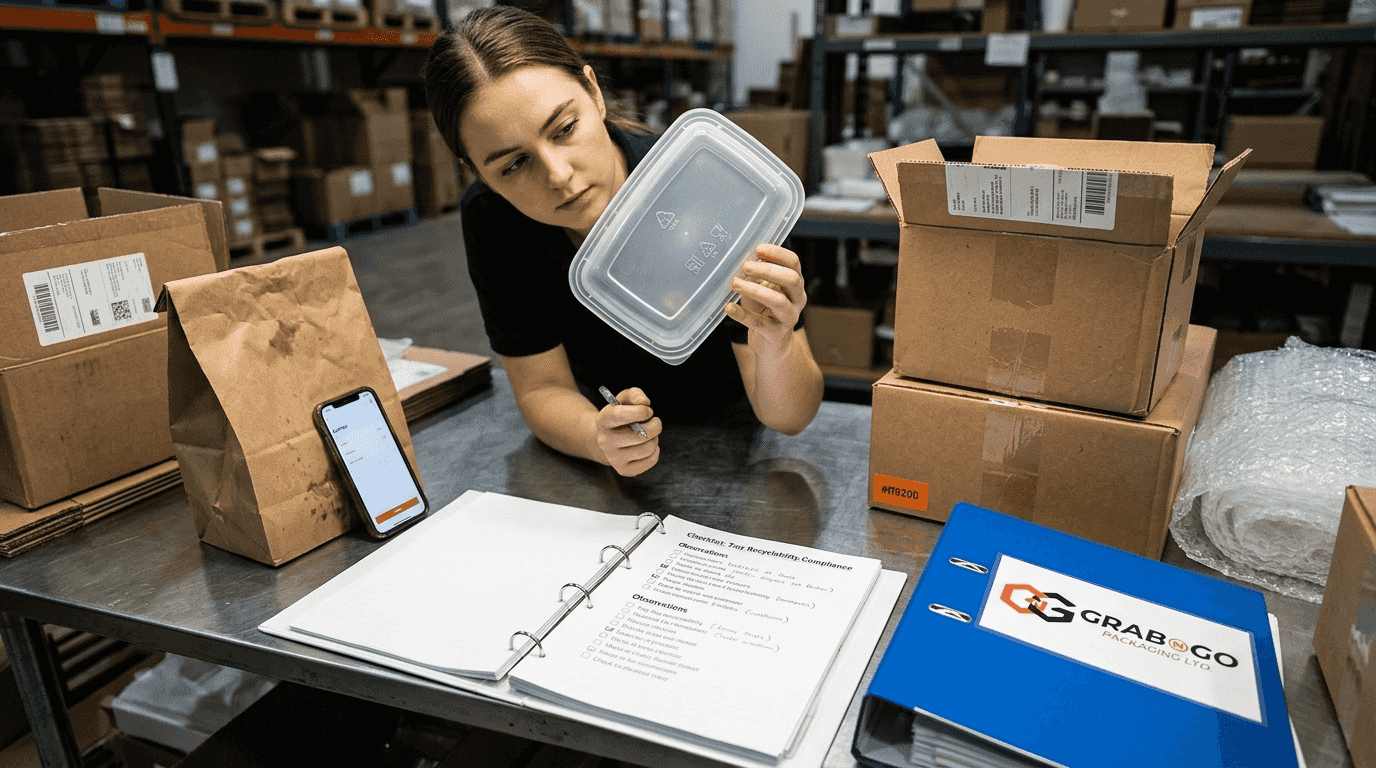
The Smart Sustainable Plastic Packaging Challenge represents the UK’s most ambitious packaging innovation programme, driving development of recyclable, reusable, and compostable alternatives to conventional plastics. Projects deliver CO2 savings exceeding 1.5 million tonnes between 2025 and 2030, demonstrating substantial environmental impact at scale.
The SSPP Challenge leveraged funding totalling £60 million alongside over £274 million in co-investment, creating unprecedented collaboration between businesses, researchers, and environmental organisations. This investment accelerates technologies that would otherwise require decades to reach commercial viability.
Steps to adopt sustainable plastic innovations:
Choosing recyclable plastic alternatives aligns your business with regulatory direction whilst meeting customer expectations for environmental responsibility. These materials maintain the protective properties and versatility that make plastic valuable whilst eliminating end-of-life disposal challenges.
Adopting innovations early provides competitive differentiation before they become industry standard. Customers increasingly seek businesses demonstrating genuine sustainability commitments beyond minimum compliance. Being among the first in your area to adopt advanced materials creates positive brand associations and customer loyalty.
Exploring sustainable packaging for catering reveals practical options that balance environmental performance with operational requirements specific to high-volume food service.
Understanding eco-friendly packaging benefits for cafés demonstrates how sustainability investments translate into customer preference and repeat business.
Pro Tip: Document your sustainability journey through social media and in-store messaging. Customers appreciate transparency about why you’ve chosen specific materials and the environmental benefits they deliver. This builds trust and justifies any price premiums sustainable packaging might require.
Translating packaging knowledge into actionable decisions requires systematic evaluation of your specific needs, constraints, and opportunities. Following a structured selection process ensures optimal outcomes.
Evaluating food type forms the foundation of packaging selection. Hot, greasy items like fried chicken require grease-resistant materials that maintain structural integrity when saturated. Cold salads need moisture barriers preventing wilting whilst allowing visibility. Baked goods benefit from breathable materials preventing sogginess whilst protecting from contamination.
Service method significantly influences material requirements. Delivery packaging must withstand extended transport times and potential stacking, requiring sturdier construction than dine-in containers. Catering operations need packaging that maintains presentation during setup whilst facilitating easy serving. Takeaway packaging balances portability with insulation and leak prevention.
Storage requirements affect material choices differently than immediate service needs. Packaging for refrigerated display requires condensation resistance and temperature stability. Items held in warming cabinets need heat tolerance without releasing odours or degrading. Understanding your complete packaging lifecycle from kitchen to customer ensures materials perform throughout.
Packaging selection criteria comparison:
| Criterion | Paper/Cardboard | Recyclable Plastic | Bagasse | Aluminium |
|---|---|---|---|---|
| Cost | Low to moderate | Moderate | Moderate to high | Moderate |
| Recyclability | Excellent | Good (if clean) | Compostable | Excellent |
| Custom printing | Excellent | Limited | Moderate | Limited |
| Grease resistance | Variable | Excellent | Good | Excellent |
| Temperature range | Moderate | Low to moderate | High | Very high |
| Customer perception | Positive | Improving | Very positive | Neutral |
Custom printed packaging enhances recognition and creates memorable experiences that distinguish your business from competitors using generic containers. Your packaging becomes a silent salesperson, reinforcing brand values with every interaction.
Balancing cost, quality, and environmental impact requires viewing packaging as investment rather than expense. Cheaper materials that fail during service create waste, damage reputation, and lose customers. Slightly higher upfront costs for reliable, sustainable packaging often deliver better total value through reduced waste, enhanced brand perception, and regulatory compliance.
Systematic packaging implementation process:
Learning how to customise packaging for your specific brand identity transforms functional necessity into marketing opportunity that pays dividends through enhanced recognition.
Exploring custom packaging ideas specific to cafés and restaurants provides inspiration for creating distinctive packaging that customers remember and share on social media.
Recognising printed packaging benefits helps justify investment in custom materials that elevate your brand above competitors using generic options.
Pro Tip: Create a packaging decision matrix scoring each option against your weighted criteria including cost, sustainability, functionality, and brand impact. This objective approach prevents emotional decisions and ensures selections align with business priorities.
Finding packaging that satisfies regulatory requirements, sustainability goals, and budget constraints whilst supporting your brand identity requires suppliers who understand food service realities. Grab & Go Packaging specialises in providing UK food businesses with compliant, versatile materials designed for real-world performance.

Our extensive range includes everything from classic fish and chips boxes to innovative bagasse containers, all selected for quality and regulatory compliance. Whether you need greaseproof papers, custom printed coffee cups, or complete takeaway packaging systems, you’ll find solutions matching your specific requirements. We understand the challenges you face balancing cost, quality, and environmental responsibility.
Explore our complete product range to discover materials suited to your menu and service style. Customisation options transform standard packaging into branded experiences that customers remember. Our straightforward checkout process makes ordering simple whether you need small quantities for testing or bulk orders for ongoing operations.
Paper and cardboard excel for most takeaway applications due to affordability, recyclability, and excellent custom printing capabilities. They handle hot, greasy foods effectively whilst meeting customer sustainability expectations. Recyclable plastics work well for cold items requiring visibility and moisture barriers.
Businesses must prove recycling achievement and pay waste disposal fees separately for each packaging material type under EPR rules effective from October 2025. You cannot substitute recycling credits between materials, requiring precise tracking and procurement. Non-compliance risks penalties and reputational damage.
Yes, custom printed packaging creates memorable customer experiences that strengthen brand identity and differentiate your business from competitors. Your packaging becomes a marketing tool that reinforces your values and quality standards with every order. Customers often share distinctive packaging on social media, extending your reach organically.
SSPP Challenge innovations offer recyclable plastics delivering over 1.5 million tonnes CO2 savings by 2030 whilst maintaining performance standards. Bagasse products provide compostable alternatives for businesses committed to circular economy principles. These materials align with regulatory direction and customer expectations for environmental responsibility.
Assess your food types, service methods, and storage requirements systematically before selecting materials. Balance cost against quality, sustainability, and compliance needs using objective criteria. Test materials with actual menu items under real service conditions before committing to bulk orders, ensuring performance matches specifications.