
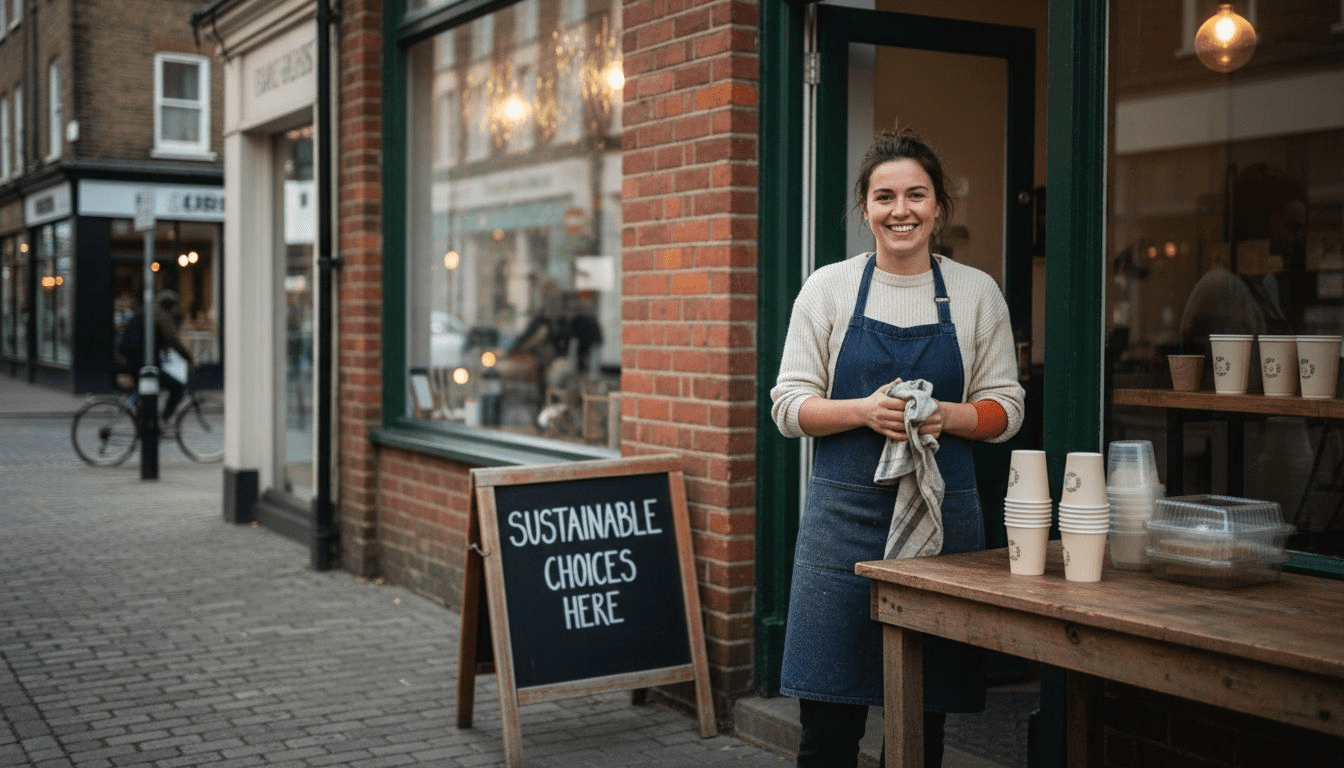
Choosing packaging that truly supports the environment can feel daunting for café and restaurant owners in the United Kingdom. With regulations tightening and consumer expectations rising, finding genuine eco-friendly solutions matters more than ever. This guide clears up misconceptions and outlines practical steps, helping you take informed action to boost your brand with sustainable packaging. Embrace environmentally sustainable packaging and discover how simple changes can yield lasting business benefits.
| Point | Details |
|---|---|
| Eco-friendly Packaging Priorities | Focus on minimising carbon footprint, reducing waste, and utilising sustainable materials. |
| Consumer Education is Essential | Businesses need to actively inform consumers about sustainable packaging to bridge knowledge gaps. |
| Compliance with Legal Standards | UK cafés must prepare for 2026 regulations on recyclability and waste reduction, shifting to comprehensive waste management. |
| Authentic Sustainability is Key | Avoid greenwashing by ensuring transparency and genuine commitment to sustainable practices while assessing material impacts. |
Eco-friendly packaging represents a strategic approach to minimising environmental impact through sustainable material selection and waste reduction. Unlike traditional packaging solutions, these alternatives prioritise minimising carbon footprint, reducing waste, and supporting circular economy principles.
The UK government defines environmentally sustainable packaging through specific criteria, emphasising materials and processes that prevent packaging waste. Key characteristics of eco-friendly packaging include:
Consumer understanding remains crucial in this ecosystem. Recent academic research highlights significant gaps in public knowledge about sustainable packaging, suggesting that businesses must play an active role in consumer education.
Challenging Common Misconceptions
Many café owners mistakenly believe eco-friendly packaging is prohibitively expensive or compromises product quality. However, consumer perception studies demonstrate that customers increasingly value sustainable practices and are willing to support businesses making genuine environmental commitments.
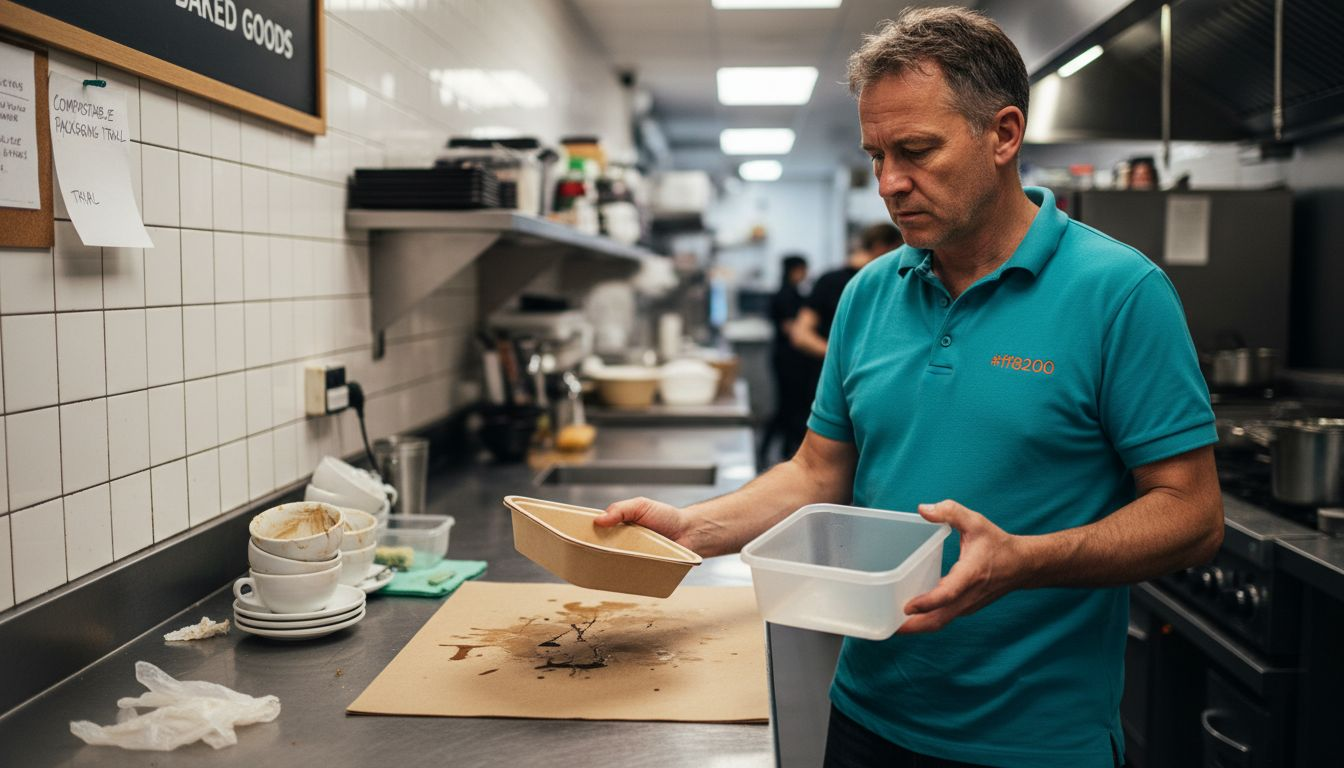
Pro Tip: Invest in transparent communication about your packaging choices to build customer trust and differentiate your café’s brand.
Sustainable packaging for food service environments requires a nuanced understanding of materials that balance environmental responsibility with practical performance. Selecting sustainable packaging materials involves carefully evaluating multiple critical factors beyond simple waste reduction.
The most prevalent eco-friendly packaging types for UK cafés include:
Modern food service packaging must meet stringent performance requirements while minimising ecological footprint. Sustainable food sector materials typically provide essential functions such as:
To clarify the distinctions among popular sustainable packaging options for UK cafés, see this comparison:
| Packaging Type | Environmental Impact | Suitable Food Uses | End-of-Life Disposal |
|---|---|---|---|
| Biodegradable Plastics | Reduces landfill waste | Cold drinks, snacks | Industrial composting required |
| Compostable Containers | Minimal ecological footprint | Hot food, salads | Home or facility composting |
| Recycled Paper Products | Low production emissions | Bakery items, sandwiches | Kerbside recycling |
| Recyclable Plastic Alt. | Supports circular economy | Salads, desserts | Standard recycling facilities |
Material Selection Considerations
Café owners should evaluate packaging solutions across multiple dimensions, including recyclability, production energy, transportation emissions, and end-of-life disposal potential. The goal extends beyond simple waste reduction to creating a holistic sustainable approach.
Effective packaging balances environmental responsibility with practical business needs.
Pro Tip: Request sample packaging from multiple suppliers to test performance, durability, and customer perception before making a final commitment.
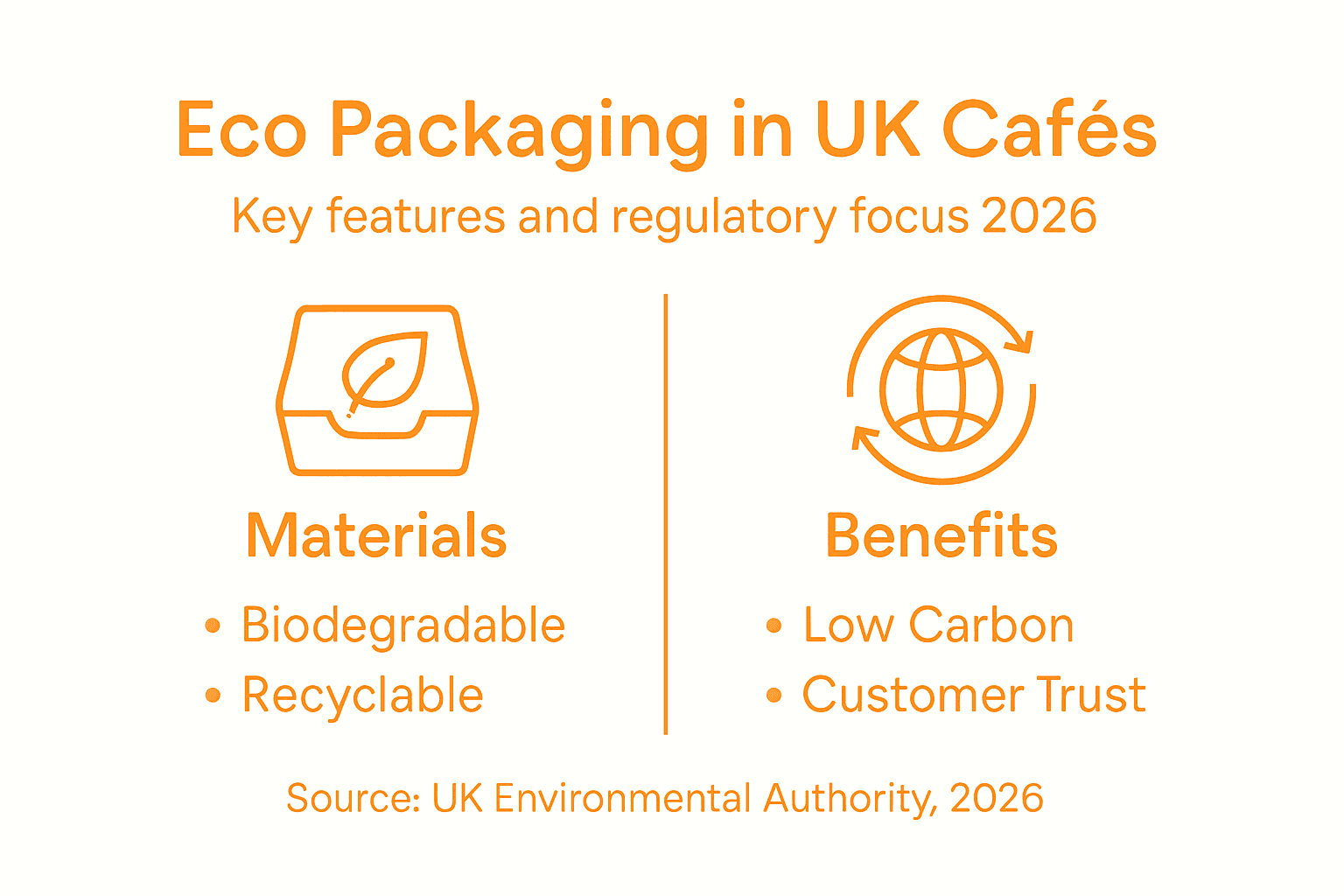
Navigating the evolving landscape of packaging regulations requires UK cafés to stay informed about upcoming legal requirements. Extended Producer Responsibility framework introduces comprehensive changes that will fundamentally transform packaging compliance strategies for food service businesses.
Key legal standards for packaging in 2026 will focus on several critical areas:
The regulatory landscape demands proactive adaptation from café owners. Businesses must demonstrate:
Compliance is no longer optional – it’s a fundamental business requirement.
UK regulatory bodies are implementing increasingly stringent measures to drive circular economy principles. Café owners must invest in understanding these evolving standards to ensure continued operational legitimacy and avoid potential financial penalties.
Pro Tip: Consult with a specialised environmental compliance consultant to develop a comprehensive packaging strategy that anticipates future regulatory changes.
Sustainable packaging offers far more than environmental advantages for UK cafés, presenting strategic business opportunities that directly impact bottom-line performance. Sustainable packaging research reveals multiple compelling business benefits that extend well beyond ecological considerations.
Key business advantages of eco-friendly packaging include:
Financial and Strategic Impacts
Businesses adopting sustainable packaging strategies can expect significant competitive advantages. Consumer purchase intentions demonstrate that eco-friendly initiatives directly correlate with increased customer engagement and potential sales growth.
Additional strategic benefits include:
Sustainable packaging is not an expense, but an investment in future business resilience.
Pro Tip: Develop a transparent communication strategy that highlights your packaging sustainability efforts to maximise customer perception and competitive advantage.
Here is a summary of strategic business benefits gained by adopting eco-friendly packaging:
| Benefit | Business Outcome | Customer Perception |
|---|---|---|
| Enhanced Brand Reputation | Increased trust and loyalty | Seen as responsible and modern |
| Cost Reduction | Lower waste costs | Value alignment |
| Market Differentiation | Unique selling proposition | Preference for sustainability |
| Investor Appeal | Strong CSR profile | Future-oriented business |
Transitioning to sustainable packaging requires strategic navigation of complex challenges. Sustainable packaging implementation reveals multiple potential obstacles that UK cafés must proactively address to ensure genuine environmental impact.
Common pitfalls in sustainable packaging include:
Key areas requiring careful consideration:
Strategic Mitigation Approaches
Sustainable packaging challenges demonstrate that successful implementation requires nuanced understanding beyond surface-level solutions. Café owners must develop robust strategies that address multiple dimensions of sustainable packaging.
Authentic sustainability demands continuous learning and adaptation.
Pro Tip: Develop a transparent audit process that regularly reassesses your packaging choices against emerging environmental standards and technologies.
UK cafés face increasing pressure to adopt eco-friendly packaging that meets legal standards and customer expectations without compromising quality or cost. With challenges like choosing truly biodegradable materials, ensuring recyclability, and avoiding common pitfalls such as greenwashing, making the right packaging decision can feel overwhelming. Grab & Go Packaging understands these concerns and offers a comprehensive range of sustainable food packaging options designed to help cafés reduce their environmental impact while maintaining product integrity.
Discover our selection of compostable containers, recyclable alternatives, and biodegradable plastics that align perfectly with the evolving UK regulations. By partnering with Uncategorized – Grab & Go Packaging, you gain access to competitively priced, reliable packaging supplies with the added benefit of expert guidance to navigate compliance and enhance your brand reputation. Take action today for a greener tomorrow by visiting Grab & Go Packaging and transforming your packaging strategy with eco-conscious choices.
Eco-friendly packaging refers to materials and designs that minimise environmental impact, prioritising sustainability, waste reduction, and carbon footprint minimisation.
Using sustainable packaging can enhance brand reputation, attract environmentally conscious customers, reduce waste management costs, and provide a competitive edge in the food service industry.
Common materials include biodegradable plastics, compostable containers, recycled paper products, and recyclable plastic alternatives, each offering differing environmental benefits.
Cafés can avoid greenwashing by ensuring transparency in their packaging claims, conducting thorough material assessments, and educating consumers on proper disposal and recycling methods.