
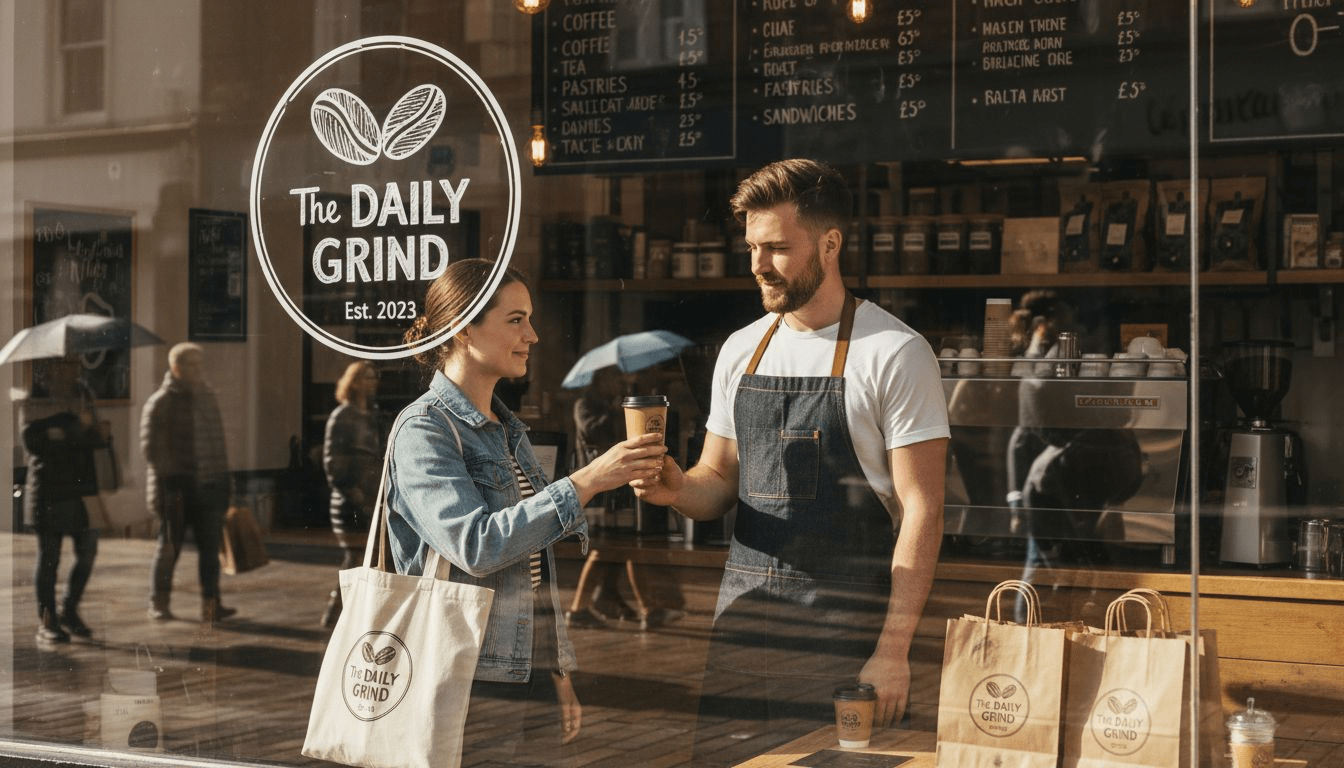
Standing out as a café in the UK is about more than serving great coffee. Customised packaging has become a bold way to shape customer perceptions and improve delivery operations, whether you run a busy London shop or a family café in Manchester. Meeting UK food safety standards and choosing materials that reinforce your brand story could turn every takeaway order into a powerful marketing moment. Discover how thoughtful packaging choices can protect your products and build lasting customer loyalty.
| Point | Details |
|---|---|
| Importance of Customisation | Custom packaging not only reflects your brand but also ensures compliance with food safety regulations, protecting both your product and reputation. |
| Material Selection Matters | Choosing the right packaging materials can enhance customer perception and sustainability, making it crucial for operational success. |
| Cost and Compliance Awareness | Understanding the financial implications and regulatory requirements of custom packaging is vital to avoid unexpected expenses and ensure compliance. |
| Enhancing Customer Experience | Well-designed packaging improves brand recognition and customer satisfaction, potentially driving repeat business and loyalty. |
Packaging customisation in food service goes far beyond slapping your café logo on a cup. It’s about creating a deliberate system that protects your products, communicates your brand values, and operates efficiently within the real constraints of your business. For UK cafés, this means understanding how food contact packaging materials intersect with branding, logistics, and customer expectations.
When you customise packaging for your café, you’re solving multiple problems simultaneously. Your packaging must be suitable for food contact and comply with UK food safety legislation, protecting everything from hot beverages to fresh pastries during storage and delivery. At the same time, that packaging becomes a silent ambassador for your brand every time a customer carries your takeaway coffee down the street or receives a delivery order at their door. Consider what happens when a customer opens a delivery box from your café. The packaging quality, printed design, and thoughtful touches communicate whether you’re a premium operation or cutting corners. This is why customisation matters. A generic white box tells one story; custom branded packaging with your café’s colours and messaging tells quite another.
The practical side of customisation involves selecting materials that work for your specific menu items. A cold brew coffee needs different protective properties than a warm croissant. Custom insulated cups keep drinks at the right temperature whilst branded boxes for pastries protect freshness and allow for clear labelling of ingredients and allergens. Many UK cafés overlook how customisation actually simplifies their operations. Branded packaging reduces confusion during busy periods, makes your products instantly recognisable to delivery customers, and builds consistency across all touchpoints. When everything is customised to your specifications, staff grab the right packaging instinctively, reducing errors and waste.
Compliance deserves special attention here. Food businesses must keep declarations of compliance from packaging suppliers, and your customised materials must meet these legal requirements. This isn’t optional. Before ordering custom printed cups, boxes, or containers, verify that your supplier has confirmed compliance documentation for food contact safety. This step protects both your customers and your business from liability.
Pro tip: Start your customisation journey by auditing your current packaging waste and failures. Identify which items get damaged, which cause customer complaints, and which don’t reinforce your brand, then use those insights to guide your customisation choices rather than designing for aesthetics alone.
UK cafés have access to a diverse range of packaging solutions that go well beyond the basic brown box or plain paper cup. The UK foodservice packaging industry supplies everything from disposable cups and containers to specialist trays and bags, each designed for specific purposes in take-away, eat-in, and delivery operations. Understanding what’s available helps you match the right packaging to your actual business needs rather than defaulting to whatever your competitor uses.
The material choices fall into several categories. Paper and cardboard packaging remains the workhorse of the industry, suitable for hot and cold items alike. You’ll find custom printed coffee cups, takeaway boxes for pastries and sandwiches, and structured trays that hold everything from cakes to salads without collapsing during delivery. Plastic containers offer transparency so customers can see what they’re buying, making them popular for smoothie bowls and prepared salads. Biodegradable and compostable materials are growing rapidly in UK cafés, with sustainable packaging solutions including compostable films and innovative alternatives that reduce environmental impact without compromising functionality. The choice of material directly affects how customers perceive your brand and your café’s environmental commitment.
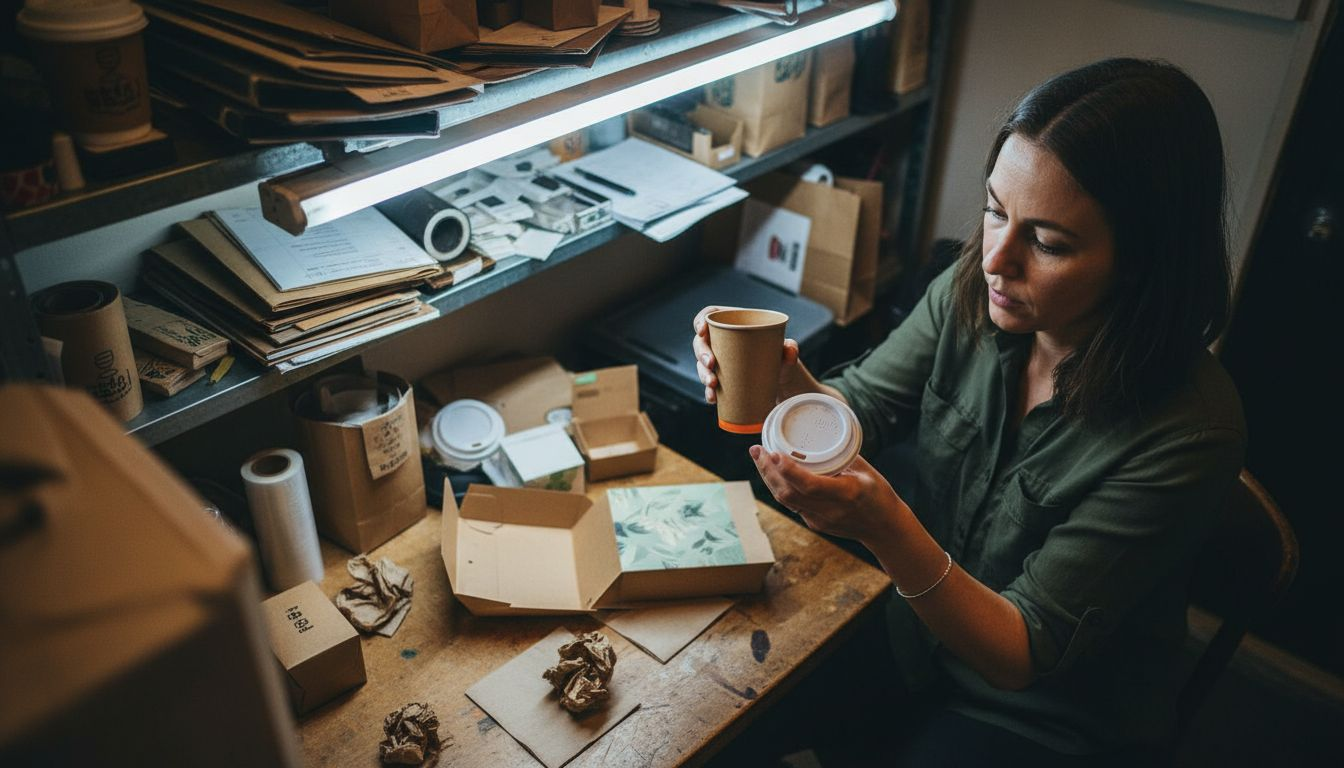
Beyond materials, packaging types break down by function. Thermal cups with custom printing keep hot drinks at the right temperature whilst displaying your branding prominently. Rigid boxes protect delicate items during delivery and stack neatly on shelves. Kraft paper bags work brilliantly for grab-and-go items and create a premium feel at minimal cost. Insulated packaging deserves special mention for UK cafés managing delivery orders, as temperature control during transit directly impacts customer satisfaction. Many cafés overlook how packaging solutions developed for take-away and delivery services actually solve operational problems. The right packaging fits your workflow, reduces waste during service, and makes stock management simpler because you’re not juggling five different box sizes.
When selecting from available solutions, consider your delivery volume, storage space, and menu diversity. A café serving mostly hot beverages might focus heavily on customised cup investment. One handling substantial delivery orders might prioritise insulated boxes and temperature-control solutions. The most successful UK cafés treat packaging selection as a strategic decision rather than a cost item to minimise.
Here is a comparison of common packaging materials used by UK cafés and their business implications:
| Material Type | Strengths | Limitations | Environmental Impact |
|---|---|---|---|
| Paper/Cardboard | Customisable, cost-effective, recyclable | Not waterproof, limited insulation | Widely recyclable, renewable source |
| Plastic | Clear visibility, lightweight, durable | Not biodegradable, image concerns | Long lifespan, recycling varies |
| Compostable/Bio | Eco-friendly, aligns with regulations | Higher cost, limited shelf life | Breaks down with proper processing |
| Insulated Packaging | Maintains food temperature, premium feel | Bulky to store, costly | Depends on material composition |
Pro tip: Request samples from your packaging supplier in your actual serving sizes and materials before committing to large orders, then test them through a real service shift to identify practical issues that don’t appear in product catalogues.
Your packaging is working for or against your brand identity every single second it exists in the world. When a customer carries your coffee cup down the street, receives a delivery box at their door, or stores leftovers in your branded container, that packaging communicates who you are as a business. Strong branding through customised packaging enhances consumer experience by creating familiarity and trust that goes beyond the actual product inside. This isn’t marketing fluff. Research shows that packaging reflecting your brand values and delivering consistent quality experiences directly improves customer loyalty and drives repeat visits in a competitive café market.
Think about what happens psychologically when a customer receives your order. They see your colours, your logo, maybe a message that reflects your café’s personality. If everything looks cohesive and intentional, they feel they’ve made a smart choice. If the packaging looks generic or mismatched, they question whether the café itself is disorganised. Customised packaging creates an unboxing moment that either reinforces positive feelings or undermines them. Some of the most successful UK cafés are moving beyond traditional packaging design entirely. Innovative packaging designs like disruptive styles help smaller food and beverage brands stand out and create memorable experiences that customers want to share on social media. A thoughtfully designed, slightly unexpected packaging approach generates word-of-mouth marketing that generic solutions simply cannot achieve.
Customisation also affects how customers interact with your brand beyond the initial purchase. A well-designed branded container makes your café visible in people’s homes or offices. Someone storing their favourite pastry in your branded box becomes a micro-advertiser every time they reach for it. Alternatively, customers might feel hesitant to keep or display cheap-looking packaging, meaning your brand disappears the moment they leave your shop. The emotional connection created through effective packaging customisation is crucial for differentiation, especially in UK markets where dozens of cafés might operate within walking distance of each other. Your packaging either tells customers why they should choose you again or it blends into the background alongside every other generic option.
The customer experience extends to practical moments as well. A cup that actually keeps drinks hot, a box that doesn’t fall apart during delivery, containers that seal properly all communicate care and professionalism. These aren’t separate from branding. They are branding. Every functional detail is a brand promise being kept or broken.
Pro tip: Ask recent customers what they notice most about your packaging and whether it feels consistent with your café’s overall vibe, then use that feedback to refine your customisation strategy rather than guessing what works based on competitor analysis alone.
Sustainability in café operations is no longer optional or a marketing angle. The UK hospitality industry has committed to serious environmental goals, and your packaging choices directly impact whether your café meets those standards. The industry commitment includes eliminating unnecessary single-use packaging by 2025 whilst reducing food waste and environmental footprint. This isn’t distant future planning. If you’re running a café in 2024, your packaging decisions today will determine whether you’re compliant or scrambling to overhaul your entire system in twelve months. Customised packaging actually gives you a strategic advantage here because you can design solutions that eliminate waste from the start rather than retrofitting generic packaging into a sustainable approach.
The material choices matter far more than many café owners realise. Recyclable, compostable, and biodegradable materials aren’t premium add-ons anymore. They’re becoming baseline expectations. Customers increasingly expect your business to align with their environmental values, and packaging is the most visible proof point of that commitment. When someone receives a coffee in a compostable cup with your branding, they perceive your café as environmentally responsible. When they carry a plastic cup, they question whether you actually care. Beyond customer perception, sustainable packaging solutions that limit waste directly align with consumer expectations and evolving regulatory frameworks for foodservice sustainability. You’re not just making customers happy. You’re staying ahead of regulations that will become mandatory regardless.
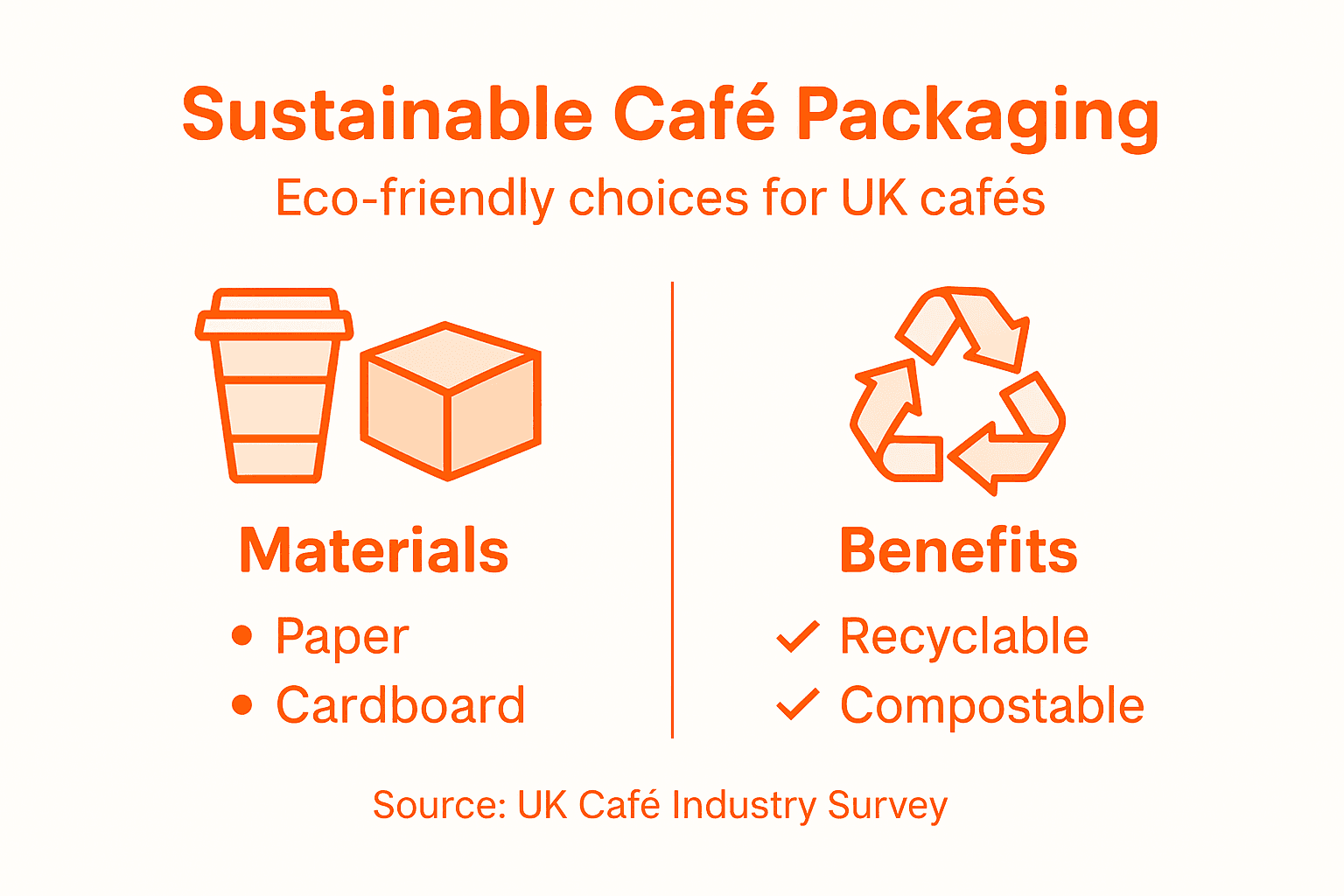
The practical side involves material selection and minimisation. You might customise packaging to be slightly smaller where it still functions, reducing material per unit. You might switch from plastic to compostable alternatives for specific items. Some cafés use customisation to eliminate packaging entirely for eat-in customers, then introduce it only for takeaway and delivery. This targeted approach costs less than overhauling everything simultaneously. Your suppliers should be able to document their environmental credentials, certifications, and compliance with regulations. Asking for this documentation isn’t bureaucratic hassle. It’s due diligence that protects your business from liability and supports your marketing narrative.
Customisation also allows you to communicate your sustainability story directly on packaging. A printed message about compostable materials or carbon-neutral sourcing educates customers and reinforces brand values. This communication is free marketing that turns packaging into an educational tool rather than just a container.
Pro tip: Start by auditing which packaging items you use in highest volume and which generate the most customer complaints about waste, then prioritise sustainable customisation in those areas first rather than overhauling everything at once.
Customising your packaging sounds brilliant until you start calculating the actual costs. The investment breaks down into several areas, and understanding each one prevents nasty surprises when invoices arrive. Setup costs include design fees, minimum order quantities, and printing plates. Unit costs vary dramatically based on material choice, customisation complexity, and order volume. A café ordering 500 custom cups pays significantly more per unit than one ordering 5,000. The key is determining at what volume your break-even point sits and whether your sales justify that minimum order. Many café owners underestimate how long custom inventory takes to shift. A 2,000-cup order sounds reasonable until you realise you’re still using them six months later because sales were slower than projected.
Compliance costs deserve serious attention because they’re non-negotiable. If you supply packaged food or drinks, you’re subject to UK packaging regulations that carry real financial obligations. Producer responsibility obligations require registration and reporting of packaging data, alongside fees and recycling duties. The exact costs depend on your business size and packaging volume, but these aren’t optional expenses you can negotiate away. You must budget for registration fees, compliance reporting costs, and potentially fees for waste disposal or recycling participation. Some café owners discover these obligations only after ordering packaging, then realise their custom solution doesn’t meet legal requirements. That’s an expensive lesson. Before customising anything, confirm your obligations with your packaging supplier and account for those costs in your decision-making.
Extended producer responsibility for packaging requires balancing sustainability, regulatory compliance, and operational practicality. Your delivery logistics also influence packaging choices. Temperature sensitive items require insulated custom boxes that cost more than standard cardboard. Frequent delivery orders might justify investing in reusable containers rather than disposables, shifting your cost model entirely. Storage space limitations mean you can’t hold excessive inventory of multiple custom packaging sizes. The café operating from a tiny kitchen has different packaging constraints than one with dedicated storage areas.
Start by mapping your actual volume. How many cups do you genuinely use weekly? Monthly? What’s your delivery percentage versus walk-in orders? Calculate the real costs per unit at your likely order volumes, then add compliance costs and storage considerations. Only then does the financial picture clarify. A £2,000 investment in custom packaging only makes sense if you’re selling enough units to justify it within a reasonable timeframe.
The following summary illustrates the financial factors and compliance steps for custom café packaging:
| Factor | What to Consider | Business Impact |
|---|---|---|
| Design/Setup Costs | Artwork, plates, minimum orders | Higher initial outlay; branding benefit |
| Unit Pricing | Order volume, material type | Lower price per unit for large orders |
| Compliance Expenses | Registration, recycling fees | Mandatory, ongoing, non-negotiable |
| Storage Requirements | Available space, order forecasting | Limits variety; affects cash flow |
| Delivery Adaptations | Insulation, durability, reusability | Can increase expenses per order |
Pro tip: Request quotes from your packaging supplier that include compliance documentation and total cost of ownership over one year, including storage and any regulatory fees, rather than comparing unit prices alone.
UK cafés face critical challenges when it comes to packaging customisation. From ensuring full compliance with food contact regulations to enhancing your brand identity and meeting growing sustainability expectations your packaging needs to be more than just functional. It must protect your products maintain temperature deliver a memorable customer experience and visibly reflect your café’s values. These concerns can feel overwhelming especially when balancing costs storage and operational efficiency.
GrabngoPackaging offers a comprehensive range of bespoke and standard packaging materials designed specifically for food service businesses like yours. Whether you need custom printed coffee cups durable insulated boxes or eco-friendly compostable containers you can find reliable solutions that solve these exact pain points. Our platform simplifies bulk ordering with clear pricing and product details so you spend less time managing suppliers and more time focusing on your customers.
Discover how tailored packaging can transform your café’s customer experience and streamline your compliance efforts.
Don’t wait until packaging issues impact your brand reputation or compliance status order now from GrabngoPackaging and start delivering exceptional branded packaging that works as hard as you do
Customisation enhances brand visibility, improves customer experience, and ensures compliance with food safety regulations. It also helps differentiate a café in a competitive market by reinforcing brand values through thoughtful packaging design.
The choice of packaging material is crucial for food safety, as it must be suitable for food contact, resist damage during delivery, and comply with UK regulations. Materials such as paper, plastic, and biodegradable options each have unique properties that impact freshness and safety.
Compliance documentation from packaging suppliers is necessary to ensure that the materials used meet legal health and safety standards. This protects both the business and customers from potential liabilities associated with unsafe packaging practices.
Sustainable packaging aligns with the growing consumer preference for environmentally responsible choices. Using recyclable or compostable materials can enhance a café’s image as eco-friendly, improving customer loyalty and attracting environmentally conscious consumers.