
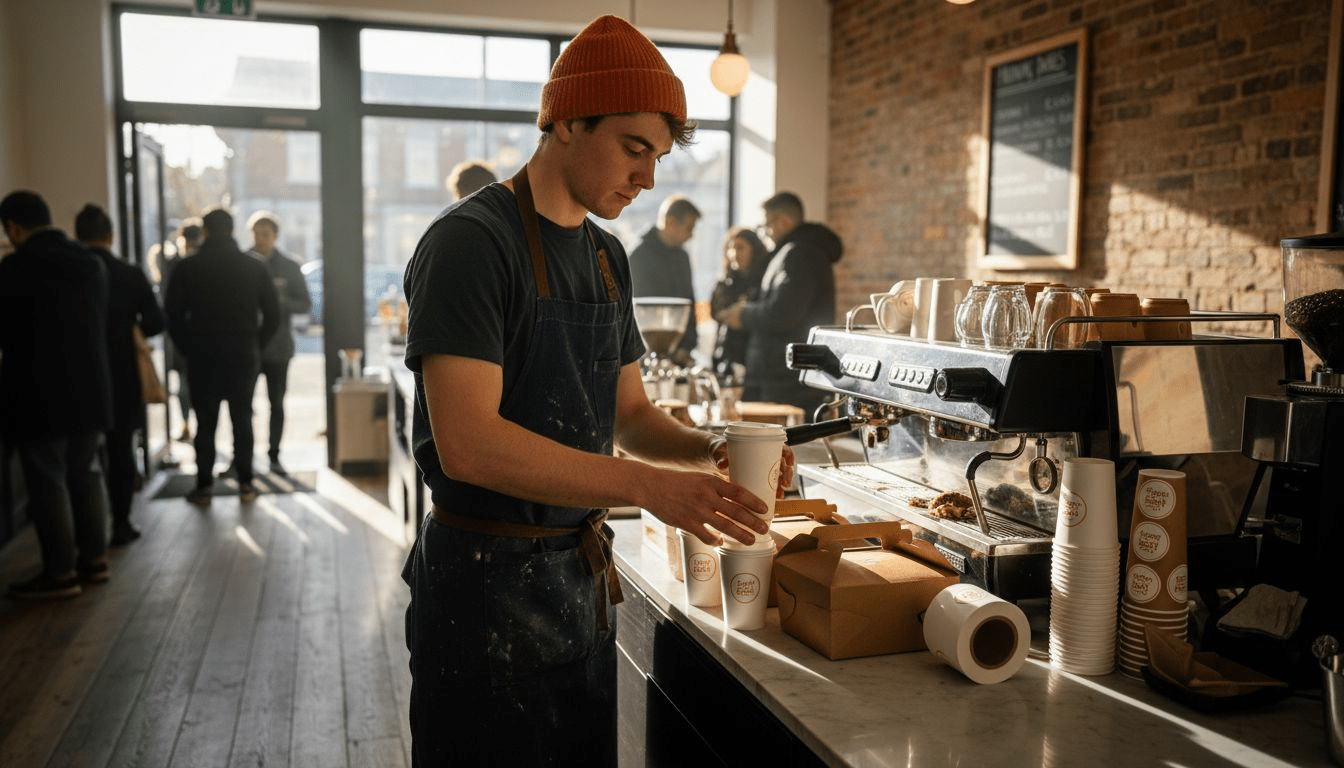
Finding packaging that looks good and keeps food safe is a daily challenge for café owners across the UK. Customers now expect more than simple containers—they notice sustainability, branding, and how their takeaway feels in hand. Packaging acts as your silent sales tool, shaping first impressions and echoing your café’s values. Discover how strategic business packaging can transform customer satisfaction, build loyalty, and position your café as a leader in the competitive food service market.
| Point | Details |
|---|---|
| Strategic Importance of Packaging | Packaging is a key business tool that enhances customer perception and communicates brand identity within the hospitality sector. |
| Regulatory Compliance | Understanding UK packaging regulations is essential for avoiding financial penalties and ensuring compliance in your operations. |
| Sustainability as a Competitive Advantage | Businesses that adopt sustainable packaging not only comply with regulations but also attract environmentally conscious customers and improve brand reputation. |
| Innovation in Packaging | Embracing innovative materials and technologies can enhance customer experience and create differentiation in a competitive market. |
Packaging in hospitality goes far beyond simply wrapping food. It’s a strategic business tool that shapes customer perception, protects your product, and communicates your brand identity in seconds. For café owners managing takeout services, packaging isn’t an afterthought—it’s part of your service experience.
In the hospitality industry, packaging serves multiple critical functions:
Packaging in hospitality encompasses more than the physical container. Sustainable packaging systems and reusable alternatives are reshaping how hospitality businesses approach their environmental footprint whilst maintaining quality standards.
Think of packaging as your silent sales representative. When a customer collects their espresso in a branded cup, they’re experiencing your café’s attention to detail. That same cup becomes walking advertising around the high street.
Your packaging design influences customer decisions before they even open the box—it’s a critical marketing element that shapes perception and loyalty.
For UK cafés, packaging also carries regulatory responsibility. Your containers must meet food safety standards, be clearly labelled, and communicate allergen information effectively. This isn’t optional; it’s mandatory.
Understanding what packaging truly means helps you make smarter purchasing decisions. Many café owners buy containers based on price alone—then wonder why customers don’t perceive their business as premium.
Packaging quality directly impacts how customers value your offering. Packaging acts as a strategic marketing element that influences purchasing decisions through visual cues and sustainable attributes, particularly in hospitality contexts where customers are increasingly conscious of their environmental impact.
Consider these packaging priorities for your café:
The best packaging sits at the intersection of these five elements. It’s rarely about choosing one over the others—it’s about balance.
Pro tip: Start by auditing your current packaging against these five criteria. If your takeaway cups don’t prominently display your café name or logo, you’re missing a significant branding opportunity that costs nothing extra when ordered in bulk.
Packaging in hospitality isn’t one-size-fits-all. Different products demand different solutions, and understanding the main types helps you choose correctly for your café. The wrong packaging wastes money and disappoints customers; the right choice protects quality whilst building your brand.
Your café likely uses several packaging types already. Let’s break down what’s available and why each matters:
Here’s how common hospitality packaging types suit typical UK café products:
| Packaging Type | Ideal Products | Key Benefit |
|---|---|---|
| Rigid container | Pastries, cakes | Resists crushing |
| Flexible packaging | Sandwiches, dry goods | Adapts to product shape |
| Beverage container | Hot/cold drinks | Maintains temperature |
| Protective wrapping | Greasy foods, snacks | Prevents leaks and mess |
| Corrugated box | Catering orders | Protects during transport |
Food preservation and shelf life extension remain fundamental to all packaging decisions. Your containers must keep products fresh, safe, and appetising from your counter to the customer’s home.
Packaging serves five critical functions in your business:
Effective packaging balances all five functions—prioritise only one, and you’ll struggle with the others.
For UK cafés, plastic packaging in food service plays a significant role in waste reduction and food safety. However, many businesses now explore compostable, recyclable, and reusable alternatives to reduce their environmental impact.
Your espresso needs different packaging than your lemon drizzle cake. A rigid clamshell protects a delicate pastry better than a paper bag. A double-walled coffee cup maintains temperature whilst communicating your brand on every sip.
Consider what your product needs: moisture protection, temperature control, visibility, or impact resistance. Then match the packaging type to that requirement.
Many café owners buy packaging based purely on cost. That approach often backfires when customers receive damaged goods or perceive your business as cheap rather than quality-focused.
Pro tip: Test your packaging with real products before committing to bulk orders—drop a packaged pastry, leave a sealed soup in a warm car, and check if your cups leak when filled with hot liquid.
Your packaging is often the first physical touchpoint customers experience with your brand. Before they taste your coffee or pastry, they’re forming judgements based on how your product looks, feels, and arrives at their table. That silent first impression shapes everything that follows.
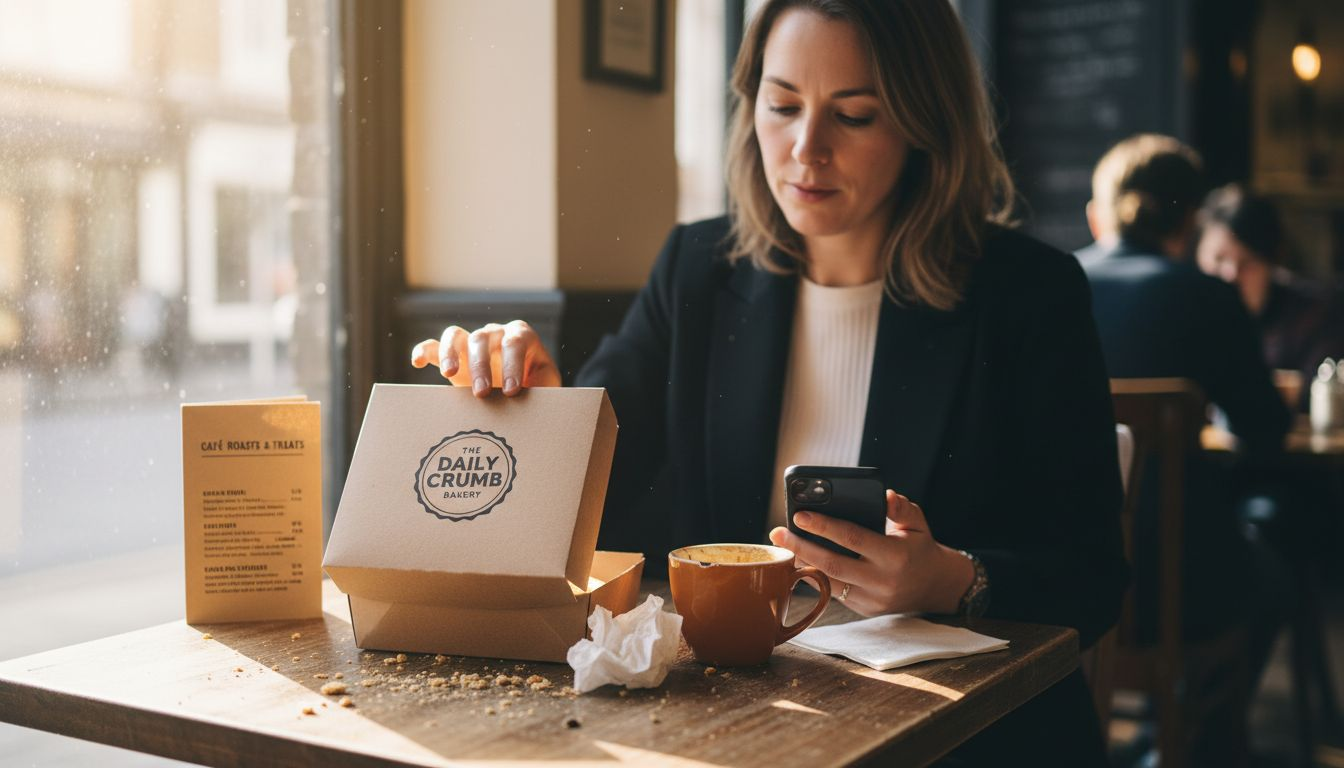
Packaging acts as your unspoken brand ambassador. It communicates quality, values, and professionalism without saying a word. A well-designed cup tells customers you’re thoughtful; cheap, flimsy packaging whispers that you cut corners.
Consider these perception drivers:
Packaging influences perceptions of quality and sustainability, acting as a tacit salesperson that shapes how customers value your offering before they even open the box.
The unboxing moment matters. When a customer collects a takeaway coffee in your branded cup or opens a pastry box with care, they’re experiencing your brand tangibly. That experience sticks in memory far longer than a generic container.
Customers remember feeling valued. They remember quality. They remember when something exceeded expectations.
Creative packaging design affects customer motivation through dimensions like visual creativity, relevance to their needs, and unexpected design choices that diverge from standard offerings. This directly influences consumer behaviour and loyalty in hospitality.
When your branded cups appear around your local high street, that’s free advertising with emotional weight. Customers become walking billboards because your packaging made them feel like insiders to something special.
Think about what emotion you want customers to feel:
Packaging doesn’t just protect your product—it tells your brand story and invites customers to be part of it.
Many café owners overlook this opportunity. They view packaging as pure cost, not as an investment in brand perception and customer loyalty. That mindset costs them money in the long run through lower perceived value and reduced repeat purchases.
Pro tip: Ask customers to take a photo of your packaging and share it on social media—great packaging naturally encourages this behaviour, multiplying your marketing reach without extra spend.
Packaging regulations in the UK have tightened dramatically. What you choose today directly impacts your compliance tomorrow, and non-compliance carries real financial penalties. Understanding the landscape isn’t optional—it’s essential business practice.
The UK government has introduced several major regulations affecting hospitality packaging. These aren’t suggestions; they’re legal requirements with enforcement mechanisms.
Key legislation includes:
UK packaging legislation impacts hospitality compliance requirements significantly, covering everything from tax obligations to producer responsibility and recycling standards.
Many café owners aren’t aware these regulations exist. Others know about them but haven’t adjusted their purchasing strategies. Both positions create financial and legal risk.
Yes, regulations force action. But sustainability delivers genuine business benefits beyond legal requirements.
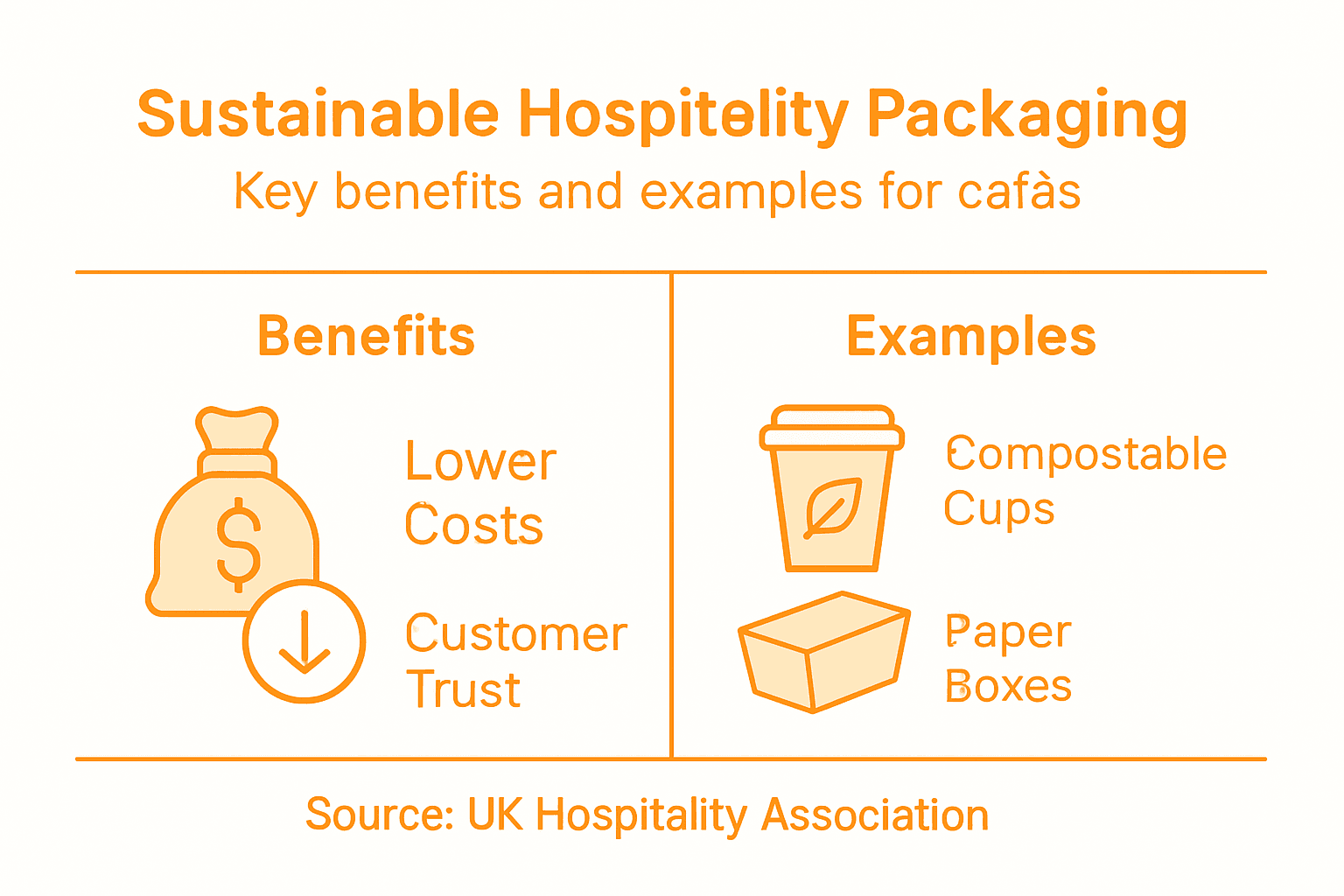
Consumers—especially younger UK customers—actively prefer environmentally responsible businesses. Hospitality sector sustainability targets include eliminating single-use packaging, promoting recycling, and reducing waste. Businesses meeting these targets gain competitive advantage and customer loyalty.
Consider the practical impacts:
Compliance is the floor, not the ceiling—sustainable packaging is now a competitive advantage that strengthens your business.
Packaging represents a tangible way to demonstrate environmental commitment. Your customers see it, handle it, and form opinions based on it.
Shifting to compliant, sustainable packaging requires planning. You’ll need to evaluate current suppliers, assess material alternatives, and potentially invest in new equipment or processes.
Start by auditing your current packaging against the regulations above. Identify which items breach compliance deadlines. Then prioritise replacements by volume and cost impact.
Pro tip: Calculate your Plastic Packaging Tax exposure now by checking the recycled content percentage on your current suppliers’ product sheets—early action avoids last-minute, expensive switching fees when deadlines hit.
Packaging innovation is accelerating rapidly. Technologies and materials that seemed experimental five years ago are now becoming standard. For UK café owners, staying ahead of these trends means staying competitive.
The shift from single-use to reusable packaging is no longer theoretical—it’s happening now. Customers increasingly expect businesses to offer alternatives to disposable containers.
Circular economy adoption and systemic packaging changes represent the strategic direction for UK hospitality, with innovation focused on sustainable design breakthroughs and long-term value creation.
Reusable packaging systems work best when integrated into your operation:
The beauty of reusable systems? Lower long-term costs, stronger customer engagement, and genuine environmental impact.
Below is a comparison of future-forward packaging innovations relevant for UK cafés:
| Innovation Area | Example Application | Business Impact |
|---|---|---|
| Reusable systems | Deposit cup schemes | Cuts long-term packaging costs |
| Compostable material | Seaweed-based trays | Reduces landfill waste |
| Smart labelling | Temperature indicators | Builds customer confidence |
| Hybrid solutions | Paper-plastic boxes | Balances function and recycling |
Beyond traditional plastics and paper, new materials are emerging. Compostable films, seaweed-based packaging, and mushroom leather alternatives are moving from niche to mainstream.
These materials offer genuine advantages:
Innovation in packaging materials isn’t just environmental—it’s becoming a customer expectation and a competitive differentiator.
Many UK cafés still use conventional materials by default. Those experimenting with alternatives attract conscious consumers willing to pay premium prices.
QR codes on packaging, temperature-tracking labels, and freshness indicators are becoming standard. These features enhance customer experience whilst providing valuable data.
Consider what data matters to your business: freshness assurance, product origin, recycling instructions, or sustainability credentials. Smart packaging communicates this information instantly.
Innovation adoption doesn’t require immediate wholesale change. Start by testing one new material or system with a select product line. Gather customer feedback. Measure cost impact. Scale what works.
Monitor supplier developments and regulatory changes. The businesses thriving in 2026 will be those who began experimenting in 2024.
Pro tip: Contact your current packaging suppliers and ask what innovations they’re developing for 2025—early adopters often access better pricing and ensure supply reliability before mainstream demand hits.
Understanding the critical role packaging plays in hospitality—from protecting products to building brand loyalty and meeting sustainability standards—means you need packaging solutions that align perfectly with your café’s goals. Whether you seek durable containers, environmentally conscious options, or custom branding opportunities, choosing the right packaging impacts how customers perceive your business every step of the way.
Explore our wide range of packaging supplies tailored for hospitality at Grab & Go Packaging. Discover everything from sturdy beverage containers to bespoke printed coffee cups that showcase your brand with professionalism and care. Take action now to ensure compliance with UK regulations, enhance customer experience, and stand out with sustainable packaging. Visit our Uncategorized – Grab & Go Packaging category for versatile options and start transforming your takeaway service today.
Packaging in hospitality serves several functions, including product protection, preservation of freshness, effective communication of brand identity, enhancing customer convenience, and promoting sustainability.
Packaging influences customer perception by acting as a visual ambassador for the brand. High-quality, well-designed packaging can create a memorable unboxing experience, enhance the perceived value of the product, and foster brand loyalty.
Café owners should consider factors such as visual appeal, functionality, sustainability, branding opportunities, and cost efficiency. A balance between these elements is crucial for creating packaging that meets customer expectations and enhances the brand image.
Sustainability is increasingly important in packaging choices, as consumers tend to prefer eco-friendly options. Using sustainable materials can improve brand reputation, attract eco-conscious customers, and ensure compliance with current packaging regulations.