
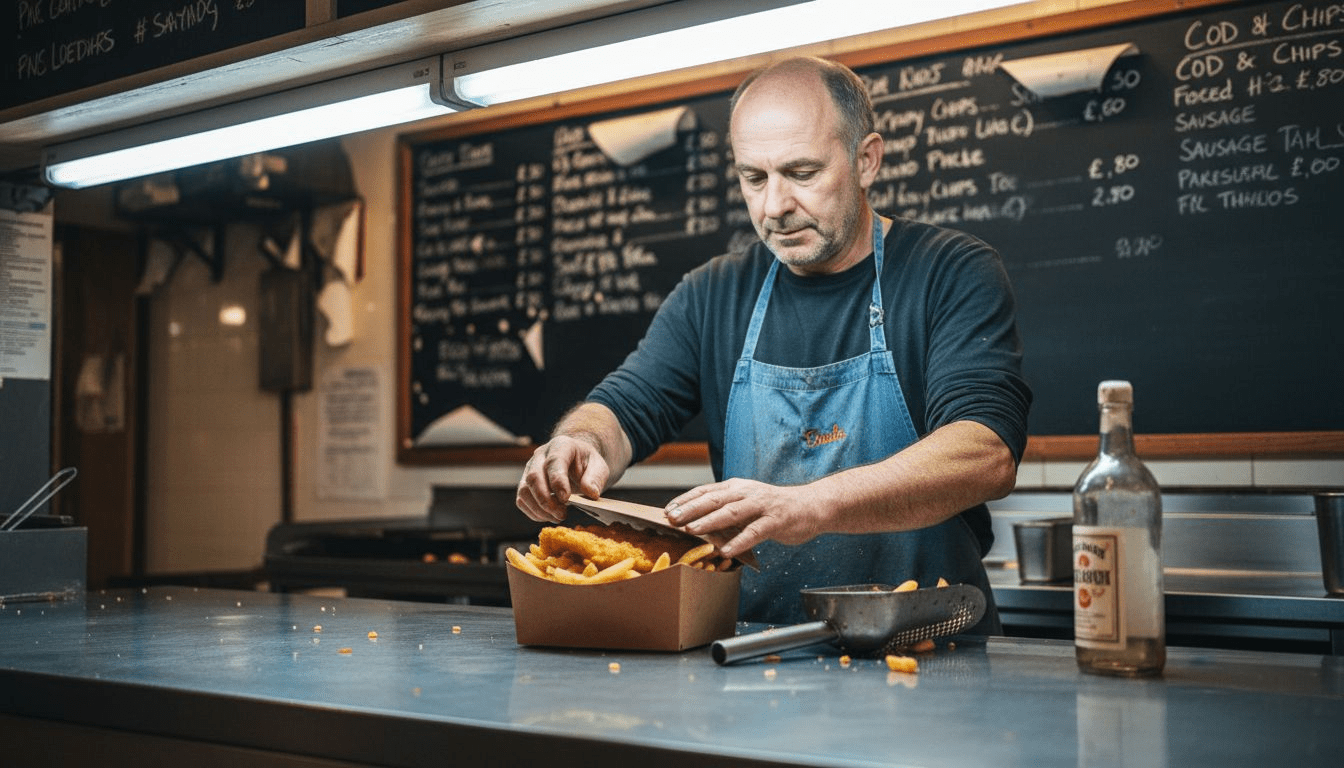
More than 270 million portions of fish and chips are served annually across British takeaways, making packaging choices critical for quality and brand reputation. For shop owners aiming to stand out, the right box is about more than just holding food. This guide uncovers practical packaging options, touches on environmental trends, and highlights features that keep British customers coming back for hot, crisp meals time after time.
| Point | Details |
|---|---|
| Evolution of Fish and Chips Boxes | Fish and chips boxes have advanced from simple wrappings to sophisticated containers protecting food quality and presentation. |
| Material Choices and Sustainability | Emphasise biodegradable and greaseproof materials that enhance food safety while benefiting the environment. |
| Custom Branding Opportunities | Personalising packaging enhances brand identity and improves customer experience in a competitive market. |
| Regulatory Compliance Importance | Stay informed about UK regulations regarding food safety and environmental standards to ensure compliance and sustainability. |
Fish and chips boxes represent a critical evolution in British takeaway packaging, transforming how traditional street food is served and experienced. These specialised containers have moved far beyond simple newspaper wrappings, becoming sophisticated solutions designed to preserve food quality, temperature, and presentation.
Modern packaging technologies have revolutionised how fish and chips are transported and consumed across the United Kingdom.
The primary purpose of fish and chips boxes is maintaining the integrity of Britain’s most beloved street food. These containers are engineered to address multiple challenges: preventing grease seepage, retaining heat, protecting the crispy batter of fish, and keeping chips from becoming soggy. Typically constructed from greaseproof, biodegradable materials, they represent a perfect intersection of functionality and environmental consciousness. The best boxes feature strategically designed ventilation systems that prevent steam build-up, ensuring the food remains crisp during transit.
Modern fish and chips boxes come in various sizes and configurations, catering to different portion requirements. Standard designs include compartmentalised sections separating fish from chips, preventing moisture transfer and maintaining individual food textures. Some advanced models incorporate features like leak-proof seals, microwave-safe materials, and even branded printing options for local chip shops seeking to enhance their professional image.
Top Tip: When selecting fish and chips boxes, prioritise containers with good ventilation and grease-resistant coatings to guarantee the best possible takeaway experience for customers.
Fish and chips packaging has undergone significant transformation, with manufacturers exploring increasingly sophisticated packaging material technologies that balance food preservation, environmental responsibility, and customer experience. Traditional packaging solutions have evolved from basic newspaper wrappings to advanced, purpose-designed containers that protect the delicate texture and temperature of Britain’s favourite takeaway meal.
The contemporary British packaging landscape offers several primary material categories for fish and chips boxes. Paper-based materials remain predominant, featuring advanced greaseproof coatings that prevent oil absorption and maintain structural integrity. Biodegradable options have gained substantial traction, with manufacturers developing innovative solutions using materials like bagasse, recycled cardboard, and plant-based composites. These eco-friendly alternatives not only reduce environmental impact but also provide robust protection for hot, steamy fish and crisp chips.
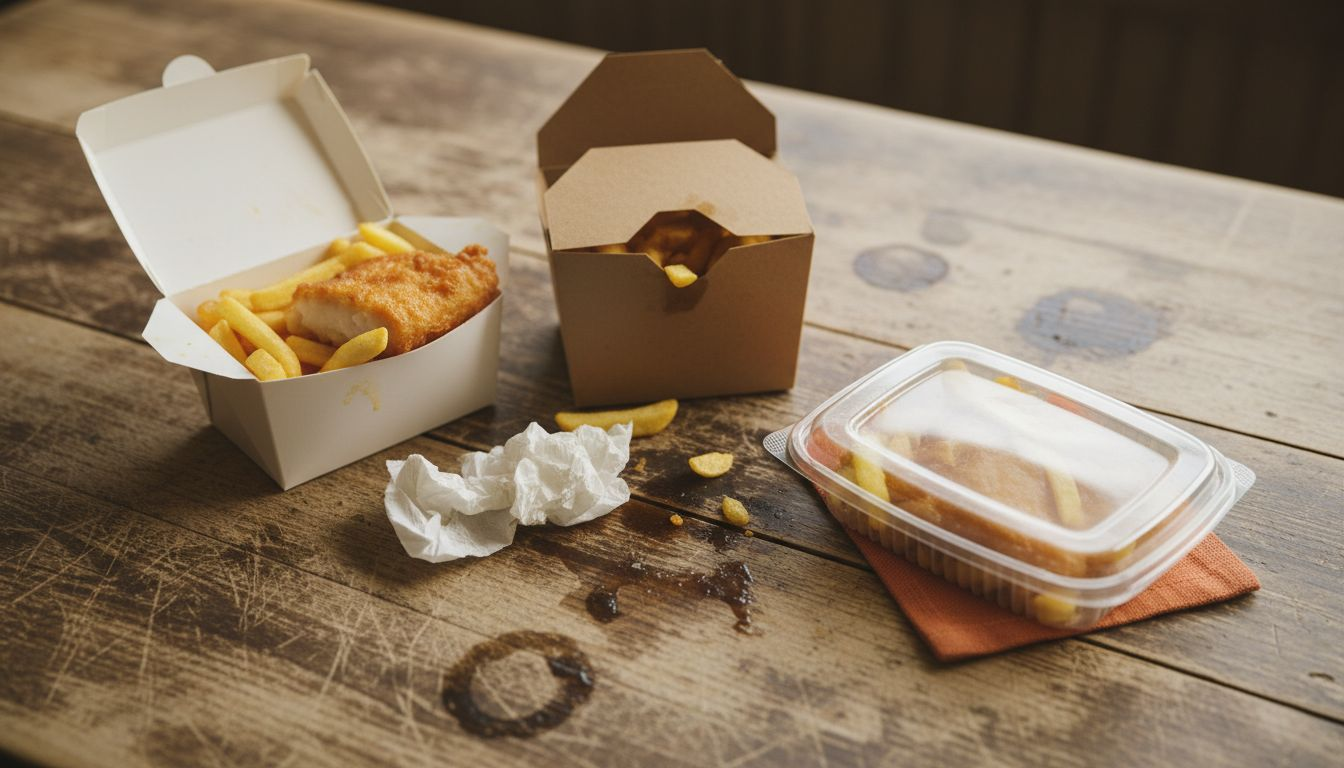
Plastic packaging continues to play a significant role, particularly with high-performance barrier materials that extend food shelf life and prevent contamination. Modern plastic containers incorporate ventilation features, compartmentalised designs, and microwave-safe properties. Some advanced packaging solutions blend multiple materials, combining the strength of plastic with the sustainability of paper-based elements, creating hybrid containers that meet both functional and environmental requirements.
Here is a summary comparing popular fish and chips packaging materials:
| Material Type | Food Protection Level | Environmental Impact | Typical Use Cases |
|---|---|---|---|
| Greaseproof Paper | Good for short journeys | Biodegradable, recyclable | Single portions, local takeaways |
| Biodegradable Cardboard | Maintains heat, absorbs grease | Eco-friendly, compostable | High street shops, bulk orders |
| Plant-based Composites | Superior for insulation | Fully compostable | Premium takeaways, eco shops |
| Plastic (Recyclable) | Excellent against leaks | Moderate, if recycled | Long-distance delivery, reheating |
| Hybrid Combinations | Maximum preservation | Improved but varies | Branded, high-volume outlets |
Top Tip: When selecting packaging materials, prioritise options that offer a balance between food safety, thermal retention, and environmental sustainability to enhance your takeaway business’s reputation.
Modern fish and chips packaging has evolved beyond mere food containment, becoming a powerful marketing tool that communicates brand identity and enhances customer experience. Role of packaging in takeaways extends far beyond simple transportation, representing a critical touchpoint for businesses seeking to differentiate themselves in a competitive market.
Custom branding opportunities in fish and chips packaging are remarkably diverse. Local chip shops can now personalise their packaging with distinctive logos, colour schemes, and unique design elements that instantly communicate their brand’s personality. These customisation options range from simple printed logos to full-colour illustrations that reflect the shop’s heritage, local connections, or signature style. Businesses can choose from various printing techniques including digital printing, offset printing, and flexographic methods, each offering different levels of detail and cost-effectiveness.
Practical features have become increasingly sophisticated in contemporary packaging solutions. Advanced fish and chips boxes now incorporate functional elements such as built-in ventilation systems that prevent soggy chips, leak-proof seals to maintain food quality, and ergonomic designs that make carrying and opening the package effortless. Some innovative designs include compartmentalised sections to keep different food items separate, moisture-absorbing linings to preserve crispiness, and heat-retention technologies that keep meals warm during transit.
Below is a quick guide on practical features and their benefits for fish and chips packaging:
| Packaging Feature | Main Benefit for Business | Customer Experience Impact |
|---|---|---|
| Ventilation Slots | Prevents soggy food | Maintains crispiness |
| Leak-proof Seal | Avoids mess and complaints | Ensures tidy and reliable transport |
| Compartment Dividers | Preserves distinct texture | Fish and chips stay separated |
| Custom Branding Print | Builds shop identity | Creates memorable, professional impression |
| Microwave-safe Material | Enables reheating options | Adds convenience for later consumption |
Top Tip: Invest in packaging that not only looks professional but also enhances your food’s quality and presentation, creating a memorable takeaway experience for your customers.
The United Kingdom maintains stringent environmental and safety regulations governing food packaging for takeaway businesses, with particular emphasis on fish and chips establishments. Role of packaging in takeaways intersects critically with legal requirements that protect both consumer health and environmental sustainability.
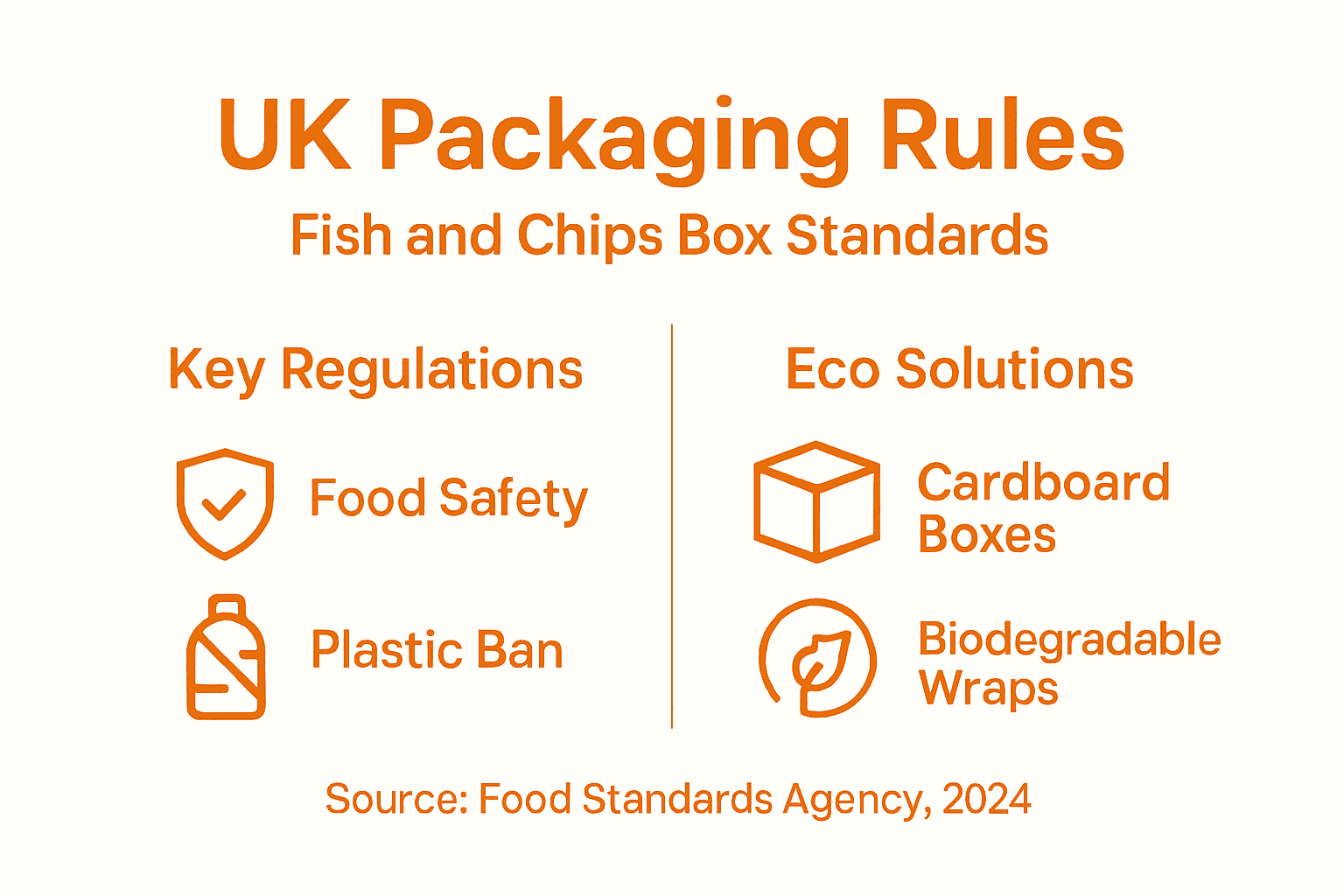
Environmental regulations predominantly focus on reducing single-use plastic waste and promoting sustainable packaging solutions. The UK government has implemented comprehensive guidelines that mandate businesses to consider eco-friendly alternatives, including biodegradable materials, recyclable containers, and reduced plastic content. Specific regulations require packaging to meet strict food safety standards, ensuring that materials do not leach harmful chemicals into food and maintain appropriate thermal and structural integrity during transportation.
Safety compliance involves multiple layers of regulatory oversight. Food businesses must adhere to regulations set by the Food Standards Agency (FSA), which specify precise requirements for food contact materials. These regulations cover aspects such as material composition, potential chemical migration, temperature resistance, and overall food preservation quality. Packaging must undergo rigorous testing to demonstrate it can withstand typical food service conditions without compromising food safety or consumer health. Additionally, businesses must maintain detailed documentation demonstrating their packaging’s compliance with national food safety standards.
Top Tip: Regularly consult the Food Standards Agency guidelines and stay updated on environmental packaging regulations to ensure your fish and chips packaging remains compliant and sustainable.
Navigating the financial landscape of fish and chips packaging requires strategic decision-making and careful consideration of multiple factors. Role of packaging in takeaways significantly impacts a business’s overall operational expenses and brand perception, making cost management a critical aspect of packaging selection.
Cost considerations extend beyond the immediate price of packaging materials. Small to medium-sized fish and chip shops must evaluate total cost of ownership, including factors such as bulk purchasing discounts, material durability, potential waste reduction, and brand impact. Sourcing strategies should prioritise suppliers offering consistent quality, competitive pricing, and flexibility in order quantities. Businesses can significantly reduce expenses by establishing long-term relationships with packaging suppliers, negotiating volume-based pricing, and exploring local manufacturing options that minimise transportation costs.
Common mistakes in packaging procurement can dramatically increase operational expenses and compromise food quality. Frequent errors include selecting inappropriately sized containers, overlooking material performance characteristics, neglecting environmental regulations, and failing to consider the thermal retention properties of packaging materials. Chip shop owners should avoid purchasing solely based on the lowest price point, as cheaper options often result in compromised food presentation, reduced customer satisfaction, and potential additional costs from customer complaints or increased waste.
Top Tip: Conduct a comprehensive cost-benefit analysis of packaging options, considering long-term value rather than just initial purchase price.
The article highlights the critical challenge of maintaining food quality, temperature, and presentation in fish and chips takeaways. From preventing soggy chips through effective ventilation to ensuring greaseproof and eco-friendly materials, your packaging choices directly impact customer satisfaction and brand reputation. Understanding the importance of sustainable, leak-proof, and custom-branded fish and chips boxes empowers your business to stand out in a competitive market while complying with UK environmental and safety regulations.
Grabngo Packaging offers a broad selection of premium fish and chips boxes designed to meet these exact needs. Whether you require ventilated, biodegradable, or branded packaging, their range supports your goal of delivering a crisp, fresh takeaway experience every time.
Ready to transform the way you package and present your fish and chips? Explore expert packaging solutions at Grabngo Packaging today and enjoy convenience, quality, and competitive pricing tailored specifically for your takeaway business. Don’t miss the chance to enhance your brand identity and customer delight with packaging that works as hard as you do.
Fish and chips boxes are specialised containers designed to hold and transport fish and chips, ensuring the food maintains its quality, temperature, and texture during delivery.
Common materials include greaseproof paper, biodegradable cardboard, plastic, and plant-based composites, each offering various levels of food protection and environmental impact.
Many modern fish and chips boxes incorporate ventilation systems that allow steam to escape and prevent moisture buildup, helping to keep chips crispy and fish batter intact.
When selecting packaging, prioritise features such as ventilation, grease resistance, and material sustainability to enhance food quality and customer satisfaction.