
Next Day UK delivery on orders by 12pm (T&Cs apply)
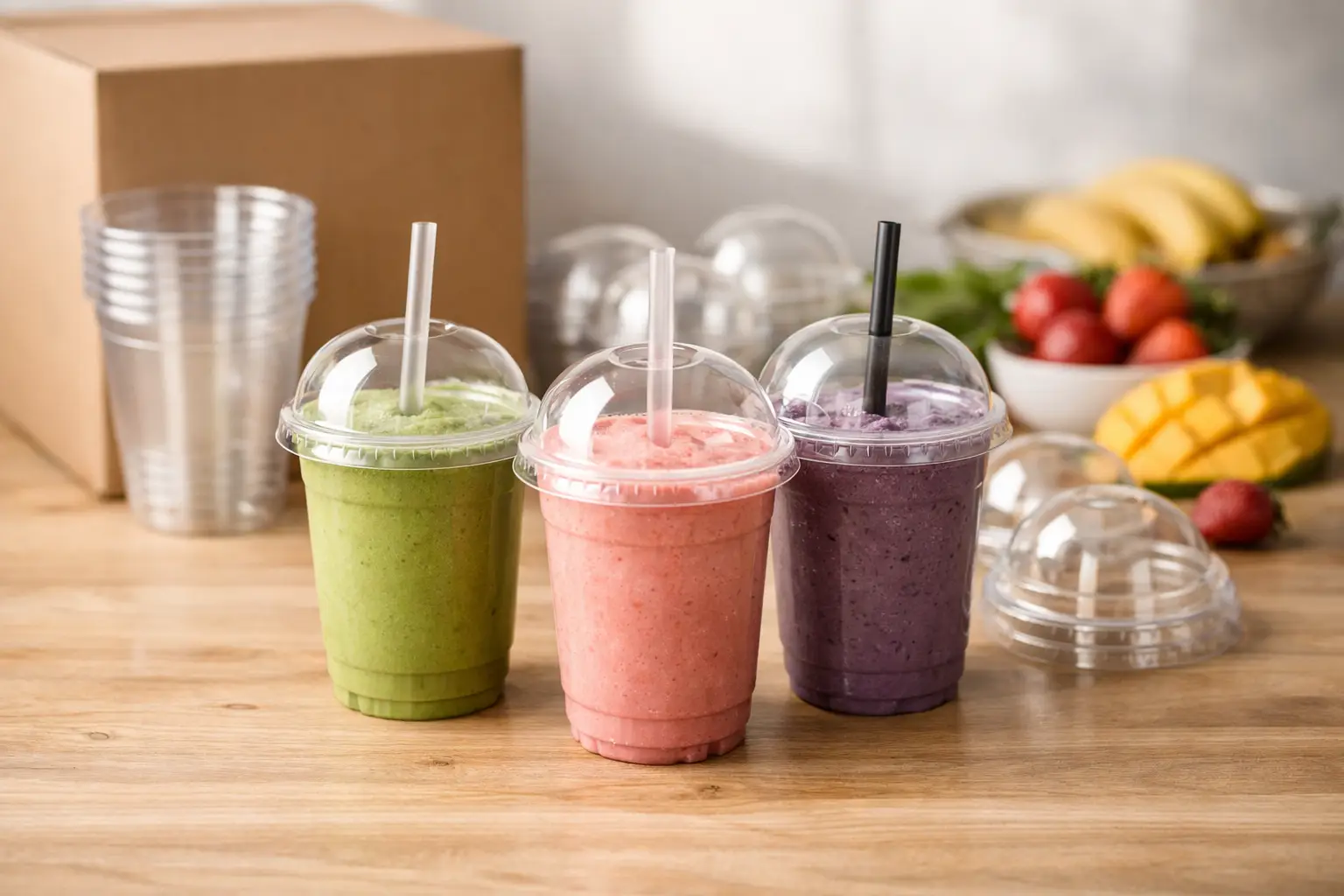
A busy drinks counter notices packaging problems quickly. If lids pop off in transit, cups crack under pressure, or stock runs low mid-service, it slows the whole operation. That is why buying smoothie cups with lids bulk is not just about unit price. It is about choosing a format that works consistently across prep, service, delivery and customer use.
For cafés, juice bars, dessert shops, mobile caterers and takeaway operators, smoothie cups need to do three jobs at once. They need to present the drink well, hold up during handling, and make repeat ordering simple. The right cup and lid combination supports speed of service and reduces waste. The wrong one creates complaints, spills and unnecessary reorder pressure.
The first consideration is drink style. A thick fruit smoothie, iced frappe, milkshake or layered dessert drink does not behave like a cold juice or soft drink. Thicker products often need wider straws, better headspace, and a cup shape that lets staff fill quickly without mess. If your menu includes toppings such as whipped cream, fruit, sauce or biscuit crumb, lid choice becomes even more important.
Cup size also needs to reflect your menu rather than guesswork. Too small and you limit upsell potential. Too large and portion control becomes inconsistent, especially in busy periods. Many operators keep two or three standard sizes so staff can move quickly while maintaining a clear price ladder. That also makes bulk ordering easier because you are not carrying too many slow-moving lines.
Material is another practical point. Clear plastic smoothie cups remain popular because they show off colour, texture and layers. That matters for front-of-house display and customer perception. A bright smoothie or iced drink often sells itself when the packaging presents it properly. At the same time, the cup needs enough strength to cope with stacking, storage, filling and transport.
Lid fit should never be treated as a minor detail. A poor-fitting lid can turn a well-made drink into a refund request. Flat lids, dome lids and straw-slot lids all have their place, depending on the drink format. If you offer cream-topped shakes or indulgent cold drinks, a dome lid may be the better choice. For standard smoothies served with a straw, a secure flat or straw-slot lid is often more practical and cost-effective.
Bulk buying works best when it matches your actual turnover. Some operators overbuy to chase a lower unit cost, then tie up cash and storage space in packaging that takes too long to move. Others buy too little and end up placing frequent top-up orders that cost more over time and create stock risk.
The better approach is to work from realistic weekly or monthly cup usage. Look at your sales by drink size, then factor in peak trading periods such as summer weekends, event catering, school holidays or promotional campaigns. If cold drinks are a seasonal growth area for your business, bulk packs can help you stay ahead of demand without scrambling for emergency stock.
Storage conditions matter as well. Cups and lids need to stay clean, dry and easy to access. If your stockroom is tight, nesting efficiency and carton size become more important than many buyers expect. A slightly cheaper line is not always the best value if it creates handling issues in-store or takes up space needed for ingredients and other essentials.
For multi-site operators, consistency is another reason to standardise. Using the same smoothie cups and lids across locations helps with ordering, staff training and presentation. It also reduces errors when sites share stock or when central purchasing teams need a cleaner ordering process.
Packaging affects speed more than most businesses realise. During peak periods, staff need cups that separate easily, fill cleanly and close without forcing the lid into place. A cup that sticks in the stack or a lid that needs repeated pressing slows the queue and frustrates the team.
This is particularly relevant for takeaway-led businesses where drinks are often assembled alongside food orders. If your staff are building smoothies, coffees and meal deals at the same time, every second matters. Good cup-and-lid compatibility helps maintain rhythm behind the counter.
There is also a labour cost angle. Packaging that works first time reduces remakes, wipe-downs and wasted product. Even small issues add up over hundreds of orders per week. Bulk buying makes most sense when the product is not only competitively priced, but also dependable in day-to-day use.
Smoothies are visual products. Customers expect them to look fresh, bright and well made. Clear cups support that expectation, especially when drinks include visible fruit, layered colours or premium toppings. If you are charging for quality ingredients, the packaging should reflect that.
For some businesses, plain stock cups are enough. They are practical, fast to source and easy to add into standard ordering patterns. For others, branded packaging can strengthen the offer, especially in competitive high street locations or delivery-led markets where every part of the order shapes the customer impression.
That is where bespoke packaging becomes relevant. Personalised cups or associated branded items such as printed
grease-proof paper can help create a more joined-up presentation across your takeaway range. It is not always the first step for a new business, but for operators looking to sharpen brand recognition, it can be a worthwhile upgrade.
Not every cold drink belongs in the same cup. A simple fruit smoothie has different packaging needs from a bubble-style drink, iced coffee or thick dessert shake. If your menu spans several categories, it is worth checking whether one cup format can realistically cover them all, or whether separate lines are the smarter choice.
A single standard cup can simplify purchasing, but it may involve compromise. For example, a cup that works well for smoothies might not be ideal for cream-heavy frappes. On the other hand, carrying too many cup types complicates stock control. The right balance depends on your menu range, prep style and available storage.
It also helps to think beyond the cup itself. If drinks are sold as part of meal bundles or delivery orders, they need to work with cup carriers, bags and the rest of your packaging setup. A cup that looks good on the counter but travels badly is not doing the full job.
Every buyer wants a competitive price, but the cheapest smoothie cups with lids bulk option is not always the lowest-cost decision overall. Weak cups, poor lid fit and inconsistent supply can cost more through waste and customer dissatisfaction than a slightly higher line that performs properly.
A sensible buying decision looks at total use, not just carton cost. Consider breakage, lid failure, storage efficiency, reorder frequency and whether the product supports your menu pricing. If a better-looking, more reliable cup helps justify a stronger retail price or improves repeat custom, that has value.
Wholesale buyers also benefit from consolidating categories where possible. Ordering cups, lids, takeaway containers, carrier bags, napkins and cleaning supplies from one supplier can simplify administration and reduce the time spent managing separate accounts. For many operators, that convenience matters almost as much as headline price.
If you are seeing regular spills, inconsistent lid fitting, too many pack sizes in stock or complaints around drink presentation, it is probably time to review. The same applies if your menu has changed. A business that started with simple cold drinks may now be selling premium shakes, iced coffees or dessert-led beverages that need a different cup and lid format.
Seasonal trading is another trigger. Warmer months often expose weak packaging decisions because volume rises fast. A product that seems acceptable in low demand can become a problem when cold drinks are moving at pace.
Reviewing your cup setup does not mean
over complicating the range. In most cases, the goal is the opposite – fewer lines, better compatibility and clearer stock planning.
food-service
Packaging works best when it is sourced with the wider operation in mind. That means more than just finding cups and lids in the right size. It means choosing a supplier that understands how those products sit alongside coffee cups, deli bowls, burger boxes, carrier bags and the rest of the essentials a food business uses every day.
For operators that want a straightforward supply route, working with a broad-range packaging wholesaler can remove friction from reordering. It gives you the option to keep core consumables under one account, maintain consistency and spend less time chasing multiple vendors. Businesses looking to streamline purchasing can explore ranges at Grab & Go Packaging Ltd through https://www.grabngopackaging.co.uk.
The best bulk buy is the one that keeps service moving, protects the product and makes reordering easy. If your smoothie range is growing, now is a good time to make sure your cups and lids are keeping up.