
Next Day UK delivery on orders by 12pm (T&Cs apply)
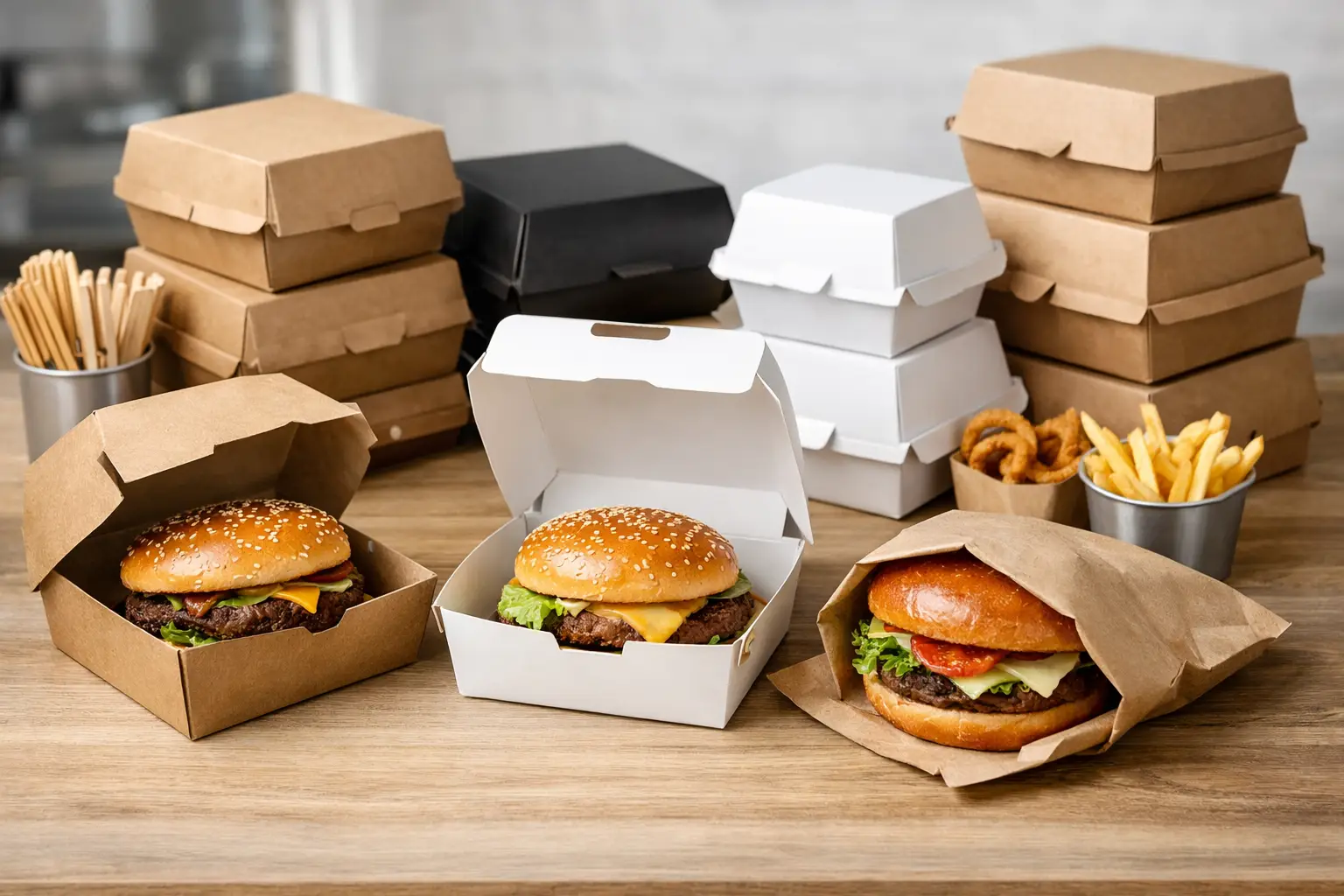
A soggy bun, a crushed lid or chips steaming inside the same pack can turn a good burger into a poor handover. That is why choosing the right burger boxes wholesale UK suppliers offer is not just about unit price. For takeaways, burger bars, cafés and fast food operators, the box has to protect presentation, manage heat and moisture, and still make service quick during busy periods.
If you are buying in volume, the better question is not simply which burger box is cheapest. It is which format works best for your menu, your service style and your order mix. A box that suits a single smash burger for walk-in trade may be the wrong choice for stacked burgers going out on delivery. Wholesale purchasing works best when the pack fits the food properly and the stock line fits the pace of your business.
The first factor is product fit. Burger boxes need enough internal height and width to hold the build without crushing the bun or forcing sauces into the lid. If you serve double patties, brioche buns, loaded toppings or side salad in the same pack, standard shallow boxes often create more complaints than savings.
Material matters just as much. Foam, board and bagasse all behave differently in service. Some hold heat well, some give a cleaner premium look, and some suit businesses that want a more paper-based presentation. There is no single best option for every outlet. A late-night takeaway focused on speed and price may choose differently from a gourmet burger restaurant sending branded delivery orders.
Then there is ventilation and moisture control. Burgers create condensation quickly, especially when packed straight off the grill. A fully closed box can trap steam and soften the bun. A more breathable format may protect texture better, but if it vents too much, heat can drop on longer journeys. That balance depends on how far your orders travel and how long food sits before collection.
A classic clamshell burger box remains the most common choice because it is fast to use, stackable and easy for staff to close at the pass. For quick-service counters and takeaways with high volume, it keeps packing simple. Staff can load, close and move to the next order without slowing service.
Single-compartment burger boxes are usually the cleanest option when the burger is sold on its own or with wrapped sides packed separately. They keep the main item centred and presentable. This works particularly well for premium burgers where appearance matters the moment the customer opens the lid.
Compartment boxes are useful when operators want to pack burger and side together. They can reduce the number of packs per order and help with handling, but they come with trade-offs. Chips held in the same container can steam up the burger side, and portion control becomes more important. They are often best for short collection times rather than longer delivery routes.
Deep burger boxes suit taller builds and prevent squashed buns. If your menu includes chicken fillets, stacked beef patties, onion rings or loaded toppings, extra depth is worth paying for. It reduces re-makes and keeps the product looking closer to how it left the kitchen.
Expanded polystyrene has long been used because it is lightweight, insulating and practical in busy takeaway settings. It helps retain heat, and for some operators that remains the priority. The trade-off is that it does not always give the stylish presentation some brands want, and businesses may prefer other materials depending on their customer base and packaging policy.
Paperboard burger boxes give a neater, more modern appearance. They are popular with cafés, gourmet burger outlets and food businesses that want a cleaner branded look. They can also work well with stickers, stamps or printed
grease-proof for stronger presentation. The main point to watch is performance with very hot, freshly packed food, especially on delivery, where condensation can build up.
Bagasse and similar fibre-based boxes appeal to operators looking for an alternative to more traditional takeaway materials. They often give a tidy, high-quality finish and suit businesses that want consistency across broader food packaging lines. As with any material, performance depends on the exact food type, holding time and whether sides are packed separately.
For many businesses, the right answer is a mixed approach. Use one box for standard burgers, one deeper format for premium menu items, and separate side containers where that improves food quality. Wholesale buying does not have to mean forcing every order into the same pack.
Buying burger boxes in bulk only makes sense if they work operationally. Storage space is often tighter than buyers expect, especially in smaller shops and kiosks. Before committing to a large case quantity, check how many sleeves fit in your stock room and how quickly you turn through them.
Flat-packed formats can save space, but if they slow packing during peak periods, they may cost more in labour and service delays. Pre-formed clamshells are easier to handle when queues build. The practical test is simple: can your team pack quickly, consistently and without damaging the product?
It is also worth checking whether your burger boxes align with the rest of your packaging range. If your orders regularly include fries, dips, drinks, napkins and carrier bags, sourcing those categories together can simplify purchasing and improve consistency. A one-stop supplier becomes useful here because it cuts down on split ordering and mismatched stock lines.
A plain burger box can do the job, but branded presentation has real value, especially in crowded local markets. Customers remember neat packaging. They also photograph it, carry it through town and place it on social media without being asked. For independents trying to look more established, packaging can do part of that work.
That does not always mean fully printed burger boxes from day one. Bespoke branding can start with printed
grease-proof paper, stickers or coordinated cup and food packaging. If your burgers are wrapped or lined properly inside the box, the result looks more considered and protects the product at the same time.
For businesses growing across multiple sites, consistency becomes even more important. The burger ordered in one branch should arrive in packaging that looks and performs the same in another. That is where working with a supplier that also handles cups, containers, bags and bespoke print can make day-to-day procurement much easier. Grab & Go Packaging Ltd supports that approach by supplying stock packaging and branded options across core takeaway categories.
Wholesale buyers are right to watch margins, but the lowest unit price does not always deliver the lowest operating cost. If a cheaper box collapses, traps too much steam or fails to hold a larger burger, the saving disappears quickly through refunds, remakes and poor reviews.
A better way to assess value is to look at total performance. Does the box protect food quality? Does it suit your menu without requiring awkward workarounds? Does it help staff pack orders faster? Can you buy it in case quantities that fit your cash flow and storage capacity? Those are the questions that matter in a live food operation.
It also helps to review ordering patterns. Some buyers overstock slow-moving formats and run short on everyday lines. Others buy too narrowly and then need urgent top-up orders when menu specials or weekend demand spike. A practical wholesale range should cover core volume lines and a few flexible options for different burger builds.
Before you commit, test burger boxes with real menu items rather than sample fitting with empty buns. Check how the pack performs after ten minutes, twenty minutes and a full delivery run. Open the box and look at bun texture, chip condition and sauce movement. That tells you more than product specs alone.
You should also ask about case quantities, repeat availability and whether matching food packaging is available from the same supplier. If you are buying burger boxes, you may also need
grease-proof paper, chips boxes, portion pots, drink cups, carrier bags and cleaning supplies. Keeping those lines under one account can save time each week and make reordering more straightforward.
The best burger packaging is not always the most expensive or the most basic. It is the format that fits your food, supports fast service and keeps your product looking right when it reaches the customer. Choose with the full order journey in mind, and your packaging starts working like part of the kitchen rather than just another cost line.