

Selecting the right packaging can feel like a balancing act for catering managers in the United Kingdom who must keep food safe, impress customers, and control costs all at once. Food businesses must address unique operational challenges, meeting strict hygiene rules while also delivering an appealing brand message. This guide will show you how a step-by-step packaging strategy can tackle everything from compliance and efficiency to customer satisfaction, with practical tips grounded in trusted British industry guidance.
| Key Point | Explanation |
|---|---|
| 1. Assess Catering Needs Thoroughly | Evaluate your food production processes to determine essential packaging based on food type, service environment, and temperature management. |
| 2. Shortlist Suitable Materials | Choose packaging that offers durability, food safety, and aligns with your brand while considering environmental impact and cost. |
| 3. Evaluate Suppliers Beyond Price | Look for suppliers based on material quality, sustainability practices, and delivery reliability, in addition to pricing. |
| 4. Test Packaging for Functionality | Conduct comprehensive tests on packaging durability, food safety, and branding visibility to ensure it meets all operational needs. |
| 5. Implement and Monitor Effectively | Integrate selected packaging into operations with ongoing staff training, performance tracking, and customer feedback for continuous improvement. |
Successfully selecting packaging for your food business begins with a comprehensive evaluation of your specific operational needs. Understanding your unique catering requirements ensures you choose packaging that enhances service efficiency and meets critical food safety standards.
Start by performing a detailed assessment of your food production activities. This involves carefully mapping out your entire food handling process, from ingredient preparation to final product delivery. Consider key factors like food type, temperature management, portion sizes, and transportation requirements. Food safety management steps recommend examining potential risks such as cross-contamination and bacterial growth.
Your packaging selection process should address several critical dimensions:
Pay special attention to regulatory compliance. The UK hospitality hygiene guidelines emphasise the importance of selecting packaging that supports safe food handling and meets legal standards for hygiene and allergen management.
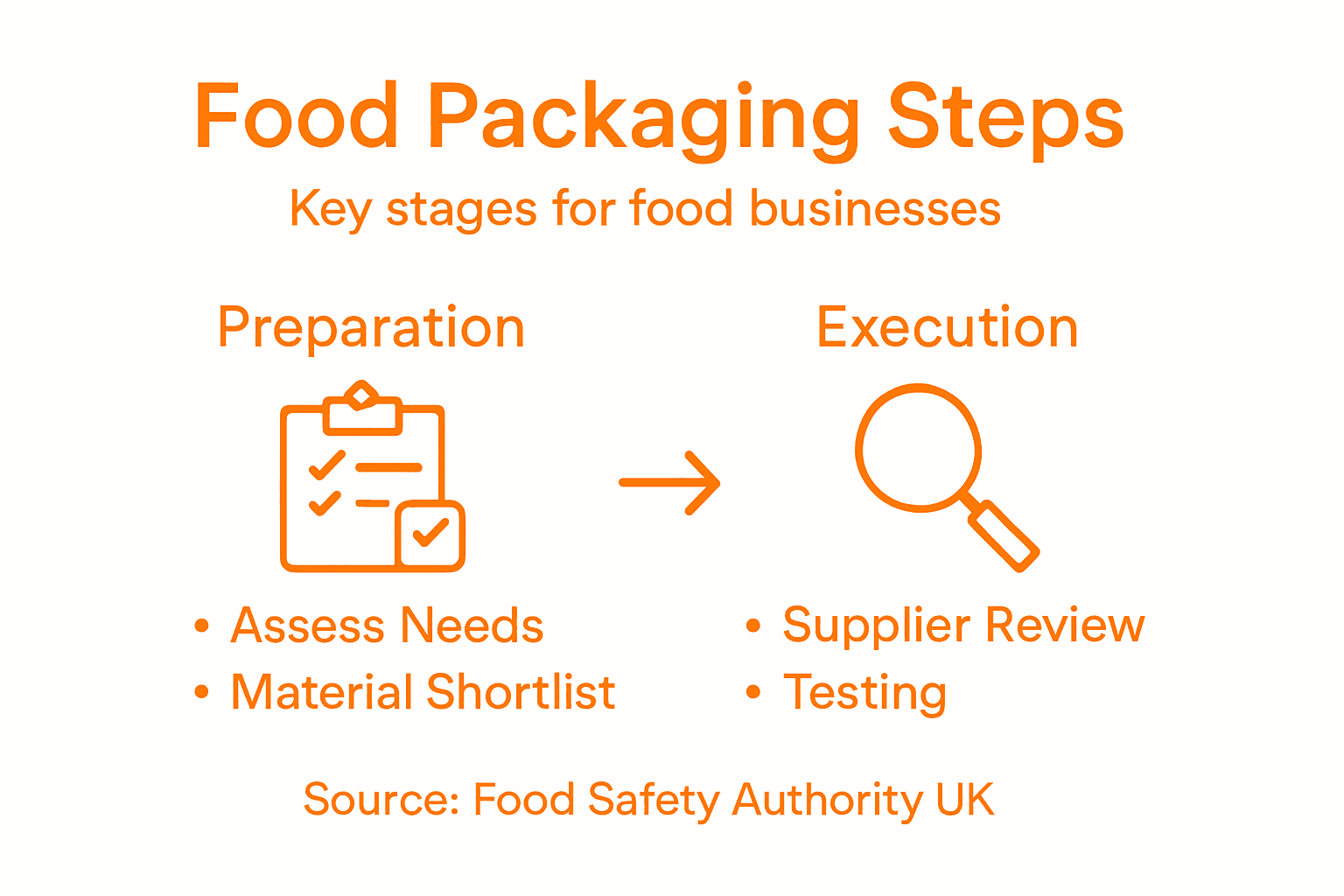
Below is a summary of how packaging impacts key areas of your food business:
| Business Area | Impact of Packaging | Example Benefit |
|---|---|---|
| Service Efficiency | Streamlines food handling | Faster order fulfilment |
| Food Safety | Mitigates contamination risk | Complies with hygiene standards |
| Customer Experience | Influences perception | Enhances brand image |
| Cost Management | Affects overall expenses | Reduces waste and saves money |
Pro tip: Conduct a trial run with sample packaging to evaluate performance under real operational conditions before making bulk purchases.
Narrowing down the right packaging materials requires a strategic approach that balances functionality, compliance, and business needs. Your goal is to identify packaging solutions that protect your food, meet legal standards, and reflect your brand’s commitment to quality.
Begin by exploring the range of packaging materials available for your specific food service requirements. Food packaging legal standards highlight critical considerations for material selection, including food safety, contamination prevention, and regulatory compliance. Different food types demand different packaging characteristics, so carefully evaluate your options.
Consider the following key factors when shortlisting packaging materials:
Your shortlist should prioritise materials that offer optimal protection and align with industry best practices. The UK foodservice packaging sector recommends selecting materials that maintain hygiene, preserve food quality, and support convenient service delivery.
Here is a comparison of popular food packaging materials and their characteristics:
| Material Type | Sustainability Score | Typical Use Cases |
|---|---|---|
| Cardboard | High | Takeaway boxes, food trays |
| Plastic | Moderate | Salad containers, drink cups |
| Aluminium | Moderate | Hot meal trays, foil wrappers |
| Compostable PLA | Very High | Eco-friendly pots, cutlery |
Selecting the right packaging material is not just about protection – it’s about creating a complete customer experience.
Pro tip: Request samples from multiple suppliers to conduct thorough testing before making a final packaging material commitment.
Comparing packaging suppliers effectively requires a comprehensive approach that goes beyond simple price comparisons. Your objective is to identify partners who offer reliable materials, competitive pricing, and align with your business’s operational and ethical standards.

Extended producer responsibility guidelines recommend conducting a thorough evaluation that considers the total cost of packaging, including potential legislative compliance fees and waste management responsibilities. This means looking beyond the initial price tag to understand the long-term financial implications of your packaging procurement strategy.
When assessing potential suppliers, focus on these critical evaluation criteria:
Your evaluation should extend beyond financial considerations. Sustainable supplier selection guidelines suggest examining potential suppliers’ environmental certifications, such as ISO 14001, and their commitment to responsible business practices.
True value in supplier selection goes far beyond the initial price point – it’s about finding a strategic partner who understands your business needs.
Pro tip: Create a comprehensive scoring matrix that weights financial, quality, and sustainability factors to make an objective supplier comparison.
Validating your packaging involves a comprehensive assessment that goes beyond visual appeal. Your primary goal is to ensure the packaging meets both functional requirements and brand communication standards, protecting your product and representing your business effectively.
Food packaging legal requirements emphasise the critical need for thorough testing to guarantee food safety, prevent contamination, and comply with labelling regulations. This means conducting rigorous evaluations that assess structural integrity, material compatibility, and information accuracy.
Develop a systematic testing strategy that covers multiple dimensions:
Your testing approach should be comprehensive and methodical. Foodservice packaging standards recommend multiple assessment stages to ensure packaging meets hygiene, durability, and brand representation requirements.
Effective packaging testing is not just about avoiding failures – it’s about creating a superior customer experience.
Pro tip: Create a detailed testing checklist with weighted scoring for each critical packaging performance criterion to ensure objective and thorough evaluation.
Successfully implementing your selected packaging requires a strategic and systematic approach that goes beyond initial selection. Your goal is to seamlessly integrate the new packaging into your existing food service operations while continuously monitoring its performance and compliance.
Extended producer responsibility regulations require careful tracking and ongoing assessment of packaging usage. This means developing a robust implementation strategy that captures critical data about material consumption, recycling potential, and environmental impact.
Establish a comprehensive implementation and review process:
Your review mechanism should be dynamic and responsive. Food safety management guidance emphasises the importance of regular audits and continuous improvement in packaging strategies.
Effective packaging implementation is not a one-time event, but an ongoing process of refinement and adaptation.
Pro tip: Develop a quarterly review template with predefined performance metrics to systematically evaluate your packaging strategy.
Choosing the right packaging can feel overwhelming when you juggle food safety, branding, and cost management all at once. Whether you are assessing your catering needs or testing packaging functionality, finding reliable, compliant, and cost-effective packaging solutions is critical to your business success. Key challenges like maintaining hygiene standards, ensuring regulatory compliance, and enhancing customer experience require trusted sources that understand the foodservice sector.
At Grab N Go Packaging, we specialise in providing a diverse range of packaging products designed specifically for food businesses looking to master their packaging selection process. From disposable containers and bespoke greaseproof papers to eco-friendly bagasse items, our collection supports your goals for durability, sustainability, and impactful branding. With user-friendly navigation and competitive pricing, you can confidently trial, select, and implement packaging that fits your operational needs without delay.
Take control of your packaging choices today by exploring our comprehensive selection at Grab N Go Packaging. Benefit from expert guidance, bulk ordering convenience, and branding opportunities that position your food business for growth and compliance. Don’t delay improving your service efficiency and customer satisfaction – start your tailored packaging journey now.
Start by mapping out your entire food handling process from preparation to delivery. Consider factors such as food type, temperature management, and customer preferences to ensure you select appropriate packaging that enhances service efficiency and food safety.
Evaluate material durability, food compatibility, environmental impact, and cost-effectiveness. Prioritise materials that offer optimal protection and align with your food service requirements to enhance customer experience while maintaining compliance with regulations.
Compare suppliers based on their pricing structure, material quality, and sustainability credentials. Use a scoring matrix to weigh these factors against your business needs, ensuring you select a reliable partner that aligns with your operational standards.
Develop a systematic testing strategy that examines physical durability, food safety compatibility, and branding visibility. Ensure that all required labelling information complies with regulations and is clearly presented on the packaging to enhance customer trust.
Educate your team on proper packaging handling and track performance through consistent monitoring. Regularly gather customer feedback and conduct audits to ensure compliance with food safety standards while identifying areas for improvement in your packaging strategy.
Begin with a thorough assessment of your catering requirements and shortlist materials accordingly. Conduct trial runs with samples to assess performance before making bulk purchases, allowing you to make informed decisions that align with your operational needs.