
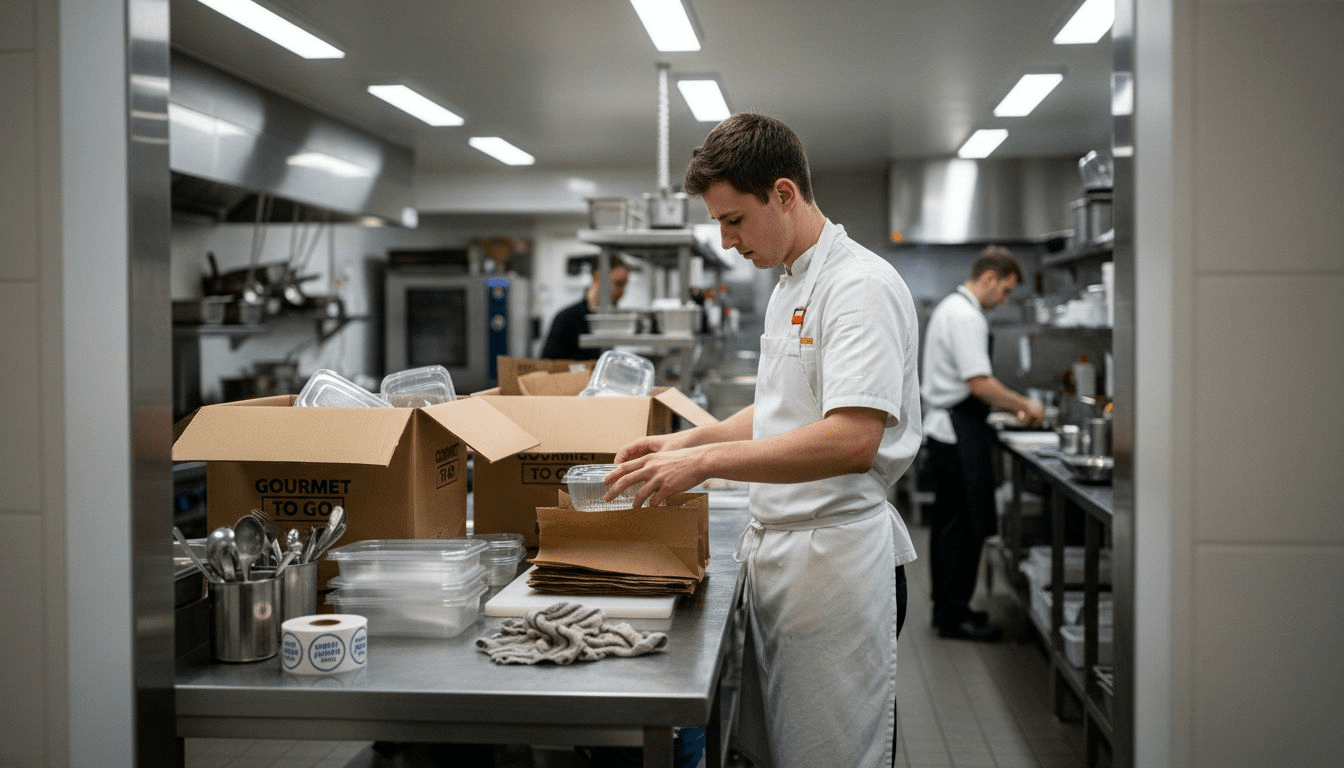
Choosing the right packaging for your restaurant or café can feel like a balancing act between convenience, hygiene, and growing pressure to cut waste. In the fast-paced world of UK food service, single-use items like cups, boxes, and cutlery offer clear hygiene and safety advantages while shaping daily operations and customer perceptions. Understanding these packaging choices gives you the power to improve food quality, meet regulations, and demonstrate your commitment to sustainability in a practical, affordable way.
| Point | Details |
|---|---|
| Single-use Packaging Dominance | Single-use packaging is integral to food service, ensuring hygiene and convenience while impacting waste management and customer perceptions. |
| Material Selection Implications | The choice of packaging material influences operational costs, environmental footprint, and compliance with regulations. |
| Hygiene Benefits | Single-use packaging significantly reduces contamination risks, providing customers with food safety assurance and enhancing operational simplicity. |
| Transition to Sustainable Options | Businesses should explore sustainable packaging alternatives, considering local waste infrastructure and customer preferences to align with environmental goals. |
Single-use packaging is exactly what the name suggests: containers, wraps, and utensils designed to be used once and then discarded. In your restaurant or café, this includes the foam clamshells holding takeaway meals, the paper bags customers carry out, plastic cutlery sets, disposable cups, and napkins. These products are everywhere in food service because they solve an immediate problem: hygiene and convenience.
The rise of single-use packaging accelerated dramatically in the 1970s when manufacturers began replacing durable materials with lighter, cheaper alternatives made from plastic and paper. What started as a practical solution for busy kitchens became the standard operating model for food businesses worldwide. Single-use plastics are typically derived from petrochemicals and disposed of immediately after use, often within minutes of a customer leaving your premises.
What makes single-use packaging so prevalent in catering is its role in food safety. Each piece of disposable cutlery, each container, each wrapper prevents cross-contamination by ensuring customers receive food that touched only the surfaces designated for their meal. This hygiene benefit became central to public health initiatives after World War II, driving widespread adoption across the food industry. Whether it’s a cardboard takeaway box or a plastic clamshell, the principle remains the same: one use, then disposal.
Today’s single-use packaging comes in diverse materials. Your local café might use paper cups with plastic linings, whilst your fish and chips shop relies on grease-proof paper boxes. Some businesses now offer bamboo or bagasse alternatives alongside traditional plastics. The material varies, but the purpose stays constant: provide safe, convenient food service with minimal reusable cleaning requirements.
Understanding what falls under single-use packaging matters because it directly impacts your waste management strategy, customer perception, and regulatory compliance. Every item you hand to a customer contributes to your business’s environmental footprint and brand image. The way you choose, source, and dispose of these materials affects everything from your operational costs to how customers view your commitment to sustainability.
Pro tip: When reviewing your current packaging stock, categorise items by material type and frequency of use to identify which single-use products you could swap for sustainable alternatives without compromising food safety or customer experience.
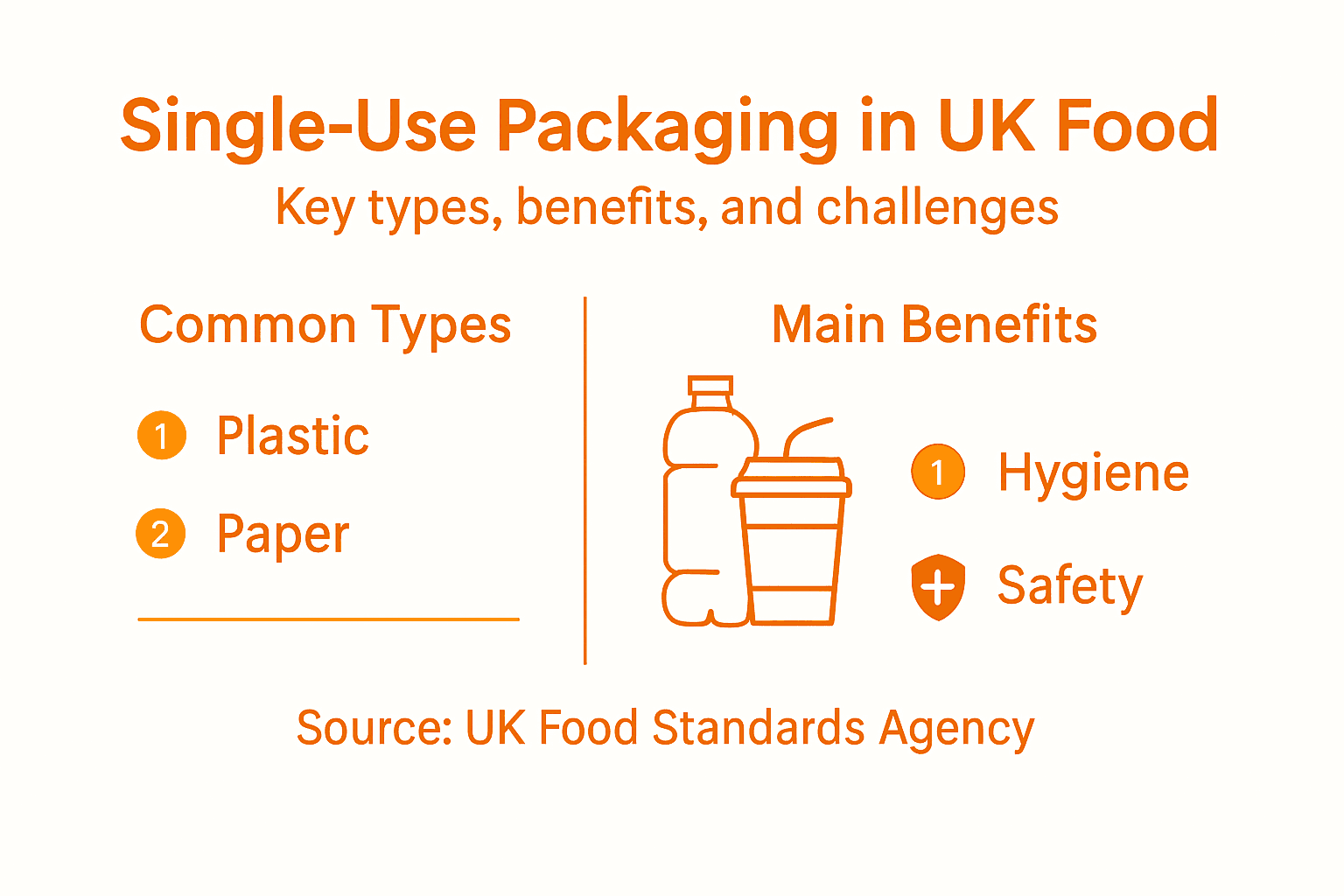
Walk into any UK restaurant kitchen or café storage area and you’ll see the same materials repeated over and over. Plastic containers for takeaways, cardboard boxes, metal tins, glass jars, and paper wrapping dominate the packaging landscape. These aren’t random choices. Business owners select them because they work, they’re affordable, and they’ve proven themselves across thousands of food service operations across the country.
Plastic is the workhorse of food packaging in the UK. Your deli counter uses plastic trays for meats and cheeses. Bakeries rely on clear plastic clamshells to display cakes and pastries. Drinks come in lightweight plastic bottles that customers appreciate for convenience. Plastic packaging remains prominent due to its flexibility, strength, and ability to extend shelf life of fresh food. From rigid containers to flexible films, plastic adapts to almost any food type and keeps costs down compared to alternatives.
Paper and cardboard dominate takeaway operations. Fish and chips shops use grease-proof paper boxes. Restaurants hand out paper bags for customer orders. Coffee shops wrap sandwiches in paper. It’s biodegradable, customers view it as more sustainable than plastic, and it’s genuinely affordable at scale. Many UK businesses combine paper with plastic linings to add moisture resistance without sacrificing the sustainable perception.
Metal, glass, and multi-material composites complete the picture. Glass jars appeal to premium delis and upmarket cafés. Metal cans work for beverages. Food packaging materials span various types including composites that combine multiple materials for specific performance needs. Each material choice carries different implications for recyclability, food safety, and cost.
The material you select shapes your operational reality. Plastic keeps costs low but raises sustainability concerns with customers. Paper feels eco-friendly but requires protective linings. Glass looks premium but breaks easily. Metal costs more upfront. Most successful UK food businesses use a mix, matching materials to specific products and customer expectations.
To help businesses choose the right packaging, here is a comparison of common materials used in UK food service:
| Material | Key Advantages | Main Drawbacks | Typical Applications |
|---|---|---|---|
| Plastic | Excellent food barrier; lightweight; cost-effective | Environmental impact; recycling concerns | Salad boxes, drinks bottles, bakery trays |
| Paper/Cardboard | Biodegradable; recyclable; positive customer perception | Needs lining for wet foods; durability issues | Takeaway boxes, sandwich wrappers, paper bags |
| Glass | Reusable; high-end appearance; recyclable | Heavy; risk of breakage; high transport cost | Premium food storage, deli jars |
| Metal | Good for long shelf life; easily recyclable | Costly; energy-intensive recycling process | Beverage cans, sealed food tins |
| Composites | Tailored performance; specific uses | Recycling is complex; environmental cost | Specialty pouches, multi-layer packs |
Pro tip: Audit your current packaging by product type and identify which items generate the most customer complaints or returns, then investigate whether switching to a different material could improve both customer satisfaction and your bottom line.
Hygiene sits at the heart of every food business decision you make. Single-use packaging delivers a straightforward hygiene advantage that reusable containers simply cannot match: every customer receives food in packaging that has never touched another person’s meal. This one fact matters more than most business owners realise.
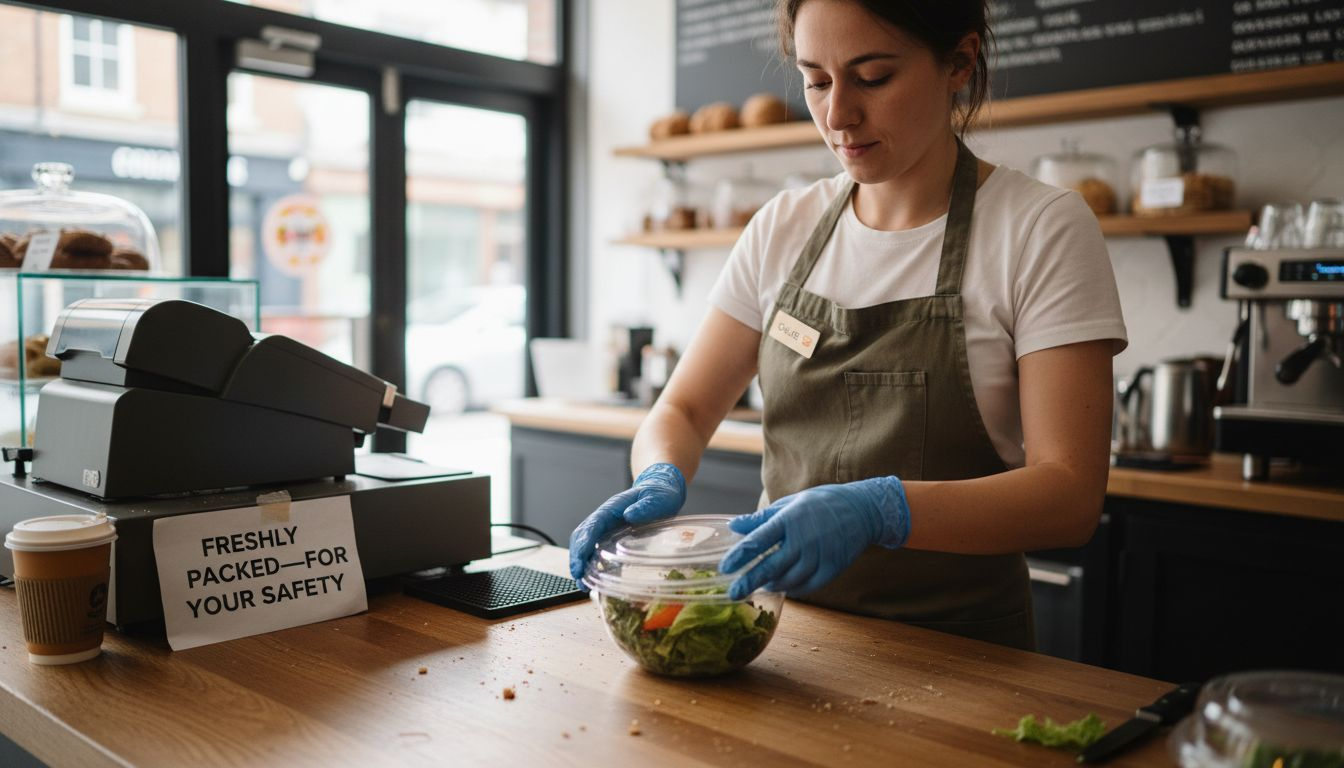
When you use fresh, untouched packaging for each order, you eliminate a major contamination pathway. Reusable containers require thorough washing between uses, and even with rigorous cleaning protocols, microscopic pathogens can survive. Single-use packaging bypasses this risk entirely. Your kebab shop doesn’t need to worry about residual bacteria from the previous customer’s order. Your café doesn’t stress over whether the salad box was adequately sanitised. Plastic packaging protects against contaminants throughout the entire supply chain, from manufacture through to consumption, maintaining product integrity at every step.
Foodborne illness outbreaks damage businesses catastrophically. A single incident can close your doors permanently and destroy your reputation. Single-use packaging acts as insurance against this risk. Because each package is new, cross-contamination becomes virtually impossible. Your customers eat with confidence knowing their food arrived in untouched, hygienic conditions.
Tamper-proof closures on single-use containers add another safety layer. Customers see sealed packaging and trust that no one has interfered with their meal. This visible security matters psychologically and practically. Single-use fibre packaging reduces contamination risks by preventing reuse of potentially contaminated materials, which directly supports food safety standards and regulatory compliance.
The compliance side matters too. Environmental Health Officers and Food Standards Agency inspectors look for evidence of proper hygiene practices. Using single-use packaging demonstrates you take these requirements seriously. Your documentation becomes simpler. You prove each customer received fresh, untouched packaging. Reusable systems require detailed cleaning logs and validation protocols that invite scrutiny.
Beyond microbial safety, single-use packaging maintains food quality. Sealed containers prevent cross-flavour contamination. Your fish and chips don’t smell like someone else’s curry. Your pastries don’t absorb odours from savoury items. The barrier between products stays intact.
Pro tip: Display your single-use packaging commitment visibly to customers through signage or your menu, highlighting the hygiene advantage; this builds trust and can justify slightly higher pricing compared to competitors using questionable reusable systems.
Single-use packaging presents a genuine paradox for UK food businesses. It keeps customers safe and your operations compliant, yet it contributes significantly to waste streams and environmental challenges. Understanding this tension is crucial because regulations are tightening, and your choices today will shape your compliance tomorrow.
The environmental cost is real. Plastic packaging dominates UK food retail, and plastic packaging poses environmental challenges including overproduction, waste generation, and pollution. Much of this ends up in landfills or oceans. Paper and cardboard seem greener, but they require significant water and energy to produce. Glass is recyclable but heavy, increasing transport emissions. Metal recycling works well but requires substantial processing energy. No single material offers a perfect environmental solution.
Regulations are shifting rapidly. The UK government has introduced taxes on plastic packaging and is encouraging deposit return schemes. More significantly, businesses exporting to the EU must align with the European Packaging and Packaging Waste Regulation. This regulation includes extended producer responsibility requirements and packaging reduction targets, effectively influencing UK businesses to innovate towards sustainable packaging by 2030.
What does this mean practically for your café or restaurant? First, you cannot ignore packaging waste indefinitely. Environmental Health Officers increasingly scrutinise waste management practices. Customers specifically ask about sustainable options. Staff turnover improves when employees feel their employer cares about environmental responsibility.
Second, regulation compliance is no longer optional. If you export any products to European markets, you must understand these rules. Even if you operate domestically only, future UK regulations will likely mirror these standards. Starting compliance work now avoids expensive retrofitting later.
The smart approach combines immediate compliance with gradual innovation. Continue using single-use packaging where hygiene and safety demand it. Simultaneously, audit your packaging choices. Where could you switch to paper instead of plastic? Can you offer customers the option of bringing their own containers for certain products? Which items could use compostable packaging without compromising food safety?
Pro tip: Contact your packaging supplier about their sustainability credentials and ask what proportion of their products are made from recycled content or are recyclable; this information helps you make informed choices aligned with both regulations and customer expectations.
Switching to sustainable packaging sounds straightforward until you actually try it. Your business needs packaging that protects food, maintains hygiene, fits your budget, and satisfies customers. Finding materials that tick all these boxes requires understanding what alternatives exist and which ones work for your specific operation.
Compostable packaging has gained traction. These materials break down in industrial composting facilities within months rather than decades. Your café could use compostable coffee cups and food containers. The catch: not all UK areas have industrial composting infrastructure. Check whether your local waste authority accepts compostable materials before committing. If they don’t, compostable packaging simply sits in landfills where it fails to decompose.
Biodegradable bioplastics represent another option. Made from renewable sources like corn starch or sugarcane, these materials degrade faster than conventional plastics. However, they require specific conditions to break down properly. Home composting rarely works. Sustainable alternatives to single-use plastics include innovations like algae-based films and biodegradable bioplastics, offering environmental benefits when conditions support proper decomposition.
Paper and cardboard remain reliable middle-ground solutions. They’re recyclable, biodegradable, and customers perceive them as environmentally friendly. Your fish and chips shop already uses greaseproof paper boxes. Adding paper napkins, paper cups, and cardboard containers extends this approach. The downside: paper requires protective linings for moisture-heavy foods, often using plastic or wax coatings.
Reusable systems deserve serious consideration for specific use cases. Customers bringing their own containers for loose items like bakery goods or salad bar selections can work brilliantly. However, reusables demand rigorous cleaning protocols and complicate logistics. They don’t suit all food types or customer behaviours. Many customers won’t participate. The UK’s Smart Sustainable Plastic Packaging Challenge funds innovation to develop food-grade recycled plastics and boost reuse systems, but these solutions remain emerging rather than immediately available at scale.
The practical approach? Start with materials your local waste infrastructure actually handles. Ask your council specifically which materials their contractors accept. Choose packaging that genuinely fits your food type. Don’t sacrifice food safety or customer satisfaction for environmental credentials that don’t translate to actual waste reduction.
Here is an overview of sustainable packaging alternatives and their practical considerations for food businesses:
| Alternative Type | Environmental Benefit | Infrastructure Needed | Suitability for Food Types |
|---|---|---|---|
| Compostable | Rapid decomposition; reduces landfill | Industrial composting facilities | Hot drinks, salads, light meals |
| Biodegradable Bioplastic | Derived from plants; less fossil fuel use | Controlled decomposition environment | Cold foods, wraps |
| Recyclable Paper | Easily recycled; low emissions | Accessible recycling collection | Baked goods, dry foods |
| Reusable Containers | Eliminates packaging waste | Cleaning protocols; customer buy-in | Deli items, loose bakery goods |
Pro tip: Contact three packaging suppliers and request sample materials along with documentation showing their recyclability and local waste acceptance; test them with your actual food products before making bulk purchases.
Managing single-use packaging challenges while maintaining hygiene and sustainability can feel overwhelming. You want reliable, cost-effective solutions that support food safety without harming your brand’s environmental commitment. At Grab N Go Packaging, we understand these critical demands and offer a wide range of disposables, containers, cutlery, and eco-friendly options designed specifically for UK food businesses like yours.
Explore our selection to find packaging that matches your operational needs and customer expectations. From bespoke greaseproof papers to bagasse alternatives and classic fish and chips boxes, we provide quality products that help you comply with regulations while boosting hygiene standards. Don’t wait to make your packaging choices count – visit Grab N Go Packaging today and take the first step toward safer, sustainable food service solutions that protect your customers and your reputation.
Single-use packaging consists of containers, wraps, and utensils designed to be used once and then discarded, offering convenience and hygiene for food services.
Single-use packaging helps prevent cross-contamination, ensuring that each meal is served in packaging that has not touched any other food, thus maintaining food safety and customer confidence.
Common materials include plastic, paper, cardboard, glass, and metal. Each material has unique advantages and drawbacks regarding cost, durability, and environmental impact.
Food businesses can opt for compostable packaging, recyclable materials, or biodegradable bioplastics while considering local waste management infrastructure to ensure proper disposal and environmental benefits.