

Choosing the right food packaging can make all the difference when it comes to preserving food quality and meeting customer expectations in a busy UK restaurant. From keeping dishes hot and fresh on delivery to providing clear allergen information, packaging works behind the scenes to protect both your food and your reputation. Food packaging provides protection, maintains shelf life, conveys essential information, enables traceability, and offers tamper indication—all vital for food service managers who want to delight guests and stay compliant with UK regulations.
| Point | Details |
|---|---|
| Importance of Food Packaging | Food packaging protects food from contamination, preserves quality, and is legally mandated in the UK for customer safety. |
| Choosing the Right Materials | Selecting packaging based on material properties ensures food retains its intended quality during transport and meets customer expectations. |
| Regulatory Compliance | Adhering to UK food packaging regulations is crucial to avoid fines and ensure customer safety, requiring thorough checks of compliance documents. |
| Testing Applications | Conduct trials with different packaging types to assess food quality and customer perception before making bulk purchasing decisions. |
Food packaging is far more than just a wrapper or container. It serves as a critical barrier between your food and the outside world, performing multiple functions simultaneously. At its core, food packaging provides protection, maintains shelf life, conveys essential information, enables traceability, and offers tamper indication. For restaurants operating in the UK, understanding what packaging actually does helps you make smarter choices about what you stock in your storage areas.
When customers walk into your establishment, they’re forming opinions before they even taste a single bite. The packaging you choose influences that first impression significantly. Beyond aesthetics, packaging protects food from contamination, physical damage, and environmental factors like moisture and light exposure. In the UK context, food packaging for delivery has become increasingly important as more restaurants offer takeaway and courier services, making the protective role of packaging absolutely essential to maintaining quality during transport. Your packaging must be suitable for food contact, properly marked, and compliant with UK legislation on food contact materials. This isn’t optional—it’s a legal requirement that protects both your customers and your business.
The impact of packaging on food quality operates on three distinct levels. First, there’s the physical protection layer, which shields food from contaminants, pests, and physical damage during storage, handling, and transport. A poorly chosen container allows moisture to escape from certain foods whilst enabling condensation to accumulate in others, affecting texture and flavour in ways you’ll notice immediately when plating up. Second, packaging provides information and compliance, displaying mandatory labelling, ingredient lists, allergen warnings, and storage instructions that keep customers informed and your restaurant legally protected. UK regulations require this information to be clear and accurate, and non-compliance can result in fines or worse. Third, packaging contributes to traceability and food safety, allowing you to track products back through your supply chain if issues arise. When a supplier’s batch needs recalling, proper packaging documentation saves you hours of investigative work.
For your restaurant specifically, selecting appropriate packaging means understanding which materials work best for different applications. Greaseproof papers excel for fish and chips, whilst breathable containers work better for certain salads. Moisture-resistant materials keep pastries crispy, whilst sealed containers preserve aromatic qualities in prepared dishes. The choice isn’t about picking the cheapest option—it’s about matching material properties to your specific menu items so that what leaves your kitchen arrives at your customer’s table in the condition you intended.
Pro tip: Test different packaging materials with your most popular dishes during a quiet service period, comparing how food quality changes over 30 minutes to identify which containers best preserve your menu’s intended taste and texture profiles.
Your packaging material choices directly affect how well your food survives the journey from kitchen to customer. Different materials perform dramatically different jobs, and picking the wrong one can undermine your entire food quality strategy. The main options available to UK restaurants fall into several categories: plastics, paper and cardboard, glass, and metal, each with distinct advantages and limitations. Understanding which material works best for your specific menu items is the difference between food that arrives fresh and food that arrives compromised.
Plastics remain the most common choice in UK food service, though not all plastics are created equal. PET (polyethylene terephthalate) works brilliantly for cold drinks and transparent containers where visibility matters, whilst HDPE (high-density polyethylene) handles thicker applications like sauce containers. Polypropylene dominates the hot food market because it withstands temperatures better than other common plastics. The challenge with plastics lies in recyclability and material properties, as thin films, composites, and black plastics create genuine waste management headaches for your customers and local councils. This matters because UK legislation increasingly pressures businesses to consider their environmental footprint, and customers actively notice when you choose recyclable over difficult-to-recycle plastics. Paper and cardboard options, including greaseproof papers and kraft containers, excel for dry foods, baked goods, and fried items. They breathe naturally, preventing unwanted moisture accumulation, and communicate a more sustainable image to environmentally conscious diners. Glass provides an unbeatable barrier against oxygen and moisture, keeping delicate foods and sauces at peak quality for longer periods. Metal tins work similarly, offering superior protection whilst creating a premium perception. However, both glass and metal add weight and cost, making them less practical for high-volume takeaway operations.

Reusable packaging systems represent an often-overlooked category worth serious consideration for dine-in scenarios. Rather than treating containers as single-use disposables, you could implement reusable trays and plates that customers return—a model gaining traction among environmentally conscious establishments. This approach reduces waste substantially and builds customer loyalty when executed properly. Your choice ultimately depends on balancing three competing priorities: food preservation (which material keeps your specific dishes at their best), cost efficiency (what your margins can absorb), and environmental responsibility (what aligns with your brand values and customer expectations).
The practical reality for most UK restaurants involves using multiple materials simultaneously. You might pair practical examples of packaging materials with specific dishes—polypropylene for hot curry dishes, PET for cold salads, greaseproof paper for wood-fired pizza. Rather than selecting one universal material, successful operators match material properties to menu requirements. Temperature sensitivity, moisture exposure, product visibility, transportation method, and storage duration all influence which material deserves the job. A fish and chips operation needs different packaging logic than a fine dining establishment offering plated courses for delivery.
Here is a comparison of common food packaging materials and their suitability for typical restaurant food types in the UK:
| Material | Best Suited Foods | Main Advantages | Notable Limitations |
|---|---|---|---|
| PET Plastic | Cold drinks, salads | Good visibility, recyclable | Poor for hot foods, warps with heat |
| Polypropylene | Hot dishes, curries | Heat-resistant, durable | Difficult to recycle in some areas |
| Greaseproof Paper | Fried foods, baked goods | Breathable, preserves crispness | Not moisture-proof for wet dishes |
| Cardboard | Pizzas, pastries | Rigid, recyclable, sustainable | Can absorb grease/moisture |
| Glass | Sauces, preserves | Excellent barrier, reusable | Heavy, higher cost |
| Metal tins | Premium takeaways, pies | Outstanding protection, premium feel | Not microwave-safe, expensive |
| Reusable trays | Dine-in, sustainable brands | Minimal waste, customer loyalty | Hygiene management, upfront cost |
Pro tip: Request sample quantities from your supplier of each material type you’re considering, then use these during service to test how your most popular dishes perform over the actual timeframe customers spend eating them before providing feedback to your team.
Packaging isn’t just about containing food—it’s a preservation system that actively fights against the natural forces working to degrade what you’ve carefully prepared. Without proper packaging, your food begins deteriorating the moment it leaves the kitchen. Packaging creates barriers against physical damage, microbial contamination, moisture loss, and oxidation, each of which independently can ruin food quality. Understanding how these protective mechanisms work helps you appreciate why choosing the right packaging isn’t a cost-cutting exercise but an investment in maintaining the quality standards your customers expect.
The primary way packaging preserves food is through barrier protection against environmental hazards. A sealed container prevents bacteria and moulds from accessing your food, whilst simultaneously blocking oxygen that accelerates spoilage and colour degradation in many dishes. Think about how quickly an exposed salad wilts or how fast cut fruit browns when exposed to air. Proper packaging that extends shelf life does this work for you automatically, meaning your customers receive food that tastes and looks as close to freshly prepared as possible, even if transport takes 30 minutes. Moisture control represents another critical preservation function. Some foods need moisture protection—pastries, crisps, and baked goods suffer when humidity creeps in and softens their texture. Other foods require moisture retention—fresh herbs, salad leaves, and pre-prepared vegetables wilt dramatically when moisture escapes. Your packaging choice determines which scenario plays out. Greaseproof papers allow controlled moisture exchange for fried foods, whilst sealed plastic containers trap moisture around delicate vegetables. Neither approach is universally superior; both are specifically designed to preserve the exact qualities that matter for each dish.
Temperature stability during transport relies on packaging design as well. Insulated containers maintain hot foods above food safety temperatures (63°C minimum) for extended periods, preventing the bacteria multiplication window that occurs between 5°C and 63°C. Conversely, breathable packaging prevents condensation buildup that would otherwise drip onto your carefully plated dishes and create a soggy, unappetising presentation. The quality preservation happening inside your packaging is actually rather sophisticated—when protective packaging extends shelf life by reducing physical damage and contamination, you’re simultaneously reducing food waste and environmental impact. This creates a win-win where choosing better packaging for quality preservation also aligns with sustainability goals that increasingly matter to your customers and your bottom line.
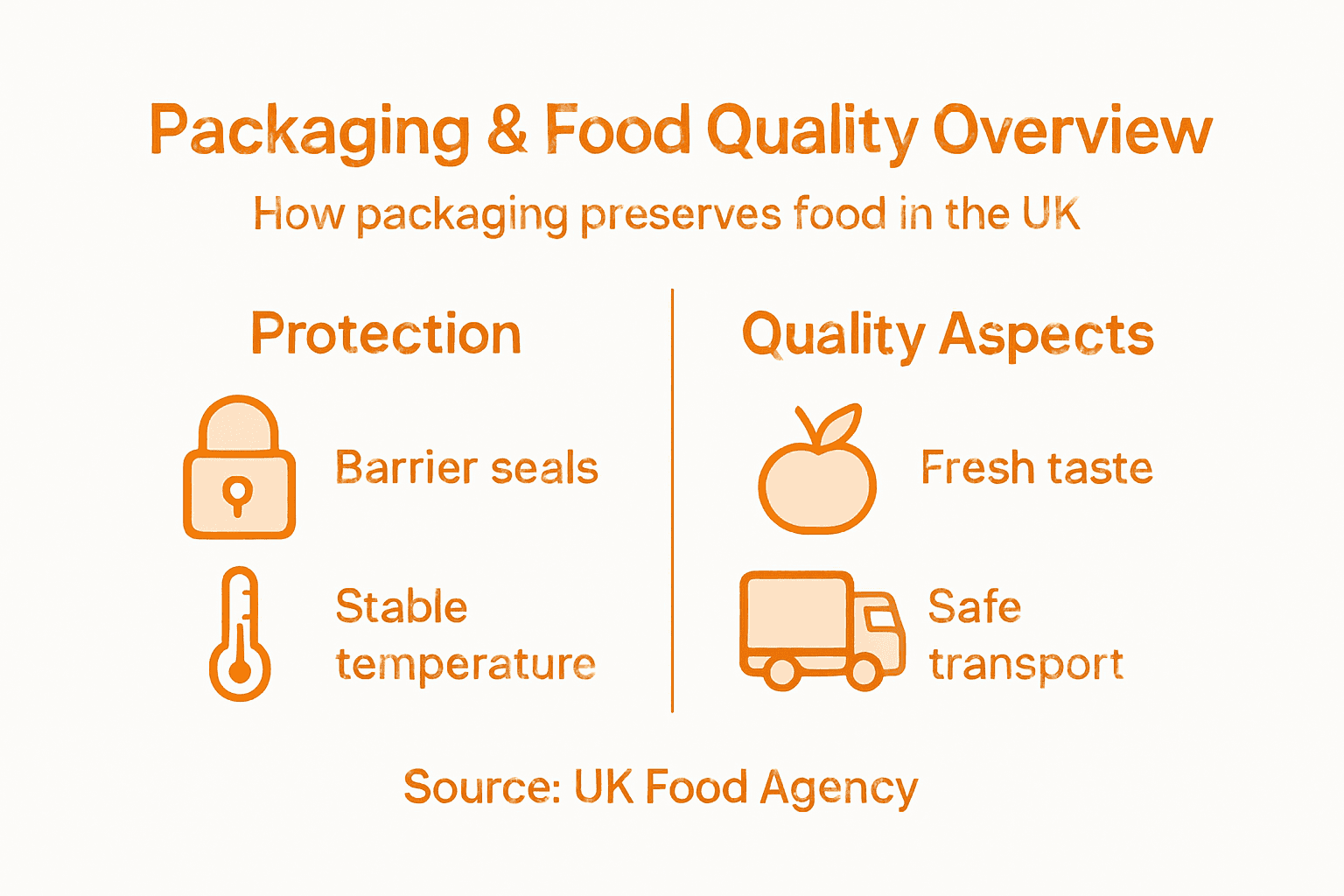
Beyond physical and chemical protection, packaging preserves the sensory qualities that define food quality. Aroma compounds in curries, the crispness of freshly fried chips, the vibrant colour of a salad, the delicate texture of patisserie items—all depend on packaging choices that preserve these specific characteristics. A container that allows too much air circulation destroys volatile aromas. A material that conducts too much heat causes condensation on cold foods. A non-opaque package exposes food to light that fades colours and triggers oxidation. When you select packaging thoughtfully, you’re orchestrating a preservation system that protects every dimension of food quality simultaneously. This is why successful restaurant operators test packaging with their actual dishes before committing to bulk purchases.
Pro tip: Monitor customer complaints specifically about quality changes between dine-in and takeaway versions of the same dish, as these observations reveal which sensory elements your chosen packaging isn’t protecting well enough to warrant switching to a different material or container style.
Compliance with UK food packaging regulations isn’t something you can ignore or work around. The regulations exist specifically to protect your customers and your business, and breaking them carries genuine consequences ranging from fines to closure. Food packaging in the UK must be safe for food contact, properly labelled, and compliant with national legislation on food contact materials. This applies whether you’re using basic cardboard containers or specialist vacuum-sealed packaging. The responsibility sits squarely with you as a business operator to ensure every packaging item you use meets these standards. Your suppliers should provide compliance documentation, but ultimately, your restaurant bears the liability if non-compliant packaging ends up in customer hands.
The regulations cover specific material categories with particular scrutiny. Plastics face the heaviest regulation because they’re most commonly used and carry the greatest variability in quality and safety. Food contact packaging materials must be certified as safe, meaning they’ve been tested to ensure they don’t leach harmful chemicals into food under normal storage and use conditions. Ceramics and ceramicware require specific checks for lead and cadmium contamination. Cellophane and other coated materials must demonstrate safety across their full range of intended applications. This isn’t theoretical—the Food Standards Agency conducts random testing of packaging materials and will seize non-compliant products. Beyond material safety, you must ensure proper labelling compliance. Every package needs clear identification of what it contains, ingredient lists (where applicable), allergen declarations, storage instructions, and use-by or best-before dates depending on product type. Missing or incorrect allergen information represents one of the most serious violations because it directly endangers customers with allergies.
The regulatory landscape continues evolving toward sustainability requirements that also impact your purchasing decisions. The UK Government’s strategy includes mandates that all plastic packaging becomes recyclable, reusable, or compostable by 2025, alongside extended producer responsibility schemes and plastic packaging tax mechanisms. This means many traditional packaging options you might currently use are becoming non-compliant with forward-looking legislation. Rather than waiting until regulations become mandatory, switching to compliant alternatives now prevents scrambling for last-minute replacements when deadlines hit. Suppliers increasingly market packaging with compliance certification clearly stated, making it straightforward to verify you’re selecting appropriate materials. Your documentation trail matters tremendously—keep records showing that your suppliers provided compliance certifications, test results, and declarations of conformity. This documentation protects you if a customer complaint or enforcement action occurs, demonstrating that you exercised due diligence in selecting compliant packaging.
Practical compliance means building simple checks into your purchasing routine. When sourcing new packaging, specifically request compliance documentation before placing orders. Verify that materials carrying food contact claims include appropriate certification marks or declarations. If a supplier can’t provide documentation, don’t use their products, regardless of price savings. Periodically audit your current stock to ensure nothing has degraded or changed composition without your knowledge. Train your team to recognise packaging defects like cracks, discolouration, or chemical odours that might indicate non-compliant materials. Small restaurants sometimes hesitate to ask suppliers questions about compliance, worried it might seem unsophisticated, but suppliers expect these questions and respect businesses that ask them.
Below is a summary of typical food packaging compliance requirements relevant to UK restaurants:
| Compliance Aspect | Why It Matters for Restaurants | What to Check with Suppliers |
|---|---|---|
| Food Contact Safety | Avoids chemical, physical hazards | Certification for food-safe materials |
| Labelling Accuracy | Prevents allergen/information risks | Clear, compliant ingredient/allergen labels |
| Sustainability Status | Meets regulatory and customer demands | Verified recyclable, compostable, or reusable claims |
| Documentation of Compliance | Protects business during inspections | Supplier provides declaration and test data |
Pro tip: Request a simple one-page compliance summary from each packaging supplier showing material type, certification standard, and test date, then file these alphabetically by supplier so you can quickly access documentation if regulatory questions ever arise.
Packing food into the wrong container is one of those decisions that seems minor in the moment but creates massive problems later. A single poor packaging choice doesn’t just affect one meal—it establishes a pattern that damages your reputation across dozens of customer transactions. The most common mistakes stem from prioritising cost or convenience over actual suitability, and they fall into predictable categories you can actively avoid. Understanding what not to do is just as valuable as knowing what to do, because these mistakes directly sabotage the food quality preservation you’ve been working toward.
The first major mistake is selecting packaging based purely on price without considering material properties and recyclability implications. Cheap doesn’t equal appropriate, and the lowest-cost option often performs poorly across multiple dimensions simultaneously. When restaurants choose thin-film plastics or difficult-to-recycle composites simply because they cost pennies less per unit, they’re accepting compromised barrier properties, reduced shelf life preservation, and environmental liability. Your customers increasingly scrutinise sustainability, and using non-recyclable materials creates waste management problems that they notice and judge harshly. Beyond customer perception, these materials often perform worse functionally—they tear more easily during handling, offer inferior moisture or oxygen barriers, and sometimes fail food contact material regulations entirely. Black plastics represent a particular problem because they confuse automated recycling machinery, contaminating entire batches of otherwise recyclable materials. This is why consciously choosing slightly more expensive, genuinely recyclable alternatives like clear PET or polypropylene actually saves money through reduced waste and better food preservation.
The second critical mistake involves excessive packaging that serves no functional purpose. Adding layers of wrapping, oversized containers, or redundant barriers doesn’t improve food quality—it just increases cost and waste. A pizza needs a sturdy box; it doesn’t need that box wrapped in plastic film, then placed in a carrier bag, then enclosed in another layer of protection. This excessive packaging frustrates customers, damages your environmental credentials, and wastes storage space in your facility. Conversely, the opposite mistake occurs when restaurants under-package to save money, resulting in damaged, contaminated, or deteriorated food arriving at customers’ doors. The balance point exists where your packaging provides exactly the protection your specific food needs for its specific transport scenario, nothing more and nothing less. This requires honest assessment rather than guesswork—test your actual dishes under your actual delivery conditions to identify the minimum acceptable packaging specification.
A third substantial mistake is neglecting clear labelling and disposal instructions. Even recyclable packaging becomes waste if customers don’t know how to recycle it. Inadequate labelling about disposal methods reduces recycling effectiveness significantly, meaning your customers want to do the right thing but lack the information to do so. Missing allergen information, unclear storage instructions, or ambiguous use-by dating create food safety risks and liability exposure. Your labels must be legible, accurate, and present in English clearly enough that a customer reading them in poor lighting can understand everything required. Some restaurants make the mistake of assuming their packaging supplier handles all labelling compliance—verify this explicitly rather than assuming, because responsibility rests with you, not your supplier.
The final mistake worth highlighting is failing to test packaging with your actual menu items before committing to bulk purchases. What works theoretically often performs differently in practice. A container might meet specifications for moisture protection but create unwanted condensation on your specific cold desserts. A material might resist heat adequately but leach odours that taint delicate fish dishes. A size might technically fit your portions but leave so much headspace that food shifts during transport. Testing prevents discovering these problems after you’ve already committed to thousands of units. Use your supplier’s sample programme to run actual service trials with real customers who’ll give you honest feedback about quality changes between what they receive and what you plated.
Pro tip: Before switching to any new packaging, compare customer feedback and food quality assessments between your current packaging and the new option across at least 50 transactions, noting specific complaints about condition, freshness, or presentation that reveal which packaging actually performs better.
The article highlights the crucial role packaging plays in preserving food quality, compliance with UK regulations, and meeting customer expectations. Choosing unsuitable packaging risks moisture damage, contamination, and poor food presentation—all of which can harm your reputation and reduce customer satisfaction. To overcome these challenges, your restaurant needs packaging solutions that protect food taste and freshness while complying with safety standards.
Explore our comprehensive packaging range designed especially for the food service industry. From heat-resistant polypropylene containers for hot meals to greaseproof papers tailored for fish and chips, we offer materials that match your menu’s unique needs. Our variety of standard and bespoke packaging supplies ensures you can test and select the best options to maintain food quality, reduce waste, and impress your customers.
Don’t let poor packaging choices undermine your culinary efforts. Visit Grabngo Packaging to discover packaging that combines durability, compliance, and sustainability all in one place. Take action now to source packaging that safeguards your food quality and helps your UK restaurant stand out for all the right reasons.
Food packaging serves multiple functions, including protection against contamination, maintaining shelf life, conveying essential information, enabling traceability, and providing tamper indication.
Packaging protects food from physical damage, light, moisture, and contamination, ensuring that the quality of the food is maintained during transport, especially for takeaway and delivery options.
Common food packaging materials include plastics (like PET and polypropylene), paper and cardboard, glass, and metal. Each type has distinct advantages suited to specific food items, such as greaseproof paper for fried foods and glass for sauces.
Compliance with food packaging regulations is crucial to ensure safety for customers. It protects businesses from legal issues and fines related to incorrect labelling, inappropriate materials, and insufficient allergen information.