
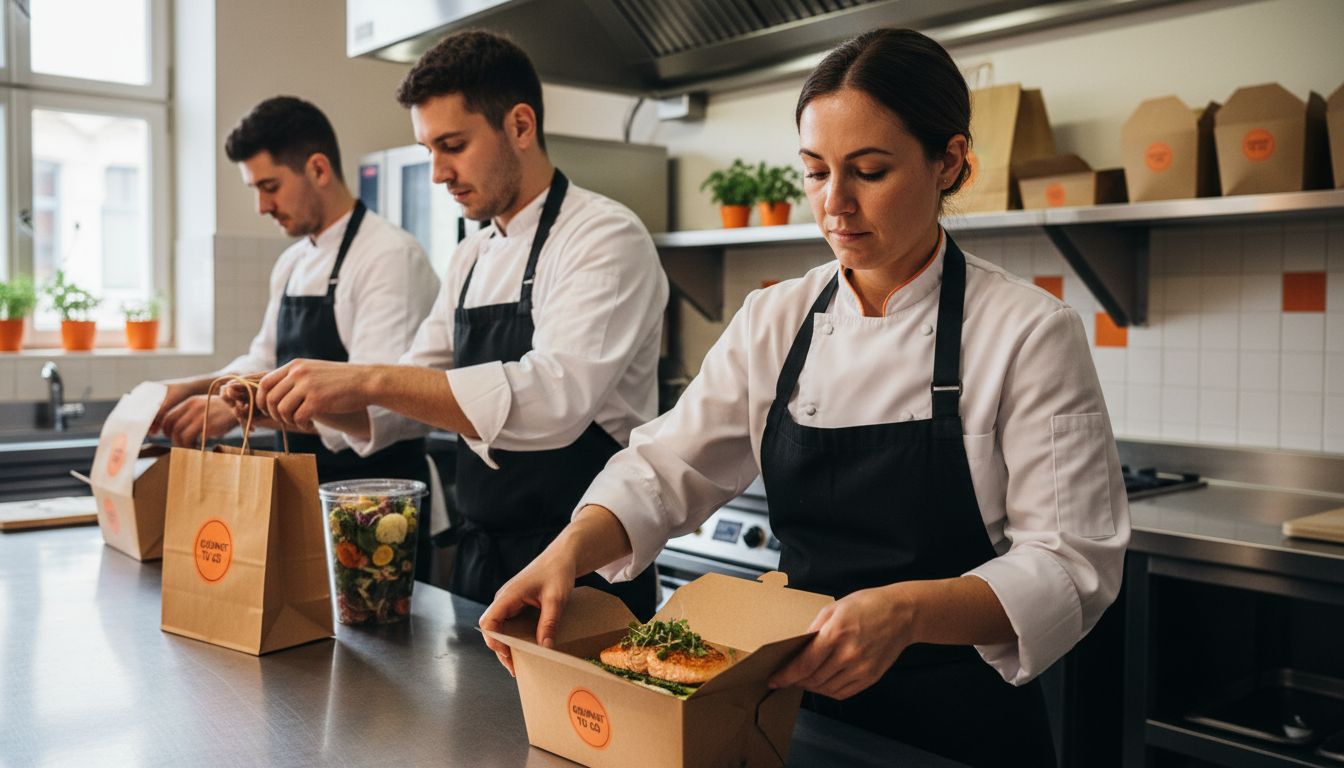
Food packaging shapes the experience long before the first taste, with studies revealing that over 70 percent of consumers say packaging sways their buying decisions. For british businesses in the food industry, packaging is more than a functional necessity. It influences how products look, feel, and are remembered. This article unpacks the vital role of packaging in presenting food, exploring how design choices impact perception, value, and overall brand presence.
| Point | Details |
|---|---|
| Role of Packaging | Food packaging is crucial for containment, protection, marketing, preservation, and consumer convenience, influencing both product quality and consumer perception. |
| Design as Communication | Strategic packaging design impacts consumer psychology, enhancing visual appeal and conveying brand identity and product attributes. |
| Custom Packaging Benefits | Custom packaging provides branding opportunities, allowing businesses to differentiate themselves through colour psychology, logo visibility, and structural innovation. |
| Legal and Sustainability Considerations | Compliance with regulations and environmental accountability are essential for businesses to meet consumer expectations and maintain food safety standards. |
Food packaging represents far more than a simple container for transporting meals. According to research from Cambridge Public Health Nutrition, packaging serves as a critical communication medium that influences consumer perceptions and purchasing decisions.
The fundamental role of food packaging extends well beyond basic containment. As outlined by Dietetics Academy, packaging performs multiple essential functions:
Professional food service businesses understand that packaging is a strategic tool for enhancing presentation. Thoughtfully designed packaging transforms a simple meal into a visual experience, creating anticipation before the first bite. The right packaging can elevate perceived value, communicate quality, and even influence taste expectations. Strategic packaging design considers colour, texture, shape, and materials that complement the specific food being served, turning each container into a silent brand ambassador.
Moreover, modern packaging solutions go beyond aesthetics. They integrate functionality with design, ensuring food remains at optimal temperature, maintains structural integrity, and arrives looking precisely as intended. The Essential Guide to Packaging in Takeaway Operations provides deeper insights into selecting packaging that balances visual appeal with practical performance, making it a crucial consideration for any food service professional.
Food packaging represents a complex ecosystem of materials and designs tailored to specific culinary needs. According to Food Safety Institute, packaging materials vary significantly, with each type offering unique properties for preserving food quality and safety.
Research from IHM Notes categorises food packaging into three fundamental levels:
The primary packaging types include metal containers, glass vessels, plastic containers, and paper-based solutions. Each material offers distinct advantages. Metal packaging provides excellent durability and protection, glass ensures complete transparency and chemical inertness, plastic offers lightweight flexibility, and paper-based options support sustainability goals. Professional food service businesses must carefully select packaging that balances functional requirements with aesthetic appeal.
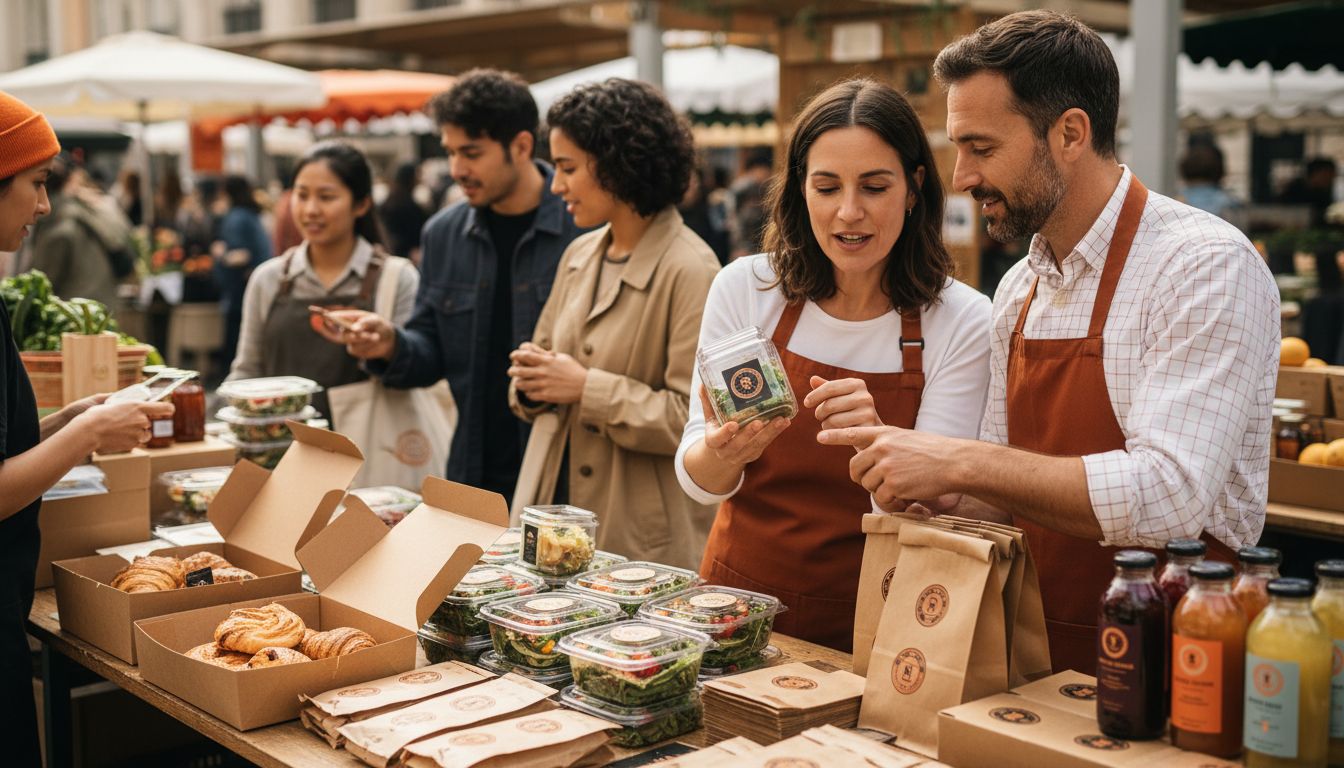
Understanding packaging nuances becomes crucial for maintaining food quality. 7 Essential Types of Takeaway Bags for Food Businesses can help restaurateurs navigate the complex landscape of packaging selection, ensuring they choose solutions that preserve food integrity, enhance visual presentation, and meet specific operational needs.
Packaging is far more than a mere container; it’s a powerful sensory communication tool that dramatically influences consumer perceptions. According to research from Science Direct, the aesthetic presentation of food packaging significantly shapes consumers’ initial impressions, particularly regarding perceived healthiness and quality.
The strategic elements of packaging design play a crucial role in consumer psychology. As highlighted by JMSR Online, packaging serves as a non-verbal communication channel that communicates several key attributes:
Professional food businesses understand that packaging is essentially a silent salesperson. The right packaging can elevate a product from ordinary to extraordinary, creating anticipation and desire before the first bite. Colour schemes, typography, and material selections work together to tell a story about the food inside, whether that’s artisanal craftsmanship, health-conscious preparation, or premium quality.
For food service professionals seeking to optimise their packaging strategy, 7 Essential Steps for Your Takeaway Packaging Checklist provides a comprehensive guide to creating packaging that not only preserves food but also enhances its perceived value and appeal.
Custom packaging represents a powerful strategic tool for businesses seeking to differentiate themselves in a competitive marketplace. Research from arXiv demonstrates the critical importance of logo visibility and strategic design, introducing advanced frameworks for measuring brand attention through packaging.
The strategic dimensions of custom packaging extend far beyond mere visual appeal. According to MDPI Sustainability, packaging design can profoundly influence consumer perceptions and behavioural choices through carefully crafted visual communication. Key branding opportunities include:
Professional food businesses understand that packaging is more than a container—it’s a dynamic brand ambassador. By integrating design elements that reflect company ethos, businesses can transform simple packaging into a powerful marketing instrument that communicates quality, personality, and unique value proposition. Thoughtful design creates an immediate connection with consumers, transforming a transactional moment into an emotional brand experience.
For food service professionals looking to elevate their branding strategy, Printed Coffee Cups offers insights into creating custom packaging solutions that capture attention and reinforce brand identity.
The landscape of food packaging is rapidly evolving, with increasing emphasis on legal compliance, safety standards, and environmental responsibility. Research from MDPI Food Science highlights the growing consumer awareness and expectations surrounding sustainable packaging solutions in the United Kingdom.
Key considerations for food service businesses encompass multiple critical dimensions:
According to MDPI Sustainability, the transition towards a circular economy demands strategic integration of consumer insights into packaging supply chains. This means businesses must not only comply with regulations but also proactively address environmental concerns and consumer preferences. The most successful food service organisations will view sustainability not as a compliance requirement, but as a fundamental business strategy that demonstrates corporate responsibility and attracts environmentally conscious consumers.

Professional food businesses seeking comprehensive guidance on navigating these complex considerations can explore The Essential Guide to Packaging in Takeaway Operations, which provides valuable insights into balancing legal requirements, safety standards, and sustainable practices.
Food packaging mistakes can significantly compromise product quality, brand reputation, and consumer safety. Research from arXiv highlights the critical importance of precise quality control, introducing advanced systems for identifying and verifying packaging information to minimise labelling errors.
The most prevalent risks in food packaging encompass several key areas:
According to MDPI Sustainability, design plays a crucial role in mitigating packaging risks. Professional food businesses must understand that packaging is not merely a container, but a complex communication tool that requires strategic thinking. Common design pitfalls can dramatically influence consumer perception and potentially compromise food safety.
For food service professionals seeking to navigate these complex challenges, The Essential Guide to Packaging in Takeaway Operations offers comprehensive guidance on avoiding critical packaging mistakes and implementing robust quality control strategies.
In today’s competitive food service market, packaging is not just about containment but about creating a compelling sensory experience. This article highlights challenges such as balancing visual appeal, food protection, and sustainable practices while communicating your brand’s unique story. If you seek to overcome common pitfalls like poor material choice or uninspired design, your packaging can become a powerful silent salesperson that influences customer perceptions and loyalty.
Discover a wide range of expertly crafted packaging options designed for food businesses at Grab n Go Packaging. Whether you need premium containers, bespoke printed coffee cups, or eco-friendly disposables, our collection supports your goal of blending aesthetics with functionality. Act now to transform every meal into a memorable brand experience that delights customers and safeguards your product quality. Visit https://grabngopackaging.co.uk/ to explore our solutions and start elevating your food presentation today.
Food packaging serves several essential functions, including containment, protection from contamination, marketing, preservation of shelf life, and consumer convenience.
Packaging affects consumer perceptions through visual appeal, colour psychology, material choice, and structural design, all of which can communicate quality, healthiness, and brand identity.
Common food packaging materials include metal containers, glass vessels, plastic containers, and paper-based solutions, each offering unique properties such as durability, transparency, flexibility, and sustainability.
Common mistakes in food packaging include incorrect material selection, poor information legibility, inadequate protective barriers, inappropriate temperature resistance, and insufficient consideration of sustainability issues.