

Over 500 million takeaway meals are served in the UK each year, yet many customers aren’t aware of the crucial role packaging plays in keeping their food fresh, safe, and delicious on arrival. As more people choose to eat outside traditional settings, what happens between the restaurant kitchen and your table matters more than ever. Understanding takeaway packaging helps both businesses and customers make smarter, safer, and even more sustainable choices for every order.
| Point | Details |
|---|---|
| Importance of Takeaway Packaging | Essential for food transport, protecting quality, preventing contamination, and enhancing customer experience. |
| Sustainability Trends | Businesses must prioritize eco-friendly materials and practices in packaging to align with consumer preferences and regulatory demands. |
| Regulatory Compliance | Adherence to UK food packaging regulations is crucial for consumer safety and corporate responsibility. |
| Branding Potential | Effective packaging serves as a marketing tool, enhancing brand identity and influencing customer perceptions and loyalty. |
Takeaway packaging represents the essential containers and materials used to transport prepared food from restaurants and catering businesses to customers at different locations. According to Wikipedia, these packaging solutions encompass various materials like paper, plastic, and foam containers designed to maintain food quality and safety during transportation.
These packaging solutions serve multiple critical functions beyond mere transportation. They protect food from contamination, help maintain appropriate temperatures, prevent spillage, and create a convenient eating experience for customers who consume meals away from the restaurant’s premises. Modern takeaway packaging must balance practical requirements with environmental considerations, pushing businesses to explore sustainable material options.
Key characteristics of effective takeaway packaging include:
The evolution of takeaway packaging reflects broader trends in food service, with increasing emphasis on sustainability, consumer convenience, and brand representation. Businesses now recognize packaging as more than a functional necessity – it’s a critical touchpoint for customer experience and brand perception.
For a comprehensive understanding of packaging strategies, check out our guide on packaging in takeaway operations.
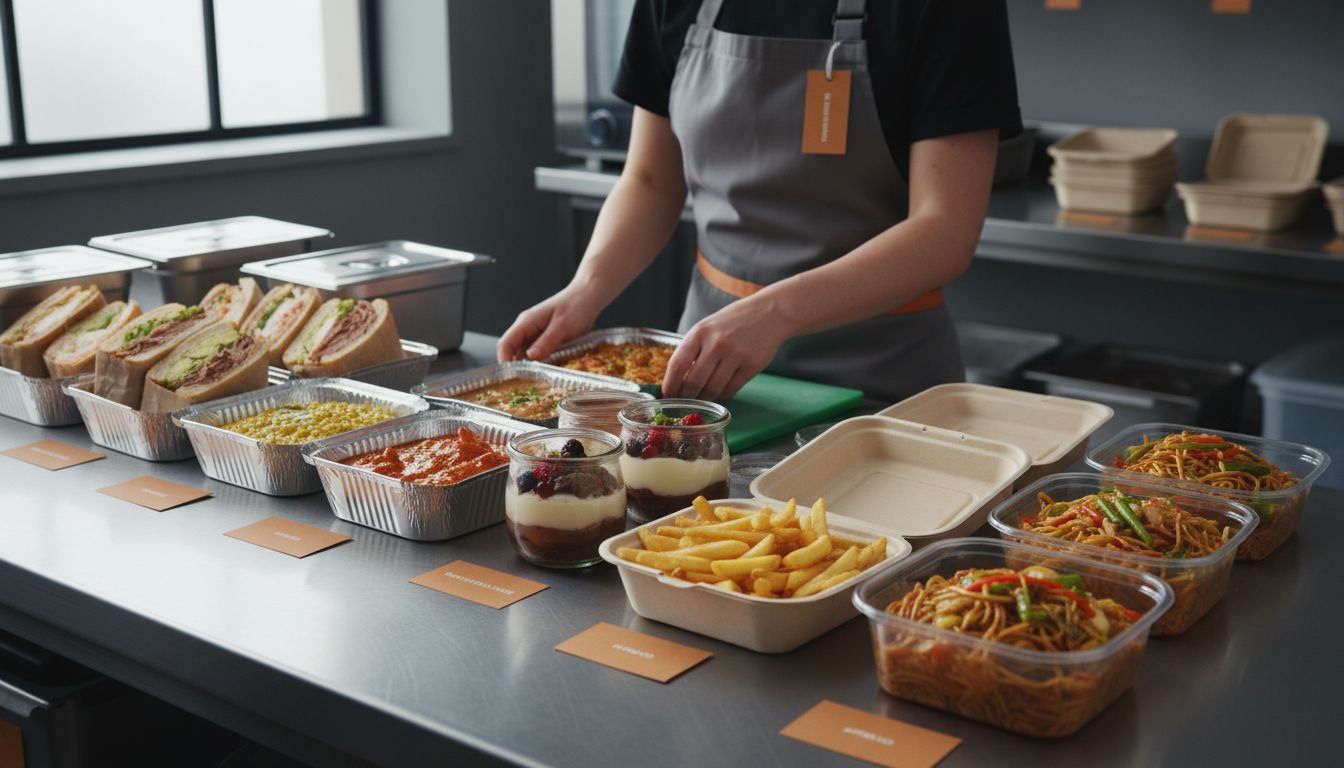
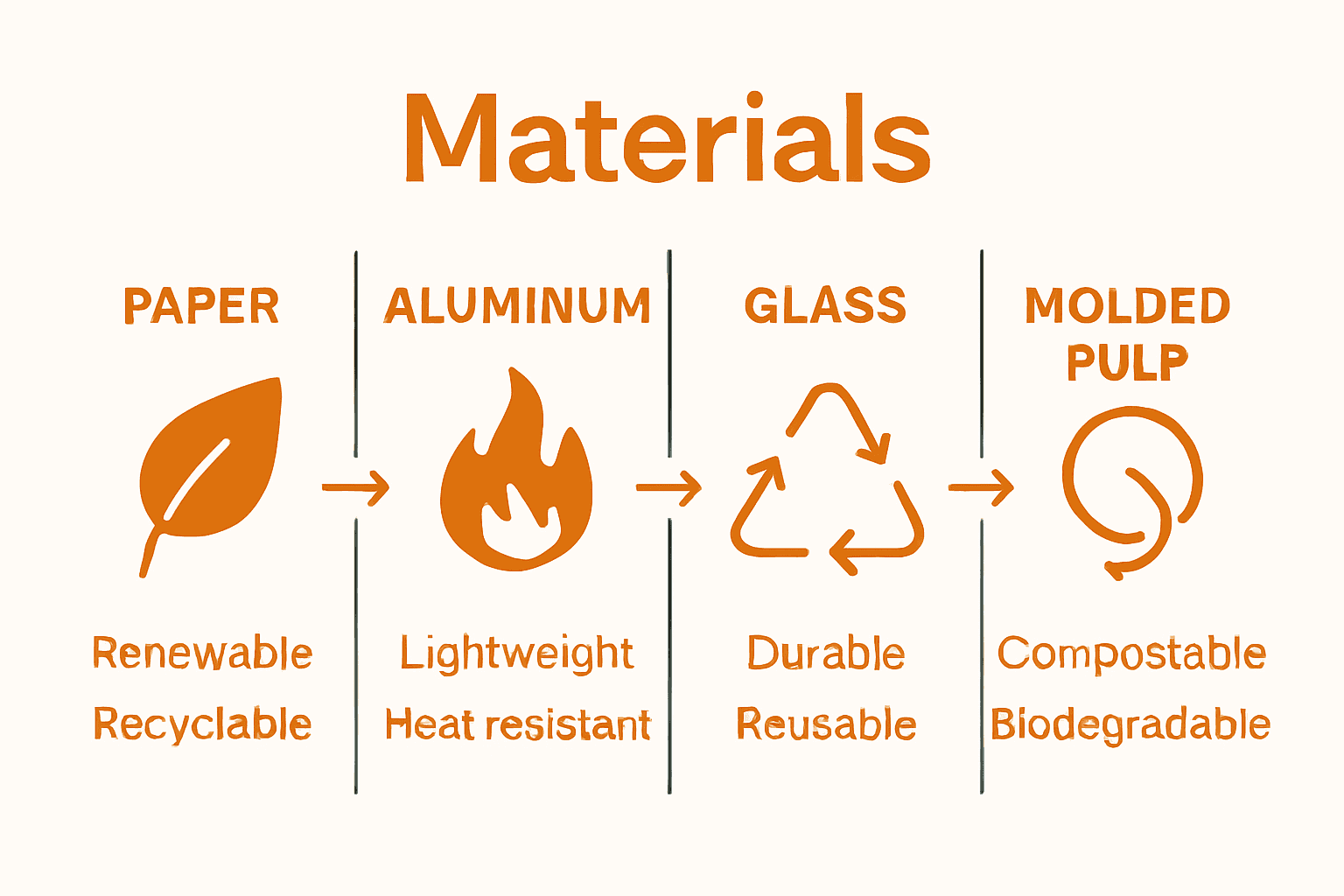
Takeaway packaging materials represent a diverse ecosystem of solutions tailored to different culinary needs and environmental considerations. According to OrderDigital, common materials include paper and cardboard, aluminum, glass, and molded pulp, each offering unique benefits and drawbacks in terms of sustainability, durability, and food type compatibility.
Paper and cardboard packaging remain popular for their lightweight nature and biodegradability. These materials work exceptionally well for dry foods, sandwiches, and bakery items. Aluminum containers provide excellent heat retention and are ideal for hot meals, while glass offers superior visibility and can be reused multiple times, appealing to environmentally conscious consumers.
Key characteristics of different packaging materials:
The selection of packaging material involves careful consideration of factors like food type, temperature requirements, transportation distance, and environmental impact. Modern catering businesses must balance practical functionality with sustainability goals, choosing materials that protect food quality while minimizing ecological footprint.
To explore more about sustainable packaging choices, read our guide on the role of packaging in takeaways.
Food packaging regulations in the United Kingdom represent a comprehensive framework designed to protect consumer health and ensure safe food delivery. According to the Food Standards Agency, food packaging must comply with strict regulations ensuring materials are safe for food contact, prevent transfer of harmful substances, and are manufactured under rigorous good practice standards.
The legal landscape for takeaway packaging encompasses multiple critical dimensions. UK Government guidelines mandate that businesses must meet specific safety standards, including proper labeling and adherence to environmental regulations. These requirements extend beyond mere safety, incorporating responsibilities for recycling and sustainable waste management practices.
Key legal considerations for food packaging include:
Businesses must navigate these complex regulations proactively, understanding that legal compliance is not just about avoiding penalties but protecting consumer health and demonstrating corporate responsibility. The evolving regulatory environment continues to push businesses towards more sustainable, safer packaging solutions that balance practical needs with environmental consciousness.
To understand more about selecting appropriate packaging, explore our guide on disposable containers for food businesses.
Takeaway packaging has evolved far beyond a simple container for transporting food. According to Business Beverages, effective packaging serves as a powerful marketing tool that significantly influences customer perceptions and satisfaction through strategic design, functionality, and brand messaging alignment.
Visual branding through packaging creates an immediate connection with customers. Custom printed containers, distinctive color schemes, and thoughtful design elements transform ordinary packaging into a storytelling medium. Each package becomes a mobile advertisement, extending the restaurant’s brand identity beyond its physical location and creating lasting impressions that can drive customer loyalty and word-of-mouth marketing.
Key branding opportunities in takeaway packaging include:
Beyond aesthetics, packaging plays a crucial role in customer experience. The right packaging communicates professionalism, demonstrates attention to detail, and can significantly enhance the perceived value of the food. Thoughtful design considers not just visual appeal, but also practical elements like ease of opening, temperature retention, and overall functionality that contribute to customer satisfaction.
For comprehensive insights into selecting the perfect packaging solution, explore our guide on takeaway containers.
Takeaway packaging sustainability has become a critical consideration for modern food businesses, balancing economic constraints with environmental responsibilities. According to Resource Futures, the UK government has assessed the environmental impact of packaging materials, highlighting the urgent need to move away from polystyrene and promote biodegradable alternatives like bagasse.
The economic landscape of sustainable packaging involves a nuanced approach to cost management. While eco-friendly materials might initially appear more expensive, they offer long-term benefits through reduced waste management costs, improved brand reputation, and alignment with growing consumer environmental consciousness. Businesses can achieve cost-effectiveness by selecting materials that balance performance, sustainability, and price point.
Key sustainability considerations for packaging include:
Environmental impact extends beyond material selection. Businesses must consider the entire lifecycle of packaging, from production to disposal, understanding that sustainable choices contribute to broader ecological conservation efforts. This holistic approach not only addresses environmental concerns but also resonates with environmentally conscious consumers who increasingly make purchasing decisions based on a company’s sustainability commitments.
To dive deeper into sustainable packaging strategies, explore our guide on eco-friendly packaging options.
The challenge of balancing durability, sustainability, and brand impact in takeaway packaging is real. The article highlights how choosing the right materials and design not only protects your food but also shapes customer experience and meets legal safety standards. Whether you aim to reduce environmental impact with compostable products or create memorable branded packaging, having reliable suppliers is key.
At Grabngo Packaging, we understand your needs. Our extensive range covers everything from sturdy disposable containers to eco-friendly bagasse options, all designed to keep your food safe and your customers delighted.
Discover how easy it is to invest in packaging that ticks all the boxes. Browse our selection, including bespoke printing for a personalised touch, and enjoy competitive prices tailored for food businesses like yours. Don’t wait to enhance your takeaway packaging experience. Take the next step now with Grabngo Packaging and turn packaging challenges into your strongest advantage.
Explore more:
Takeaway packaging refers to the containers and materials used to transport prepared food from restaurants and catering businesses to customers. It is designed to protect food quality, maintain temperature, and prevent spills during transportation.
Common materials for takeaway packaging include paper, cardboard, aluminum, glass, and molded pulp. Each material offers distinct advantages such as biodegradability, heat retention, and reusability, depending on the food type and environmental considerations.
Effective takeaway packaging serves as a marketing tool, helping to create a connection with customers through visual branding. Custom printed containers and thoughtful design enhance consumer experience, convey professionalism, and can lead to increased customer loyalty.
Legal standards for food packaging in catering ensure that materials are safe for food contact, prevent harmful substance transfer, and comply with hygiene regulations. Businesses must adhere to labeling requirements and sustainability practices, demonstrating corporate responsibility and safety for consumers.