
Next Day UK delivery on orders by 12pm (T&Cs apply)
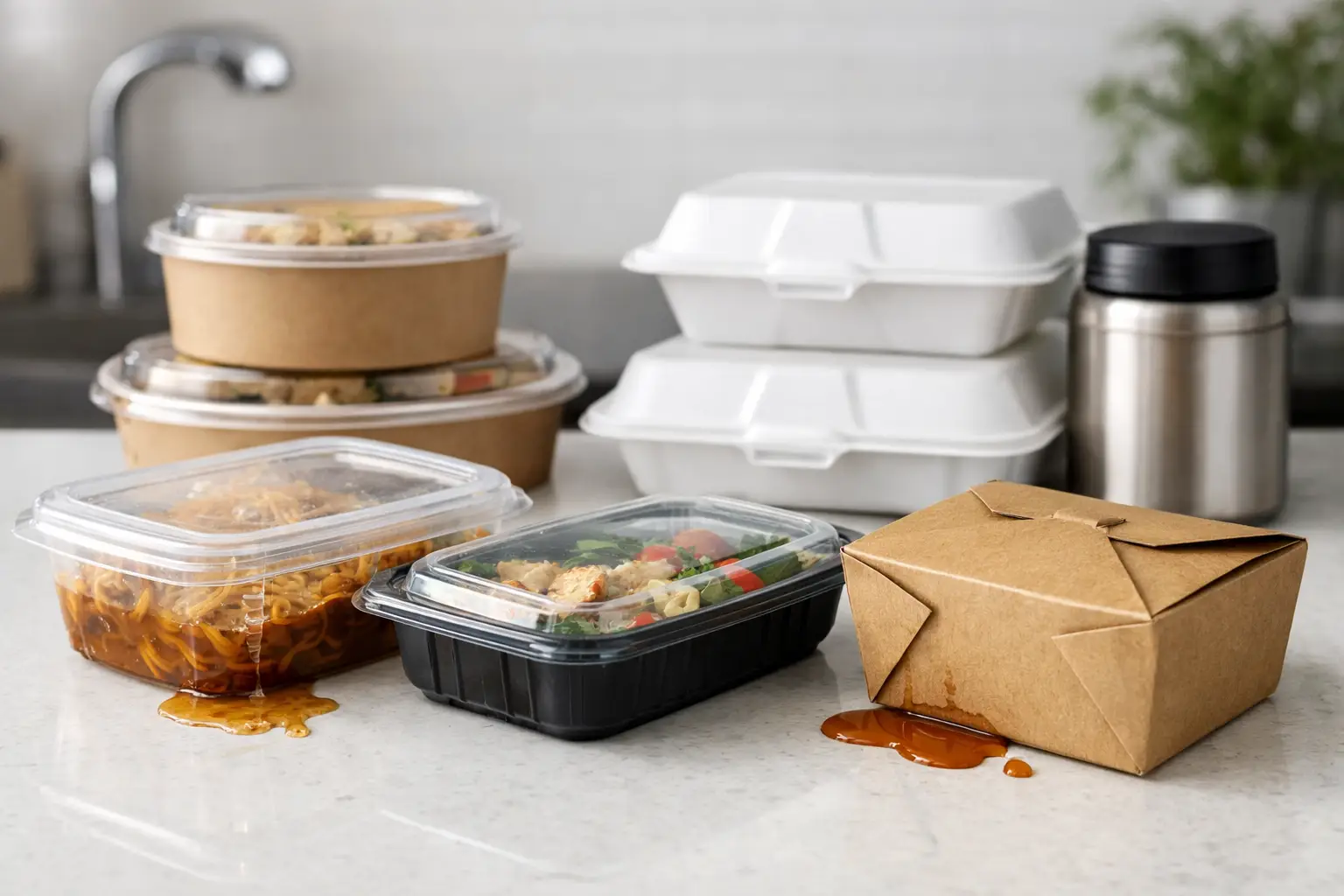
A leaking delivery order usually costs more than one refund. It can mean a wasted meal, a bad review, and a customer who does not order again. If you are asking which takeaway containers stop leaks, the real answer is not one single product. It depends on the food, the temperature, the journey time, and how the lid and base work together.
For food businesses, leak resistance is not a nice extra. It is part of product quality. A strong container keeps sauces where they belong, protects presentation, and helps drivers, counter staff, and customers handle food with confidence.
The best leak-resistant container for one menu item can be the wrong choice for another. Dry rice dishes, loaded fries and pastries do not place the same demands on packaging as dhal, gravy, ramen or chicken curry.
For wetter foods, containers with tight-fitting lids and rigid walls usually perform best. Plastic microwave containers with secure clip or press-on lids are widely used because they hold their shape and create a more reliable seal than many lightweight alternatives. Deli bowls can also work well for cold foods with dressings or sauces, provided the lid is designed for a snug fit and the bowl is not overfilled.
Foil containers are useful for hot food and ovenable applications, but they are not always the strongest option for liquid-heavy deliveries unless paired with the correct lid and kept level in transit. Bagasse and paper-based containers can be a strong choice for many takeaway menus, but leak resistance varies by coating, lid fit and food type. Some hold up well with burgers, grilled items and moderately saucy meals. Others struggle when faced with thin liquids or long delivery times.
That is why the question is less about the material alone and more about the full packaging format.
A leak-resistant takeaway container depends on four things working together: the base, the lid, the food, and the journey.
The first is rigidity. If the sidewalls flex too easily, the lid seal can break when the container is lifted, stacked or squeezed into a delivery bag. Rigid containers generally cope better with movement and pressure.
The second is lid fit. A lid that simply sits on top may be fine for dry food collected in person, but it is a risk for deliveries. For sauces, curries and soups, you want a lid that locks firmly into place and stays secure once steam builds up.
The third is headspace. Overfilling is one of the main causes of leakage. Even a high-quality container will fail if liquid is pushed up into the rim before the lid is applied. Leaving enough space at the top helps the seal do its job.
The fourth is condensation and heat. Very hot food creates steam, and steam changes pressure inside the pack. Some containers manage this well. Others soften, warp or lose their seal. The hotter and wetter the food, the more important correct material choice becomes.
For saucy mains and side portions, polypropylene containers are often the most dependable option. They are popular across takeaways because they are lightweight, stackable and suited to hot food. Most importantly, the right lid fit gives better protection against spills than many fibre-based packs.
Round containers can be a strong option for curries, pasta sauces and stews because the lid pressure is usually more even around the rim. Rectangular microwave containers are useful when portion control and stacking matter, especially for meal prep, rice dishes and combination meals. If the sauce content is high, it is worth choosing a heavier-grade version rather than the lightest available spec.
Foil trays suit many hot menu lines, particularly where heat retention matters. They are common in kebab shops, takeaways and catering operations. However, if the food is very liquid, the lid choice becomes critical. Card lids may be fine for collection orders, but for genuine leak resistance in delivery, they are rarely the safest choice on their own.
Soup is where weak packaging gets exposed quickly. Thin liquids travel into every gap, especially when a driver brakes or corners.
For soups, broths and heavily dressed noodle dishes, round soup containers with tight lids are usually the safer choice than general-purpose meal boxes. They are designed for liquid content and tend to perform more consistently during transport. A well-sealed deli-style soup pot can also work for cold liquid products such as gazpacho or prepared foods, but the lid quality matters as much as the pot itself.
If you sell soup regularly, it is worth testing containers under real service conditions rather than relying on supplier descriptions alone. Fill them hot, leave them for ten minutes, place them in a delivery bag, tip them slightly and see what happens. This kind of practical test tells you more than a product spec sheet.
They can be, but only within the right use case.
Paperboard and bagasse containers are often chosen for presentation, sustainability goals and broad menu flexibility. For burgers, wraps, chips, rice boxes and many street food formats, they can do the job well. They are also useful when businesses want a more natural look or want to align packaging with branded
grease-proof and other front-of-house items.
The trade-off is that not every paper or bagasse container is built for wet, hot, oil-heavy food over a 20-minute delivery run. Some have grease-resistant linings and better lid systems. Others are better suited to drier menu items or shorter journeys. If you need true leak resistance for liquid dishes, plastic containers often remain the more reliable operational choice.
For many food businesses, the practical answer is a mixed packaging range rather than forcing one container type across the whole menu.
Start with the menu, not the catalogue. A fried chicken shop, a salad bar and an Indian takeaway all need different packaging mixes.
Think first about food consistency. Thick sauces are easier to contain than thin ones. Oil behaves differently from water-based liquids. Foods with separate compartments may need a different format again, because divider walls can reduce usable seal space.
Next, look at travel conditions. Collection-only operators can often use a broader range of containers than delivery-focused businesses. The longer the journey and the more handling involved, the more secure the container needs to be.
Then consider heat. Some containers are excellent for cold deli use but less suitable for freshly cooked meals. Others handle reheating and hot holding better. Matching the container to service temperature helps avoid softening, warping and lid failure.
Finally, think about pack consistency across your operation. Buying cups, lids, food boxes,
grease-proof, bags and cleaning supplies from one wholesale source can make ordering simpler, but there is still value in selecting specialist formats where your menu demands them. Standardising too far can create service problems if one all-purpose box is being pushed beyond what it can handle.
Sometimes the container is not the problem. The issue is how it is being used.
Overfilling is the most common mistake. So is closing a lid on food caught around the rim, which stops a proper seal forming. Stacking very hot packs straight away can also shift lids before they settle. In some kitchens, speed at the pass leads to containers being pressed shut unevenly.
Delivery bag setup matters too. If liquid items are packed on their side or squeezed between larger boxes, even strong containers can leak. Staff training is part of packaging performance. The right product helps, but handling still matters.
If you are seeing regular complaints, small packaging savings may be costing you more than they save. One or two pence per unit can look attractive until refunds, remakes and poor reviews start adding up.
Upgrading usually makes sense when you sell high-sauce dishes, premium meals, or anything that travels frequently through third-party delivery. It also makes sense if your current range creates inconsistency across sites or shifts. Better sealing containers can improve portion presentation as well as reduce waste.
For growing operators, it is worth reviewing packaging as part of the wider customer experience. A tidy, secure meal arrives looking more professional, and that supports the value of the food inside.
The best answer to which takeaway containers stop leaks is usually a shortlist, not a single winner. Choose rigid, well-sealing formats for wet and hot foods, test them against your actual menu, and avoid treating every dish the same. Good packaging should make service easier, not create extra problems at the door. If a container protects the food, keeps the order clean and holds up through delivery, it is doing exactly what your operation needs.